"A documentary about spiritual healing."
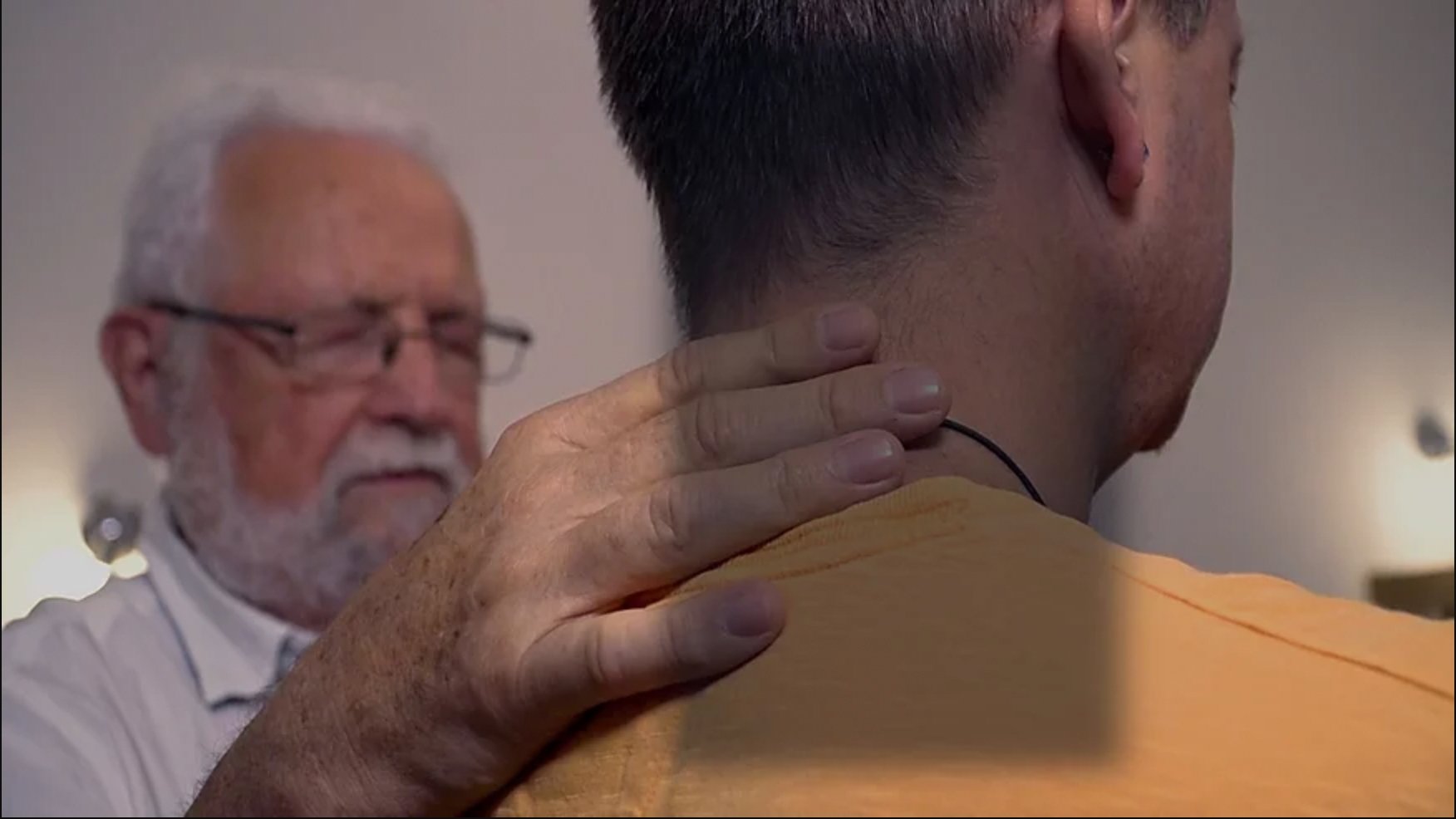
A documentary about healers from the Swiss canton of Appenzell.
Social & External
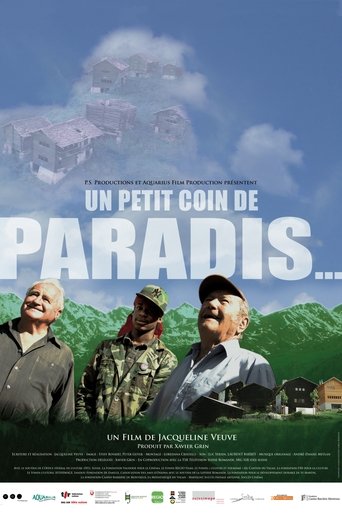
The traditional healers in the Swiss and French mountains.
Over 350,000 tons of highly radioactive waste and spent fuel rods are in temporary storage on site at nuclear power complexes and at intermediate storage sites all over the world. More than 10,000 additional tons join them every year. It is the most dangerous waste man has ever produced. Waste that requires storage in a safe final repository for hundreds of thousands of years. Out of reach of humanity and other living creatures. The question is, where? Together with Swiss-British nuclear physicist Charles McCombie, who has been searching for a safe final storage site for highly radioactive nuclear waste for thirty-five years, director Edgar Hagen investigates the limitations and contradictions involved in this project of global significance. Supporters and opponents of nuclear energy struggle for solutions whilst dogmatic worldviews are assailed by doubt
An intimate portrayal of the everyday lives of Carthusian monks of the Grande Chartreuse, high in the French Alps (Chartreuse Mountains). The idea for the film was proposed to the monks in 1984, but the Carthusians said they wanted time to think about it. The Carthusians finally contacted Gröning 16 years later to say they were now willing to permit Gröning to shoot the movie, if he was still interested.
In May of 1982 Julio Cortázar, the Argentinean writer and his companion in life, Carol Dunlop set out in their VW bus on a journey along the highway from Paris to Marseille that, for each of them, was to be their final one. Twenty-five years later, Océane Madelaine and Jocelyn Bonnerave set out to undertake the journey again.
“Namibia Crossings” takes a trip through a country of archaic beauty and bizarre contradictions. The film creates polyphonies of soulful landscapes made up of each individual's highs and lows.
Max Frisch was the last big Swiss intellectual widely respected as a “voice” in its own right – a character hardly found today. The film retells Frisch’s story as a witness of the unfolding 20th century, wondering if such “voices” are needed at all, or if we could do without them.
Modern Amazons are fierce heroines. They are ready to fight for what is important to them. Without explaining, without compromising, always persisting. They fight for victory in the ring for acceptance, and too, for fellow sufferers and humanity.
A behind-the-scenes look at the of how the Paris Opera is run under the direction of Stephane Lissner.
Switzerland still carries out special flights, where passengers, dressed in diapers and helmets, are chained to their seats for 40 hours at worst. They are accompanied by police officers and immigration officials. The passengers are flown to their native countries, where they haven't set foot in in up to twenty years, and where their lives might be in danger. Children, wives and work are left behind in Switzerland. Near Geneva, in Frambois prison, live 25 illegal immigrants waiting for deportation. They are offered an opportunity to say goodbye to their families and return to their native countries on a regular flight, escorted by plain-clothes police officers. If they refuse this offer, the special flight is arranged fast and unexpectedly. The stories behind the locked cells are truly heartbreaking.
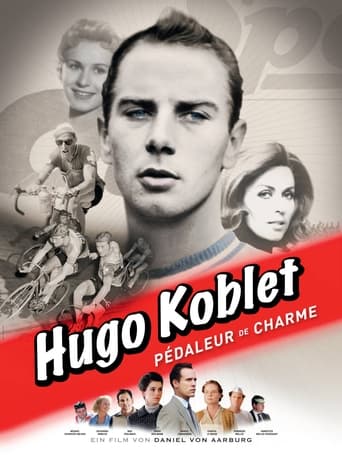
Zurich-born Hugo Koblet was the first international cycling star of the post-war period. He was a stylist on the bicycle and in life, and a huge heartthrob. Koblet had a meteoric rise and won the Giro d'Italia in 1950. Once he had reached the zenith of his career, Koblet was put under pressure by overly ambitious officials and ended up ruining his health with drugs. In 1954, he married a well-known model and they became a celebrity dream couple. After his athletic career ended, Koblet began to lose his footing. Threatened by bankruptcy, he crashed his Alfa into a tree.
Switzerland is presently the only country in the world where suicide assistance is legal. Exit: The Right to Die profiles that nation's EXIT organization, which for over twenty years has provided volunteers who counsel and accompany the terminally-ill and severely handicapped towards a death of their choice.
Is the solution to Switzerland's future to integrate Germany into the confederation? After all, like Michael Ringier, CEO of the Ringier media group, says, blithely ignoring all minorities, we're very close in culture and language. Oskar Freysinger takes out his guitar and sings his answer. Politicians from French-speaking Switzerland and Ticino think expanding will help the country survive. The former German foreign minister thinks the two countries' traditions are too different. The banker Oswald Grübel is worried about Germany's debts, although he'd be prepared to take over its assets. With serious interviews interspersed with gags (boat people on Lake Constance, the last Habsburger as a peasant), Giaccobbo gathers off-the-cuff reactions which reveal a lot about the different mentalities. The movie laughs at preconceived notions, redefines neutrality and reflects on what designates a nation. Switzerland, which loves to teach the world a lesson, will soon helvetize the planet, oder?
The Blocher Experience tells the story of Switzerland’s most controversial political leader. It also chronicles the face-to-face encounter between a film-maker and a man of power, through a year of exclusive, up-close interviews and access to his private life.
Documentary account of a man’s life in the face of imminent death – Francisco Varela's story told affectionately and gently, touchingly and astutely. Varela spent his life building bridges: between Western science and Eastern wisdom, neurobiology and philosophy, abstract theory and practical life. This film seeks to deconstructs the prevailing division between science and art.
In 1966, John Harlin II died while attempting Europe's most difficult climb, the North Face of the Eiger in Switzerland. 40 years later, his son John Harlin III, an expert mountaineer and the editor of the American Alpine Journal, returns to attempt the same climb.
What becomes history, what feeds memory, what shapes an era? Images found in the dustbins of history. Taken out of context, fragments, testimonies and unpublished documents intermingle, interweave and collide. They take on a new meaning, a dimension of authentic proximity. The peregrination touches on the advent of the atomic bomb, the military trials at the end of the war, the lie detector, the discovery of the Majdanek camp; Einstein, Lenin's embalmer, the KGB agent, the American spy rebuilding his life in Russia, the Yugoslav war sniper all have their say.
It is winter at an emergency shelter for the homeless in Lausanne. Every night at the door of this little-known basement facility the same entry ritual takes place, resulting in confrontations which can sometimes turn violent. Those on duty at the shelter have the difficult task of “triaging the poor”: the women and children first, then the men. Although the total capacity at the shelter is 100, only 50 “chosen ones” will be admitted inside and granted a warm meal and a bed. The others know it will be a long night.
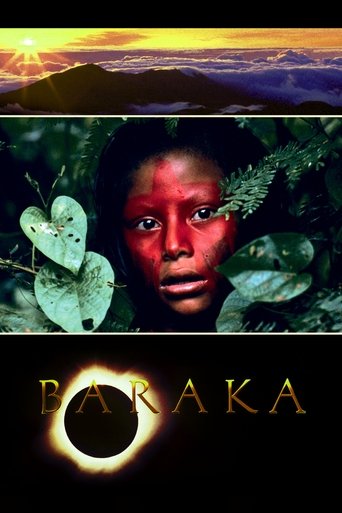
A paralysingly beautiful documentary with a global vision—an odyssey through landscape and time—that attempts to capture the essence of life.
Ram Dass is one of the most important cultural figures from the 1960s and 70s. A pyschedelic pioneer, author of Be Here Now, beloved spiritual teacher, and outspoken advocate for death-and-dying awareness, Ram Dass is now himself approaching the end of life. Since suffering a life-changing stroke twenty years ago, he has been living at his home on Maui and deepening his spiritual practice — which is centered on love and his idea of merging with his surroundings and all living things. Shot in a nuanced cinematic style, the film is an intimate summary of his life learning and awareness, and is ultimately a poetic meditation on life, death, and the soul’s journey home.
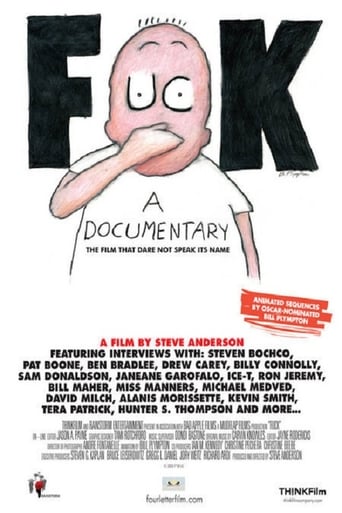
A documentary on the expletive's origin, why it offends some people so deeply, and what can be gained from its use.
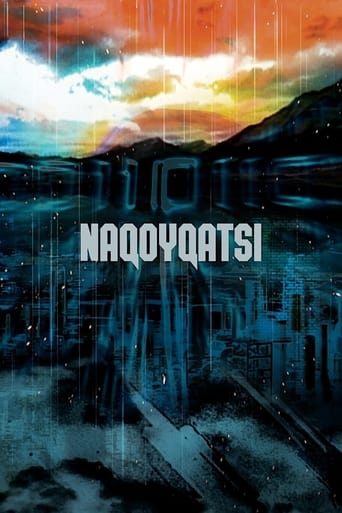
A visual montage portrait of our contemporary world dominated by globalized technology and violence.
From the heights of her modeling fame to her tragic death, this documentary reveals Anna Nicole Smith through the eyes of the people closest to her.
This documentary focuses on the actors and their journey over two summers to create the remake to the original IT, by Stephen King. The documentary originally released as bonus material, bundled with IT: Chapter Two.
Illusionist Derren Brown reinvents the concept of "faith healing" through a series of stunts that debunk the confines of fear, pain and disbelief.
In this documentary, recovering addict and amputee John Wood finds himself in a stranger-than-fiction battle to reclaim his mummified leg from Southern entrepreneur Shannon Whisnant, who found it in a grill he bought at an auction and believes it therefore to be his rightful property.
This unique cinematic experience dives deep into an artist’s work and reveals his life path, inspiration, and creative process. It explores his fascination with myth and history. Past and present are interwoven to diffuse the line between film and painting, allowing the audience to be completely immersed in the remarkable world of one of the greatest contemporary artists, Anselm Kiefer. Wim Wenders shot this unique portrait over the course of two years in stunning 3D.
Dick Proenneke retired at age 50 in 1967 and decided to build his own cabin in the wilderness at the base of the Aleutian Peninsula, in what is now Lake Clark National Park. Using color footage he shot himself, Proenneke traces how he came to this remote area, selected a homestead site and built his log cabin completely by himself. The documentary covers his first year in-country, showing his day-to-day activities and the passing of the seasons as he sought to scratch out a living alone in the wilderness.
A documentary focused on plastic pollution in the world's oceans.
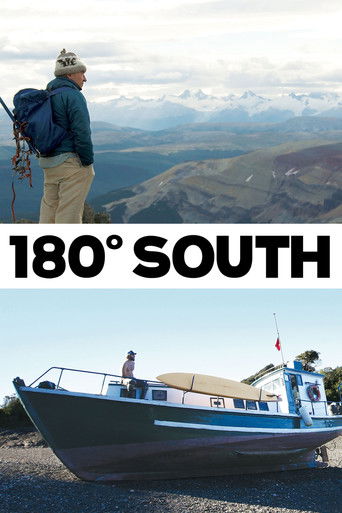
The film follows adventurer Jeff Johnson as he retraces the epic 1968 journey of his heroes Yvon Chouinard and Doug Tompkins to Patagonia.
THE SPIRIT MOLECULE weaves an account of Dr. Rick Strassman's groundbreaking DMT research through a multifaceted approach to this intriguing hallucinogen found in the human brain and hundreds of plants, including the sacred Amazonian brew, ayahuasca. Utilizing interviews with a variety of experts to explain their thoughts and experiences with DMT, and ayahuasca, within their respective fields, and discussions with Strassman’s research volunteers, brings to life the awesome effects of this compound, and introduces us to far-reaching theories regarding its role in human consciousness.
Shot under extreme conditions and inspired by Mayan creation theory, the film contemplates the illusion of reality and the possibility of capturing for the camera something which is not there. It is about the mirages of nature—and the nature of mirage.
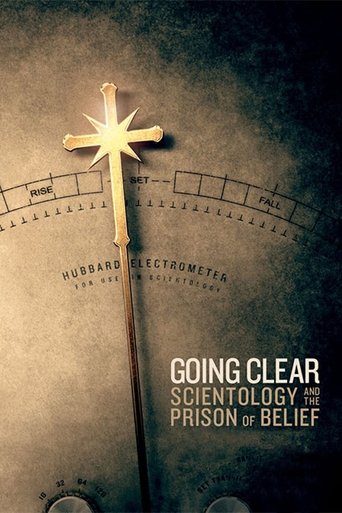
The film profiles eight former members of the Church of Scientology, shining a light on how they attract true believers and the things they do in the name of religion.
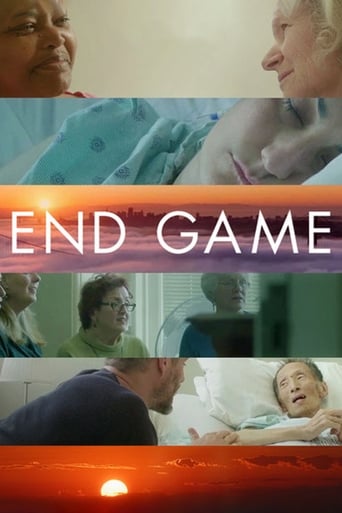
Filmed and edited in intimate vérité style, this movie follows visionary medical practitioners who are working on the cutting edge of life and death and are dedicated to changing our thinking about both.
In 1999, Internet entrepreneur Josh Harris recruits dozens of young men and women who agree to live in underground apartments for weeks at a time while their every movement is broadcast online. Soon, Harris and his girlfriend embark on their own subterranean adventure, with cameras streaming live footage of their meals, arguments, bedroom activities, and bathroom habits. This documentary explores the role of technology in our lives, as it charts the fragile nature of dot-com economy.
When Allied forces liberated the Nazi concentration camps in 1944-45, their terrible discoveries were recorded by army and newsreel cameramen, revealing for the first time the full horror of what had happened. Making use of British, Soviet and American footage, the Ministry of Information’s Sidney Bernstein (later founder of Granada Television) aimed to create a documentary that would provide lasting, undeniable evidence of the Nazis’ unspeakable crimes. He commissioned a wealth of British talent, including editor Stewart McAllister, writer and future cabinet minister Richard Crossman – and, as treatment advisor, his friend Alfred Hitchcock. Yet, despite initial support from the British and US Governments, the film was shelved, and only now, 70 years on, has it been restored and completed by Imperial War Museums under its original title "German Concentration Camps Factual Survey".
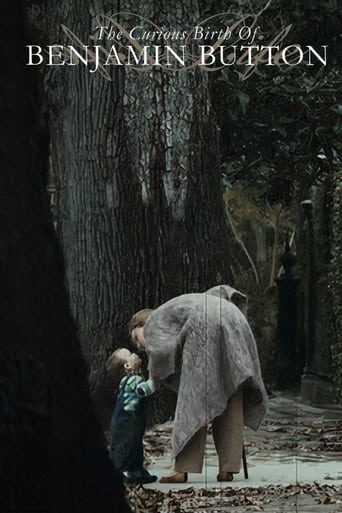
A documentary about the making of David Fincher's 2008 film THE CURIOUS CASE OF BENJAMIN BUTTON. Virtually every element in the evolution of the Fincher's film is documented here, from the project's attachment to numerous other directors during the 1990s, to its shoot in 2006 and 2007 in New Orleans, to its complex, CGI-intensive postproduction process.
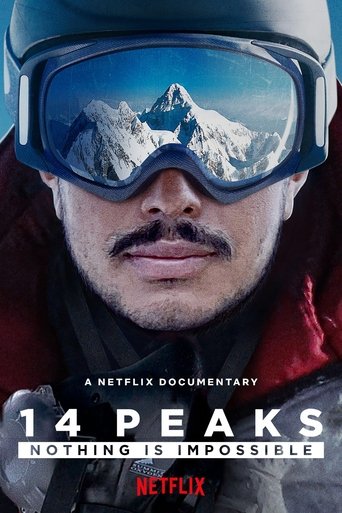
In 2019, Nepalese mountain climber Nirmal “Nims” Purja set out to do the unthinkable by climbing the world’s fourteen highest summits in less than seven months. (The previous record was eight years). He called the effort “Project Possible 14/7” and saw it as a way to inspire others to strive for greater heights in any pursuit. The film follows his team as they seek to defy naysayers and push the limits of human endurance.