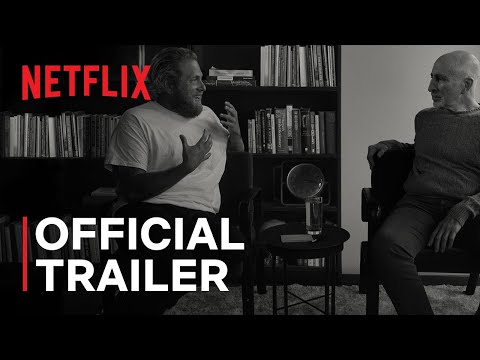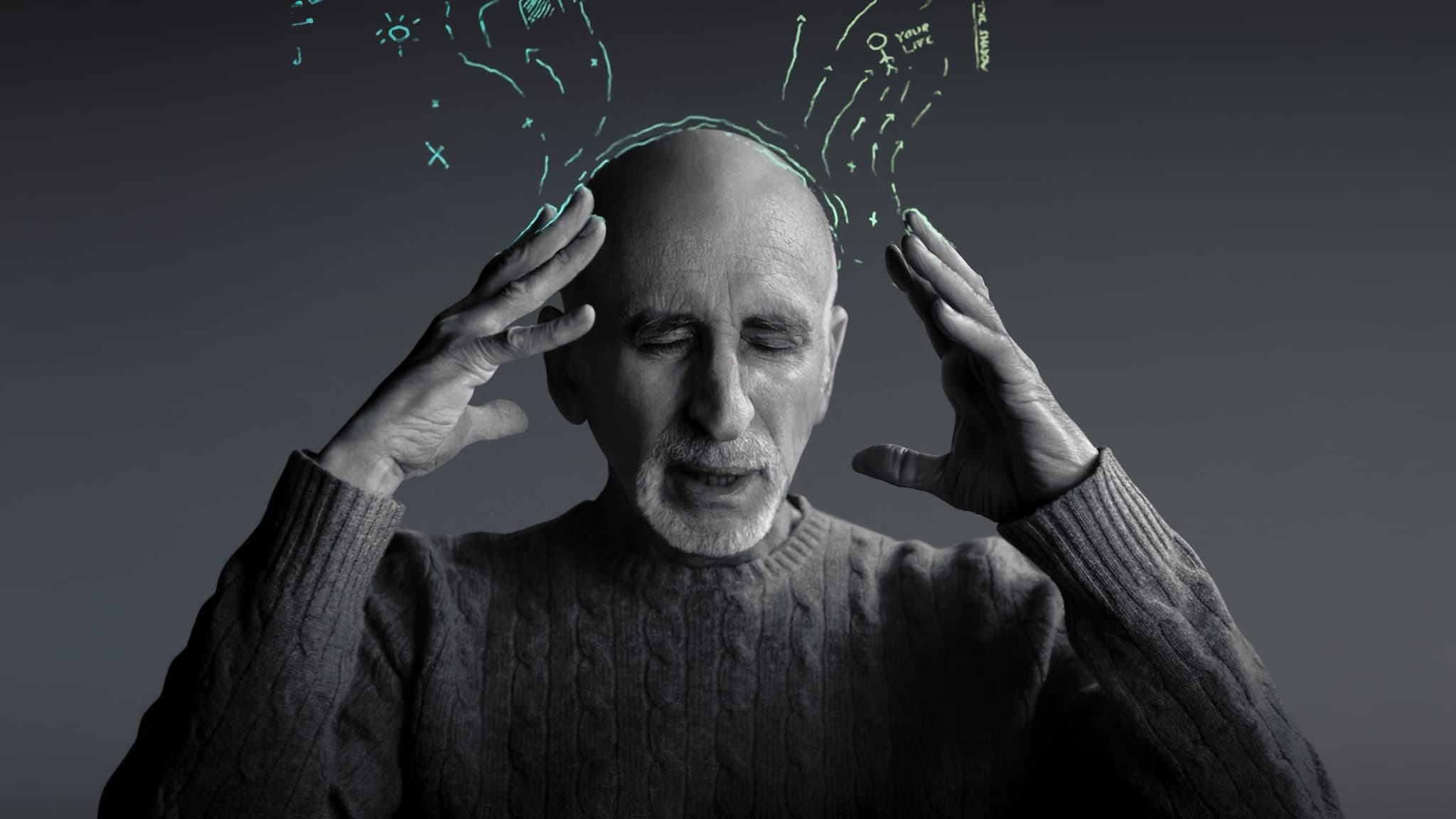

"Meet a different kind of therapist."
In candid conversations with actor Jonah Hill, leading psychiatrist Phil Stutz explores his early life experiences and unique, visual model of therapy.
Stream
Social & External
The people behind it
Jonah Hill
Self
Phil Stutz
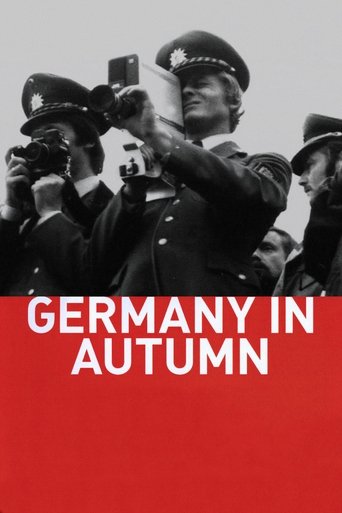
Nine fictitious documentaries and films reflect the mood of late 1970s Germany, particularly the two-month period in 1977 when a businessman was kidnapped by the RAF (Red Army Faction). The kidnap had been made to orchestrate the release of the original leaders of the RAF, aka the Baader-Meinhof.
Averroès and Rosa Parks: two units of the Esquirol Hospital, which - like the Adamant - are part of the Paris Central Psychiatric Group. From individual interviews to «carer-patient» meetings, the filmmaker focuses on showing a form of psychiatry that continually strives to make room for and rehabilitate the patients’ words. Little by little, each one eases open the door to their world. Within an increasingly worn-out health system, how can the forsaken be given a place among others.
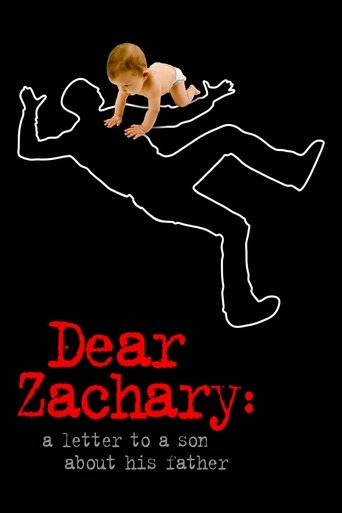
In 2001, Andrew Bagby, a medical resident, is murdered not long after breaking up with his girlfriend. Soon after, when she announces she's pregnant, one of Andrew's many close friends, Kurt Kuenne, begins this film, a gift to the child.
A year after Thadd and Shannon gave birth to their son, A Conversation Between Parents highlights a climactic conversation in their lives -- as both young parents grasp at the last threads of their ideal family. On an afternoon off of work, the couple sits on their couch, while their son sleeps in his crib, and the family grapples with their limited options one last time. Dietrich’s camera ties the couple’s painful conversation together with flashbacks of both parents’ precious memories of their first year with Jasper, attempting to find a way to articulate their struggles in the last conversation they have together as a couple.
Marta Cardoso, a young dancer from northern Portugal, moves through Lisbon with restless energy, between precarious routines, affections, and a daily life in constant imbalance. Dance becomes her refuge and her cry: a space where the body finds freedom and instinct, and where gesture replaces words. When dancing, she feels close to her inner animal.
Ten years after establishing New Heights, the pastors, their families, and other influential members of the church sit down for roundtable discussions to look back on the past decade and forward toward their future plans for the congregation.
With commentary from Hollywood stars, outtakes from his movies and footage from his youth, this documentary looks at Stanley Kubrick's life and films. Director Jan Harlan, Kubrick's brother-in-law and sometime collaborator, interviews heavyweights like Jack Nicholson, Woody Allen and Sydney Pollack, who explain the influence of Kubrick classics like "Dr. Strangelove" and "2001: A Space Odyssey," and how he absorbed visual clues from disposable culture such as television commercials.
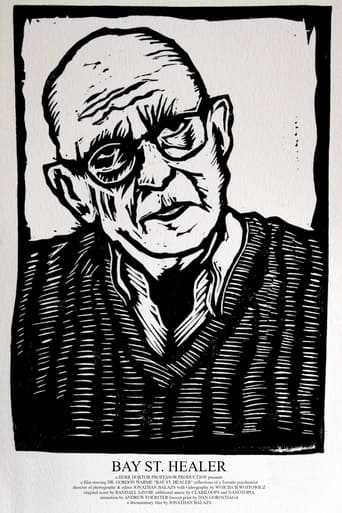
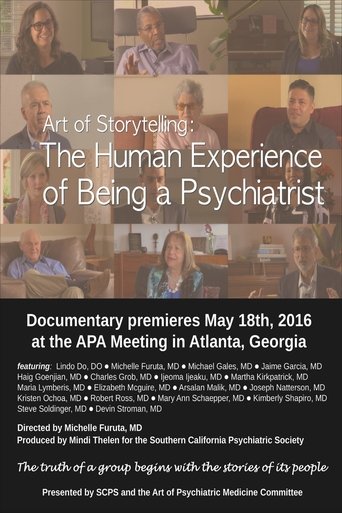
The story of who psychiatrists are today, what they do, and what they value has been told by almost everyone but them. Psychiatrists are notoriously private; cautious about revealing personal information, and noticeably absent in the media. What has been the consequence of this? If you don’t tell your story, someone else will tell it for you. Mental illness is the number one cause of disability worldwide, however many patients still fear coming to see a psychiatrist – that they will be overmedicated, not listened to, not understood, not cared for, or worse - maybe the psychiatrist will see how “crazy” they are and lock them up. The stereotype of being “crazy” is equated with being dangerous, weird, scary, and ostracized - and in some ways - so is being a psychiatrist.
An interview between Volker Schlöndorff and Billy Wilder.
An Editor recounts the diaries of a failed film production as they attempt to construct a new narrative from the remaining footage.
For a series of programs made for TV Fnac, Philippe Grandrieux meets different people who tell us, each in their own point of view, a story of images. After Paul Virilio (The World is an image) and before Jean-Louis Schaeffet, Le Trou noir (AKA The Black Hole) gives us the enlightened reflections of psychanalyst Juan David Nasio about real and reality.
A woman in her twenties has just admitted herself to a psychiatric hospital in California. A staff doctor characterizes her behavior as antisocial and impulsive.
For the third time, HBO cameras go inside Trenton State Maximum Security Prison--and inside the mind of one of the most prolific killers in U.S. history--in this gripping documentary. Mafia hit man Richard Kuklinski freely admits to killing more than 100 people, but in this special, he speaks with top psychiatrist Dr. Park Dietz in an effort to face the truth about his condition. Filled with more never-before-revealed confessions, it's the most chillingly candid Iceman special yet as it combines often-confrontational interview footage between Kuklinski and Dietz with photos, crime reenactments and home movies that add new layers to this evolving and fascinating story.
Martin Scorsese, Robert De Niro, Joe Pesci, and Al Pacino in conversation about The Irishman.
A Conversation with Martin Scorsese & Francis Ford Coppola
LSD: Problem Child and Wonder Drug captures the fascinating story of LSD as it is eloquently told by Dr. Albert Hofmann, the 100-year-old sage-scientist who brought LSD into the world. With interviews and presentations by Rick Doblin, Alex Grey, Ralph Metzner, Carl Ruck, Goa Gil, and others, this historic message from the father of LSD is a timeless relic and an immediate source of inspiration. The story is told through an account of the 2006 International LSD Symposium in Basel, Switzerland. At the now-legendary conference, eighty speakers and two thousand participants gathered for three days in honor of Dr. Hofmann's 100th birthday and to hear Dr. Hofmann speak about his life, his discovery, and his thoughts on the psychedelic experience. It was also an occasion for leading doctors, researchers, artists and thinkers in the psychedelic field to present their work.
At Folsom Prison with Dr. Timothy Leary is an extraordinary counterculture document, filmed during Leary’s incarceration there. Under 30 minutes in length, this 1973 film shows Leary at his most engaging and personable. It’s a testament to his considerable charm that he was able to pull off such a performance, considering that the prison warden and other officials were sitting across the room listening as this was filmed. Leary discusses his jailbreak (intimating that the daughter of a United States senator he refuses to name helped him), the revolution in consciousness and drugs, Eldridge Cleaver and what it feels like to be an imprisoned philosopher.
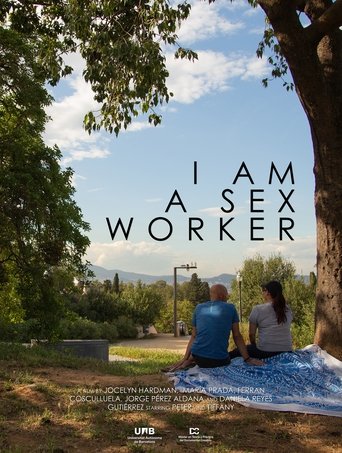
Two foreigners meet in Barcelona and become friends after discovering that they both work in the same business: sex work. Their conversations offer an insider’s view into the differences between women and men in the sex industry.
Chronicling the only 10 men in the history of college and pro football to win the Heisman Trophy and be enshrined into the Pro Football Hall of Fame; an achievement so rare, "More men have walked on the moon."
From a prolific career in film and television, Anton Yelchin left an indelible legacy as an actor. Through his journals and other writings, his photography, the original music he wrote, and interviews with his family, friends, and colleagues, this film looks not just at Anton's impressive career, but at a broader portrait of the man.
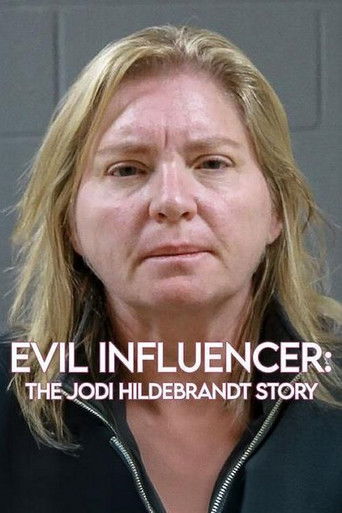
Unravel the case of Utah therapist Jodi Hildebrandt, whose child abuse arrest with parenting YouTuber Ruby Franke exposed a twisted tale of manipulation.
In her own words, through personal video and diaries, Pamela Anderson shares the story of her rise to fame, rocky romances and infamous sex tape scandal.
The life and career of one of comedy's most inimitable modern voices, Mr. Gilbert Gottfried.
Through deeply personal interviews with her siblings and an examination of the photographs, letters, and belongings left behind, Mariska assembles a new portrait of her mother Jayne Mansfield, an extraordinary and complex woman.
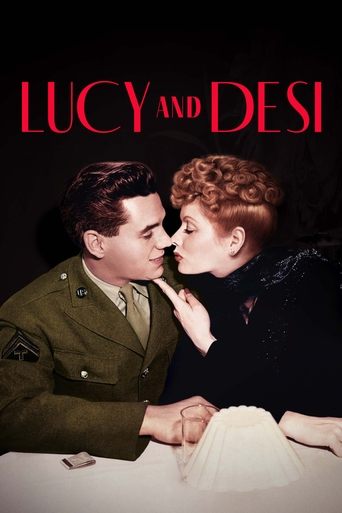
Explore the unlikely partnership and enduring legacy of one of the most prolific power couples in entertainment history. Lucille Ball and Desi Arnaz risked everything to be together.
The story of artist Lil Peep from his birth in Long Island and meteoric rise as a genre blending pop star & style icon, to his death due to an accidental opioid overdose in Arizona at just 21 years of age.
His love of film began as an escape from a rocky childhood. From underdog to Hollywood legend, Sylvester Stallone tells his story in this documentary.
A funny, intimate and heartbreaking portrait of one of the world’s most beloved and inventive comedians, Robin Williams, told largely through his own words. Celebrates what he brought to comedy and to the culture at large, from the wild days of late-1970s L.A. to his death in 2014.
Using previously unheard audiotapes recorded shortly after John Belushi’s death, director R.J. Cutler’s documentary feature examines the too-short life of the once-in-a-generation talent who captured the hearts and funny bones of devoted audiences.
Vulgar, taunting texts blow up the phones of a teen and her boyfriend. Who's sending them — and why? This twisty documentary reveals the shocking answer.
A string of threatening emails escalates into a revenge plot involving a newly married US marshal and his ex-girlfriend.
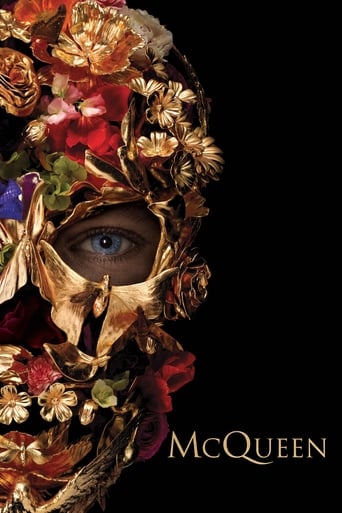
Alexander McQueen's rags-to-riches story is a modern-day fairy tale, laced with the gothic. Mirroring the savage beauty, boldness and vivacity of his design, this documentary is an intimate revelation of McQueen's own world, both tortured and inspired, which celebrates a radical and mesmerizing genius of profound influence.
A night of drunken chaos rocks a quiet Dutch town in this shocking documentary about a teen's birthday invite that accidentally went viral on Facebook.
A portrait of the life and career of Robert Downey Sr. (1936-2021), the visionary and fearless US filmmaker — father of actor Robert Downey Jr. — who in the sixties and seventies laid the foundations for countercultural comedy.
When Allied forces liberated the Nazi concentration camps in 1944-45, their terrible discoveries were recorded by army and newsreel cameramen, revealing for the first time the full horror of what had happened. Making use of British, Soviet and American footage, the Ministry of Information’s Sidney Bernstein (later founder of Granada Television) aimed to create a documentary that would provide lasting, undeniable evidence of the Nazis’ unspeakable crimes. He commissioned a wealth of British talent, including editor Stewart McAllister, writer and future cabinet minister Richard Crossman – and, as treatment advisor, his friend Alfred Hitchcock. Yet, despite initial support from the British and US Governments, the film was shelved, and only now, 70 years on, has it been restored and completed by Imperial War Museums under its original title "German Concentration Camps Factual Survey".
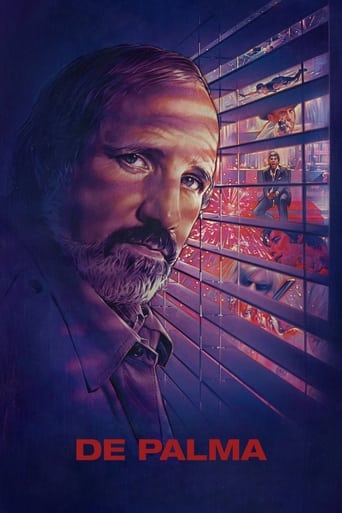
An intimate conversation between filmmakers, chronicling De Palma’s 55-year career, his life, and his filmmaking process, with revealing anecdotes and, of course, a wealth of film clips.
Journey into the extraordinary world of "The Witcher" — from casting the roles to Jaskier's catchy song — in this behind-the-scenes look at the series.
In a hypercompetitive world, drugs like Adderall offer students, athletes, coders and others a way to do more -- faster and better. But at what cost?