
"Ever go down a google wormhole?"
The funniest thing happened to me the other day...
Social & External
Self
An expedition to a peculiar small town where even the swans swim backwards and water in puddles is antimatter.
H(o)me(o)pa®t(h)y is a home entertainment healing system based on Homoeopathic medicine which one can at least to a certain extent autonomously manage as first aid tool, if you are skilled enough. As an allusion to David Cronenberg's Videodrome where the president of a trashy TV channel, Max Renn is desperate for new programming to attract viewers by establishing a new TV show dedicated to torture and punishment, H(o)me(o)pa®t(h)y instead is based on joy and healing. But will there be an overdose of globules? Insert 1 globules and start your solo home party! Cure yourself on so many occasions and relive a full relief. Your own H(o)me(o)pa®t(h)y kit is now available. Don't worry, be homoeopathic!
A ritual of grids, reflections and chasms; a complete state of entropy; a space that devours itself; a vertigo that destroys the gravity of the Earth; a trap that captures us inside the voids of the screen of light: «That blank arena wherein converge at once the hundred spaces» (Hollis Frampton).
Deaf artist Seo Hye Lee gives new subtitles to a selection of archive films about pottery, ones which playfully examine the disparity between how people with different levels of hearing experience art.
In Junior War, a throng of highschoolers congregate at night for a party in the woods sometime in the year 2000. A band plays, the kids get drunk, the boys and girls tepidly flirt, and groups deploy into cars for the purpose of destroying mailboxes, tee-peeing houses, breaking lawn ornaments, and sparring with the police. The film is composed entirely of footage Trecartin took during his senior year of high school in exurban Ohio; as such, it baits the viewer with genealogical significance.
A memorial mourns as time passes
The Karikpo masquerade - a traditional dance of the Ogoni tribe - is transposed onto the remnants of a faded oil industry programme in the Niger delta.

In the present work, the artists appears lying on his back, his eyes mostly closed, dreamingly listening to a walkman that plays, a recording of 'The Best of Lou Reed and the Velvet Underground'. The artist can hear the music through his earphones, but as viewers we are only privy to the sound of his voice that whispers the melody. As we listen to the hypnotic interpretion of the familiar songs - as emblematic for pop music history as 'Psycho' is for film - we are forced to mentally 'reconstruct' the remaining orchestration, instrumentation and vocals. We must attempt to reassemble something we already know to be a fact by negotiating the sticky mess of interpretation, meaning, and memory.
In his book "1984", George Orwell saw the television of the future as a control instrument in the hands of Big Brother. Right at the start of the much-anticipated Orwellian year, Paik and Co. were keen to demonstrate satellite TV's ability to serve positive ends-- Namely, the intercontinental exchange of culture, combining both highbrow and entertainment elements. A live broadcast shared between WNET TV in New York and the Centre Pompidou in Paris, linked up with broadcasters in Germany and South Korea, reached a worldwide audience of over 10 or even 25 million (including the later repeat transmissions).
The innovative and influential British filmmaker Derek Jarman was invited to direct the Pet Shop Boys' 1989 tour. This film is a series of iconoclastic images he created for the background projections. Stunning, specially shot sequences (featuring actors, the Pet Shop Boys, and friends of Jarman) contrast with documentary montages of nature, all skillfully edited to music tracks.
IDFA and Canadian filmmaker Peter Wintonick had a close relationship for decades. He was a hard worker and often far from home, visiting festivals around the world. In 2013, he died after a short illness. His daughter Mira was left behind with a whole lot of questions, and a box full of videotapes that Wintonick shot for his Utopia project. She resolved to investigate what sort of film he envisaged, and to complete it for him.
Today, analogue video is attractive primarily thanks to the distinctive aesthetic quality of its pixelated image and raster errors. But for Czech artists who first explored the possibilities offered by video art in the late 1980s, this medium represented a path towards freedom. Through a portrait of her grandfather Radek Pilař, one of the pioneers of Czech video art, the director explores her own legacy of imperative creative fascination. Her film’s main story, i.e., the process of reconstructing the 1989 exhibition Video Day, contrasts this enchantment with life in the final days of the totalitarian regime, which different sharply with the adventures of those who decided to emigrate – whom the filmmaker also visits in order to discover forgotten works, get to know their creators, and re-establish broken ties.
Flooded McDonald's is a new film work in which a convincing life-size replica of the interior of a McDonald's burger bar, without any customers or staff present, gradually floods with water.
After concluding the now-legendary public access TV series, The Pain Factory, Michael Nine embarked on a new and more subversive public access endeavor: a collaboration with Scott Arford called Fuck TV. Whereas The Pain Factory predominantly revolved around experimental music performances, Fuck TV was a comprehensive and experiential audio-visual presentation. Aired to a passive and unsuspecting audience on San Francisco’s public access channel from 1997 to 1998, each episode of Fuck TV was dedicated to a specific topic, combining video collage and cut-up techniques set to a harsh electronic soundtrack. The resultant overload of processed imagery and visceral sound was unlike anything presented on television before or since. EPISODES: Yule Bible, Cults, Riots, Animals, Executions, Static, Media, Haterella (edited version), Self Annihilation Live, Electricity.
A film exploration of the work and aesthetic concepts of Yayoi Kusama, painter, sculptor, and environmentalist, conceived in terms of an intense emotional experience with metaphysical overtones, an extension of my ultimate interest in a total fusion of the arts in a spirit of mutual collaboration. —Jud Yalkut
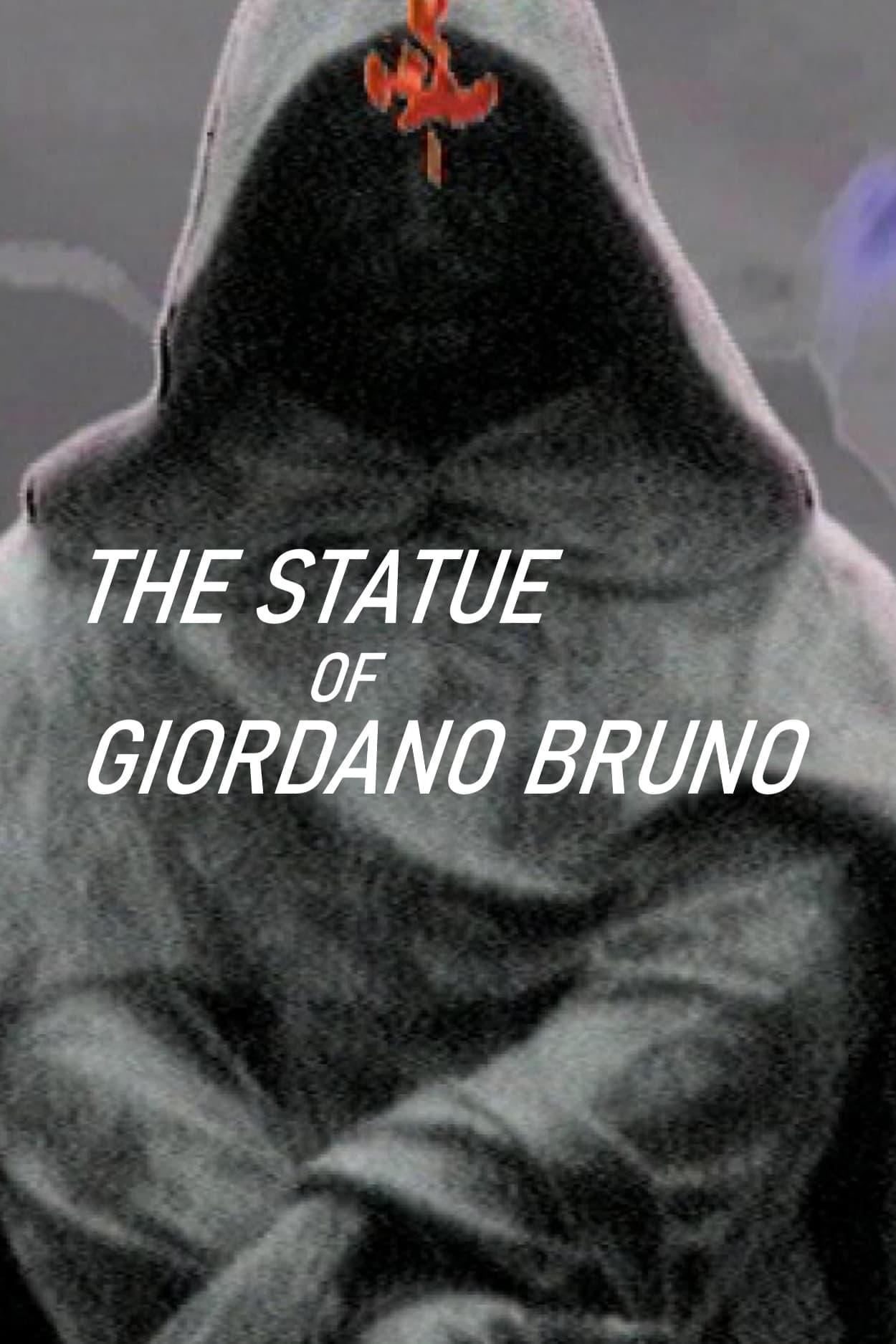
This film was made out of the capture of a live animation performance presented in Rome in January 2005 by Pierre Hébert and the musician Bob Ostertag. It is based on live action shooting done that same afternoon on the Campo dei Fiori where the philosopher Giordano Bruno was burned by the Inquisition in 1600. A commemorative statue was erected in the 19th century, that somberly dominate the market held everyday on the piazza. The film is about the resurgence of the past in this place where normal daily activities go on imperturbably. The capture of the performance was reworked, shortened and complemented with more studio performances.
Ted Hughes's 1993 novel The Iron Woman is the springboard for this multi-media project by Mikhail Karikis. The video section of the installation features seven-year-olds from Mayflower Primary School in East London discussing the novel's environmental themes.
The Machine That Killed Bad People is about the cultural and political history of the Philippines leading up to the overthrow of President Ferdinand Marcos in 1986. It also addresses the role of electronic media in the struggle for power, and more broadly, American intervention in the Third World. Using a structure that emulates the way television news programs construct meaning through fragmentation, the tape interweaves clips of Filipino activists and reporters, a fictional television anchorwoman and correspondent, commentary by independent filmmaker Trinh T. Minh-ha, Fagin's off-camera voice and script, and anonymous excerpts from commercial television.
An auto-documentary about a disenfranchised Everyman and his struggle to re-integrate himself into society. He fails and turns to crime.
Poet and artist Vito Acconci points his finger towards the camera and his own reflection in an offscreen video monitor.
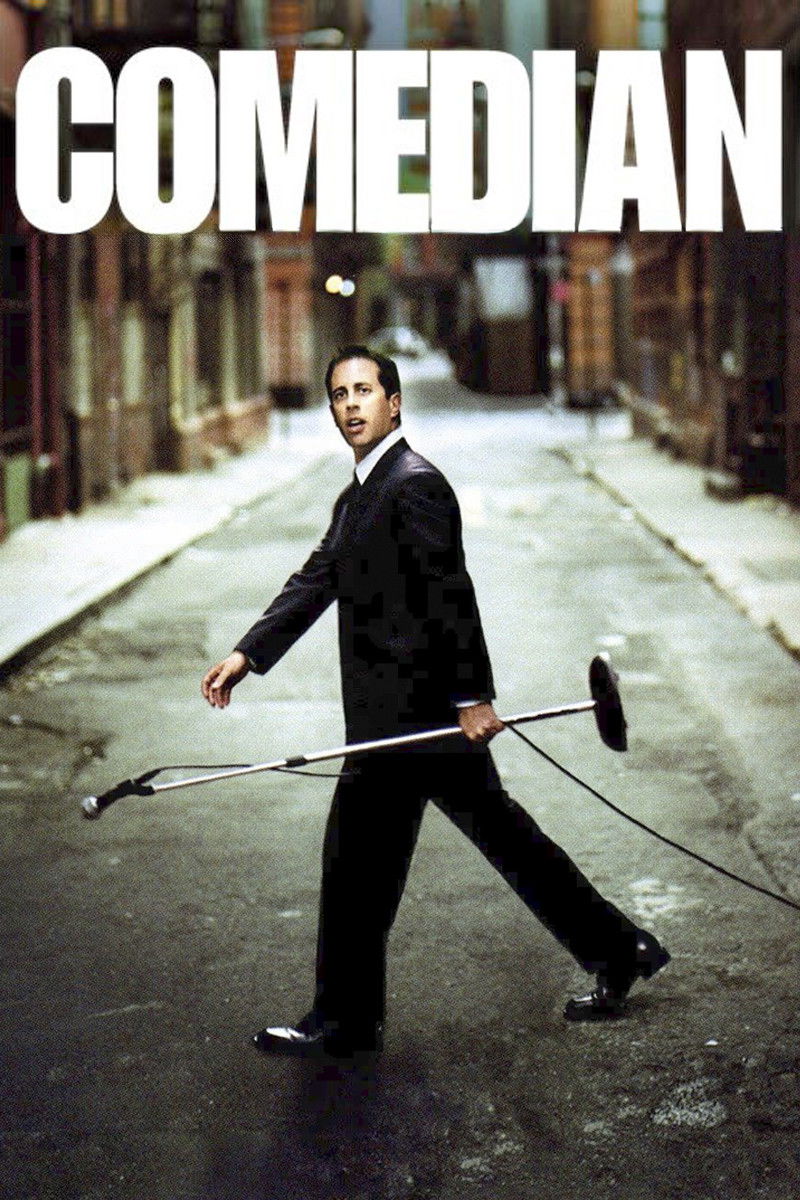
A look at the work of two stand-up comics, Jerry Seinfeld and a lesser-known newcomer, detailing the effort and frustration behind putting together a successful act and career while living a life on the road.
Offbeat documentarian Chris Smith provides a behind-the-scenes look at how Jim Carrey adopted the persona of idiosyncratic comedian Andy Kaufman on the set of Man on the Moon.
Mater the tow truck travels from country to country as he retells his infamous but unbelievable stories.
An aspiring young filmmaker gets involved with an eccentric gangster for the financing of his first film.
When the denizens of Littlehampton – including conservative Edith – begin receiving letters full of hilarious profanities, rowdy Irish migrant Rose is charged with the crime. Suspecting something amiss, the town's women band together to investigate.
The film documents, in an often dramatic and humorous fashion, Gray's investigations into alternative medicine for an eye condition (Macular pucker) he had developed.
An inspiring, triumphant and wickedly funny portrait of one of comedy’s most enigmatic and important figures, CALL ME LUCKY tells the story of Barry Crimmins, a beer-swilling, politically outspoken and whip-smart comic whose efforts in the 70s and 80s fostered the talents of the next generation of standup comedians. But beneath Crimmins’ gruff, hard-drinking, curmudgeonly persona lay an undercurrent of rage stemming from his long-suppressed and horrific abuse as a child – a rage that eventually found its way out of the comedy clubs and television shows and into the political arena.
When Day, a sunny fellow, encounters Night, a stranger of distinctly darker moods, sparks fly! Day and Night are frightened and suspicious of each other at first, and quickly get off on the wrong foot. But as they discover each other's unique qualities--and come to realize that each of them offers a different window onto the same world-the friendship helps both to gain a new perspective.
A burned-out paramedic tries to survive his last 24 hours on the job while training a new recruit.
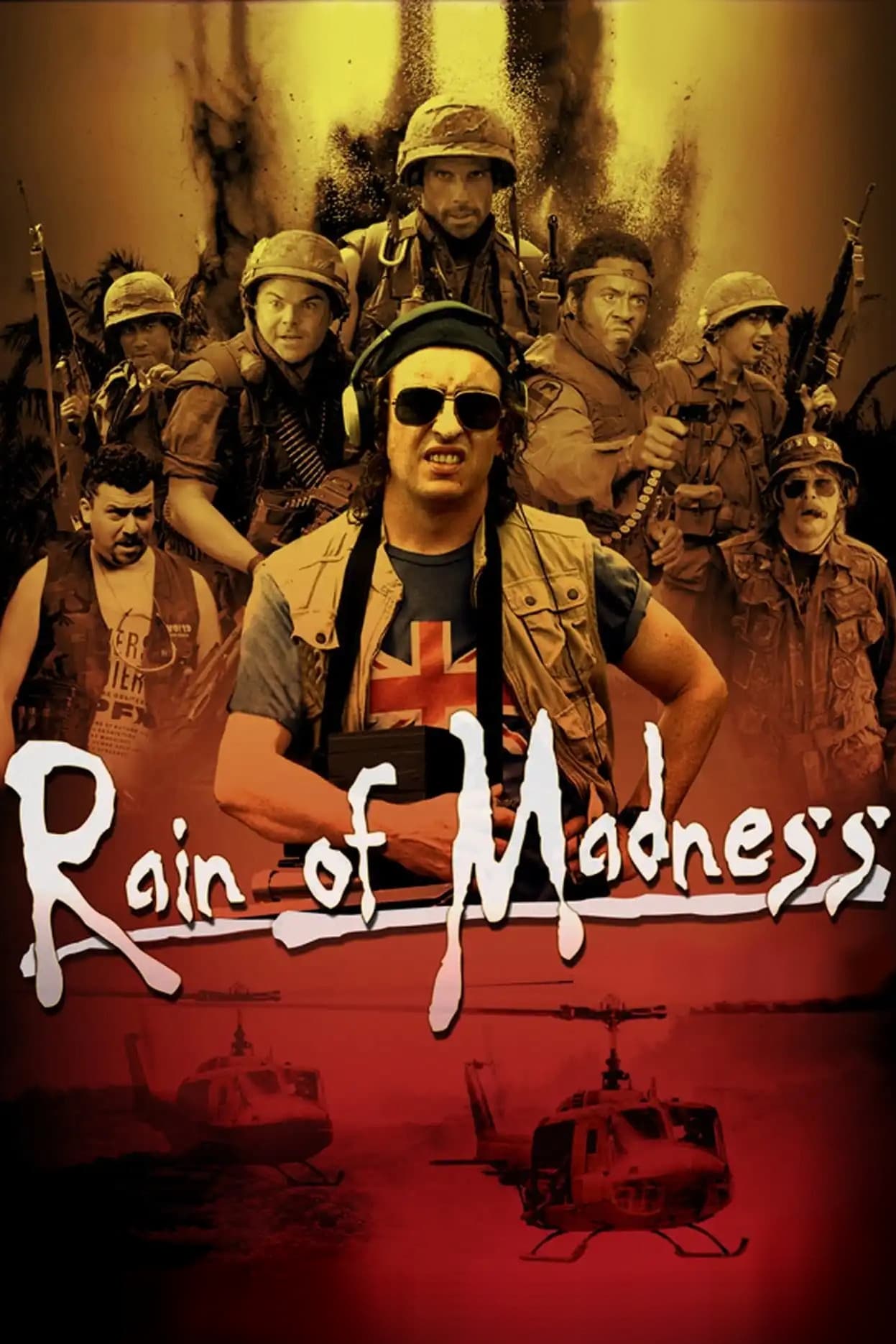
A behind-the-scenes mockumentary of Tropic Thunder.
When the mystery-solving musician Foxxy Love notices she and her fellow housemates can curse without being bleeped—something they've never been able to do before—she realizes their show has been canceled. Determined to get back on the air, the gang travels to Make-A-Point-Land in order to get a point (and get back on the air).
Donald is leading a scout troop consisting of his nephews on a hike in the woods. Donald isn't nearly the expert on the woods that he thinks he is, much to the amusement of the boys. In a bid for sympathy, he douses himself in catsup and fakes injury; the boys bandage him so thoroughly he can't see, and he stumbles into a pot of honey, and is soon getting all too much attention from a bear.
The deleted scenes and additional stunts and sketches that originally were not presented in the original series.
An exposé of comic proportions that only Chris Rock could pull off, GOOD HAIR visits beauty salons and hairstyling battles, scientific laboratories and Indian temples to explore the way hairstyles impact the activities, pocketbooks, sexual relationships, and self-esteem of the black community.
As their marriage quietly unravels, Alex faces middle age and an impending divorce, seeking new purpose in the New York comedy scene while Tess confronts the sacrifices she made for their family—forcing them to navigate co-parenting, identity, and whether love can take a new form.
Jerry Seinfeld returns to the club that gave him his start in the 1970s, mixing iconic jokes with stories from his childhood and early days in comedy.
In a life full of triumph and failure, "National Lampoon" co-founder Doug Kenney built a comedy empire, molding pop culture in the 1970s.
Lightning McQueen and Mater are driving in Radiator Springs and drive past Red, who is hosing some plants near Stanley. Mater tells Lightning that he used to be a firetruck, but Lightning doesn't believe Mater.
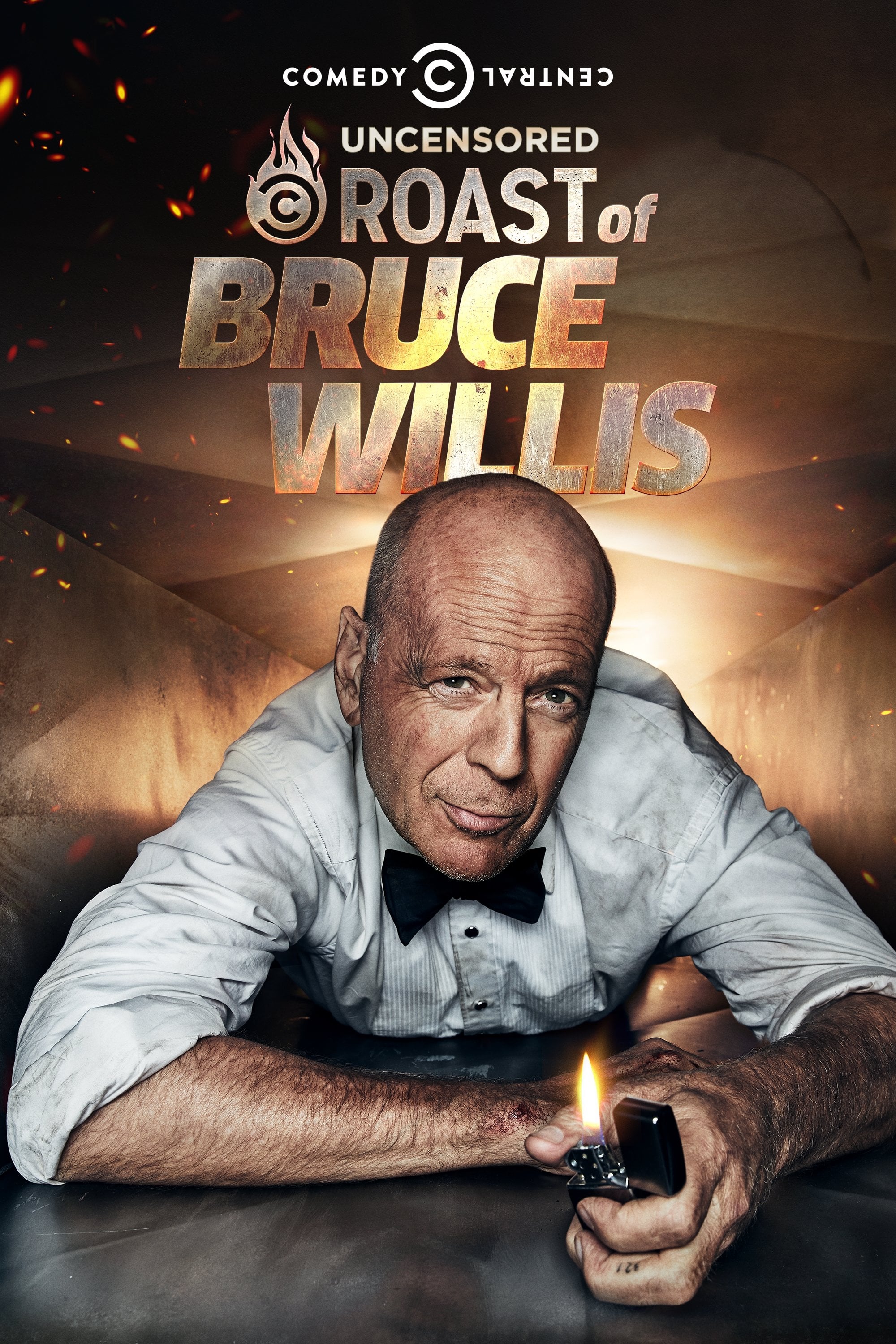
Offensive lines. Full-contact comedy. Kevin Hart hosts this all-star roast of NFL legend Tom Brady.
RJ the raccoon produces a nature video, which turns out to be an excuse for him and the porcupine children to play pranks on Hammy the squirrel.