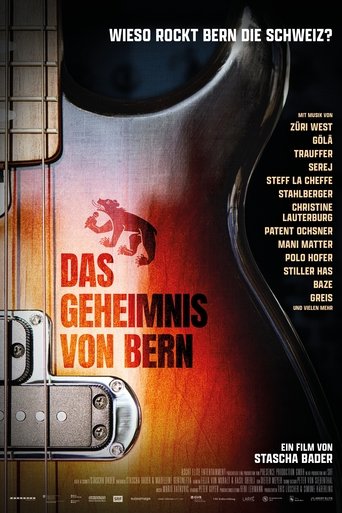
How is our dialect faring in the globalized age? When the "railroad age" began 160 years ago, Switzerland feared that High German would supplant the dialect. The opposite has happened. The dialect persists and continues to blossom.
Social & External
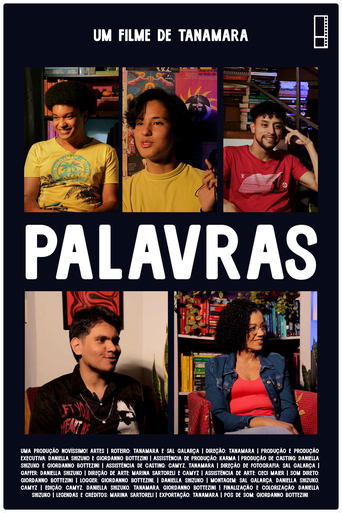
WORDS FROM HOME is a poetic documentary that explores the kinds of affection and identity in the portuguese language spoken in Brazil. Through migrants' stories and their reflections, the movie reveals how expressions, accents and memories form emotional and cultural bonds, showing how speaking connects us, differentiates us and, above all, brings us closer together.
The filmmaker traces the loss of her ancestral language over three generations of her family, and her own desire to recover it.
A TV-hour length documentary film depicting the relationship between language, culture, place, music, tradition, and magic on an active volcano, in the Pacific nation of Vanuatu, on the island of Ambrym.
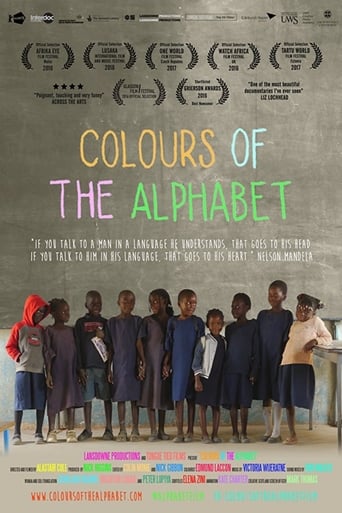
It is estimated that 40% of the world’s population lack the opportunity to be educated in their own language. In Colours of the Alphabet we get an insight into the challenges this poses as we follow a group of first graders in Zambia – a country with 72 local languages where education is primarily offered in English.
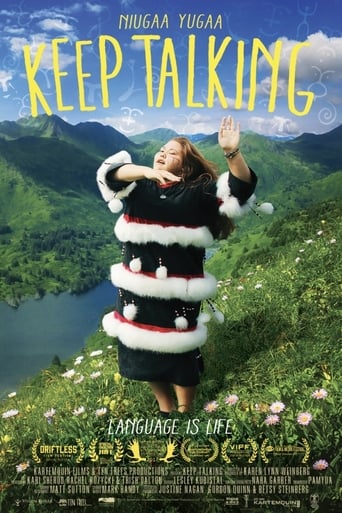
Three Alaska Native women work to save their endangered language, Kodiak Alutiiq, and ensure the future of their culture while confronting their personal demons. With just 41 fluent Native speakers remaining, mostly Elders, some estimate their language could die out within ten years. The small community travels to a remote Island, where a language immersion experiment unfolds with the remaining fluent Elders. Young camper Sadie, an at-risk 13 year old learner and budding Alutiiq dancer, is inspired and gains strength through her work with the teachers. Yet PTSD and politics loom large as the elders, teachers, and students try to continue the difficult task of language revitalization over the next five years.
This short documentary examines an innovative educational program developed by John and Gerti Murdoch to teach Cree children their language via Cree folklore, photographs, artifacts, and books that were written and printed in the community. Made as part of the NFB’s groundbreaking Challenge for Change series, Cree Way shows that local control of the education curriculum has a place in Indigenous communities.
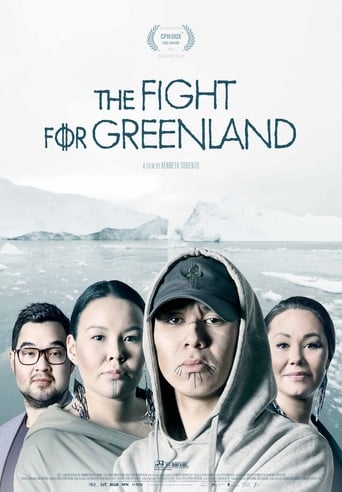
The world's largest island has been part of Denmark since 1721, but a significant majority of the 56.000 inhabitants now want independence. They feel their culture and language is threatened and is the main reason for the many suicides among young people. But the Danish speaking Greenlanders feel discriminated and want to keep the ties to Denmark. The film follows four strong young Greenlanders, who each in their own way insist on taking responsibility for the future of their country. The documentary explores the difficult balance between the right to self-determination and xenophobic nationalism. Between traditional culture and globalization.
CREE CODE TALKER reveals the role of Canadian Cree code talker Charles 'Checker' Tomkins during the Second World War. Digging deep into the US archives it depicts the true story of Charles' involvement with the US Air Force and the development of the code talkers communication system, which was used to transmit crucial military communications, using the Cree language as a vital secret weapon in combat.
She was born in a cave, more than 60 years ago. Now she lives in a village, with many children and grandchildren to look after. Sometimes, she dreams of her dead mother calling her home – to the cave.
At what point in our evolution did we start talking? To paint, play music and travel? When did we build our first imaginary worlds? When was the need to believe born? In short, where, when and how did the contours of man's essence take shape? Going back to the origins of language, art and writing, this documentary by Emmanuel Leconte and Franck Guérin traces the fantastic cultural epic of thought. Although animals also dream, today only our species has the power to recount its dreams, transforming them into stories, narratives and destinies... But where does this astonishing human faculty come from?
The Cherokee language is deeply tied to Cherokee identity; yet generations of assimilation efforts by the U.S. government and anti-Indigenous stigmas have forced the Tri-Council of Cherokee tribes to declare a State of Emergency for the language in 2019. While there are 430,000 Cherokee citizens in the three federally recognized tribes, fewer than an estimated 2,000 fluent speakers remain—the majority of whom are elderly. The covid pandemic has unfortunately hastened the course. Language activists, artists, and the youth must now lead the charge of urgent radical revitalization efforts to help save the language from the brink of extinction.
The documentary proposes a unique meeting with the speakers of several indigenous and inuit languages of Quebec – all threatened with extinction. The film starts with the discovery of these unsung tongues through listening to the daily life of those who still speak them today. Buttressed by an exploration and creation of archives, the film allows us to better understand the musicality of these languages and reveals the cultural and human importance of these venerable oral traditions by nourishing a collective reflection on the consequences of their disappearance.
Documentary by Jean-Pierre Gorin about twin girls who spontaneously developed their own unique language as children.
The œuvre of poet Raffaello Baldini (1924-2005) through the words of those who knew him, the poems he himself read, the fragments of his monologues, his beloved Romagna landscapes.
In the small community of Älvdalen in northern Dalarna, Sweden, the unique language Elfdalian (Älvdalska) is spoken. This documentary follows Ing-Marie's personal story about how it is and has been to live with the Elfdalian language.
Three images of a person running in the void through the movement of speed and abstract images
Fifteen images of a camera running in a park and in obscurity searching the space of light through distorsion and the sensory of rapid motion.
Twenty images of a camera running next to a chemical platform and capturing abstract light throught improvised gestures and asymmetrical motion
Director John Scott crafts this look at the curious life of his longtime friend John Stiles — an aspiring writer and former telephone marketer whose midlife meltdown worked wonders for his career. Stiles was down on his luck working as a telemarketer in Toronto when, one day, he threw out his pre-written script and began speaking to customers in curious character voices inspired by his upbringing in Nova Scotia. That month, Stiles made the most sales of any employee and earned a free DVD player for his efforts. In the following years, Stiles threw caution to the wind, venturing out to local open mic nights — where he developed a substantial cult following — and later publishing a pair of books with Insomniac press.
A story of a small town in southern Poland, residents of which immigrated to Poland in the 13th century from the present territories of the Netherlands and Belgium. Some of the residents still speak their ancient language.