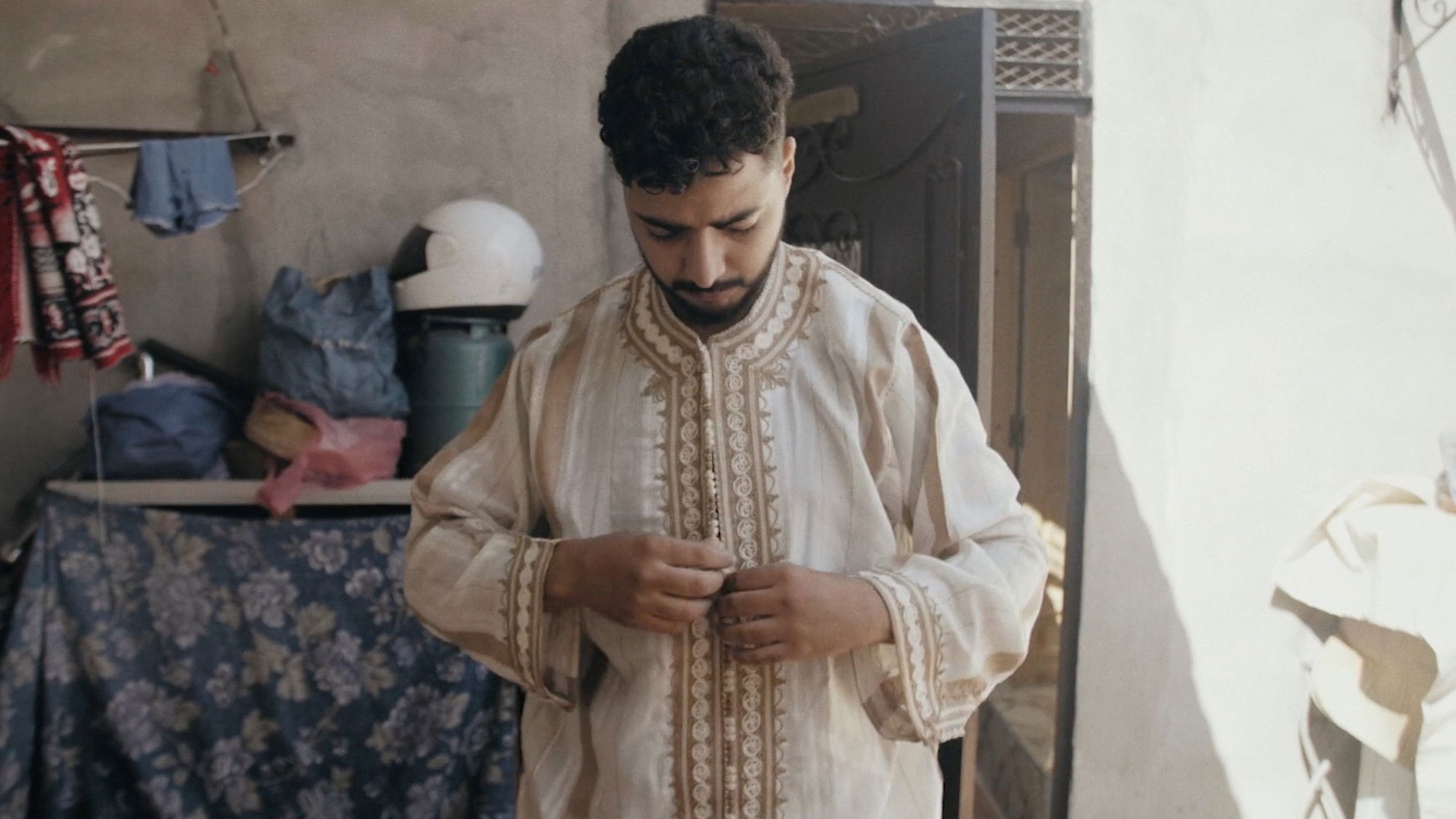
Samir longs for love and struggles to find prospects in a land of limited opportunities. He believes in a better future far away.
Social & External
Documentary that shows the changing attitude towards immigrant labor in The Netherlands. The documentary follows three immigrants that arrived in Holland 30 years ago to work in a bakery.
Road documentary that delves into the musical and religious expressions of sub-Saharan Africa. Through Mauritania and Mali, the film documents the lives of Dogon, griots, musicians and instrument makers who, through oral accounts, explain why music plays a fundamental role in the socio-religious organization of peoples. The film culminates its search with the recording of the performance of the traditional Dogon mask dance, in Begnematou, a small village lost in the desert.
An exposed Cumbrian village by the sea surrounded by windmills, fields and factories provides a striking setting for this fairy tale of young love and the loss of childhood innocence. Over one year, the film follows the 9 year-old Laura Anne and her 11 year-old cousin, Steven as they move towards the end of their childhoods. The narrative is told in rhyme by the young female protagonist. As time passes and the seasons change, feelings and memories from all our childhoods are evoked and we wonder what time will make of Laura Anne and Steven.
During the oppressive reign of Moroccan King Hassan II in the 70s and 80s (Years of Lead), many dissidents went missing. After the throning of a new king, a truth commission was formed in the 2000's. Families of the missing speak.
Yann Arthus-Bertrand flew over Morocco with his cameras and asked the journalist Ali Baddou to write and record the comment.
Shot on location in a very remote part of southern Morocco, this short film looks into the amazing craftsmanship and dedication of the Berber rug weavers in the region. These incredibly talented people are part of an ancient tradition that still employs centuries-old techniques to produce beautiful and unique handwoven rugs.
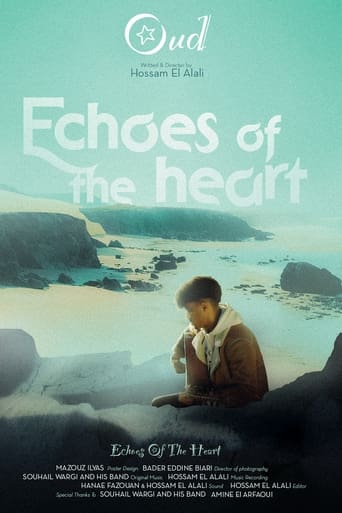
ECHOES OF THE HEART IS THE FIRST SHORT FILM OF ECHOES TRILOGY THAT FOLLOWS SOUHAIL'S MUSIC PASSION IN PLAYING OUD IN A SMALL CITY.
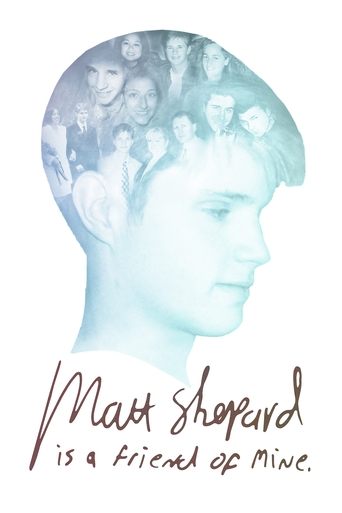
An intimate portrait of Matthew Shepard, the gay young man murdered in one of the most notorious hate crimes in U.S. history. Framed through a personal lens, it's the story of loss, love, and courage in the face of unspeakable tragedy.
The young farmer Aalami leaves his family to find work elsewhere. He gets to know the country and its people, customs and traditions at Küste in North Africa: Market life in Tetuan, the art of craftsmanship, the life of the Moors, dances and festivities in honour of the caliph, white mosques, the call of the muezzin of the minaret and the music of the shepherd flutes. Aalami also follows Franco's call and flies from Morocco to Spain to fight at Bürgerkrieg. In the end Aalami comes back to his wife and children.
Following the death of Amina Filali, a 16 year-old girl who killed herself after she was allegedly forced to marry the man who raped her, a young woman carries a personal investigation into the representation and perception of rape in Morocco. Here rapists are offered to marry their victims as a means to save the "honour" of the family. By liberating the voices of these victims, 475 : Break the Silence gives an unprecedented view of family, the deceit of love, relationships, marriage and honour in urban deprived areas of a country seeking to find its identity between modernity and tradition.
Four women are on an existential journey in Morocco, connecting with local women from all walks of life bonding in sisterhood, and share their common quest for empowerment.
A seagull, a dog, a child, a call to prayer; Looking through a window, the corridor of a train, the wall of a medina; Everyday life is momentarily paused through the eyes of a stranger in an unknown land.
A humorous observation in Barcelona’s immigrant neighbourhood El Raval. Four barber shops, four places of remembrance, strange time and space capsules inhabited by people who left their home to find a better one, while the Spaniards are about to leave their own country themselves.
On the border, the line as principle of property and belonging reaches an extreme dimension where it physically defines the sphere of its relations. Those who transgress it reconstruct these imaginary lines on a daily basis, redefining the traditional geography and occupying the non-spaces where others live in a temporary form of existence. These others, the non-citizens, are phantasmtic, exchangeable parts of a flexible market. Made invisible, they are permanently controlled persons. Under the pretext of a greater civilian security, they are kept clear from the public spaces reserved for the citizens with rights and pushed into non-public spaces, which are run by state and military surveillance, multinational operations servicing a European market and non-governmental organisations.
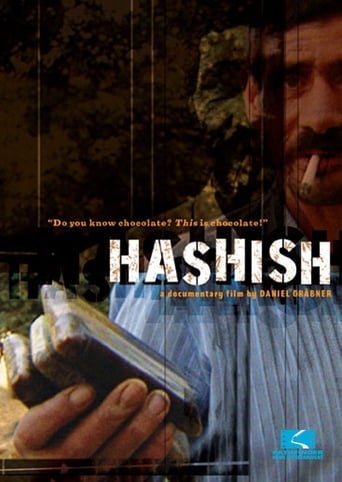
A small village high up in the mountains of Ketama, Northern Morocco. The life of the people here has been shaped by the drug hashish for centuries. Hashish as daily work, hash as exchange currency, hashish as business, hashish as basis and philosophy of a social system, hashish as medium for dreams and hashish as reason for stagnation.
This video research is based on a trip to Morocco in July 2005, during which the director documented irregular migration transiting through Morocco, as well as their control. This geographical project focuses on the main migratory axes: Oujda, entry point for migrants in Morocco; Tangier, from where migrants can try to cross the strait or the fences of Ceuta; Rabat, organization space; and Laayoune, the closest point to the Canaries. The video questions the nature and meaning of these extraterritorial enclaves that structure the Moroccan territory.