Social & External
Imagine a biology lab filled by a 40-foot specimen, ready for dissection. The creature has skin like a crocodile, eyes the size of softballs and intestines large enough to fit your arm. T. rex Autopsy will go inside a full-size T. rex for the first time ever to reveal how the 65-million-year-old beast may have lived. Using cutting-edge special effects techniques, and in collaboration with esteemed veterinary surgeons, anatomists and paleontologists, T. rex Autopsy will build the world’s first full-size anatomically precise Tyrannosaurus rex, based on the very latest research and findings. The massive monster will be lifelike inside and out, giving scientists the chance to touch it, smell it, scan it, x-ray it and cut it open from head to toe.
Through the power of IMAX 3D, experience a wondrous adventure from the dinosaur age. Join Julie, an imaginative young woman, in a unique voyage through time and space. Explore an amazing underwater universe inhabited by larger-than-life creatures which were ruling the seas before dinosaurs conquered the earth. See science come alive in an entertaining manner and get ready for a face-to-face encounter with the T-Rex of the seas!
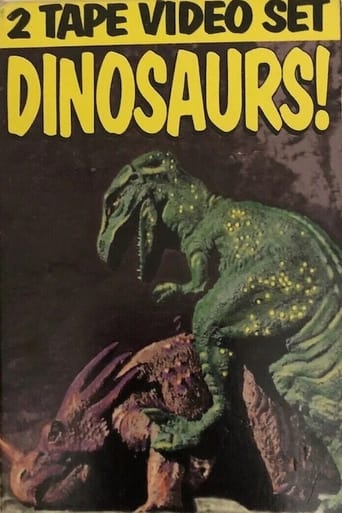
Groundbreaking claymation from the master of the medium, showcasing Vinton's pioneering techniques that would define stop-motion animation for decades. A prehistoric adventure that demonstrates why Vinton earned his reputation as the king of clay animation. Was later expanded to the longform documentary Dinosaurs!
David Attenborough searches for the identities of preserved creatures inside a piece of Baltic amber that was given to him by his adoptive sister when he was twelve years old.
Made in the sunset years of Paul Bowles’ life, the film sees the eccentric author and composer reminisce on how he ended up in Morocco.
While dinosaurs may have been some of the mightiest creatures ever to have walked the earth, they also could have been among the most bizarre. With extreme, exaggerated body parts, some predators were loaded with outlandish or disproportionately sized appendages. Join world-renowned paleontologists and travel the globe to unearth some of the lesser-known but most surprising members of the dinosaur family: Mamenchisaurus, whose neck alone was longer than the rest of its body; Chasmosaurus, adorned with a fashionable crown of frilly spikes to attract the eyes of potential suitors; Spinosaurus, with massive extensions from its vertebrae that could have supported a sail or a hump; and Parasaurolophus, whose tube-like head crest may look odd to us, but was a mating magnet back in the day. Why did these animals ever adopt such strange appendages? What was their purpose - and why did these evolutionary changes die out?
The hunt for a mythic animal once thought to have been extinct for 65 million years: the coelacanth. It can be found 120 metres beneath the ocean off the wild coast of South Africa. French scientists and South African scientists teamed up with experienced Trimix divers, including Peter Timm, who discovered the coelacanths in Sodwana Bay in 2000 and award-winning underwater photographer Mr Laurent Ballesta and his advanced technical dive team to bring you this eye-opening documentary. Click on the play button above to watch a preview.
During the 2020 pandemic summer, El Colegio de la Desextinción infiltrated into the holidays of four Divine Caste’s descendants. This elite built its wealth on slavery in the sisal plantations of Yucatán, Mexico, at the end of the 19th and beginning of the 20th century. Every year these families move to their opulent summer houses at Chicxulub Puerto, built at the same place where the asteroid that killed the dinosaurs hit. In these apocalyptic beaches, seducers of asteroids and conquistadors, we proposed the young heirs to write and star in a film about Chicxulub’s crater, in which they staged their entrepreneur fantasies.This documentary is the result of the political unconsciousness of this peninsular ethnic group.
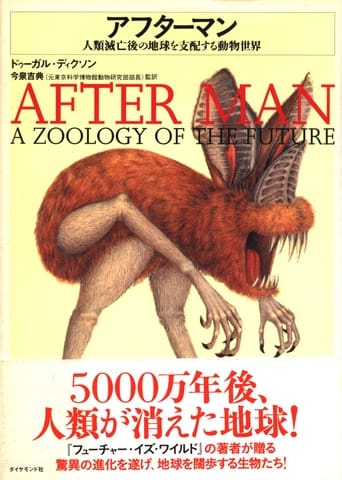
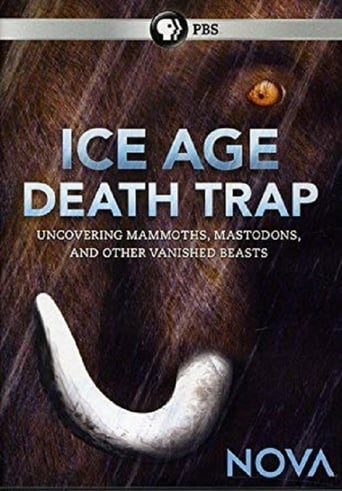
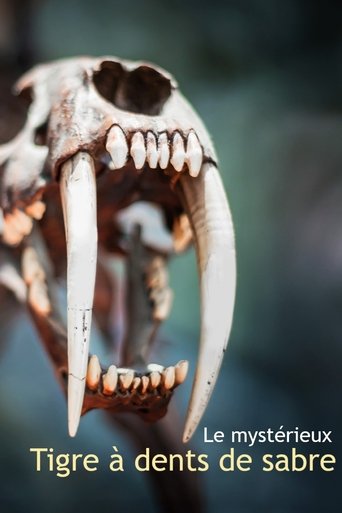
A documentary showcasing the world's many different animal species, both past and present.
In Morocco, new excavations on the site of Jebel Irhoud upset the generally accepted view of the dating of the appearance of man.
When Lena and Ulli start the engine of their old Land Rover, Lady Terés, they have a plan: to drive from Hamburg to South Africa in six months. What they don't know yet is that they won't ever get there. Two totally different characters, jammed together in two square meters of space for almost two years, they experience what it really means to travel: leaving your comfort zone for good.
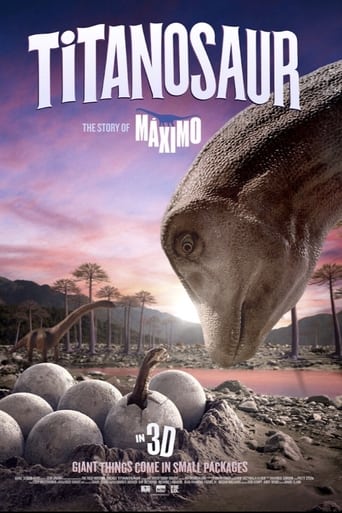
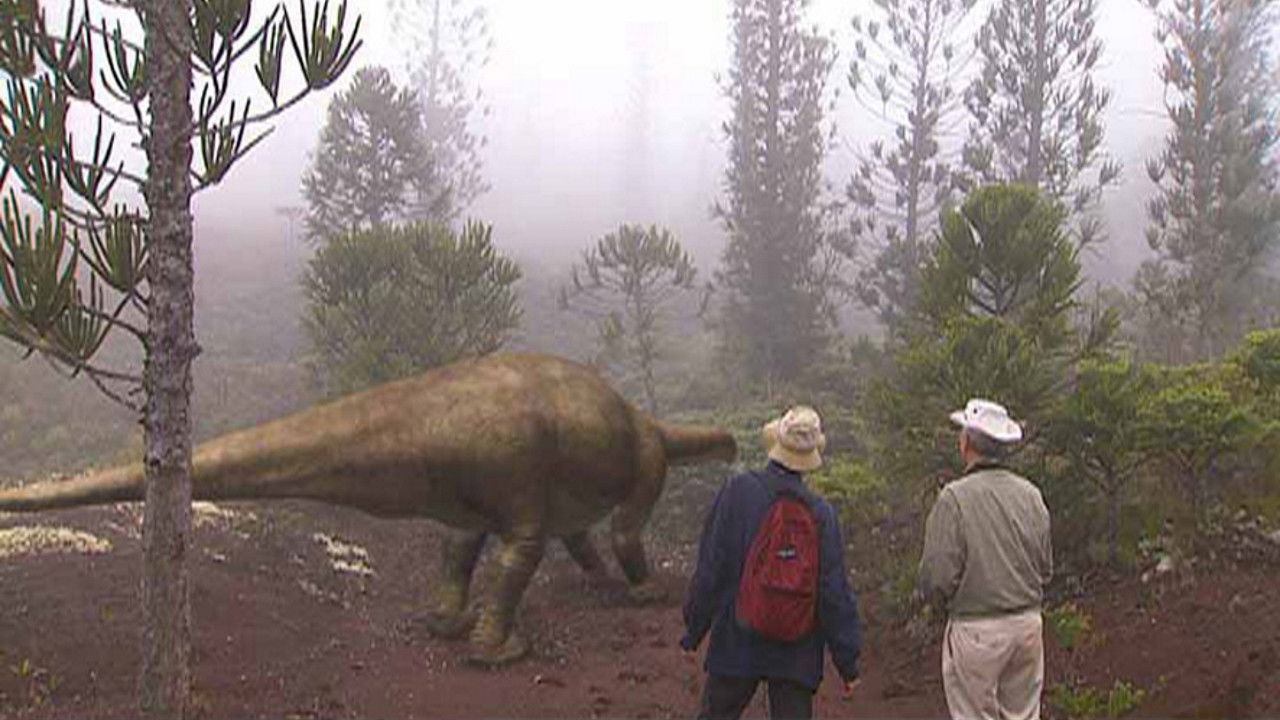
David Attenborough tells the story of the discovery and reconstruction in Argentina of the world's largest-known dinosaur, a brand new species of titanosaur.
David Attenborough returns to the island of Madagascar on a very personal quest. In 1960 he visited the island to film one of his first ever wildlife series, Zoo Quest. Whilst he was there, he acquired a giant egg. It was the egg of an extinct bird known as the 'elephant bird' - the largest bird that ever lived. It has been one of his most treasured possessions ever since. Fifty years older, he now returns to the island to find out more about this amazing creature and to see how the island has changed. Could the elephant bird's fate provide lessons that may help protect Madagascar's remaining wildlife? Using Zoo Quest archive and specially shot location footage, this film follows David as he revisits scenes from his youth and meets people at the front line of wildlife protection. On his return, scientists at Oxford University are able to reveal for the first time how old David's egg actually is - and what that might tell us about the legendary elephant bird.
Explores the story behind the discovery of an early primate fossil, Darwinius masillae, nicknamed Ida, in a shale quarry in Germany. The fossil is believed to be around 47 million years old, and is extraordinarily well-preserved. Originally unearthed in 1983, Ida lay in the hands of a private collector for 20 years before it was shown to a Norwegian paleontologist, Dr Jørn Hurum. Realising that Ida could turn out to be a significant missing link between modern primates, lemurs and lower mammals, he persuaded the Natural History Museum in Oslo to purchase the fossil and assembled an international team of experts to study it. Their findings were announced in a press conference and the online publication of a scientific paper on 19 May 2009.
There are at least seven thousand children and adolescents wandering the streets of Morocco's economic capital. Sold by their parents, abused, beaten, or abandoned, they struggle to survive. Since 1995, the Bayti association has been fighting to reintegrate these sacrificed children and give them a second chance.
Jurassic Cash is a documentary on the new business of dinosaur fossils, an incredible speculation in the auction world… And on the footsteps of our past.
Gombessa Expedition 1 To dive for the Coelacanth is to go back in time. In 1938, when it was known only as a fossil, a Coelacanth was discovered in South Africa in a fisherman's net. This species bears witness to an evolutionary bifurcation 380 million years ago, and bears the marks of a great event: the day the fish left the ocean for the open air. Does it hold the secret to the transition to walking on land? In 2010, a marine biologist and outstanding diver, Laurent Ballesta, took the first photographs of the Coelacanth in its ecosystem. In April 2013, divers and researchers set down their equipment at the Sodwana base camp in South Africa, in the club founded by Peter Timm (who died in 2014). Six weeks of extreme diving at depths of over 120 meters, in an attempt to film the Coelacanth with a double-headed camera, collect its DNA and tag a subject with a satellite-linked beacon...