The filmmaker, Simon Brückner, goes in search of his long-deceased father, one of the central figures of the German students' movement. A picture of a multi-faceted character emerges and a piece of German history is retold.
Social & External
The documentary portrays the art historian Wilhelm von Bode as a realistic visionary.
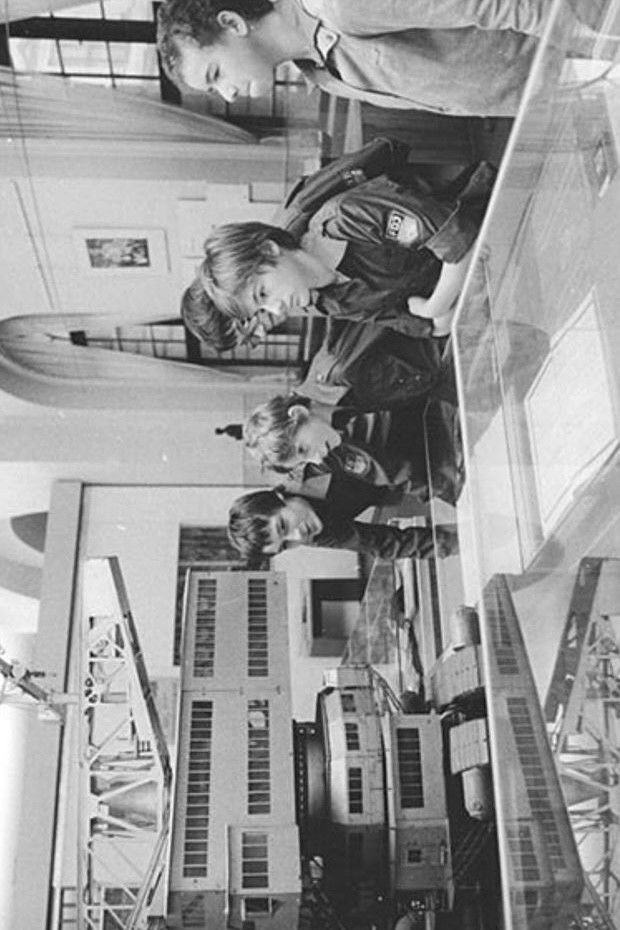
In 1952, the Central Committee of the Socialist Unity Party of Germany (SED) decides to establish a "Museum of German History" (MfDG) in the Zeughaus Unter den Linden. As the central history museum of the GDR, it is committed to the Marxist-Leninist conception of history. The film Museum of German History. Insights and Encounters - a GDR television documentary from 1988 - shows the reconstruction of the war-damaged building, presents selected eras such as the Peasants' Wars and the Revolution of 1848 and observes the preparations for a special exhibition on "Artists in the Class Struggle". The film also provides insights into the restorers' workshops, the coin collection and the painting depot.
Jérôme was sexually abused as a child by a priest. In a deeply personal film, he tries to search for clues in his memories and come to terms with the complicity of his former social environment.
In his exploration of the cultural dynamic between East and West, Adolf Muschg, the most significant Swiss writer since Frisch and Dürrenmatt, searched for the other in himself in order to understand otherness.
Produced in 1967, this black and white film is an inmate's view of Daytop, a drug treatment centre on Staten Island, New York, where addicts learn to get along without drugs. Uncompromising, often brutal group therapy sessions are designed to shake loose the excuses a victim makes for himself. The people and situations shown are authentic; only one actor was employed. The results obtained at Daytop are regarded by some psychiatrists as a breakthrough.
The film accompanies Jenny Gröllmann, a German actress, during the last two years of her life.
The film does not have a plot per se; it mixes documentary footage, along with standard movie scenes, to give the audience the mood of Germany during the late 1970s. The movie covers the two-month time period during 1977 when a businessman was kidnapped and later murdered by the left-wing terrorists known as the RAF-Rote Armee Fraktion (Red Army Fraction). The businessman had been kidnapped in an effort to secure the release of the original leaders of the RAF, also known as the Baader-Meinhof gang. When the kidnapping effort and a plane hijacking effort failed, the three most prominent leaders of the RAF, Andreas Baader, Gudrun Ensslin, and Jan-Carl Raspe, all committed suicide in prison. It has become an article of faith within the left-wing community that these three were actually murdered by the state.
The intricate history of UFA, a film production company founded in 1917 that has survived the Weimar Republic, the Nazi regime, the Adenauer era and the many and tumultuous events of contemporary Germany, and has always been the epicenter of the German film industry.
Social isolation affects millions of people, even Mars-bound astronauts. A savvy NASA psychologist is tasked with protecting these daring explorers.
‘Voices from the Shadows’ shows the brave and sometimes heartrending stories of five ME patients and their carers, along with input from Dr Nigel Speight, Prof Leonard Jason and Prof Malcolm Hooper. These were filmed and edited between 2009 and 2011, by the brother and mother of an ME patient in the UK. It shows the devastating consequences that occur when patients are disbelieved and the illness is misunderstood. Severe and lasting relapse occurs when patients are given inappropriate psychological or behavioural management: management that ignores the severe amplification of symptoms that can be caused by increased physical or mental activity or exposure to stimuli, and by further infections. A belief in behavioural and psychological causes, particularly when ME becomes very severe and chronic, following mismanagement, is still taught to medical students and healthcare professionals in the UK. As a consequence, situations similar to those shown in the film continue to occur.
A documentary produced by the French armed forces which chronicles the way of France’s “1ere armée” in the second world war from the days it first crossed the Rhine in March of 1945, through the liberation of a POW-camp in Swabia, until the forces reached the Danube and the Alps at the end of the war and the day French troops marched in the victory parade in Berlin.
Documentary about the life in Berlin in 1941. The planned premier was stopped by the national party due to the damages and painful changes to the city that soon followed. It thus premiered in 1950.
This documentary explores the creation of the Holocaust Memorial in Berlin as designed by architect Peter Eisenman. Reaction of the German public to the completed memorial is also shown.
In Their Hands follows the psychotherapy of vulnerable people, sometimes destroyed by acts of torture.Their speech deals with an inhuman past: they want to stop the pain, rule out the folly and protect their family from violence in them, be understood and recognized - these are the issues that drive them.
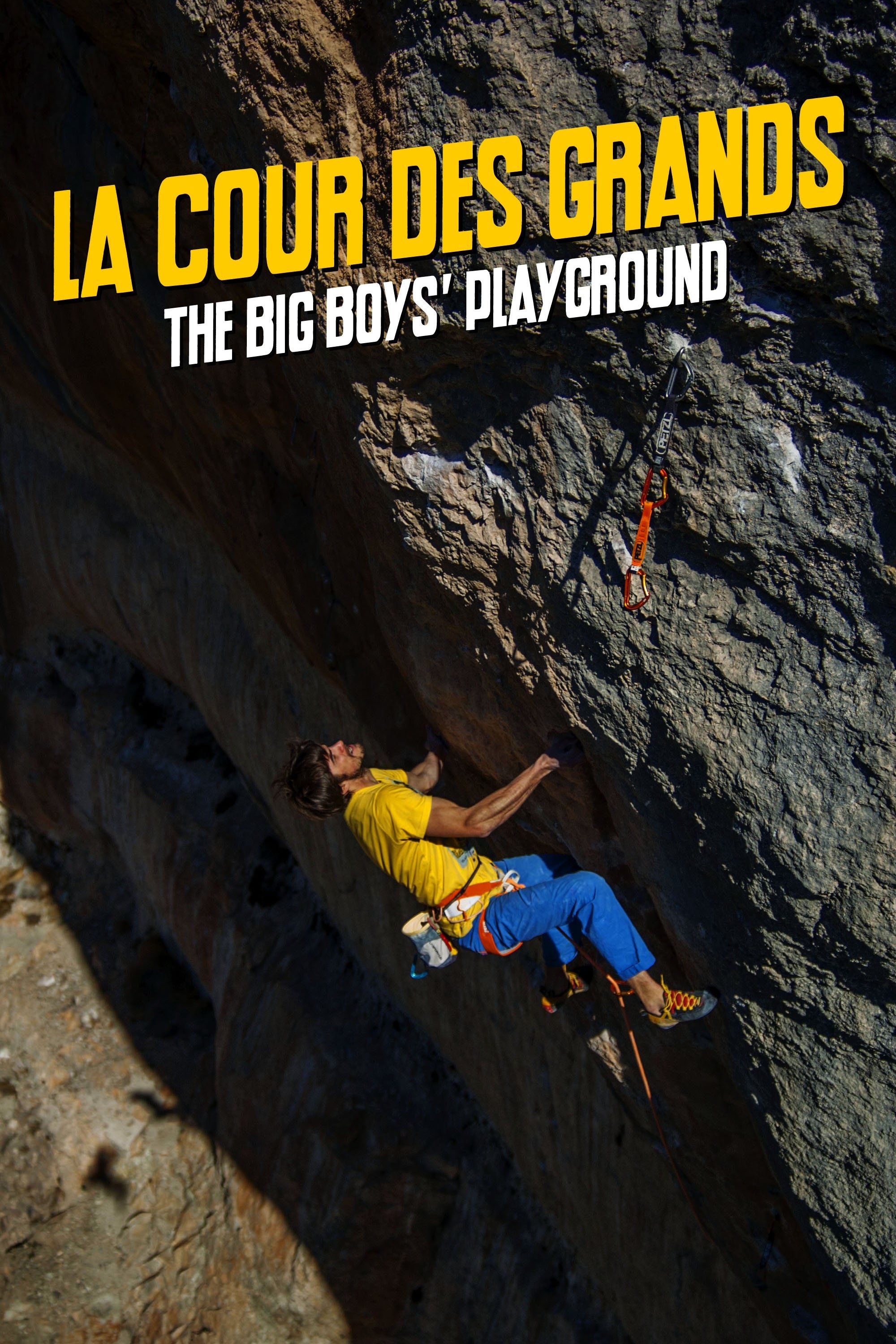
Stéphane and Alizée, two rock-climbers looking for a breakthrough, spend their winter in Catalonia—the perfect place for climbing hard. Their projects lie in the sector called “El Pati” (the playground). Success, more than a physical achievement, seems to be a state of mind.
Journey with the musicians of the Berlin Philharmonic and their conductor Sir Simon Rattle on a breakneck concert tour of six metropolises across Asia: Beijing, Seoul, Shanghai, Hong Kong, Taipei and Tokyo. Their artistic triumph onstage belies a dynamic and dramatic life backstage. The orchestra is a closed society that observes its own laws and traditions, and in the words of one of its musicians is, “an island, a democratic microcosm – almost without precedent in the music world - whose social structure and cohesion is not only founded on a common love for music but also informed by competition, compulsion and the pressure to perform to a high pitch of excellence... .” Never before has the Berlin Philharmonic allowed such intimate and exclusive access into its private world.