"PHILIPPINES FIELDWORKS (FW#16)"
Images and sound captured in Zamboanga city Mindanao, Philippines. During sunset. Part of the Azan series & the Philippines fieldworks.
Social & External
Animal Charm makes videos from other people's videos. By compositing TV and reducing it to a kind of tic-ridden babble, they force television to not make sense. While this disruption is playful, it also reveals an overall 'essence' of mass culture that would not be apprehended otherwise. Videos such as Stuffing, Ashley, and Lightfoot Fever upset the hypnotic spectacle of TV viewing, revealing how advertising creates anxiety, how culture constructs "nature" and how conventional morality is dictated through seemingly neutral images. By forcing television to convulse like a raving lunatic, we might finally hear what it is actually saying.
A whirlwind of improvisation combines the images of animator Pierre Hébert with the avant-garde sound of techno whiz Bob Ostertag in this singular multimedia experience, a hybrid of live animation and performance art.
Sylvia Kristel – Paris is a portrait of Sylvia Kristel , best known for her role in the 1970’s erotic cult classic Emmanuelle, as well as a film about the impossibility of memory in relation to biography. Between November 2000 and June 2002 Manon de Boer recorded the stories and memories of Kristel. At each recording session she asked her to speak about a city where Kristel has lived: Paris, Los Angeles, Brussels or Amsterdam; over the two years she spoke on several occasions about the same city. At first glance the collection of stories appears to make up a sort of biography, but over time it shows the impossibility of biography: the impossibility of ‘plotting’ somebody’s life as a coherent narrative.
An odyssey through Beethoven’s lasting presence and influence in our modern world – viewed through the eyes of the composer himself.
An 18-minute long single-channel video which uses CNN footage cut so that each word is spoken by a different newsperson. The pieces literally asks the viewers questions about media authenticity and give CNN a distinct voice
"Filmed in Cairo, in Al-Azhar Park, sunset during Isha'a praying time. The city becomes a Chorus. Dedicated to the people of Cairo. With love and hope." Part of the Azan series & the Cairo fieldworks.
Black Hole Radio is an installation that consists of taped confessions of callers of the New York City Phone Confession Line and video images. The Phone Confession Line is based on anonymous callers ringing to confess on things they had done or thought like adultery, theft, murder or regrets. Thereafter anybody could call and listen to the confessions. Although making a confession was free, listening to a confession costs money. After Cohen got his hands on the confessions, he used them as an audio heartbeat to accompany video-images of every day life in New York City he had taken over the years. This installation is a portrait of the city with its dark secrets, hushed voices and nocturnal images. In this way Cohen tries to bring across an experience to the viewer that relies on absence, waiting and the effort to hear something in the dark.
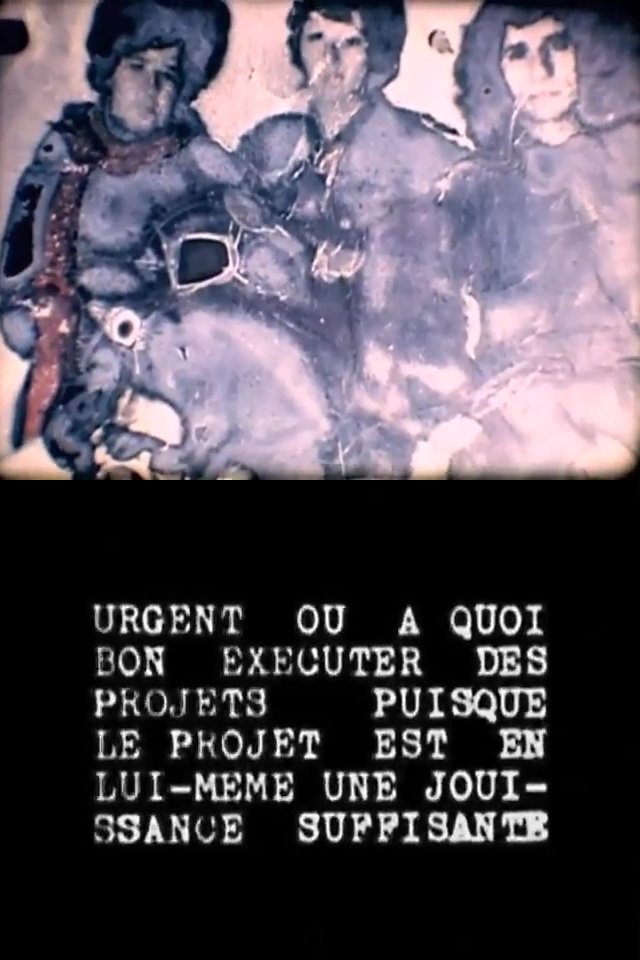
Gérard Courant applies the Lettrist editing techniques of Isidore Isou to footage of late 70's pop culture. Courant posits that his cinema offers an aggressive détournement to the French mainstream, reifying a Duchampian view of film: "I believe in impossible movies and works without meaning... I believe in the anti-movie. I believe in the non-movie. I believe in Urgent... My first full length movie that is so anti-everything that I sometimes wonder if it really does exist!"
The Quays' interest in esoteric illusions finds its perfect realization in this fascinating animated lecture on the art of anamorphosis. This artistic technique, often used in the 16th- and 17th centuries, utilizes a method of visual distortion with which paintings, when viewed from different angles, mischievously revealed hidden symbols.
Documentary, poetry and essay rolled into one, this compilation of stockshots and clips sourced from NFB productions of the '50s and '60s offers a singular lesson in Montreal history - its famous figures, symbolic places, and ordinary citizens. Without commentary, the film moves from the red light district to Jean Drapeau, the Jacques-Cartier market, department stores downtown, textile factories, and the construction of Place Ville-Marie. We meet Geneviève Bujold, Oscar Peterson, Monique Mercure, and Igor Stravinsky. We hear Raymond Lévesque, Jean Drapeau, and René Lecavalier.
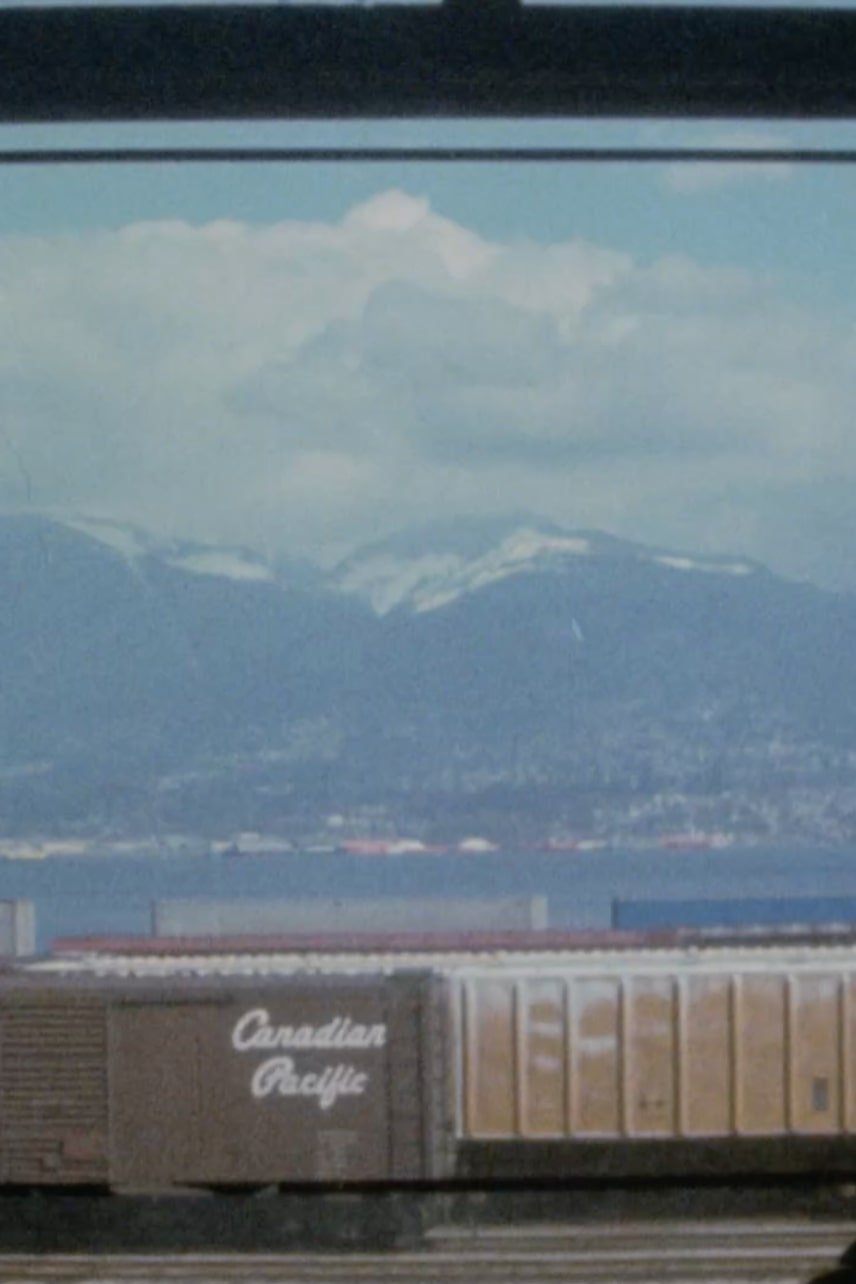
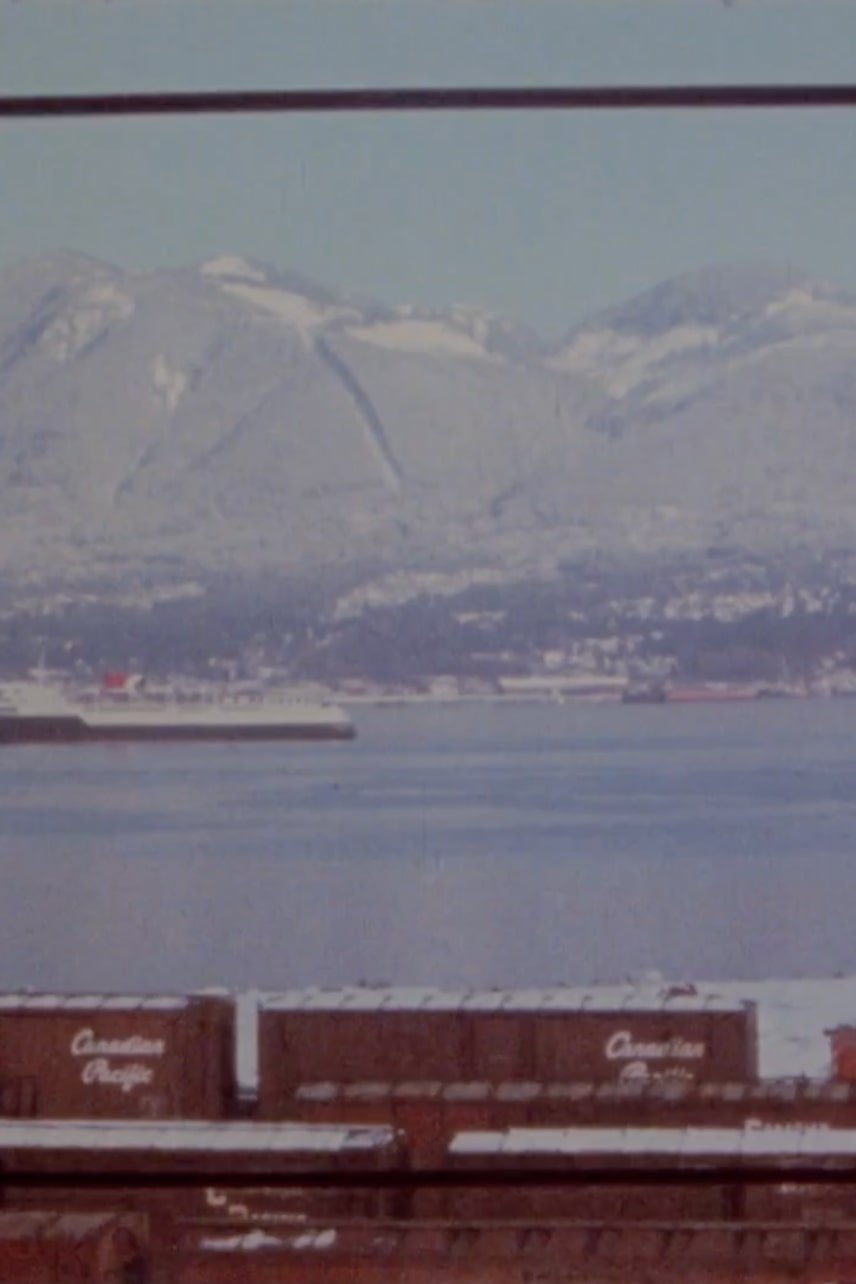
"In his description for A CHILD'S GARDEN, Brakhage quotes from poets Ronald Johnson and Charles Olson (and cites Johnson's poem "Beam 29" as inspiration). But the film also vaguely calls to mind William Blake—more perhaps for his art than his poetry: there is both a sense of darkness and of mystical transport in Brakhage's images. The first film in the loose "Vancouver Island" quartet, Brakhage films locations around the British Columbia locale where his second wife, Marilyn, grew up. He films land, sea, and sky and intercuts frequently between them. Shots are often out-of-focus, to accentuate color and light; they are hand-held, upside down, and fleeting. All of this is no surprise for those who know Brakhage's work: anything and everything is valid, as long as it works." - Cine-File.info
From radical turntablism (Otomo Yoshihide) to laptop music innovation (Numb), via classical instrument hijacking (Sakamoto Hiromichi), Tokyo's avant-garde music scene is internationally known for its boldness. While introducing some of the greatest musicians of this scene, "We Don't Care About Music Anyway..." offers a kaleidoscopic view of Tokyo, confronting music and noise, sound and image, reality and representation, documentary and fiction.
'Amy, is narrated by a model (Liisa Repo-Martell) who’s painfully uncomfortable with her own body and “old woman’s” face. Astonishing closing image is a tightly composed telephoto shot on the start of a marathon race among young schoolgirls, dashing toward and then across the screen in ultra-slo-mo, and accompanied by a girls’ chorus hauntingly singing Brian Wilson’s God Only Knows. Widely eclectic lensing and looks in various media and in color and black-and-white flow nicely from one section to the next, aided by gifted editor Mark Karbusicky.' ~ Robert Koehler, Variety - Part 7 of 7-part bio-feature Public Lighting (2004).
This short film documents the daily life of the goings-on on Orchard Street, a commercial street in the Lower East Side New York City.
In the beginning the idea was to make something from nothing, in a neutral and unknown place. Collect images and sounds instead of producing them. The camera, the microphone and the mini-amplifier: tools that take away and then give back. We defined a rule: the sound shouldn't illustrate the image and the image shouldn't absorb the sound. Less than a hundred kilometres from Reykjavik we found Strokkur. For three days we saw and heard the internal dynamics of the crevice: the boiling water that spat out every seven minutes and the thermal shock, given the eighteen degrees below zero of the atmosphere.
Filmed during a visit to Jerome Hill in Provence, Jonas Mekas sets his Bolex to capture a single day overlooking the port of Cassis. Shot frame by frame from morning to sunset, the film distills shifting light and color into a quiet meditation on time, place, and perception.
Image by Carlos Casas. Double screen projection with live soundtrack. Images and sound captured on location. Somewhere in the tundra, Chukotka Region, Northeastern Siberia, Russian Federation. Music by Prurient. Published by Von Archives. N 66° 37’ 916, W 172° 40’ 353, Sept 2006.
In an effort to cure her smoking habit a middle-aged woman discovers that she can communicate with her long lost son while watching a Halloween safety program on TV. After suffering a nervous breakdown, her husband, a used car salesman, is revitalized when he travels back in time to drive the first car he ever sold. Seventeen years later a powerful canned food manufacturer crashes the same car into a toaster truck while endorsing a brand of yams on live TV. At the funeral his clergyman experiences a crisis of faith when he and a lifelike Mexican continue their search for a married couple who have befriended an insect who enjoys drinking lime soda. They later meet a young man whose bizarre murder scheme involves four innocent members of an experimental rock band who have all given up smoking.
A short documentary about Jörg Buttgereit's father.
Openland is an art film guided by issues surrounding micro states and its derivative definitions. Through intertwining interviews, meta-narratives, and digital landscapes, Openland unfurls a dialogue between consciousness, individuality and collectivity.
An inside look at one of the most anticipated movie sequels ever with James Cameron and cast.
Carefully picked scenes of nature and civilization are viewed at high speed using time-lapse cinematography in an effort to demonstrate the history of various regions.
A behind the scenes look into George Romero's groundbreaking horror classic Night of the Living Dead.
From a prolific career in film and television, Anton Yelchin left an indelible legacy as an actor. Through his journals and other writings, his photography, the original music he wrote, and interviews with his family, friends, and colleagues, this film looks not just at Anton's impressive career, but at a broader portrait of the man.
Martin Scorsese’s portrait of writer and social commentator Fran Lebowitz, celebrated for her sharp wit and observations on modern life. Filmed at New York’s Waverly Inn and intercut with archival footage and interviews, the documentary captures Lebowitz’s distinctive worldview through her spontaneous monologues and public appearances.
The Making-of James Cameron's Avatar. It shows interesting parts of the work on the set.
Through deeply personal interviews with her siblings and an examination of the photographs, letters, and belongings left behind, Mariska assembles a new portrait of her mother Jayne Mansfield, an extraordinary and complex woman.
An exploration of technologically developing nations and the effect the transition to Western-style modernization has had on them.
A candid look at rehearsal footage in support of a focus on pre-viz.
JB Smoove and Martin Starr host a celebration of 20 years of "Spider-Man" movies, from the Sam Raimi trilogy to Marc Webb's movies and the trio from Jon Watts.
One man’s journey to find meaning in Bill Murray’s many unexpected adventures with everyday people, rare and never-before seen footage of the comedic icon participating in stories previously presumed to be urban legend.
Join director Clint Eastwood and his creative team, along with Bradley Cooper and Sienna Miller, as they overcome enormous creative and logistic obstacles to make a film that brings the truth of Navy SEAL Chris Kyle's story to the screen.
A visual montage portrait of our contemporary world dominated by globalized technology and violence.
This revealing documentary honors the legendary Sidney Poitier—iconic actor, filmmaker, and civil rights activist. Featuring interviews with Denzel Washington, Spike Lee, Halle Berry, and more.
A documentary about the making of David Fincher's 2008 film THE CURIOUS CASE OF BENJAMIN BUTTON. Virtually every element in the evolution of the Fincher's film is documented here, from the project's attachment to numerous other directors during the 1990s, to its shoot in 2006 and 2007 in New Orleans, to its complex, CGI-intensive postproduction process.
This documentary focuses on the actors and their journey over two summers to create the remake to the original IT, by Stephen King. The documentary originally released as bonus material, bundled with IT: Chapter Two.
Alexander McQueen's rags-to-riches story is a modern-day fairy tale, laced with the gothic. Mirroring the savage beauty, boldness and vivacity of his design, this documentary is an intimate revelation of McQueen's own world, both tortured and inspired, which celebrates a radical and mesmerizing genius of profound influence.
Follow the evolution of the 'Halloween' movies over the past twenty-five years. It examines why the films are so popular and revisits many of the original locations used in the films - seeing the effects on the local community. For the first time, cast, crew, critics and fans join together in the ultimate 'Halloween' retrospective.
A purely observational non-fiction film that takes viewers into the ethically murky world of end-of-life decision making in a public hospital.
Those who knew iconic funnyman John Candy best share his story, in their own words, through never-before-seen archival footage, imagery, and interviews.