"CAIRO FIELDWORKS (FW#12)"
"Filmed in Cairo, in Al-Azhar Park, sunset during Isha'a praying time. The city becomes a Chorus. Dedicated to the people of Cairo. With love and hope." Part of the Azan series & the Cairo fieldworks.
Social & External
Szirtes's masterful experimental work is a dazzling composition of several years of filming within an industrial macro/microcosm, an abstract model of revolution and the beauty of daybreak.
A dark and magical visit to the fabled Parisian address Rue Fontaine 42. This was the residence of André Breton, the mastermind of surrealism, who surrounded himself with an impressive collection of modern, Western art and ethnographic objects from Oceania and North America. The collection was sold and divided up in 2003 at a controversial auction. 'The Trick Brain' is a delirious montage and a trip back in time to Breton's private art collection, where Atkins has been scouring the archives and come up with a possessing interior film of the place that once was, complete with surrealistic paintings, scores of Indian figures and hundreds of other displayed rarities. The film's soundtrack is provided by an observant narrator, who reveals to us that the objects shown are not necessarily what they claim to be - but instead are catalysts for some kind of wonderful linguistic virus which reveals the real identity of things.
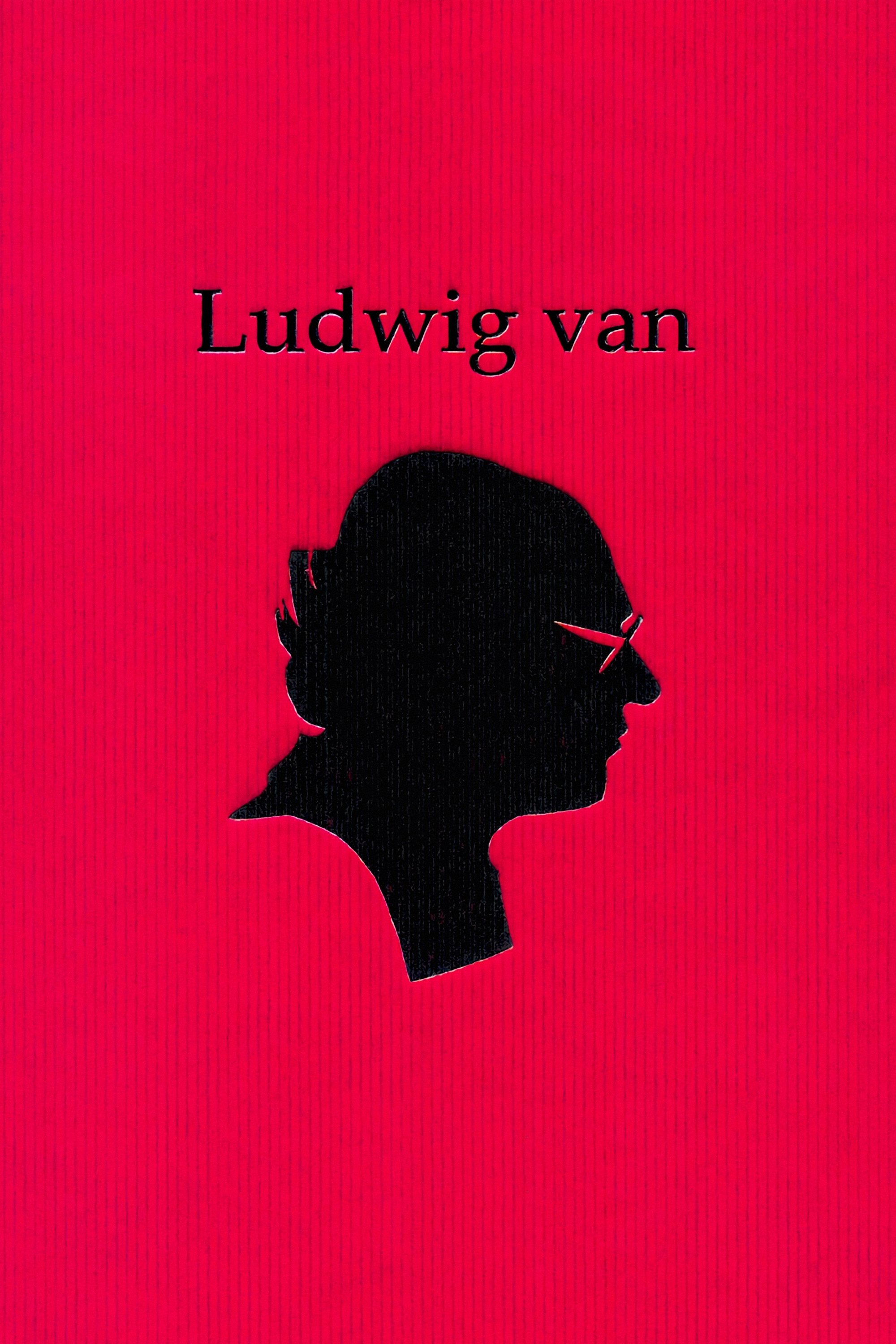
An odyssey through Beethoven’s lasting presence and influence in our modern world – viewed through the eyes of the composer himself.
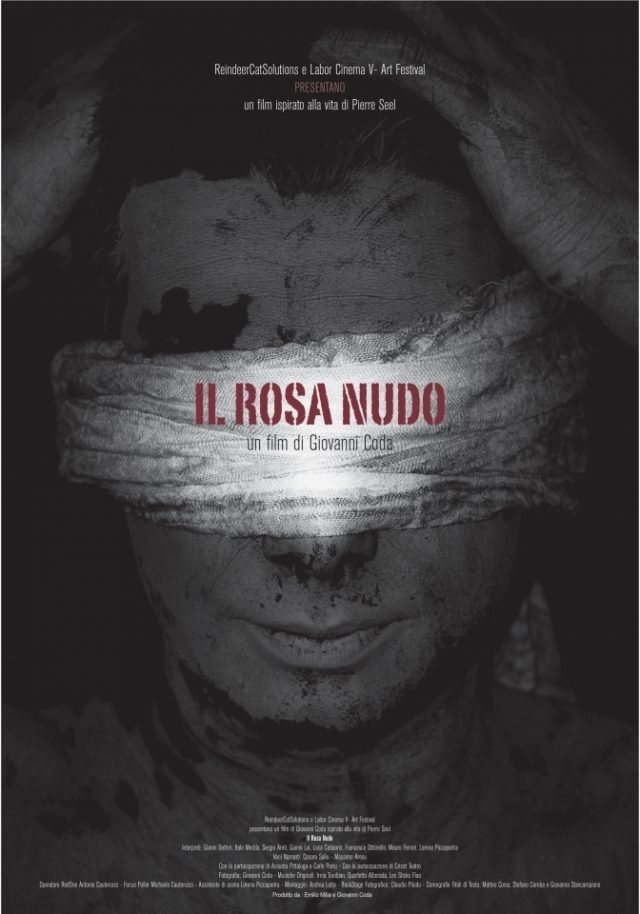
Among the millions of victims of the Nazi madness during the Second World War, Pierre Seel was charged with homosexuality and imprisoned in the Schirmeck concentration camp. He survived this terrifying experience of torture and humiliation, and after the war he married, had three children, and tried to live a normal life. In 1982, however, he came to terms with his past and his true nature and decided to publicly reveal what he and thousands of other homosexuals branded with the Pink Triangle had undergone during the Nazi regime. Il Rosa Nudo (Naked Rose), inspired by the true story of Pierre Seel, depicts in a theatrical and evocative way the Homocaust, focusing on the scientific theories of SS Physician Carl Peter Værnet for the treatment of homosexuality, which paved the way for the Nazi persecution of gay men.
Migrating by sea from Holland as an eight-year-old, Dirk de Bruyn went on to be a doyen of Australian experimental cinema. But as this intimate film reveals, his work is suffused with the trauma of migration, and the struggle to recognise himself as a ‘new Australian'. In conversation with documentarian Steven McIntyre, Dirk guides us through more than 40 years of his filmmaking: the early years exploring technique and technology, a subsequent phase of unflinching self-examination brought on by upheaval and overseas travel, and more recent projects where he attempts a fusion of personal, cultural, and historical identity. What emerges is an inspiring, rugged, and at times poignant portrait of an artist committed to self-expression and self-discovery through the medium of film.
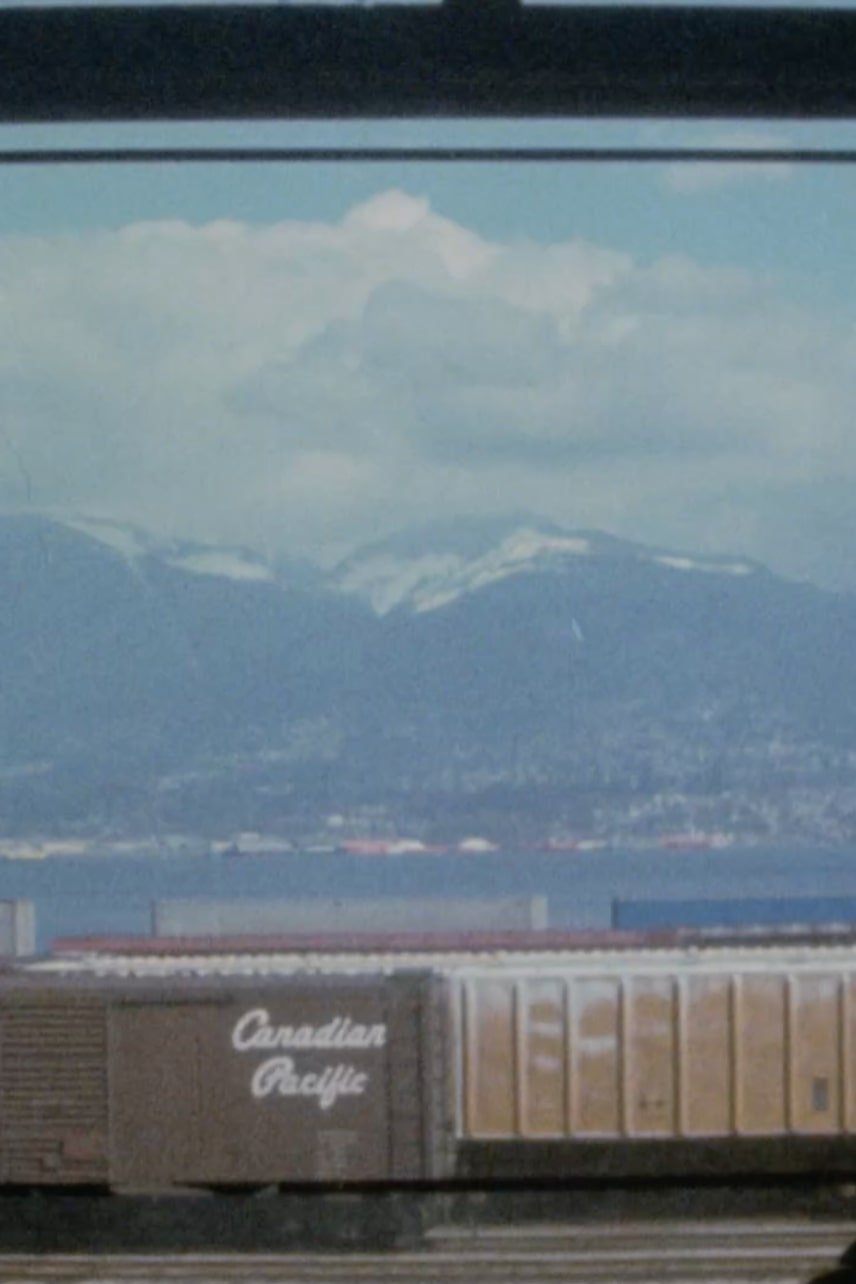
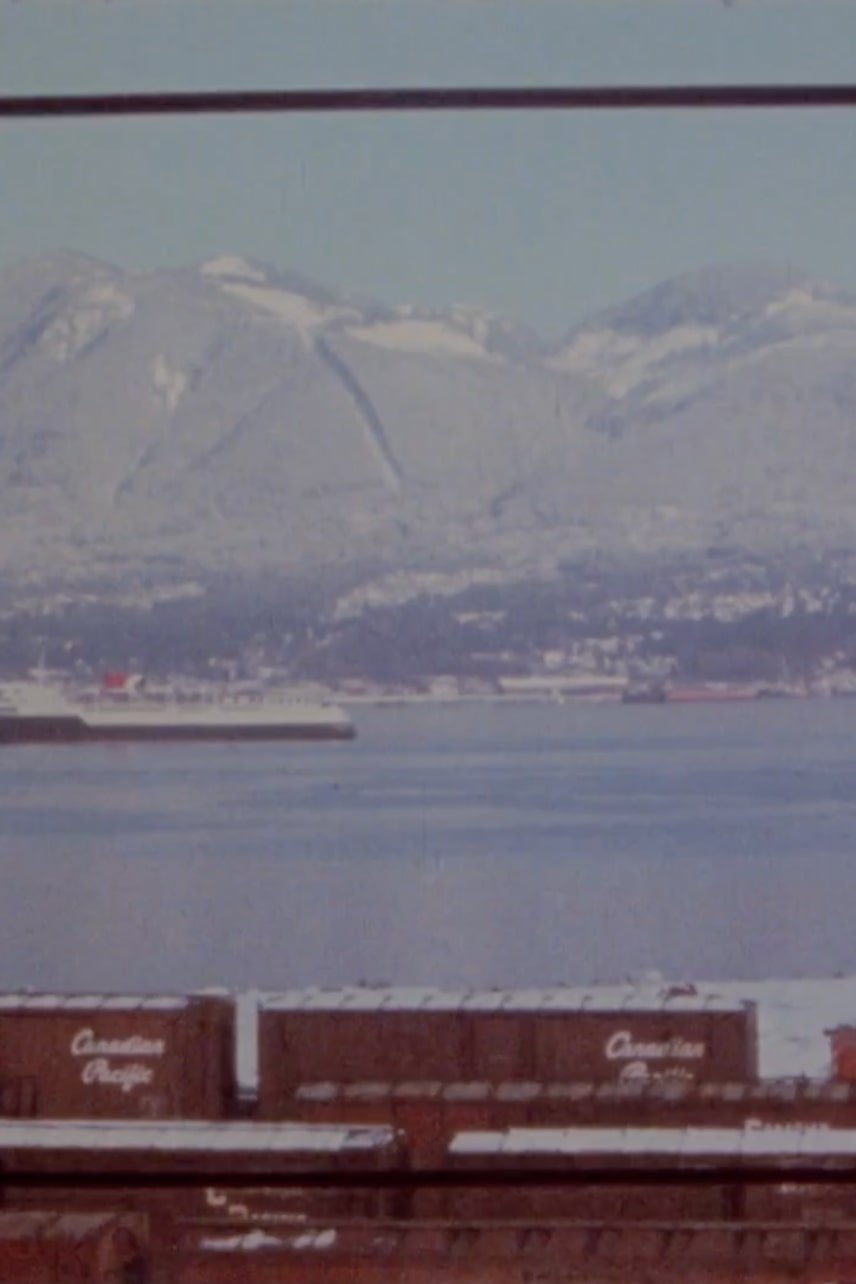
Canadian Pacific I is made up of a series of slowly dissolved shots done from the same framing over several months. The camera frames a window with a railway yard in the foreground, a bay in the space behind it, and misty mountains in the extreme distance. Trains occasionally pass by in the foreground. Huge ships move across the bay. Blue mists hover over the mountain heads.
The Quays' interest in esoteric illusions finds its perfect realization in this fascinating animated lecture on the art of anamorphosis. This artistic technique, often used in the 16th- and 17th centuries, utilizes a method of visual distortion with which paintings, when viewed from different angles, mischievously revealed hidden symbols.
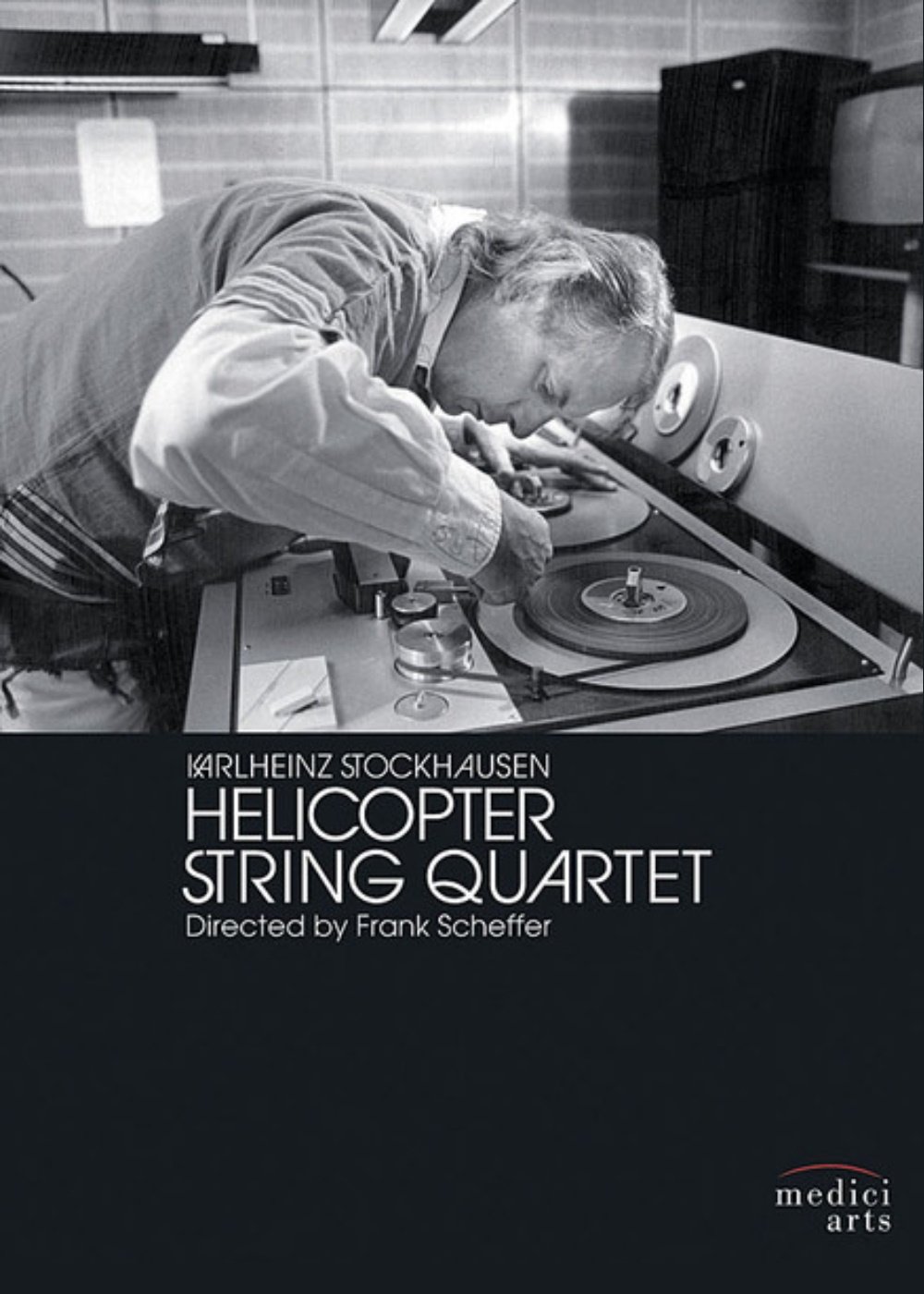
One morning, the late Karlheinz Stockhausen awoke from a dream that told him to take to the sky. Stockhausen envisioned four helicopters swirling in the clouds, with each of a quartet’s members tucked inside his own chopper, communicating through headsets, stringing away in sync to the rotor-blade motors. He immediately set forth to make that dream a reality. In 1995, Dutch film director Scheffer followed Stockhausen in the days leading up to the premiere performance of his Helicopter String Quartet in Amsterdam. The resulting film offers a rare glimpse of Stockhausen as he patiently dictates every agonizingly detailed measure to the Arditti Quartet.
A short documentary about Jörg Buttgereit's father.
The Darkness of Day is a haunting meditation on suicide. It is comprised entirely of found 16mm footage that had been discarded. The sadness, the isolation, and the desire to escape are recorded on film in various contexts. Voice-over readings from the journal kept by a brother of the filmmaker’s friend who committed suicide in 1990 intermix with a range of compelling stories, from the poignant double suicide of an elderly American couple to a Japanese teenager who jumped into a volcano, spawning over a thousand imitations. While this is a serious exploration of a cultural taboo, its lyrical qualities invite the viewer to approach the subject with understanding and compassion.
"In his description for A CHILD'S GARDEN, Brakhage quotes from poets Ronald Johnson and Charles Olson (and cites Johnson's poem "Beam 29" as inspiration). But the film also vaguely calls to mind William Blake—more perhaps for his art than his poetry: there is both a sense of darkness and of mystical transport in Brakhage's images. The first film in the loose "Vancouver Island" quartet, Brakhage films locations around the British Columbia locale where his second wife, Marilyn, grew up. He films land, sea, and sky and intercuts frequently between them. Shots are often out-of-focus, to accentuate color and light; they are hand-held, upside down, and fleeting. All of this is no surprise for those who know Brakhage's work: anything and everything is valid, as long as it works." - Cine-File.info
From radical turntablism (Otomo Yoshihide) to laptop music innovation (Numb), via classical instrument hijacking (Sakamoto Hiromichi), Tokyo's avant-garde music scene is internationally known for its boldness. While introducing some of the greatest musicians of this scene, "We Don't Care About Music Anyway..." offers a kaleidoscopic view of Tokyo, confronting music and noise, sound and image, reality and representation, documentary and fiction.
'Amy, is narrated by a model (Liisa Repo-Martell) who’s painfully uncomfortable with her own body and “old woman’s” face. Astonishing closing image is a tightly composed telephoto shot on the start of a marathon race among young schoolgirls, dashing toward and then across the screen in ultra-slo-mo, and accompanied by a girls’ chorus hauntingly singing Brian Wilson’s God Only Knows. Widely eclectic lensing and looks in various media and in color and black-and-white flow nicely from one section to the next, aided by gifted editor Mark Karbusicky.' ~ Robert Koehler, Variety - Part 7 of 7-part bio-feature Public Lighting (2004).
This short film documents the daily life of the goings-on on Orchard Street, a commercial street in the Lower East Side New York City.
Filmed during a visit to Jerome Hill in Provence, Jonas Mekas sets his Bolex to capture a single day overlooking the port of Cassis. Shot frame by frame from morning to sunset, the film distills shifting light and color into a quiet meditation on time, place, and perception.
Sylvia Kristel – Paris is a portrait of Sylvia Kristel , best known for her role in the 1970’s erotic cult classic Emmanuelle, as well as a film about the impossibility of memory in relation to biography. Between November 2000 and June 2002 Manon de Boer recorded the stories and memories of Kristel. At each recording session she asked her to speak about a city where Kristel has lived: Paris, Los Angeles, Brussels or Amsterdam; over the two years she spoke on several occasions about the same city. At first glance the collection of stories appears to make up a sort of biography, but over time it shows the impossibility of biography: the impossibility of ‘plotting’ somebody’s life as a coherent narrative.
In this tape, Ko Nakajima and Video Earth Tokyo interview a homeless man. The subject is initially angry and frustrated, but gradually opens up and shares stories about his life. Under A Bridge was later broadcast on cable television.
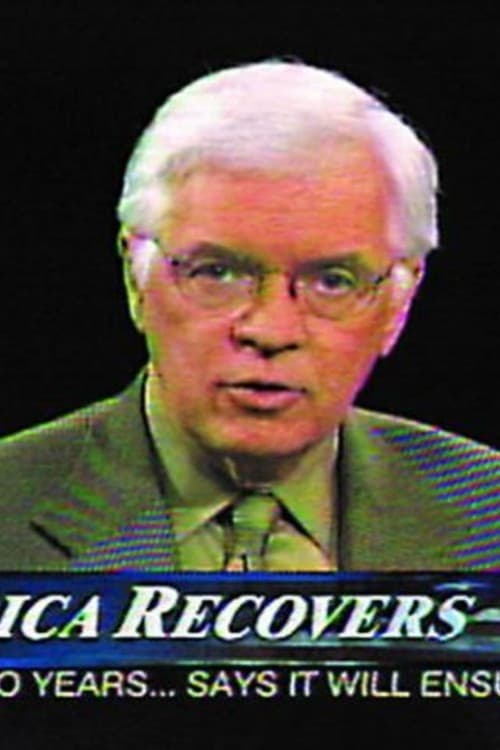
An 18-minute long single-channel video which uses CNN footage cut so that each word is spoken by a different newsperson. The pieces literally asks the viewers questions about media authenticity and give CNN a distinct voice
Animal Charm makes videos from other people's videos. By compositing TV and reducing it to a kind of tic-ridden babble, they force television to not make sense. While this disruption is playful, it also reveals an overall 'essence' of mass culture that would not be apprehended otherwise. Videos such as Stuffing, Ashley, and Lightfoot Fever upset the hypnotic spectacle of TV viewing, revealing how advertising creates anxiety, how culture constructs "nature" and how conventional morality is dictated through seemingly neutral images. By forcing television to convulse like a raving lunatic, we might finally hear what it is actually saying.
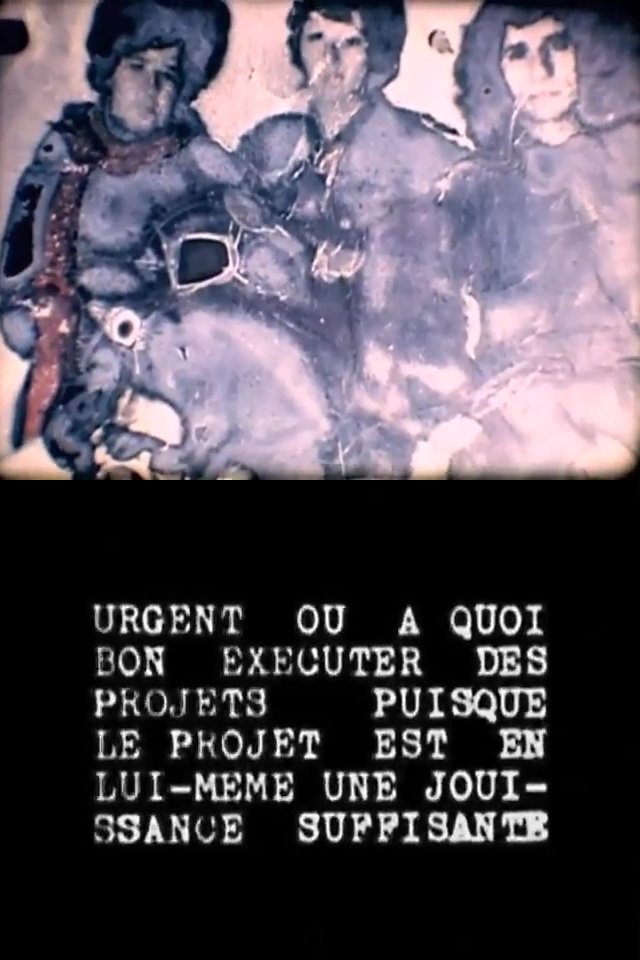
Gérard Courant applies the Lettrist editing techniques of Isidore Isou to footage of late 70's pop culture. Courant posits that his cinema offers an aggressive détournement to the French mainstream, reifying a Duchampian view of film: "I believe in impossible movies and works without meaning... I believe in the anti-movie. I believe in the non-movie. I believe in Urgent... My first full length movie that is so anti-everything that I sometimes wonder if it really does exist!"