This documentary posits that war and confrontation between superpowers spell doom for humanity. A film warning about all aspects of nuclear danger.
Social & External
Narrator (voice)
Ireland, June 1944. The crucial decision about the right time to start Operation Overlord on D-Day comes to depend on the readings taken by Maureen Flavin, a young girl who works at a post office, used as a weather station, in Blacksod, in County Mayo, the westernmost promontory of Europe, far from the many lands devastated by the iron storms of World War II.
The filmmaker, Alexandros Papathanasiou, travels to Crete to meet Lefteris Eliakis, a guerrilla fighter during the Greek Civil War and a political prisoner for two decades. This insightful portrait conjures the ghosts of the Greek Civil War – the maverick people, revolutionary politics, and breathtaking events that have shaped today’s Greece.
The Black Book, drafted during World War II, gathers numerous unique historical testimonies, in an effort to document Nazi abuses against Jews in the USSR . Initially supported by the regime and aimed at providing evidence during the executioners’ trials in the post-war era, the Black Book was eventually banned and most of its authors executed on Stalin’s order. Told through the voices of its most famous instigators, soviet intellectuals Vassilli Grossman, Ilya Ehrenburg and Solomon Mikhoels, the documentary, provides a detailed account of the tragic destiny of this cursed book and puts the Holocaust and Stalinism in a new light.
May 1945. Victory. Triumph over Nazi Germany. And already, history is being rewritten. The story of a France liberated by its people, resistant at heart, united against oppression. In our memories, we see the faces of heroes: Gaullists and Communists. We forget the origins of the struggle. That of the very first men and women, left-wing, right-wing, communists, far-right, apolitical... who, individually and from June 17, 1940, said "no." A visceral and spontaneous "no" in a France that said "yes," rallying behind Pétain. A "no" from the heart and courage, fueled by the will to act in the name of freedom. They started from nothing, had to invent everything, risk their lives and those of their loved ones. They are the heroes, those who, in isolation, stood up at once and chose to disobey, whatever the cost, even to the point of self-sacrifice. Alone against all...
These days it seems that nothing is as polarizing and controversial as religious belief. Everywhere one goes it seems that people are asking the question: Do we even need religion? Is it limiting our understanding? What kind of world is being produced by these faith systems? Regardless of your answers to these questions, it is hard to deny that worship still plays an important role in many people's lives and many people simply do not understand where others are coming from. Believers is a unique exploration of those questions related to faith by focusing the lens on five of the world's belief systems, Agnosticism, and the new Atheism. The film follows Sacha Sewhdat's personal journey towards understanding as he searches for the value of religion in modern society. With honesty and objectivity Sacha explores what it means to believe in a higher power or what it would mean to let those beliefs go. It will both inform and challenge what you know about religion in the 21st Century.
The birth of the atomic bomb changed the world forever. In the years before the Manhattan project, a weapon of such power was not even remotely imaginable to most people on earth. And yet, with war comes new inventions. New ways of destroying the enemy. New machines to wipe out human life. The advent of nuclear weapons not only brought an end to the largest conflict in history, but also ushered in an atomic age and a defining era of "big science". However, with the world now gripped by nuclear weapons, we exist constantly on the edge of mankind's total destruction.
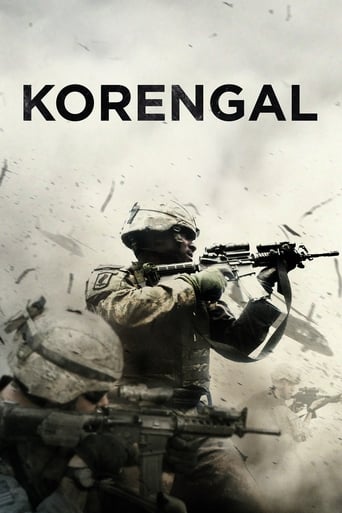
Korengal picks up where Restrepo left off; the same men, the same valley, the same commanders, but a very different look at the experience of war.
Immediately after the US pullout from Afghanistan, Taliban forces occupied the Hollywood Gate complex, which is claimed to be a former CIA base in Kabul.
This documentary re-examines the story of the Red Orchestra: the most important resistance network in Nazi Germany, whose operations extended from Berlin and Brussels to Paris.
Beginning with Guernica and the Chinese cities of Chongqing and Shanghai in 1937 and ending with the bombing of Hiroshima and Nagasaki in August 1945, World War Two saw a new art of warfare in the form of extensive, worldwide bombing campaigns.
This film, directed by Dominique GAUTIER, takes the viewer on a worldwide excursion into the history and structure of the Esperanto language, introducing its present-day speakers. The words of these users of the language are reflective of a variety of activities and viewpoints, and in the film they are interwoven so as to reveal bit by bit how the utopia of its initiator, Ludwig ZAMENHOF, is concretised every day.
Anastasia Trofimova, a Russian-Canadian filmmaker, gains unprecedented access to follow a Russian Army battalion in Ukraine. Without any official clearance or permits, she earns the trust of foot soldiers and embeds herself over the span of a year with one battalion as it makes its way across Eastern Ukraine. What she discovers is far from the propaganda and labels pushed by the East or West: an army in disarray, soldiers disillusioned and often struggling to understand what they are fighting for.
Archival film maestro Göran Hugo Olsson has assembled—from a vast catalogue of footage in the vaults of Sweden’s national television service SVT—accounts of the Israeli-Palestinian conflict as witnessed and represented by Swedish journalists. Stories of the beginning of the Israeli state interwoven with the Palestinian struggle for independence. News coverage with Yasser Arafat and interviews with Israeli foreign minister Abba Eban during a visit to Sweden unseen since first broadcast. From the tenth anniversary of Israel’s founding to the First Intifada, perspectives and encounters with statesmen, civilians, revolutionaries, and intellectuals tell the story from myriad angles of an evolving media landscape, revivifying a history of the ongoing conflict.
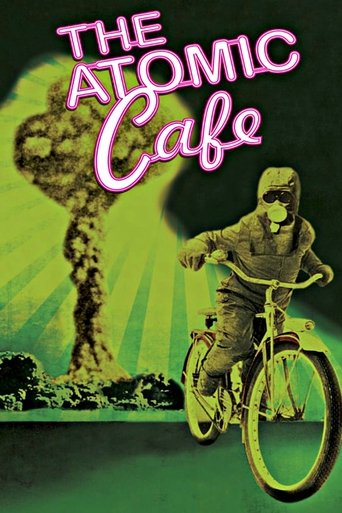
A disturbing collection of 1940s and 1950s United States government-issued propaganda films designed to reassure Americans that the atomic bomb was not a threat to their safety.
A documentary on the expletive's origin, why it offends some people so deeply, and what can be gained from its use.
A documentary on Al Gore's campaign to make the issue of global warming a recognized problem worldwide.
A visual montage portrait of our contemporary world dominated by globalized technology and violence.
Pete Postlethwaite stars as a man living alone in the devastated future world of 2055, looking at old footage from 2008 and asking: why didn’t we stop climate change when we had the chance?
The special focuses on how Star Wars is relevant today and the history that inspired it, and also makes various connections to Greek mythology. It consists of several interviews with well-known politicians, journalists, and critics, along with historical content and clips from all six of the Star Wars movies.
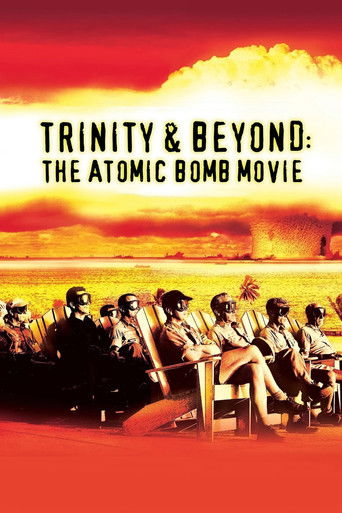
"Trinity and Beyond" is an unsettling yet visually fascinating documentary presenting the history of nuclear weapons development and testing between 1945-1963. Narrated by William Shatner and featuring an original score performed by the Moscow Symphony Orchestra, this award-winning documentary reveals previously unreleased and classified government footage from several countries.
Hidden in the heart of Russia, there is a Soviet-era city where thousands of people live and work behind barbed-wire fences monitored by armed guards. It is Ozyorsk (Ozersk), located in the Chelyabinsk Oblast, one of the most polluted places on the planet and home to the largest stockpiles of nuclear material. Its code name: City 40.
Romm pulls out all the stops in its selection of documentary material to draw the viewer not only into absolute horror about fascism and nazism in the 1920s–1940s Europe, but also to a firm conviction that nothing of the sort should be allowed to happen again anywhere in the world.
Documentary about the art of film editing. Clips are shown from many groundbreaking films with innovative editing styles.
Over seven decades, actor and activist George Takei journeyed from a World War II internment camp to the helm of the Starship Enterprise, and then to the daily news feeds of five million Facebook fans. Join George and his husband, Brad, on a wacky and profound trek for life, liberty, and love.
A documentary examining the decade of the 1970s as a turning point in American cinema. Some of today's best filmmakers interview the influential directors of that time.
A documentary focused on plastic pollution in the world's oceans.
The documentary recounts the world's first nuclear attack and examines the alarming repercussions. Covering a three-week period from the Trinity test to the atomic bombing of Hiroshima, the program chronicles America's political gamble and the planning for the momentous event. Archival film, dramatizations, and special effects feature what occurred aboard the Enola Gay (the aircraft that dropped the bomb) and inside the exploding bomb.
An experimental documentary that explores Saudi Arabia's relationship with the U.S. and the role this has played in the war in Afghanistan.
A documentary on the making of the three Godfather films, with interviews and recollections from the film makers and cast. This feature also includes the original screen tests of some of the actors for "The Godfather" film, and some candid moments on the set of "The Godfather: Part III."
This revealing documentary honors the legendary Sidney Poitier—iconic actor, filmmaker, and civil rights activist. Featuring interviews with Denzel Washington, Spike Lee, Halle Berry, and more.
A documentary about the making of David Fincher's 2008 film THE CURIOUS CASE OF BENJAMIN BUTTON. Virtually every element in the evolution of the Fincher's film is documented here, from the project's attachment to numerous other directors during the 1990s, to its shoot in 2006 and 2007 in New Orleans, to its complex, CGI-intensive postproduction process.
We live in a world where the powerful deceive us. We know they lie. They know we know they lie. They do not care. We say we care, but we do nothing, and nothing ever changes. It is normal. Welcome to the post-truth world. How we got to where we are now…
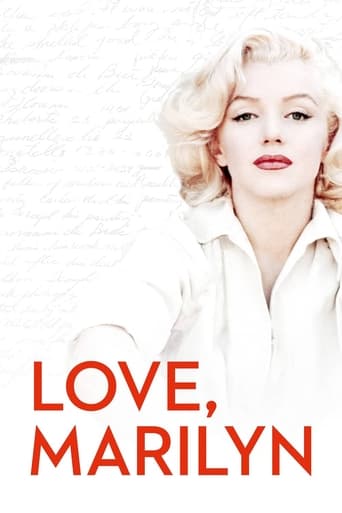
Using the book 'Fragments', which collects Marilyn Monroe's poems, notes and letters, and with participation from the Arthur Miller and Truman Capote estates who have contributed more material, each of the actresses will embody the legend at various stages in her life.