Social & External
The people behind it
Carlos Franganillo
Presentador
David Attenborough celebrates the amazing variety of the natural world in this epic documentary series, filmed over four years across 64 different countries.
To coincide with COP28, the two-part arte documentary (originally from PBS Frontline/BBC under the title "Big Oil vs. The World" / "The Power of Big Oil") shows how oil companies and politicians have, for decades, sowed doubt about the causes of climate change and obstructed necessary countermeasures. In light of the growing threat of natural disasters, heat waves, and floods, the film examines the precise reasons for this long-standing obstruction and questions the responsibility of powerful oil companies like ExxonMobil.
Take a trip inside the mind of Bill Gates as the billionaire opens up about those who influenced him and the audacious goals he's still pursuing.
See It Now is an American newsmagazine and documentary series broadcast by CBS from 1951 to 1958. It was created by Edward R. Murrow and Fred W. Friendly, Murrow being the host of the show. From 1952 to 1957, See It Now won four Emmy Awards and was nominated three other times. It also won a 1952 Peabody Award, which cited its
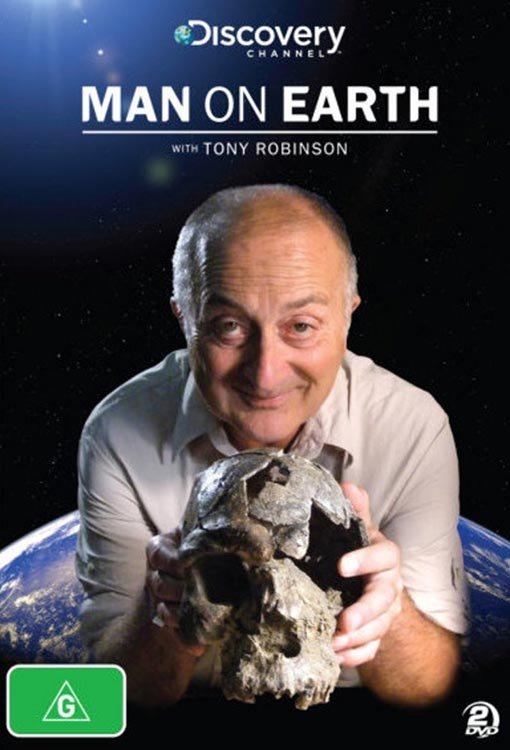
Man on Earth is a four-part British documentary television series presented by Tony Robinson. The programme documents the effects of climate change across 200,000 years of human history. The series premiered 7 December 2009 on Channel 4 with 1.4 million viewers. Accompanying Robinson to help explain the science are archaeologist Dr. Jago Cooper and climate modeller Dr. Joy Singarayer.
The series offers fascinating insights into the most successful animal group in the world. From the tiny Etruscan shrew to the giant blue whale, Mammals will reveal the secrets of their success, and how their winning design, incredible adaptability, unrivaled intelligence, and unique sociability have all contributed to their remarkable rise.
This stunning nature series narrated by Cate Blanchett explores the intelligence, resourcefulness and interconnectedness of life on our planet.
Alex Honnold leads an expedition to Greenland to climb a huge 4,000 foot sea cliff and investigate the impacts climate change on the region.
The series unravels the hidden secrets of the Ice Age and how it created the world we now live in, chronicling the rise of the mega beasts, from woolly mammoths to sabre-tooth cats, and the David and Goliath story of Neanderthals versus Homo Sapiens and the ultimate irony that global warming could trigger the next Ice Age.
Following his visit to the Great Barrier Reef in 1957, naturalist and broadcaster David Attenborough returns and uses the latest filming techniques to unlock the secrets of the natural wonder.
An excellent narration of oil industry since early days to 20th century and up to today. How oil changed the world and shaped our modern world today.
No two volcanoes are alike; each one has its own distinctive landscape, climate, and geological context. Just as unique are the people we meet along the way who help us comprehend how greatly our planet – and our lives – have been shaped by volcanic phenomena. For the scientific aspect of each episode, we explore the very diverse range of questions raised by volcanic phenomena in such varied fields as earth sciences, climatology, biodiversity, oceanography, geography, agronomics, and archaeology. The cultural part of the show delves into mythology, religion, philosophy, folk and artistic traditions, cooking, and ways of life.
Filmed across six continents, this docuseries uses cutting-edge camera technology to capture animals' nocturnal lives, revealing new behaviours filmed in full color like never before.
Experience our planet's natural beauty and examine how climate change impacts all living creatures in this ambitious documentary of spectacular scope.
Journeying to the far reaches of our planet, this eight part series follows some of the world's most amazing species, telling extraordinary stories that are dramatic, thrilling, funny and sometimes heart-breaking, but always full of hope.
Natural World is a nature documentary television series broadcast annually on BBC Two and regarded by the BBC as its flagship natural history brand. It is currently the longest-running series in its genre on British television, with more than 400 episodes broadcast since its inception in 1983. Natural World is produced by the BBC Natural History Unit in Bristol, but individual programmes can be in-house productions, collaborative productions with other broadcasters or films made and distributed by independent production companies and purchased by the BBC. Natural World programmes are often broadcast as PBS Nature episodes in the USA. Since 2008, most Natural World programmes have been shot and broadcast in high definition.
The documentary takes viewers through Janet Jackson's life and career, contain never-before-seen footage, and feature home videos from the legendary artist. Jackson discusses her controversial 2004 Super Bowl halftime show performance with Justin Timberlake, her father Joe Jackson, the death of her brother Michael Jackson, and more.
David Attenborough presents a documentary series exploring how animals meet the challenges of surviving in the most iconic habitats on earth.
Infographics and archival footage deliver bite-size history lessons on scientific breakthroughs, social movements and world-changing discoveries.
Will Smith whose curiosity and wonder is positively infectious—is guided by National Geographic Explorers traveling to different corners of the world to get up close and personal with the weirdest, most unusual, dangerous and thrilling spectacles of the planet.
Witness the remarkable story of our universe over billions of years and its inextricable link to life on Earth in this sweeping documentary series.
Millions of years ago, incredible forces ripped apart the Earth’s crust creating seven extraordinary continents. This documentary series reveals how each distinct continent has shaped the unique animal life found there.
Consistently stunning documentaries transport viewers to far-flung locations ranging from the torrid African plains to the chilly splendours of icy Antarctica. The show's primary focus is on animals and ecosystems around the world. A comic book based on the show, meant to be used an as educational tool for kids, was briefly distributed to museums and schools at no cost in the mid-2000s.
Shot from land and air, in trees and cliff-blinds, on ice floes and underwater, this documentary tells the powerful stories of many of the planet's species and their movements, while revealing new scientific insights with breathtaking high-definition clarity and emotional impact. The beauty of these stories is underscored by a new focus into these species; fragile existence and their life-and-death quest for survival in an ever-changing world.
A cinematic experience bringing you the most amazing human stories in the world. Humans and wildlife surviving in the most extreme environments on Earth.
The team behind Frozen II open their doors to cameras for a six-part documentary series to reveal the hard work, heart, and collaboration it takes to create one of the most highly-anticipated films in Walt Disney Animation Studios’ near-century of moviemaking. Cameras were there to capture an eye-opening - and at times jaw-dropping - view of the challenges and the breakthroughs, the artistry, creativity and the complexity of creating the #1 animated feature of all time.
PBS' premier science series helps viewers of all ages explore the science behind the headlines. Along the way, NOVA demystifies science and technology, and highlights the people involved in scientific pursuits.
A series of standalone documentaries powered by the unparalleled journalism and insight of The New York Times, bringing viewers close to the essential stories of our time.
A mind-bending, thrilling journey exploring the fragility and wonder of planet Earth, one of the most peculiar, unique places in the entire universe, brought to life by the only people to have left it behind – the world’s most well known and leading astronauts.
Explore the history of the American LGBTQ movement through the lens of TV in this five-part docuseries. Combining archival footage with new interviews, the series looks at homophobia, the evolution of LGBTQ characters, and coming out in the TV world.
Motoring programme featuring reviews of and reports about cars of all types.