Social & External
The people behind it
Gigi Zanchetta
Maria Victoria Andueza
Guillermo Dávila
Julio César Guerrero
Natalia Streignard
María Laura Andueza Santacruz/Andueza Cardoz
Aroldo Betancourt
Armando Ciano
Elizabeth Morales
María del Socorro Palacios "Coco"
Belén Marrero
Minerva Cardozo
Raúl Amundaray
Antonio José Andueza Ontiveros
Adolfo Cubas
Ulises Romano
Nury Flores
Moncha
Orángel Delfín
Padre Pancho
The story takes place between the 1920s and 1950s in Greater São Paulo. Going through historical moments, such as the Week of Modern Art, the Revolution of 1924, the economic crisis of 1929 and the Vargas Era, there is the story of Yolanda Penteado, a young woman from a traditional family of São Paulo's high society, who arouses admirations to go through. She had never been easily involved with any other admirer until she meets Martim, a young medical student who catches her eye. However, he was an advocate of the anarchist movement, causing disapproval of Yolanda's mother, Guiomar, but the two will fight to get together, even with the disapproval of the family.
This is the story of four women who live on the paradisiacal Isla de Margarita: Saioa Mujica, Elizabeth Zamora, Rebeca Ponti and Eloína Díaz. The four will be forced to face the issues of fidelity and love with their partners, navigating the difficult waters of self-interest and true feelings.
Mistreated by the Narváez family, the poor and innocent Maricruz is humiliated, abandoned, and imprisoned, losing everything. Upon discovering her true origins, she transforms into a wealthy and powerful woman. Driven by grief and the loss of her father, she vows revenge against everyone who made her suffer.
Apoy Sa Dagat is a 2013 Philippine television drama that aired on ABS-CBN from February 11, 2013 to July 5, 2013. It is topbilled by Piolo Pascual, Diether Ocampo, and Angelica Panganiban in her first dual role.
It's a set of six amusing short films that paint an honest and amusing picture of love. The series traces love in an unconventional way, across all ages and professions.
The story revolves around the budding relationship between Kim Kyung Ju and Jang Se Rang who meet when Kyung Ju can’t find her passport and has to go to her friend’s house to try and find it. When she arrives, the friend is leaving and tells Kyung Ju she can just go inside, but to be mindful of her houseguest, Se Rang.
Lia is an Indonesian university student who studies in Korea. Yong is a Korean boy who loves cook and has a crush on Lia.
A Korean pop star and a Japanese housewife meet and start developing feelings for each other. How will things evolve from now on?
Ramiro is a 40-year-old lawyer and university professor who returns to Brazil after eight years of exile in France as a result of the military dictatorship. Recently separated from Dora, he meets Elisa, the youngest daughter of a couple of friends of his parents, who will turn his life upside down.
A dreamy seamstress and mother of three's life is turned upside down when she's wrongly diagnosed with a terminal disease along with an actually terminally ill wealthy book publisher.
After his manager disappears, struggling actor Hao Zeyu is forced to work with an inexperienced team. As they navigate the challenges of the entertainment industry together, they form strong bonds and help each other grow, leading Hao to redefine his understanding of success.
On August 16, midway through a seemingly endless summer vacation, middle school third-year student Nagara, transfer student Nozomi, classmates Mizuho, Asakaze and their entire class are suddenly transported from their tranquil lives to a school adrift in an alternate dimension. They must survive with the super powers that have awakened within them.
El amor no es como lo pintan is a Mexican telenovela produced by Juan David Burns and Elisa Salinas for TV Azteca. It was broadcast on Azteca 13 from November 6, 2000 to April 27, 2001 for 165 episodes.
The plot told the story of Guadalupe, the eldest daughter of the Roldans, a traditional bankrupt family: to solve the family's financial problems, the father forces Guadalupe to marry a man she doesn't love.
A female coroner and royal detective solve a decades-old mystery in Tang Dynasty China, risking all to expose dangerous secrets.
A telenovela that dramatizes the romances and rivalries between two brothers and two sisters in Mexico between the years 1885 and 1900.
¡Válgame Dios! is a Spanish-language Venezuelan telenovela written by Mónica Montañéz for Venevisión. Sabrina Seara and Eduardo Orozco star as the main protagonists while Ricardo Alamo, Carlota Sosa and Raquel Yanez star as the main antagonists.
Story of love between Marimar and Sergio. Sergio is from a wealthy family, and Marimar lives with her poor grandparents in a hut in front of the ocean.
Camila Monterde is a beautiful veterinarian whose life has been torn apart by a tragic accident in which her fiancé, Luis, was killed. Hoping to ease her depression, her uncle, Daniel Monterde, invites her to live at his ranch, where she can rest and recover while caring for the many animals he keeps there. Meanwhile, in Chile, Daniel Diaz suddenly receives a letter stating that he has come into a substantial inheritance and must travel to Mexico to claim it. Surprised and curious, he’s about to make the trip when a vicious lie disrupts his plans and lands him in prison, causing him to lose the inheritance and his family. Deeply bitter and hungry for revenge, Daniel travels to Mexico determined to destroy the Monterde family, which he blames for his terrible misfortune. He takes a job at the Monterde ranch to be close to his prey. His vengeance is perfectly planned except for one unexpected development: he and Camila fall passionately in love and that changes everything.
Contra viento y marea is a Mexican telenovela aired from April 25 until November 4, 2005. This was also the last acting role of Beatriz Sheridan, who died in 2006 of a heart attack.
Teresa Chavez is a young woman with an obsession for money and ambition. Despite her beauty and the fact that she was raised in the bosom of a loving family, she is resentful; her one desire is to leave her humble but poor neighbourhood.
María Mercedes, a poor girl who sells lottery tickets, meets a rich man who hates his own family and sees in María Mercedes an opportunity to make their lives miserable.
Maricruz and Beatriz are school friends; Beatriz comes from a well-to-do family, whereas Maricruz belongs to a lower socioeconomic stratum. Both are on the verge of turning fifteen and are preparing to leave childhood behind. Issues within their family and social environments affect them directly; for Beatriz, her parents' marital breakdown becomes the primary obstacle to overcome, compounded by a sexual awakening fraught with taboos and misinformation. Meanwhile, Maricruz must contend with her mother's overprotectiveness and prejudices, as well as the tension caused by a neighbor who is obsessed with her.
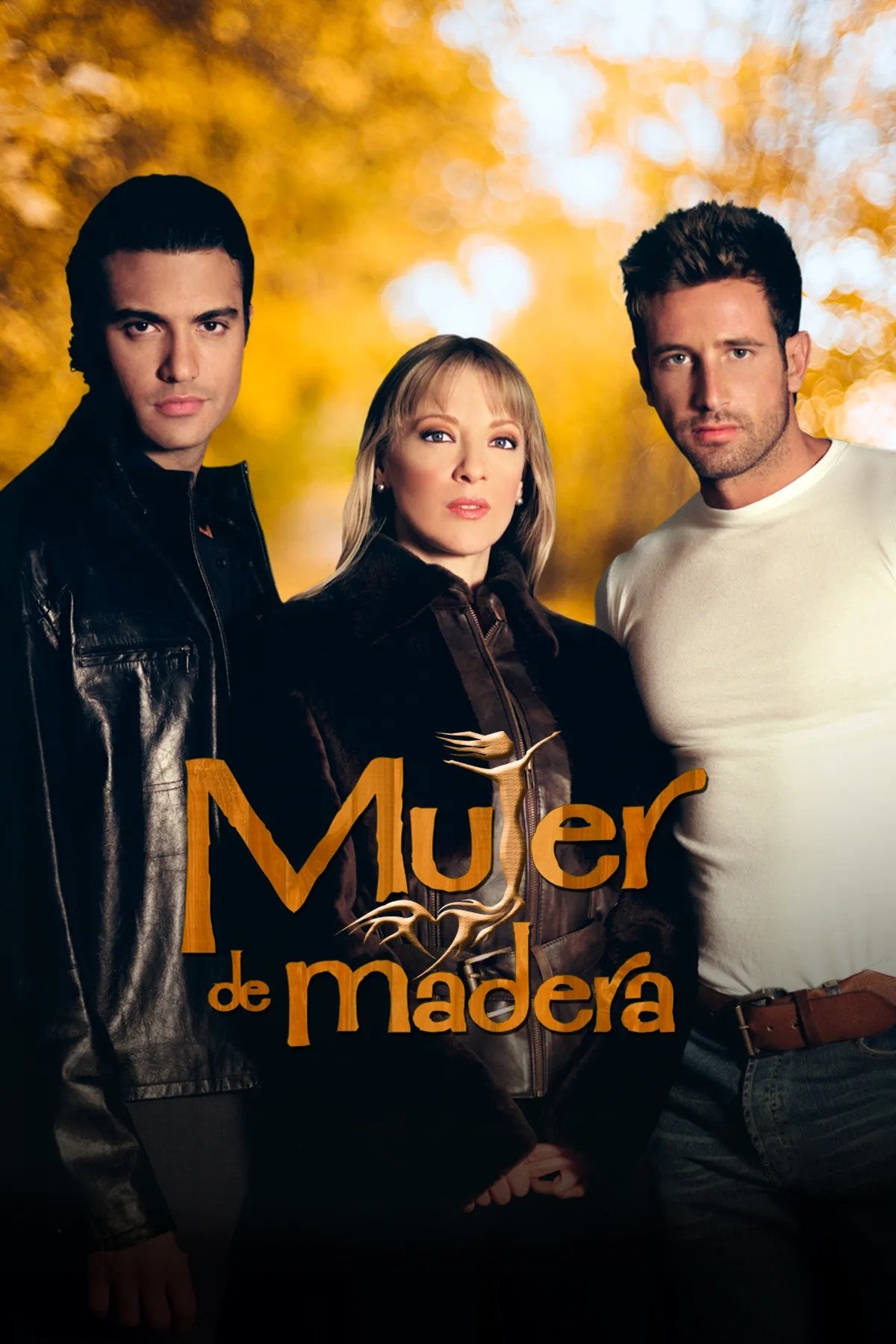
Mujer de Madera is a Mexican telenovela produced by Televisa in 2004. One unusual feature of this telenovela is that the main character is played by different actresses before and after her stay in hospital due to a forest fire.
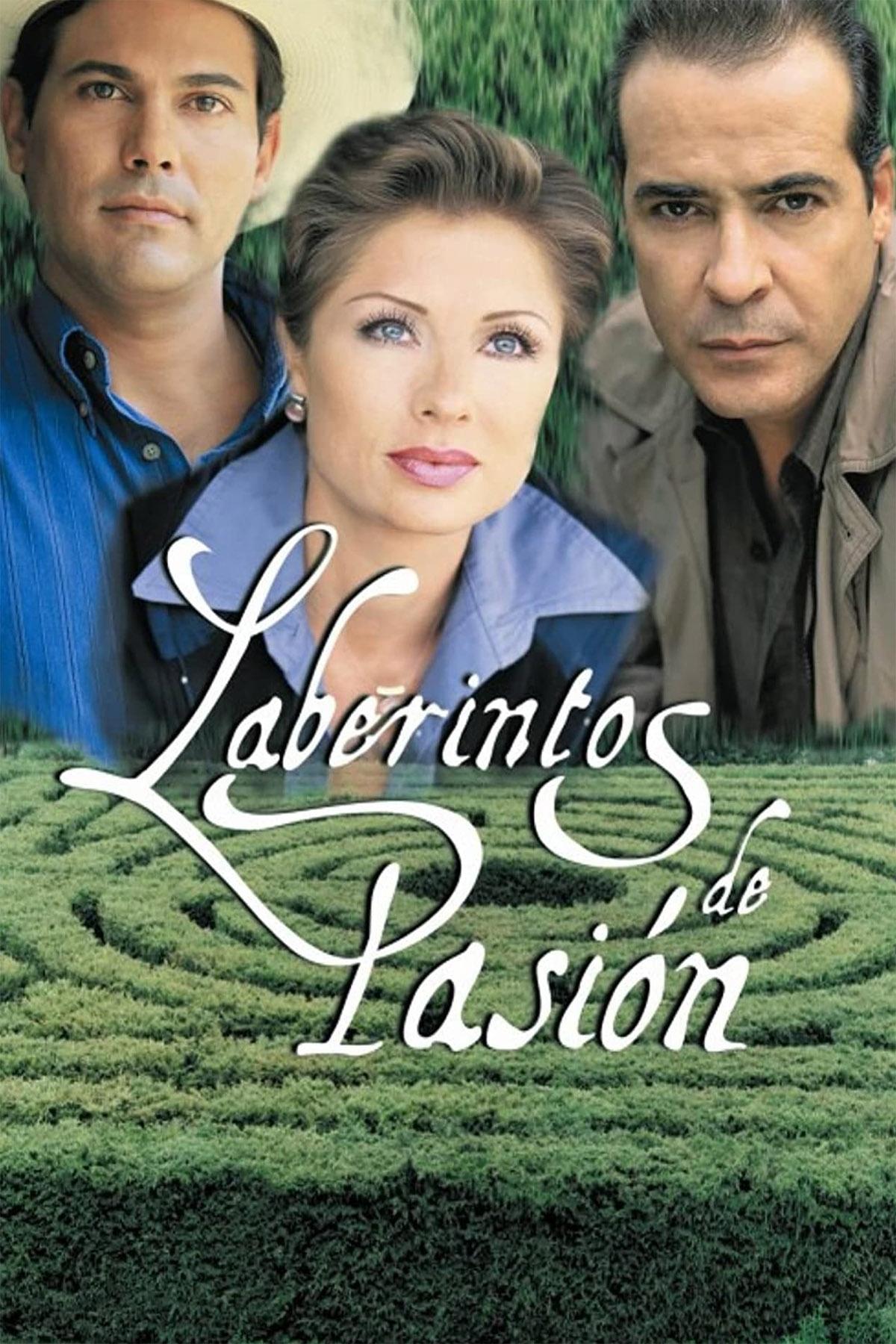
Laberintos de pasión is a Mexican telenovela produced by Televisa in 1999. Starring Leticia Calderon, Francisco Gattorno, César Évora, in addition to the participation of Manuel Ojeda, Monika Sanchez and Azela Robinson.
Piel de otoño is a Mexican telenovela that was produced by Televisa and broadcast on El Canal de las Estrellas in Mexico from 9 May 2005 through 23 September 2005 in Mexico, and from October 10, 2005, through February 17, 2005, in the United States. Starring Laura Flores and René Strickler as the series' protagonists, the show tells the story of Lucía Villarreal de Mendoza, a woman who seeks refuge from her husband and children's abuses in the friendship of a stranger on the Internet, who signs his messages only as "wind". Piel de otoño is a remake of the 1986 Televisa telenovela Cicatrices del alma. The program aired weekdays at 5 pm for twenty weeks.
Rebeca murders her sister Adriana to end up with the man she loved, and becomes the step mother of her niece Lucía. Nora, Lucía's half sister and daughter of Rebeca, resents Lucía for the same reasons Rebeca hated Adriana, as history repeats itself.
Dos Hogares is a Mexican telenovela produced by Emilio Larrosa for Televisa. Anahí, Carlos Ponce, Sergio Goyri, Alfredo Adame, Laura León, Jorge Ortiz de Pinedo, Joana Benedek, Víctor Noriega, Claudia Álvarez, Abraham Ramos, Malillany Marín and Olivia Collins in the leading roles. Canal de las Estrellas aired Dos Hogares from June 27, 2011 to January 20, 2012, with Abismo de Pasión replacing it. From October 31, 2011 to May 29, 2012., Univision broadcast Dos Hogares at 3pm central, replacing one hour of Ni Contigo Ni Sin Ti.
Las Amazonas is a Mexican telenovela produced by Salvador Mejía Alejandre for Televisa and originally broadcast on Las Estrellas from May 16 to September 4, 2016. It is based on the Venezuelan telenovela Amazonas (1985). The story follows ranch owner Victoriano Santos and his three daughters, whose lives are transformed by love, family rivalries, and long-hidden secrets. As old betrayals resurface and unexpected romances develop, they must confront painful truths that will test their relationships, reshape their family, and change their future forever.
Sofía Peralta-Avitia Villaseñor, a successful businesswoman and great mother, who feels lonely in her marriage to Gonzalo Balmori-Ricci Nava. At the same time, her daughter, Bárbara Balmori-Ricci Peralta-Avitia, and her young bodyguard, Salvador "Chava" Reyes Encino, will transform their rebelliousness into passion. But none of them know that the evil, ambitious people around them will try to meddle in their paths on their road to love.
Emiliano, a wealthy Mexican businessman, is ripped off by his friends and partners. Hidden in Bogotá, he receives help from Rosario, a mariachi singer. She does not know Emiliano’s background and that he is wanted by the police of two countries and by a criminal organization. With a new name and personality, he adapts well to his new life as a mariachi band member and finds in Rosario the love of his life. But he is afraid his secret will tear them apart. He needs to clear his name and resolve his case to avoid that fate. Meanwhile, he often finds his love tested and vulnerable to several rivals, but Rosario always trusts that he has been honest with her.
Mirada de mujer: El regreso is a Mexican telenovela, which was produced by and broadcast on TV Azteca in 2003. It is the sequel of Mirada de Mujer.
A wealthy and handsome man named Marco Durán arrives in a small coastal town called San Carlos, partly to consolidate his businesses in the area and partly to get away from Miranda Narváez, his obsessive and unstable ex-girlfriend. María del Cielo Montalvo is a beautiful and tasteful young woman, whose strength of character arouses the admiration of all the men in the sector and the love at first sight of Marco who does not hesitate to ask for her hand immediately after seeing her for the first time. She is the woman he has always dreamed of; However, for Cielo he is just another man like many who has come to poison the quiet life of San Carlos with his money and does not hide the contempt she feels for him, being also a woman engaged to Sergio Zambrano, her lifelong boyfriend.
Nunca te olvidaré is a Mexican telenovela produced by Juan Osorio for Televisa in 1999. It is based on a novel by Caridad Bravo Adams and starring Edith González, Fernando Colunga and antagonistic interests of Alma Muriel, Eugenia Cauduro and Humberto Elizondo.
Karyme Lozano, Cristian de la Fuente and Adriana Louvier will star as the protagonists, while Diana Bracho, Flavio Medina and Salvador Zerboni will star as the antagonists, and with the stellar participations of Alejandra Barros, José Elías Moreno and Olivia Bucio.