
Teresa Chavez is a young woman with an obsession for money and ambition. Despite her beauty and the fact that she was raised in the bosom of a loving family, she is resentful; her one desire is to leave her humble but poor neighbourhood.

Social & External
The people behind it
Angelique Boyer
Teresa Chávez
Aarón Díaz
Mariano Sánchez
Cynthia Klitbo
Juana Godoy
Sebastián Rulli
Arturo de la Barrera
Ana Brenda Contreras
Aurora Alcazár
Silvia Mariscal
Regina Aguirre de Chaves
Juan Carlos Colombo
Armando Chaves Gomes
Raquel Olmedo
Oriana Guijarro de Moreno
Eugenia Cauduro
Vanessa Coronel de Alcazar
A humble young woman allows herself be manipulated by her twin sister to replace her so she can leave with another man.
Por Siempre mi Amor is an upcoming Mexican telenovela to be produced by Ignacio Sada Madero for Televisa. It is a remake of Mi Segunda Madre, produced by Juan Osorio. in 1990 Canal de las Estrellas will broadcast Mi Segunda Madre after Corazón Indomable concludes in late-September 2013. On June 24, 2013, it was confirmed that Susana González and Guy Ecker will star as the protagonists. Dominika Paleta and Héctor Suárez Gomís will star as the antagonists.
An engineer who works in a large construction company and a poor worker without aspirations both share a love that dared to go beyond all prejudices and differences. Based on the Chilean TV series of the same name.
A man's budding romance with a beautiful woman is sabotaged by his evil twin, but they get another chance at love when they're reunited years later.
Libre para amarte is a Mexican telenovela produced by Emilio Larrosa for Televisa. It is based on Colombian telenovela Los canarios. Gabriel Soto, Eduardo Santamarina star as the protagonists, with the stellar performance of the singer and actress Gloria Trevi for first occasion in a soup opera as Aurora Valencia, while Harry Geithner, Jacqueline Andere and Luz Elena González star as the antagonists.
Secretos de Familia is a Mexican telenovela, remake of Brothers & Sisters by Azteca in 2013. As of January 2013, confirmed cast includes Sergio Basañez and Anette Michel as the protagonists. As of May 13, 2013, Azteca 13 is broadcasting Secretos de Familia, replacing La Otra Cara del Alma.
Karyme Lozano, Cristian de la Fuente and Adriana Louvier will star as the protagonists, while Diana Bracho, Flavio Medina and Salvador Zerboni will star as the antagonists, and with the stellar participations of Alejandra Barros, José Elías Moreno and Olivia Bucio.
Mi prima Ciela was a Venezuelan telenovela, produced and broadcast by RCTV in 2007. It starred Monica Spear and Manuel Sosa, and co-starring Flavia Gleske, Geronimo Gil, Raquel Yanez and Guillermo Perez. This telenovela is the remake of two Venezuelan telenovelas in the 80s, "Elizabeth" and "Maite", both produced by the same channel.
El amor las vuelve locas is a Venezuelan telenovela that was broadcast by Venevisión in 2005. This telenovela was a free version of the telenovela Contra Viento y Marea which was written by Leonardo Padrón. It starred Lilibeth Morillo and Carlos Montilla as the main protagonists with Jorge Aravena and Fabiola Colmenares portraying the main antagonists.
Eternamente Tuya is a Mexican telenovela produced by Oscar Guarín and Azteca, starring Fernanda Romero and Kothan Fernandez with Andrés Palacios and antagonistic participation of Verónica Merchant.
In the early 20th century, the Montes de Oca family—comprising two sisters and a cousin—finds itself entangled in an intense love triangle. Matilde is in love with her cousin Rodrigo, who loves the other sister, Branca Flor; she, in turn, loves a humble fisherman. Upon discovering this, Rodrigo accuses the fisherman of theft, leading to his arrest. The lovestruck cousin’s malice knows no bounds; learning that Branca Flor is carrying the fisherman's child, he waits for the baby to be born so he can make it disappear.
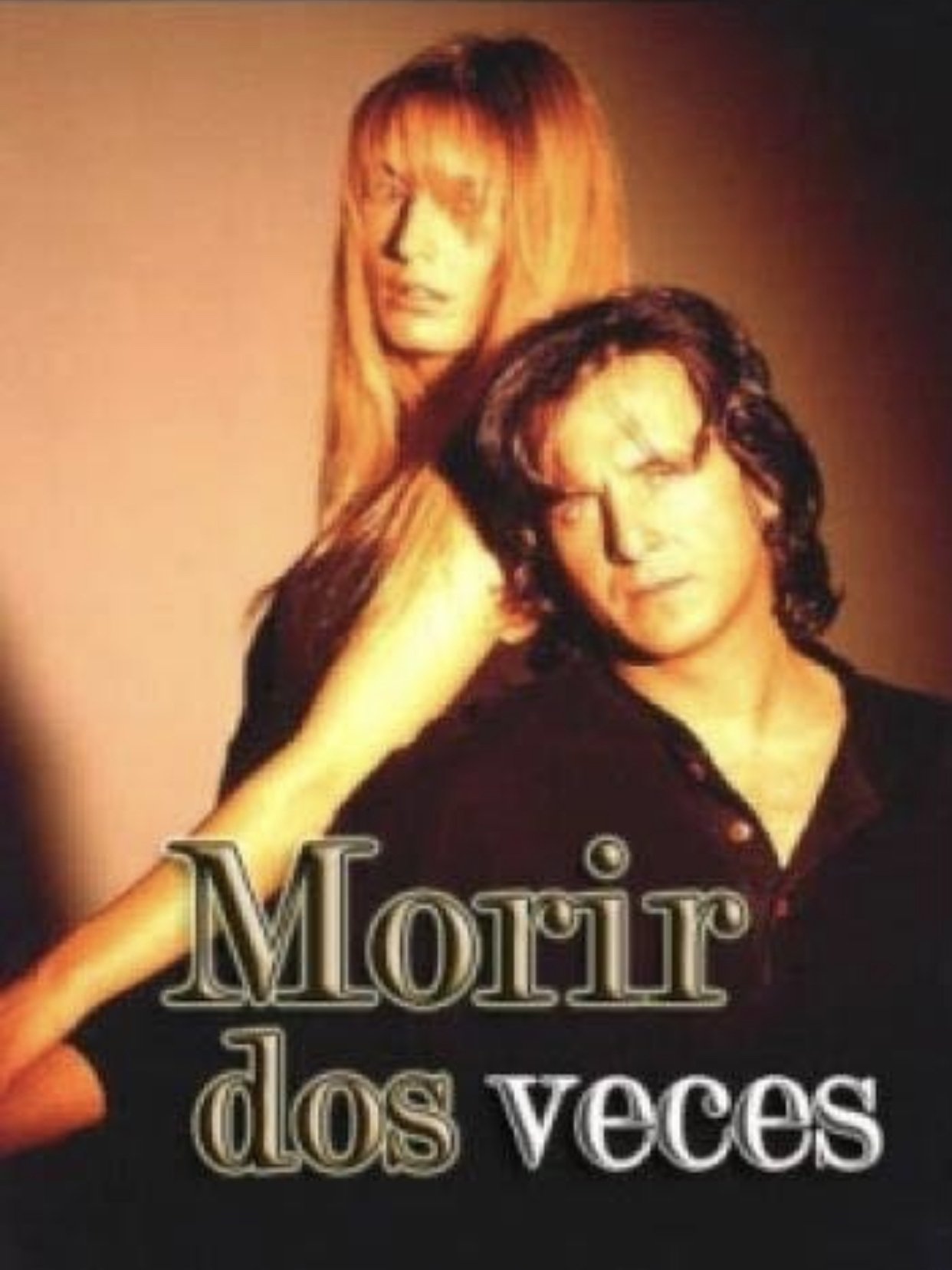
Morir dos veces is a Mexican telenovela produced by José Rendón for Televisa and originally broadcast on Canal de las Estrellas from February 26 to May 10, 1996. Created by José Rendón, with adaptation by Ximena Suárez, co-adaptation by Alfonso Espinosa, and literary editing by Martha Carrillo, the telenovela stars Eduardo Palomo and Carina Ricco. The story follows Silvana, a devoted wife whose life is shattered when her husband, Cristóbal, suddenly dies under mysterious circumstances. As the police uncover his connections to organized crime and suspect Silvana of murder, she becomes entangled in a dangerous web of deception, revenge, and betrayal. Meanwhile, the man everyone believed to be dead returns with a new identity, determined to destroy those who betrayed him.
Triángulo is a Mexican telenovela produced by Ernesto Alonso for Televisa and originally broadcast on Canal de las Estrellas from August 3 to November 20, 1992. Created by María Zarattini and adapted by Irma Ramos, the telenovela stars Daniela Castro and Eduardo Palomo. The story follows Sara Granados, a kind-hearted young woman who is constantly mistreated by her stepmother and stepsister. After being deceived by the ambitious David and becoming pregnant, Sara finds support in his brother Iván, who falls in love with her. As David returns determined to reclaim her, the three become entangled in a love triangle marked by family conflicts, betrayal, and the search for happiness.
Camaleona (2007) is a teen telenovela that follows the life of Natalia, an intelligent but insecure girl who, in order to fit in and deal with personal problems, adopts different “personalities” or ways of being—hence the name Camaleona. Along the way, she meets Sebastián, and they develop a relationship marked by secrets, shifting identities, and emotional conflicts. The story revolves around the search for identity, self-acceptance, and love, showing how Natalia learns to be herself without masks.
María Mercedes, a poor girl who sells lottery tickets, meets a rich man who hates his own family and sees in María Mercedes an opportunity to make their lives miserable.
Contra viento y marea is a Mexican telenovela aired from April 25 until November 4, 2005. This was also the last acting role of Beatriz Sheridan, who died in 2006 of a heart attack.
Camila Monterde is a beautiful veterinarian whose life has been torn apart by a tragic accident in which her fiancé, Luis, was killed. Hoping to ease her depression, her uncle, Daniel Monterde, invites her to live at his ranch, where she can rest and recover while caring for the many animals he keeps there. Meanwhile, in Chile, Daniel Diaz suddenly receives a letter stating that he has come into a substantial inheritance and must travel to Mexico to claim it. Surprised and curious, he’s about to make the trip when a vicious lie disrupts his plans and lands him in prison, causing him to lose the inheritance and his family. Deeply bitter and hungry for revenge, Daniel travels to Mexico determined to destroy the Monterde family, which he blames for his terrible misfortune. He takes a job at the Monterde ranch to be close to his prey. His vengeance is perfectly planned except for one unexpected development: he and Camila fall passionately in love and that changes everything.
Story of love between Marimar and Sergio. Sergio is from a wealthy family, and Marimar lives with her poor grandparents in a hut in front of the ocean.
Emiliano, a wealthy Mexican businessman, is ripped off by his friends and partners. Hidden in Bogotá, he receives help from Rosario, a mariachi singer. She does not know Emiliano’s background and that he is wanted by the police of two countries and by a criminal organization. With a new name and personality, he adapts well to his new life as a mariachi band member and finds in Rosario the love of his life. But he is afraid his secret will tear them apart. He needs to clear his name and resolve his case to avoid that fate. Meanwhile, he often finds his love tested and vulnerable to several rivals, but Rosario always trusts that he has been honest with her.
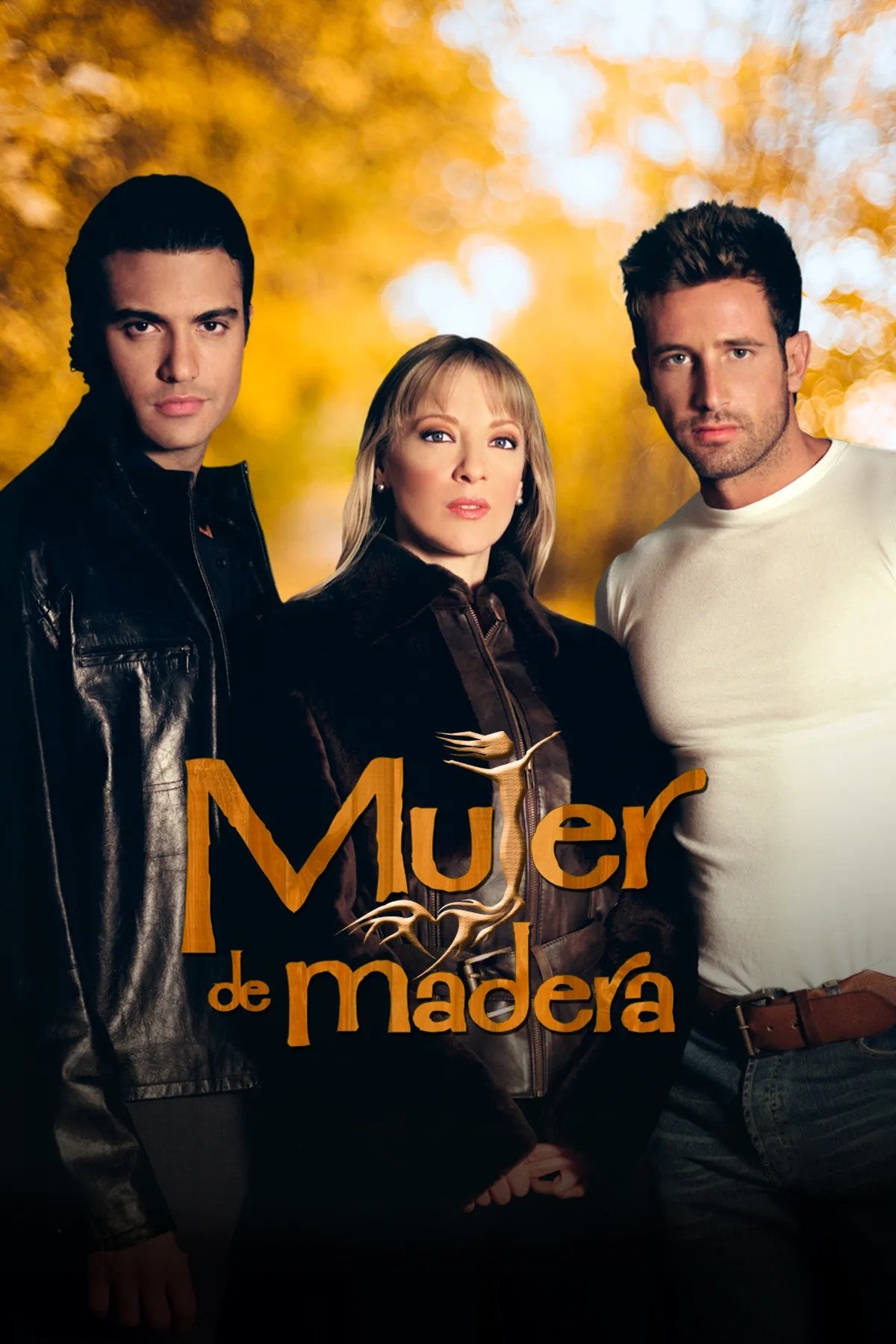
Mujer de Madera is a Mexican telenovela produced by Televisa in 2004. One unusual feature of this telenovela is that the main character is played by different actresses before and after her stay in hospital due to a forest fire.
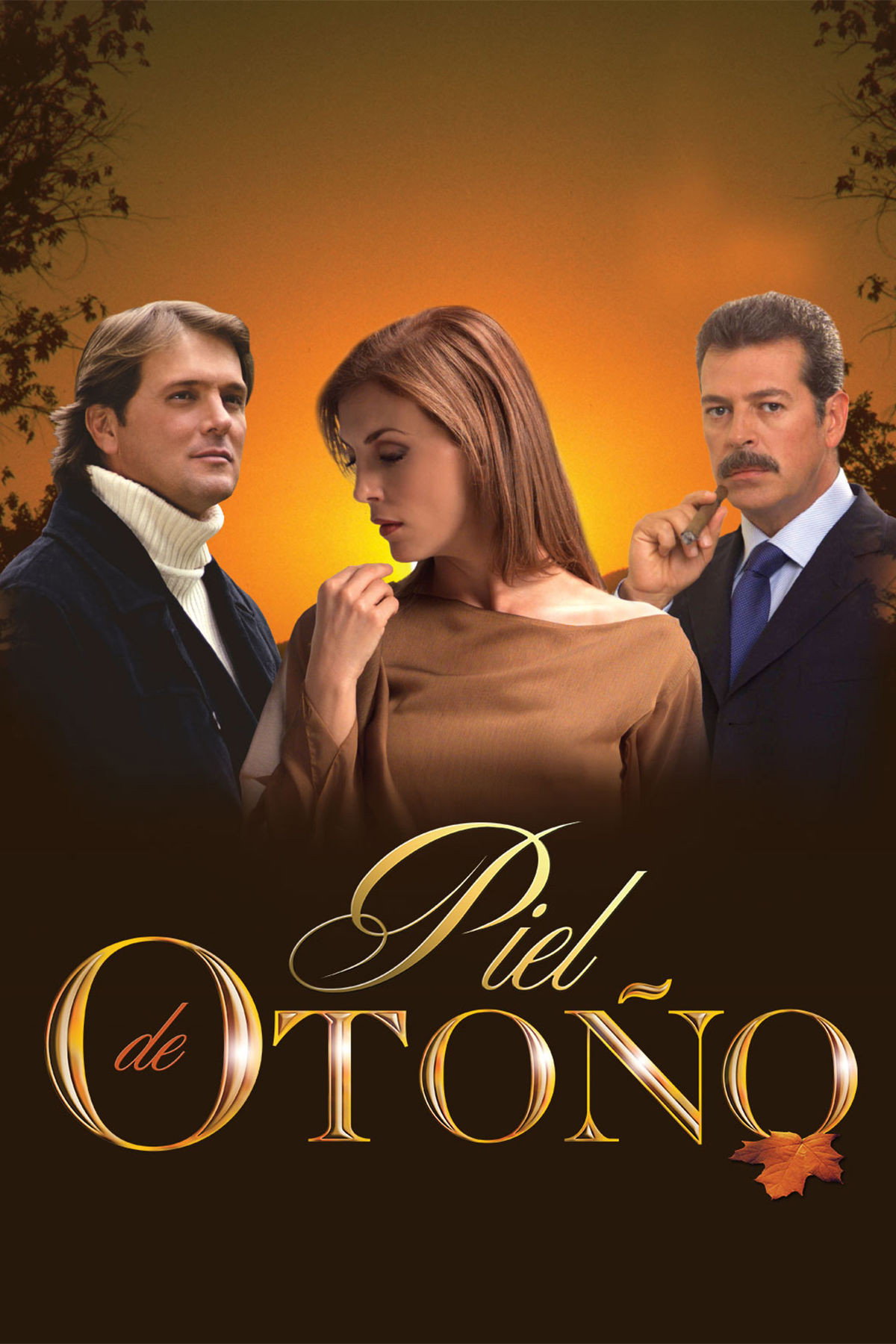
Piel de otoño is a Mexican telenovela that was produced by Televisa and broadcast on El Canal de las Estrellas in Mexico from 9 May 2005 through 23 September 2005 in Mexico, and from October 10, 2005, through February 17, 2005, in the United States. Starring Laura Flores and René Strickler as the series' protagonists, the show tells the story of Lucía Villarreal de Mendoza, a woman who seeks refuge from her husband and children's abuses in the friendship of a stranger on the Internet, who signs his messages only as "wind". Piel de otoño is a remake of the 1986 Televisa telenovela Cicatrices del alma. The program aired weekdays at 5 pm for twenty weeks.
Rebeca murders her sister Adriana to end up with the man she loved, and becomes the step mother of her niece Lucía. Nora, Lucía's half sister and daughter of Rebeca, resents Lucía for the same reasons Rebeca hated Adriana, as history repeats itself.
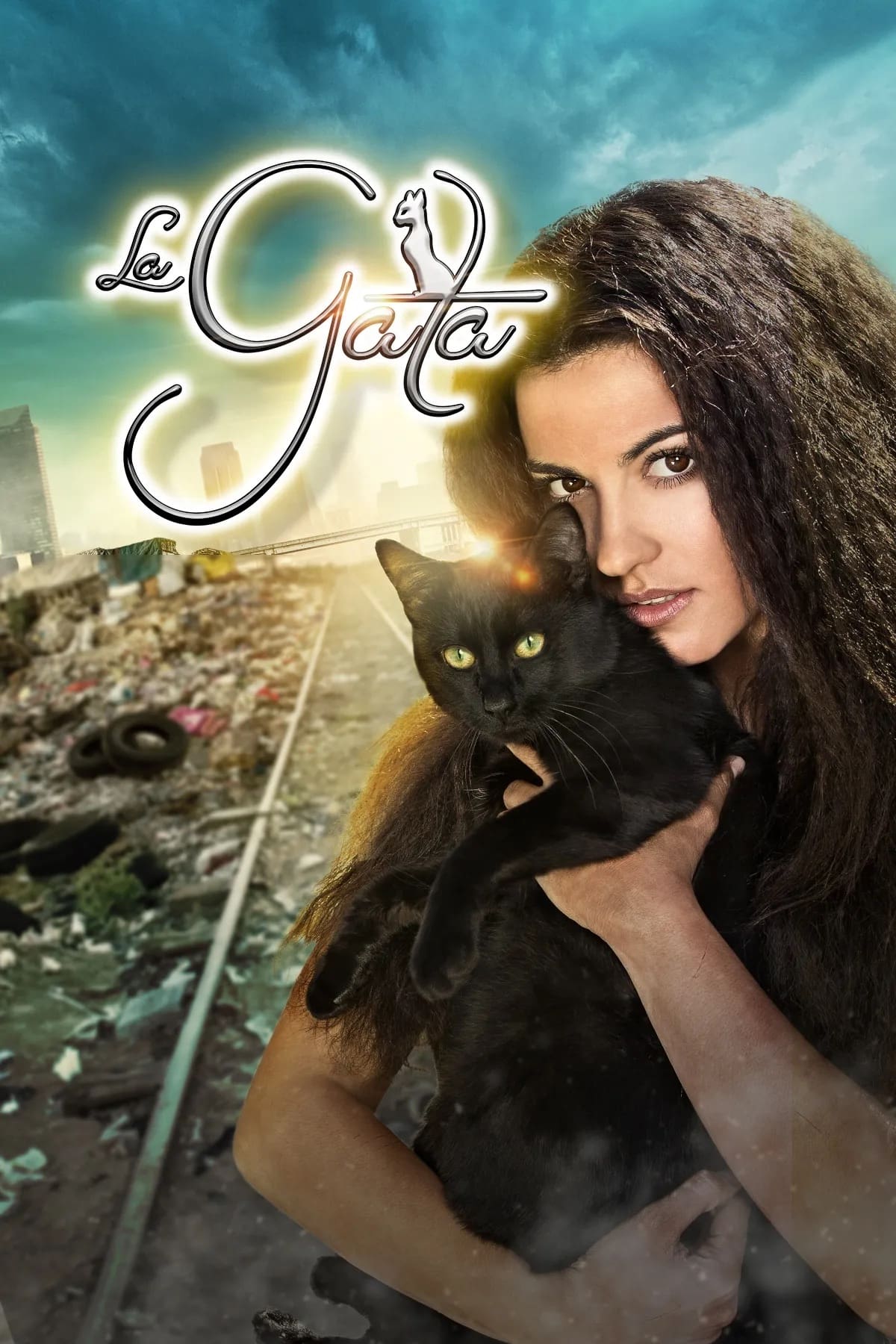
Esmeralda, whom everyone knows as "The Stray Cat," is a girl who grows up in wretched conditions, yet possesses a special sweetness and charm. Her best friend is Pablo, a wealthy boy who defends her against the other children's teasing.
Danna Paola stars as Patito, Eleazar Gómez as Mateo, Violeta Isfel and Cynthia Klitbo, play antagonist roles as Antonella and Bianca. The telenovela features adult protagonists also, René Strickler and Vanessa Guzmán. It first aired on Sunday, 8 March 2009, as the first telenovela to debut on a Sunday in Mexico. After a year of success, becoming a major hit in Mexico, especially among children, its final episode was also on a Sunday, 7 March 2010.


Rubí Pérez is a very beautiful but poor woman who studies at an exclusive university thanks to the financial support from Cristina , her hard-working older sister. She is best friends with Maribel de la Fuente , a kind and wealthy young woman. Rubí is actually jealous of Maribel's social status while pitying her disability and dreams of marrying a rich man to leave poverty behind.
The Horton and Brady broods endure the romantic trials of life in Salem, a Midwestern hamlet filled with evil geniuses, star-crossed lovers and a rich family history.
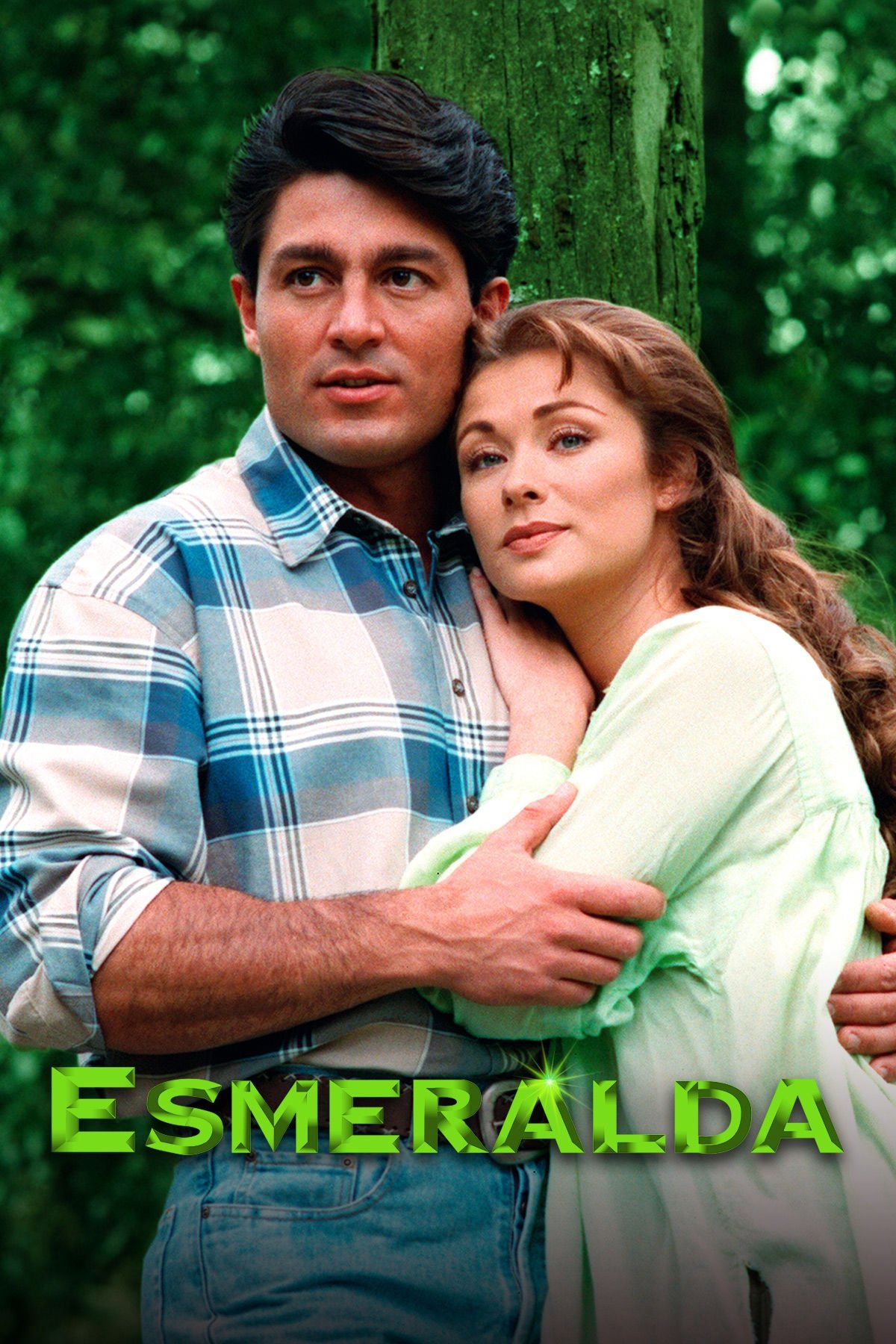
Esmeralda is a telenovela that was released by Televisa in 1997. It is a remake of a 1970 Venezuelan telenovela of that same name, and was itself remade in Brazil in 2004. Another version is Topacio from Venezuela in 1984. One of the most famous telenovela all the time.
Mistreated by the Narváez family, the poor and innocent Maricruz is humiliated, abandoned, and imprisoned, losing everything. Upon discovering her true origins, she transforms into a wealthy and powerful woman. Driven by grief and the loss of her father, she vows revenge against everyone who made her suffer.
Acorralada is an American telenovela produced by Venevisión. Univision aired Acorralada from January 2007 to October 2007 on weekday afternoons at 2 pm central. It was rebroadcast in late 2011 through April 2012 on Univision's sister network, Telefutura. It was filmed in Miami, Florida, and lasted about 187 episodes. It is the second long-running telenovela that Venevisión Productions has produced without its former co-producer Fonovideo.
When Marichuy was born, her mother—believing she was on the verge of death—handed her over to a priest, who took her to an orphanage. At the age of fourteen, Marichuy ran away from the institution and began wandering from place to place, scraping together a living however she could. Years later, she was attacked by a drunkard; the incident left her harboring resentment toward men and plagued by harrowing nightmares.
The rivalries, romances, hopes and fears of the residents of the fictional Midwestern metropolis, Genoa City. The lives and loves of a wide variety of characters mingle through the generations, dominated by the Newman, Abbott, Baldwin and Winters families.
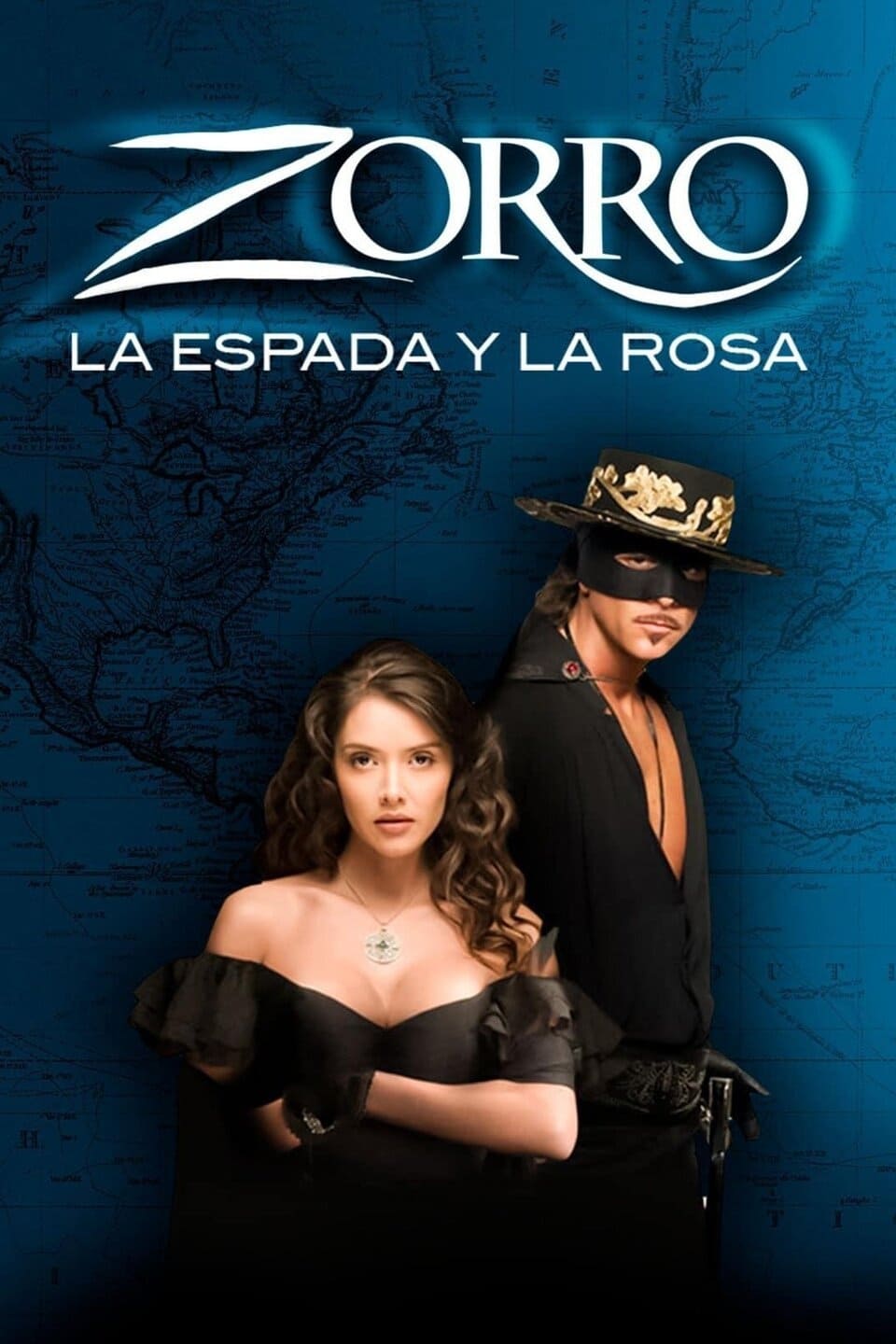
Spanish telenovela based on Johnston McCulley's characters. Don Diego Dela Vega, adopts the secret identity of Zorro. Diego born in the 1790s to a white father, Don Alejandro Dela Vega, and his wife, Native American warrior named Toypurnia. Diego learned his acrobatics and fencing skills in Spain, under a great swordmaster, than he returned to his family's California hacienda. He lives as both a nobleman and a vigilante, fighting imperialist oppression. He is backed by the brotherhood of Zorro, a secret society called the Knights of the Broken Thorn. Zorro falls in love with a beautiful young widow, Esmeralda Sánchez de Moncada. She arrives in California with her sister Mariángel Sánchez de Moncada and her father, Fernando, the newly appointed governor—and villainous dictator—of Los Angeles. The story arc focuses on mysteries concerning Esmeralda's long-lost mother and the man whose atrocities changed Diego's life forever. Their resolution threatens to shake the Spanish Empire.
Amarte es mi pecado is a Mexican telenovela produced by Ernesto Alonso for Televisa and originally broadcast on Canal de las Estrellas from January 5 to May 14, 2004. Created by Liliana Abud, with adaptation by Jaime García Estrada and Orlando Merino, the story follows Leonora Madrigal, a young woman whose life is marked by betrayal, sacrifice, and forbidden love. After being accused of a crime she did not commit, Leonora faces the consequences of a painful past while trying to rebuild her life and find happiness. The telenovela explores themes of love, revenge, ambition, and redemption.