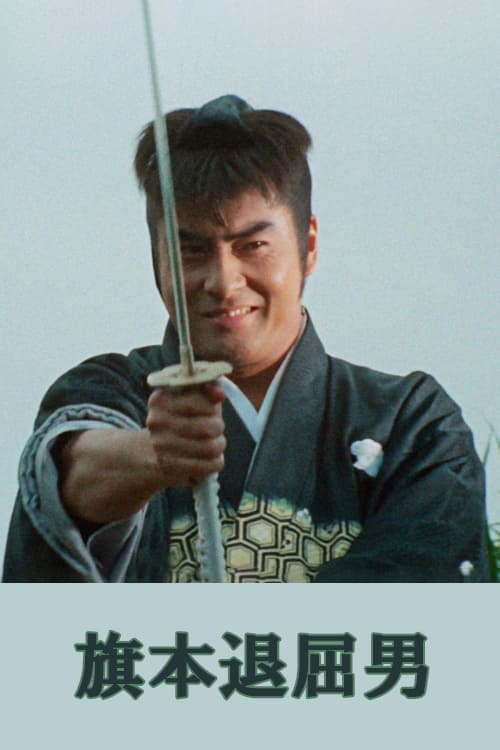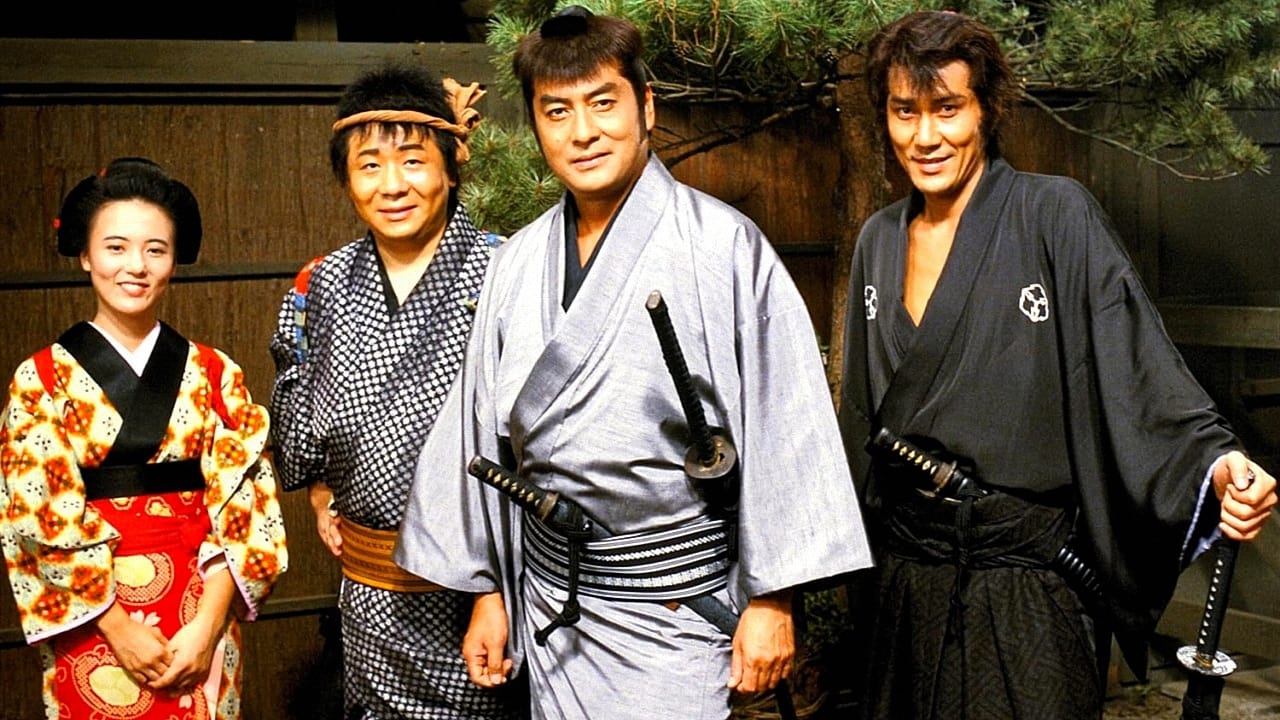
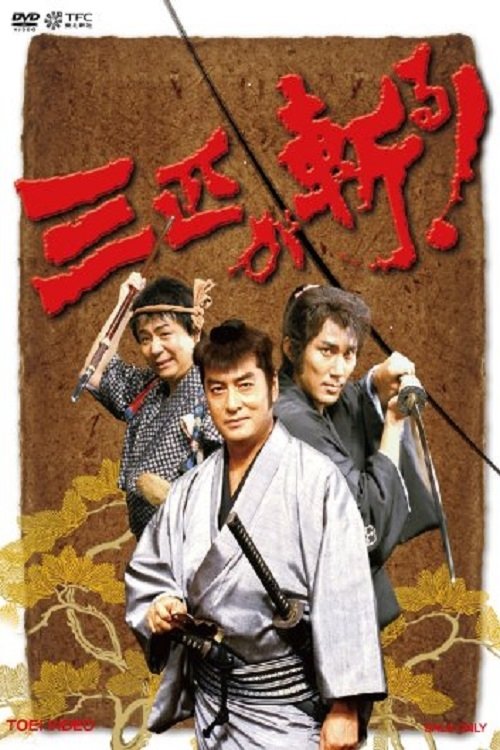
A wandering samurai, ronin, and ninja; meet by chance repeatedly and reluctantly team up to solve the problems of innocent villagers along the way.
Social & External
Unknown Role
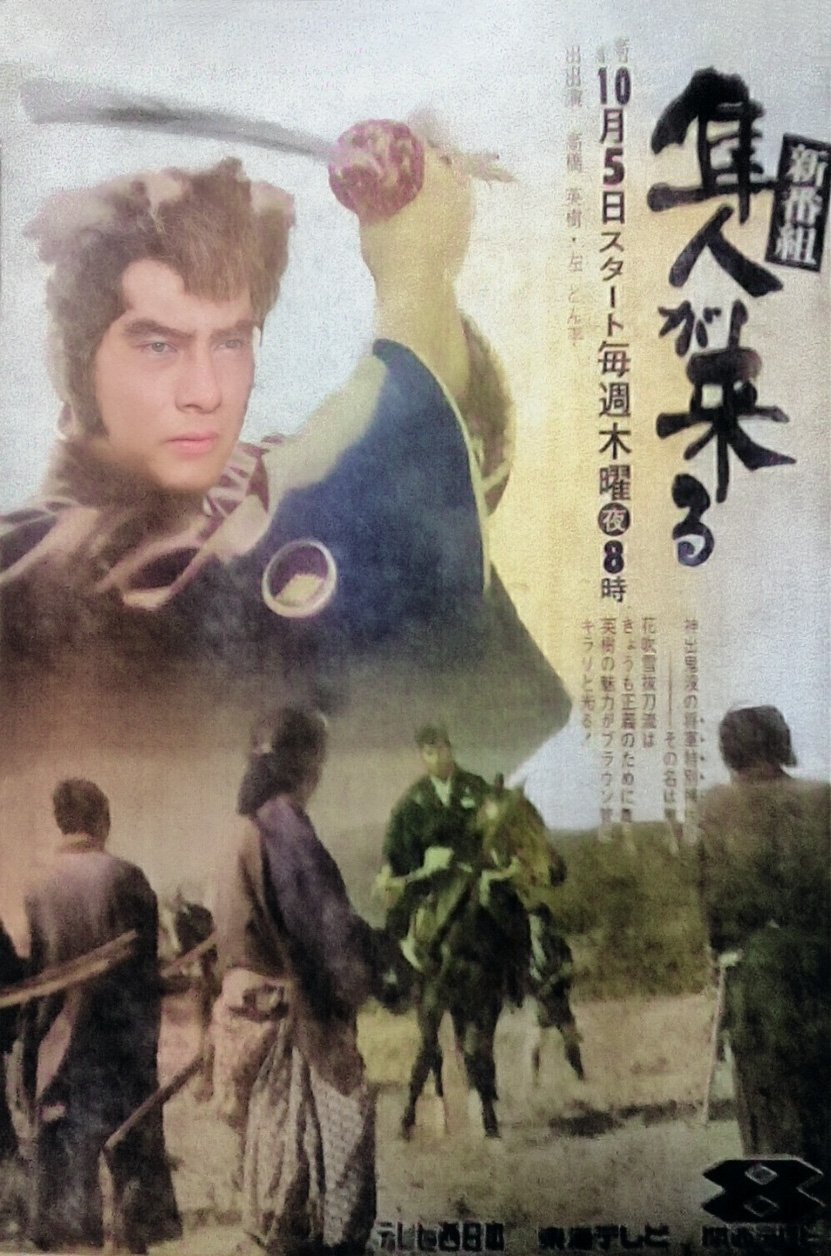
Kōchiyama Sōshun serves as a cha-bōzu (He is kind of tea man) in the administrative headquarters of the Tokugawa shogunate but he works behind the scene to protect powerless people from evil power of Tokugawa shogunate. Kataoka Naojirō and Ushimatsu work for Kōchiyama. Kaneko Ichinojō is a ronin whose interests often align with Kōchiyama


Shinsengumi! is a Taiga drama television series produced by Japanese broadcaster NHK. It was a popular drama about the Shinsengumi, a Japanese special police force from the Bakumatsu period.
Fūrin Kazan was the 46th NHK Taiga drama beginning on January 7, 2007. It was aired throughout 2007. The four characters from left to right are wind, woods, fire, and mountain. The title is a reference to the war banner used by Takeda Shingen, which in turn was taken from Sun Tzu's The Art of War. It means "Swift as the Wind, Silent as a Forest, Fierce as Fire and Immovable as a Mountain."
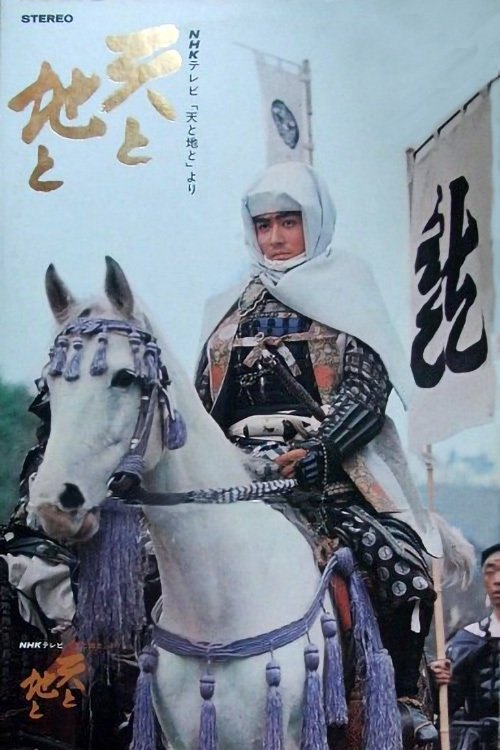
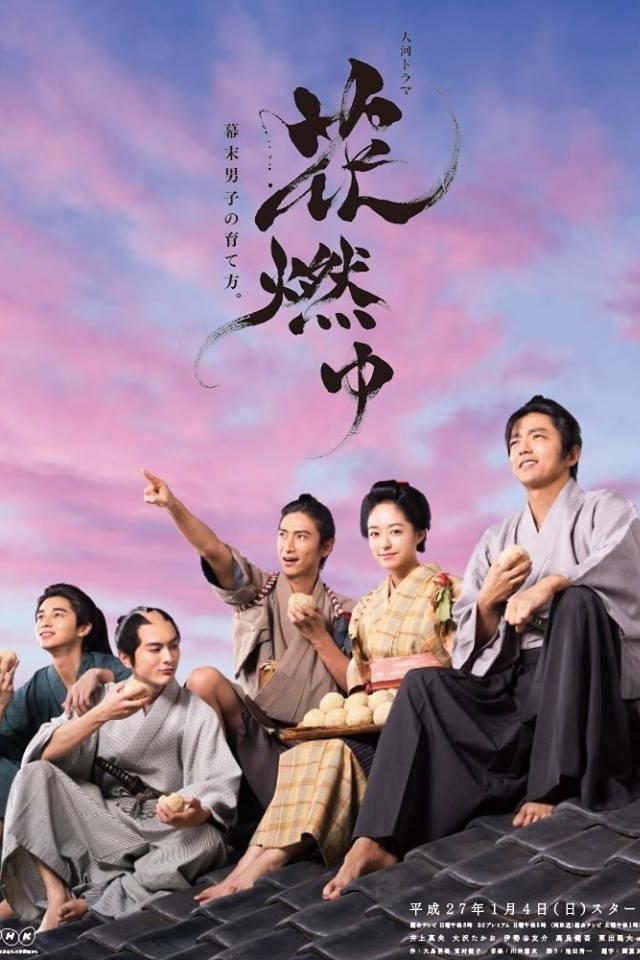
Tenchijin is the 48th NHK Taiga drama. It airs on NHK from January 4, 2009 every Sunday from 20:00 to 20:44 JST to November 22, 2009 spanning 47 episodes. The story centers on the life of the 16th century samurai Naoe Kanetsugu. Production began on April 27, 2007. The story is based on the novel Tenchijin by Masashi Hisaka and was adapted for screen by scriptwriter Eriko Komatsu. The series' music composer was Michiru Oshima. The protagonist of the drama, Naoe Kanetsugu, was taught by Uesugi Kenshin in his youth that to conquer the world is a trifling matter, but what matters is to live one's life with righteousness. After Uesugi's death, Naoe supports Uesugi Kagekatsu, who holds the destiny of Echigo province.
Ryōmaden is the 49th NHK Taiga drama. It was shown on NHK from January 3 to November 28, 2010 spanning 48 episodes. The story centers on the life of 19th-century Japanese historical figures Iwasaki Yatarō and Sakamoto Ryōma. It has been announced that the series will be aired in several other countries, for example Hong Kong, South Korea, Taiwan and Thailand.
Mini-drama with a historical character having a smartphone.
In an alternative feudal Japan, a strange disease that only affects males caused a massive population reduction, leaving females to fill the vacant jobs, therefore changing the social structure. Now, 80 years after the initial outbreak with a 1:4 male:female ratio, Japan is a completely matriarchal society. Females hold all important political positions, and males are their consorts. Only the most powerful female—head of Tokugawa shogunate—may keep a harem of handsome and unproductive males, known as "Ōoku".
Osome is an ex-actress who lost her parents in a fire when she was 6-years old. She then is separated from her older brother, who goes missing. While she tries to investigate the fire that killed her parents, an officer, Yoshikawa reveals that her father used to be a shogunate spy. Osome decides to become a spy herself under Yoshikawa, to find the man who killed her parents and to seek out her lost brother.
Heiji is an undercover policeman in the city of Edo. He possesses a superior skill of throwing coins. When a criminal is caught, Heiji throws coins at the offender and reveals his true identity. Like “Abarenbo Shogun,” “Mito Komon” and “Toyama no Kinsan,” “Zenigata Heiji” is about an official working undercover to catch criminals. The hero was created by novelist Kodō Nomura in 1931.
Kohei Akiyama, a popular master swordsman, and his son Daijiro live in the town of Edo in good faith. While running a dojo, Daijiro and his father find themselves wrapped up in a series of events with the town's people.
We're in Shamisen-bori of the bustling city of Edo. The officers of Guardhouse 36 monopolize the popularity in Edo. They're strong against evil, soft in compassion. Even the shogun depends on them. They're called the “Kirisute Bansho”... with a right to kill.
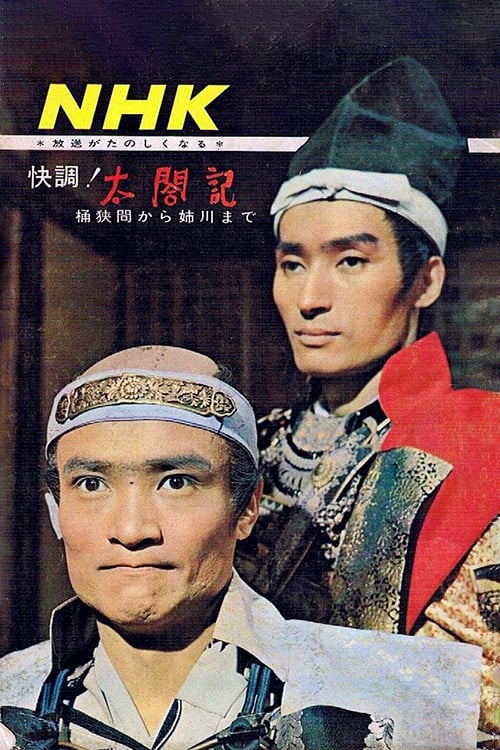
A dramatized biography of the second of Japan's three legendary leaders. Rising from obscurity, Hideyoshi served under the command of Oda Nobunaga. With an extraordinary combination of intelligence, bravery and military skill, Hideyoshi rose to near-absolute power and greatly expanded upon Nobunaga's unification of Japan's warlords. This series also focused on Hideyoshi's personal life, particularly his relationships with his mother and his wife, and the pair's rivalry for influence over him.
During the Tenpo period, the three samurai under the command of the Nanba magistrate were responsible for handling exceptional cases. However, their true identities as shadow assassins were hidden because they were secretly sent to eliminate villains who had escaped punishment by the law.
In the early Meiji era, Shujiro, once known as an undefeated samurai, decides to participate in a deadly survival game to save his family and villagers.
He lost his land, his father, and was torn from his mother. Lonely and wounded, young Takechiyo thought he'd live out his days quietly as a hostage. But fate had other plans. Inspired by Mikawa warriors, he becomes a minor lord and dives into a war-torn world ruled by monsters like Nobunaga and Shingen.Life-or-death moments, miscalculations, and no time to breathe—what will you do, Ieyasu?
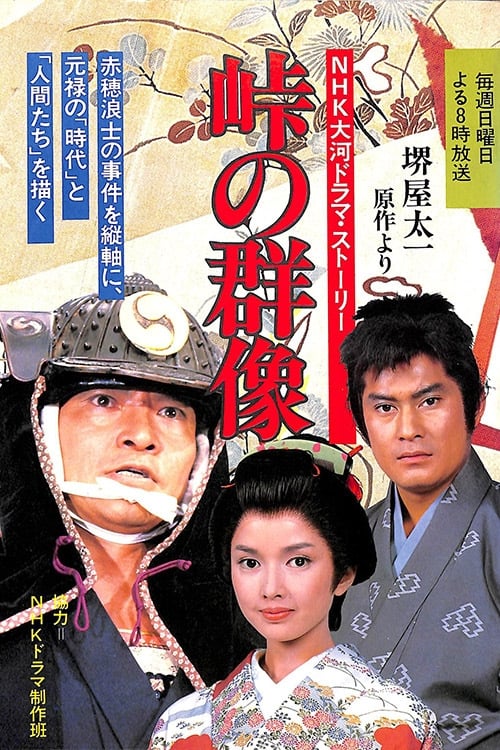
The 38th NHK Taiga Drama is Genroku Ryoran. The "Forty-seven Loyal Samurai" is one of the most enduring and best loved stories of Japan's history. Generations have grown up hearing the stirring tale of Oishi Kuranosuke, chief councillor of the Ako clan who leads his men through suffering and hardship to ultimately avenge their lord after he is unjustly forced to commit harakiri. NHK's 38th Taiga Drama "Genroku Ryoran" is the ambitious remake of this classic epic and boasts a cast that reads like a Who's Who in Japanese entertainment.
The 36th NHK Taiga Drama is Mori Motonari. This series chronicles the life of Mori Motonari, a warlord of the early 1500s who stood at the vanguard of the Warring States era. All Japanese school textbooks contain the Mitsuya no kyokun, Mori's famous lesson to his three sons that teaches that while one arrow is easily broken, three arrows together cannot be broken. In 1997, 500 years after his birth, NHK dramatizes Motonari's rise from a chief of the region of Aki (now Hiroshima) to a daimyo who rules over ten provinces of the Chugoku region. Motonari was 64 years old and already the patriarch of a powerful dynasty about the time Oda Nobunaga and Takeda Shingen appeared on the scene. And even after his death, the Mori family figured prominently in Japanese history. His grandson Terumoto became a loyal Toyotomi vassal. Defeated at the Battle of Sekigahara, Ieyasu confiscated most of his lands, leaving him only with Suwo and Nagato, later known as Choshu. But 260 years later, the Mori got their ultimate revenge, leading the imperial forces against the Tokugawa in the Meiji Restoration.
There was a very turbulent time in the warring period in the history, and Takeda Shingen is consider one of the great warlord among many other.
July 1590, Odawara. Toyotomi Hideyoshi's army had surrounded the Odawara Castle for over 3 months, hoping to conquer this last obstacle to his dream of the country's unification. Standing at the gate of the castle, a lone man facing the menacing guards shouted out: "Do not throw your lives away. Treasure living!". Not long after, the castle gates opened and the reigning lord surrendered. The name of that man is Kuroda Kanbee. An excellent military strategist, he worked hand-in-hand with Hideyoshi to unify the country.
Kee, a cool tsundere, and Peem, a mischievous rich girl, become inseparable friends. No one knows the truth, though, that really, they've been secretly in love with one another since high school. From handmade pork floss, a gear necklace as a token of love, to an accidental first kiss, hearts will be racing. But love is never so easy, and fate plays its tricks. The two are separated and it will be seven years before they meet again... as boss and employee.
After the events of "Kiss Me Again". Pete and Kao start to have troubles during their relationship. Meanwhile, the love story between Sun and Mork begins.
When two brothers fall for two sisters, they quickly realize the age differences between them are too big to ignore.
Chomjan is a prickle-fish vendor who sells her pickled fish using her family's secret recipe in order to support her sister, Methinee, study abroad. Her main helper is Gloy, an orphan who loves her like a sister. When Methinee returns, she brings along a boyfriend who is unaware of her true lifestyle. Ashamed of her life and poverty, Methinee asks Chomjan to lie about her occupation in order to not embarrass Methinee in front of her boyfriend and his family. A request which brings Chomjan a lot of sadness.
the story of Sa-ing or Ung-ing, 18 Mongkut, a beautiful girl who repented of being caught by her silly stepfather, selling her to pay off the debt of the casino owner. So she fled to Bangkok. to find a father who has never met But then fate brought her to know and was helped in the journey by Pae, a good young man before they were separated. Sa-ing therefore did not know that in fact Pae was the owner. cheating drill page A page that deals with scammers all over Thailand. until he was nicknamed crook buster Father must find this work. The enemy had to flee. Love must be resolved How will Sing get out of this crisis?
Ritu joins a coaching class in Bhopal and notices Anuj on the first day. She introduces herself to Anuj, which startles him. He seeks advice from friends on how to impress her. Ritu asks Anuj to help her explore the city but he cancels at the last minute. Anuj writes a love letter and must now confess his feelings to Ritu and pray she feels the same way.
An innovative hybrid docu-series that explores the challenges, joys and complexities of adolescence through ten compelling coming-of-age stories. Growing Up draws on storytelling, experimentation and documentary to let 18- to 21-year-olds tell their stories.
When children are unwanted by their parents, they are sent to the best boarding school in the country: Home School. However, Home School seems more like a prison than a school with its strict rules and regulations. Its curriculum is unique.
A humorous series authored by Saša Al Hamad, which follows the adventures of rebellious stewards and pilots of an imaginary airline.
Uchūsen Sagittarius is a 77-episode Japanese science fiction anime series directed by Kazuyoshi Yokota and created by Nippon Animation and TV Asahi. It aired from January 10, 1986 to October 3, 1987. The series is based on Altri Mondi, an Italian comic book drawn by physicist Andrea Romol.
A woman puts everything on the line to achieve her goal of being able to move into a luxury penthouse in the Gangnam District. In the process, she gradually finds herself turning into a monster.
A docu-drama narrated by Jung Bo Suk that tells of the people and history of Myeongdong between 1953-1960, when it was at its height as the cultural centre of the country. It captures both the beauty and incredible tragedy that surrounded that period, with its many artistic innovations as well as the blood, sweat and tears of the people in the years following the Korean War.
Heng's dull love life turns chaotic as his boss Kongdech, roommate Mo, and childhood friend Chicha confess their love, leaving him in a whirlwind of emotions.
With fresh reporting and analysis from journalists, historians and policymakers, go beyond the sensational headlines and behind the velvet rope to examine the church's long pattern of covering up misconduct to protect itself.
The Animanimals are animals with little quirks. Each time, a different animal faces an absurd adventure that could only happen to them.
An extraordinary team of soccer players pursue their personal and athletic goals in the fantastic, sports-obsessed world of Sportsville.