A film documenting life in Okinawa under the domination of American military bases
Social & External
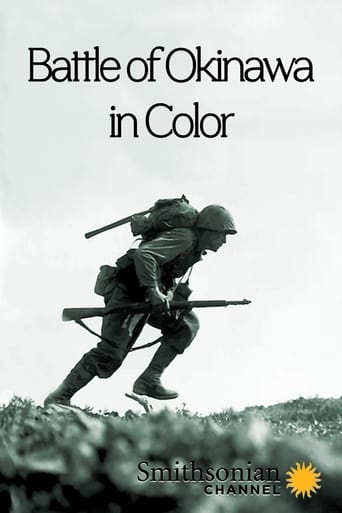
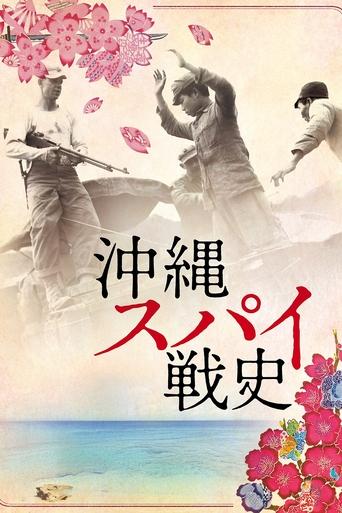
By mid-1945, Hitler is dead and the war has ended in Europe. Halfway around the world, however, the fighting is still going strong on a small island in the Pacific. Okinawa was the site of the last battle of the last great war of the 20th century, with a casualty rate in the tens of thousands. Through it all, military cameramen risked their lives to film the conflict, from brutal land combat to fierce kamikaze attacks at sea. See the footage they captured and experience this intense battle the way the soldiers saw it -- in color.
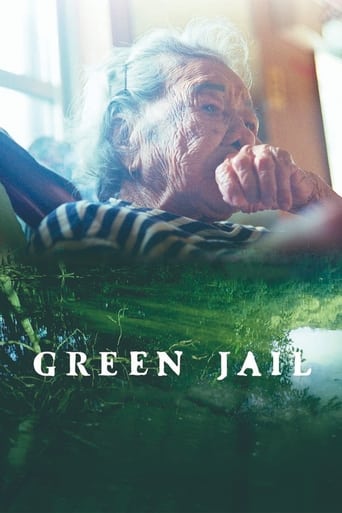
The film follows the last 4 years life of Grandma Hashima, the last existent from colonial Taiwan, who knows the secrets of "Green Jail," the notorious coal mine before World War II on Iriomote Island, Okinawa, Japan.
In April 2023, SU-METAL (vocal, dance), MOAMETAL (scream, dance), and MOMOMETAL (scream, dance) entered a new stage as the new BABYMETAL, and since then, they have embarked on their largest-ever world tour, "BABYMETAL WORLD TOUR 2023-2024," visiting 25 countries including Japan. The 98 performances, excluding festivals and guest act appearances, recorded a total audience of over 280,000 people.
Director Miho Niikura examines the modern practice of tee (Okinawan karate), and its attractiveness to Westerners—some of whom travel thousands of miles to study the venerable martial art in its birthplace, Okinawa.
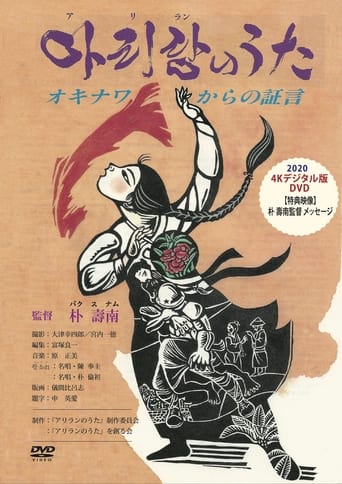
In the final hours of the Pacific War, Okinawa was the destination for Korean men conscripted as “military laborers” and Korean women taken as “comfort women.” Little is known about the number of casualties or their experiences. In 1989, Park Soonam started to track down the survivors of the Battle of Okinawa to record their testimonies. In 1990, Park visits Korea in search of former “military laborers” who had survived Okinawa and repatriated to Korea. The survivors vividly recount their experiences of their compatriots’ murder and about the “comfort women” to the Zainichi Korean female director. The film zeroes in on the murder of Korean “military laborers” and the presence of “comfort women” in Okinawa via testimonies of former Japanese soldiers.
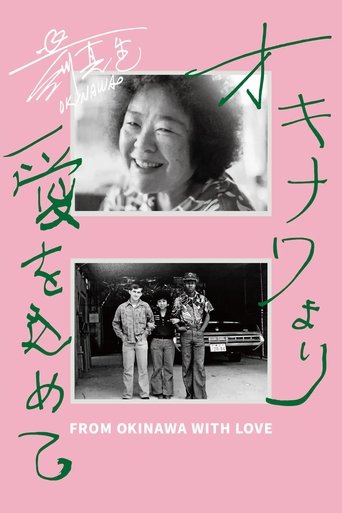
An Okinawan photographer, Mao Ishikawa spent her early 20s working as a barmaid in establishments catered specifically to African American GIs stationed in Okinawa. “There was love,” as the tagline reads, her photography book, 『Red Flower – The Women of Okinawa』 captured the diaristic intimacy of friendships, love affairs, and wild nights shared amongst her social circle of that time.
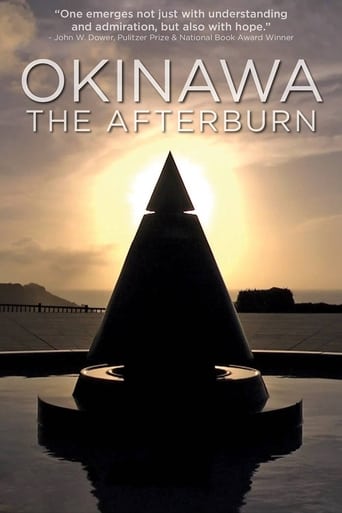
On April 1, 1945, the United States military launched its invasion of the main island of Okinawa, the start of a battle that was to last 12 weeks and claim the lives of some 240,000 people. This film depicts the Battle through the eyes of Japanese and American soldiers who fought each other on the same battlefield, along with Okinawa civilians who were swept up in the fighting. The film also depicts the history of discrimination and oppression forced upon Okinawa by the American and Japanese governments. Carrying up to the current controversy over the construction of a new base at Henoko, the film explores the root causes of the widespread disillusionment and anger expressed by many Okinawans. This ambitious documentary was directed by the American John Junkerman, long-term resident of Japan and Oscar-nominated documentary filmmaker. Okinawa: The Afterburn is a heartfelt plea for peace and an expression of deep respect for the unyielding spirit of the Okinawa people.
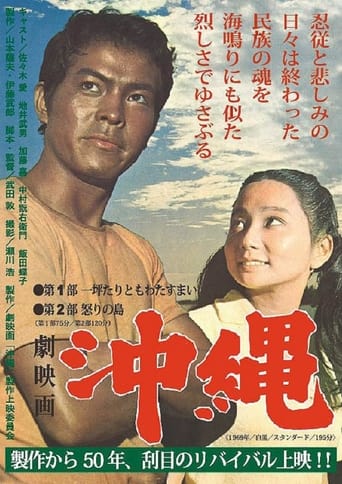
This work was created to commemorate the reversion of Okinawa to Japan.
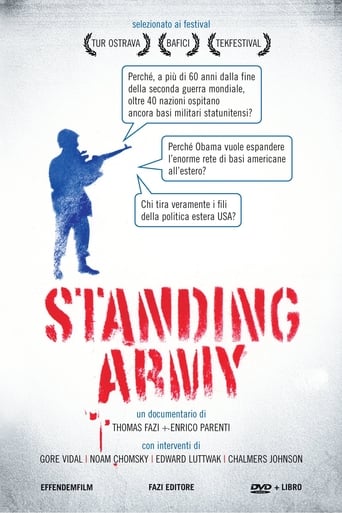
Standing Army, directed by Enrico Parenti and Thomas Fazi, is an award-winning documentary film about the global network of U.S. military bases, the impact that these have on local populations, and the military-industrial complex that lies behind it.
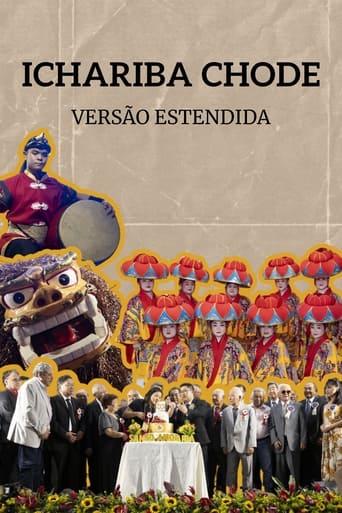
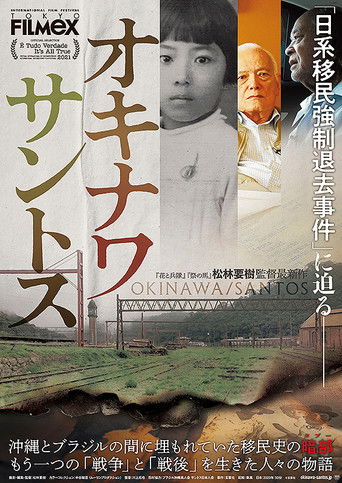
During World War II, many Japanese immigrants in Santos, Brazil, were forced to move to another place. Matsubayashi draws attention to the fact that 60% of the immigrants were from Okinawa. Based on testimonies from interviewees, this film reveals the hidden historical relationship between Okinawa and Brazil.
An Okinawan photographer, Mao Ishikawa was 33 years old when she crossed the ocean to Philadelphia in order to photograph the life of her friend, Myron Carr, a former US marine whom she met during his service in Okinawa in the 1970s. The subsequent photo book, “Life in Philly”, is filled with raw and vivid images, capturing the atmosphere and the culture of the predominantly African American neighborhood of downtown Philadelphia in the late 80s. This film looks back on those days, bringing Myron to remembrance as Mao and his surviving family try to find the missing pieces.
Set after the attack on Pearl Harbor, four of America’s top college football stars set their fame aside to enlist in the Marines. As they prepare for the brutal invasion of Okinawa, they play in a legendary game featuring some of the greatest players in history – a game that, for many, will be the last they ever play
Even when you're fortunate enough to live in a place as beautiful as the country village of Asahigaoka, you should never turn down the chance to explore someplace else. So, when Suguru wins a free trip to Okinawa just as the summer vacation is coming to an end, the town's entire school… all 5 students and 1 teacher, plus the local candy shop owner… can hardly wait for their 3-day trip to begin! Between kayaking, swimming and meeting new people, there's always something fun happening, but the best part of all is that big city girl Hotaru and her new small-town friends all get to explore the wonders of Japan's famous vacation destination together. Prepare for the perfect trip as the whole gang boards the plane!
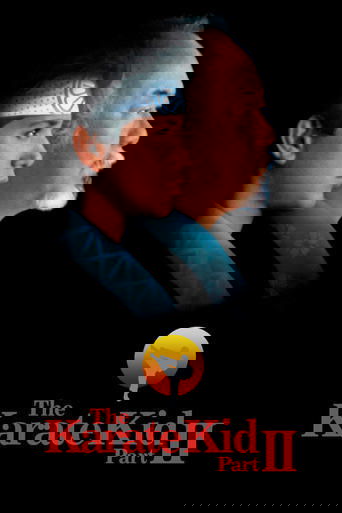
Summoned by his dying father, Miyagi returns to his homeland of Okinawa, with Daniel, after a 40-year exile. There he must confront Yukie, the love of his youth, and Sato, his former best friend turned vengeful rival. Sato is bent on a fight to the death, even if it means the destruction of their village. Daniel finds his own love in Yukia's niece, Kumiko, and his own enemy in Sato's nephew, the vicious Chozen. Now, far away from the tournaments, cheering crowds and safety of home, Daniel will face his greatest challenge ever when the cost of honor is life itself.
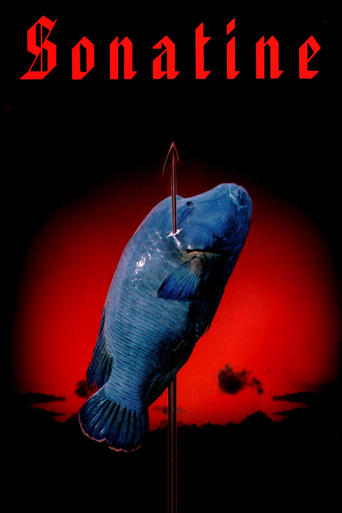
Murakawa, an aging Tokyo yakuza tiring of gangster life, is sent by his boss to Okinawa along with a few of his henchmen to help end a gang war, supposedly as mediators between two warring clans. He finds that the dispute between the clans is insignificant and whilst wondering why he was sent to Okinawa at all, his group is attacked in an ambush. The survivors flee and make a decision to lay low at the beach while they await further instructions.
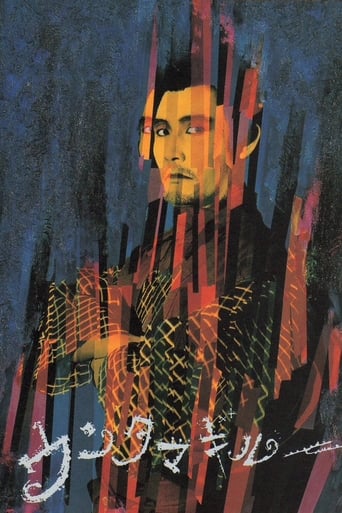
A magical realist story of the legendary Okinawan hero Untamagiru participating in efforts to form an independent Okinawa before the island was returned to Japan in 1972.
Abandoned after coming out, Shun befriends Mio just before he has to move. Years later, Mio returns with a confession. How will Shun feel?
Masaki, a baseball player and gas-station attendant, gets into trouble with the local Yakuza and goes to Okinawa to get a gun to defend himself. There he meets Uehara, a tough gangster, who is in serious debt to the yakuza and planning revenge.
Charts the troubled teenage years of students Yūichi Hasumi and Shūsuke Hoshino, exploring the shifting and complex power dynamics of their relationship against the backdrop of Yūichi's love for the dreamy and abstract music of pop star Lily Chou-Chou.