Social & External
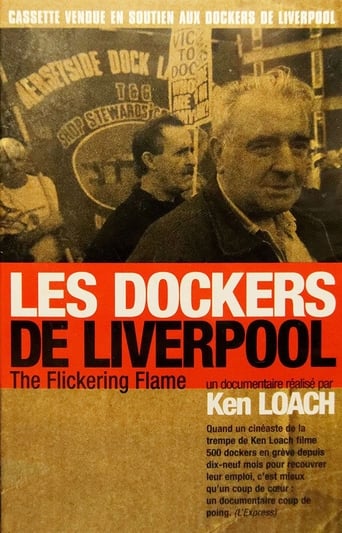
Documentary following dockers of Liverpool sacked in a labour dispute and their supporters’ group, Women of the Waterfront, as they receive support from around the world and seek solidarity at the TUC conference.
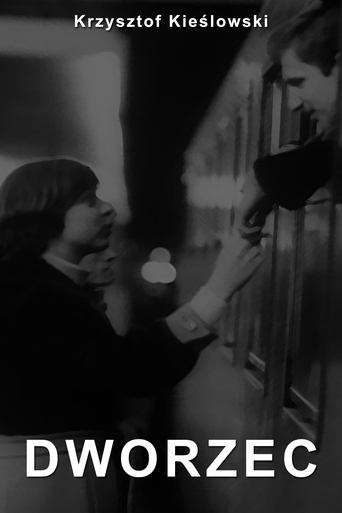
Warsaw's Central Railway Station. 'Someone has fallen asleep, someone's waiting for somebody else. Maybe they'll come, maybe they won't. The film is about people looking for something.
In August 2012, mineworkers in one of South Africa’s biggest platinum mines began a wildcat strike for better wages. Six days later the police used live ammunition to brutally suppress the strike, killing 34 and injuring many more. Using the point of view of the Marikana miners, Miners Shot Down follows the strike from day one, showing the courageous but isolated fight waged by a group of low-paid workers against the combined forces of the mining company Lonmin, the ANC government and their allies in the National Union of Mineworkers.
What happens when subcontracted precarious workers turn into podcast DJ. Subcontracted precarious workers at the SK Broadband, Inc. began a podcast titled ‘Workers Have Changed!’ to broadcast the story about their strike for job security. The podcast studio becomes a theater of their life as they share their stories - daily hardshipsof subcontracted labor, coping with rude customers, and their futures and dreams.
When workers at the Hormel meatpacking plant in Austin, Minnesota are asked to take a substantial pay cut in a highly profitable year, the local labor union decides to go on strike and fight for a wage they believe is fair. But as the work stoppage drags on and the strikers face losing everything, friends become enemies, families are divided and the very future of this typical mid American town is threatened.
A RECORD OF THE STRIKE AT GRUNWICK IN 1977. The story of the continuing struggle at Grunwick’s by mainly Indian workers, from July 11th, 1977 until the struggle was lost. It shows the Special Patrol Group attack on the November 7th day of action, how the leadership of the struggle was taken out of the hands of the strike committee, how some of the strike leaders were disciplined by their own union for going on hunger strike outside the TUC in protest at the TUC’s inactivity, and how the post office workers were forced by their union to end their blacking of Grunwick mail. It also shows the beginnings of the similar struggle by immigrant workers at Garner’s Steak Houses in London.
'Stand together!', a film on the "mass day of solidarity" on 11 July 1977, was made in 1977 for the Grunwick Strike Committee by the Newsreel Collective, of which Chris Thomas was a member, and members of the Association of Cinematograph, Television and Allied Technicians (ACTT) and the Transport and General Workers' Union.
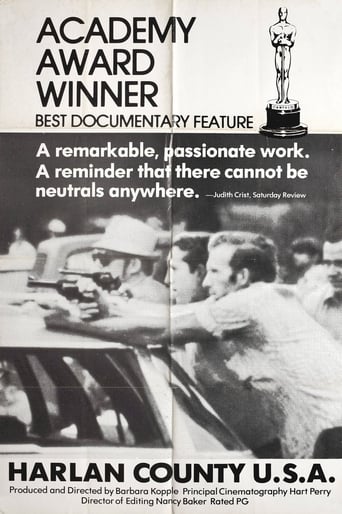
This film documents the coal miners' strike against the Brookside Mine of the Eastover Mining Company in Harlan County, Kentucky in June, 1973. Eastover's refusal to sign a contract (when the miners joined with the United Mine Workers of America) led to the strike, which lasted more than a year and included violent battles between gun-toting company thugs/scabs and the picketing miners and their supportive women-folk. Director Barbara Kopple puts the strike into perspective by giving us some background on the historical plight of the miners and some history of the UMWA. Preserved by the Academy Film Archive in partnership with New York Women in Film & Television in 2004.
In 1977, the workers of the INAVE vehicle assembly company went on strike. This strike was declared legal, one of the few registered in the country. This strike was also a strike that demanded great sacrifice from the workers. It lasted more than three months, more than three months without pay and in constant struggle, until the strikers finally achieved their victory.
A film documenting work shortages during the Depression of the 1930s and the attempts to deal with the unemployed, in particular young men. The film discusses the establishment of relief camps and projects, where men were paid twenty cents per day; the founding of organizations such as the Co-operative Commonwealth Federation (CCF), Workers' Unity League, and Relief Camp Workers' Union; general unionization and protest of the unemployed, including the On To Ottawa Trek, Regina Riot, sit-in strike from May to June 1938 at the Vancouver Main Post Office, Vancouver Art Gallery and Hotel Georgia, and the resulting Bloody Sunday of June 19.
A 1975 documentary short about a strike being conducted by public-housing residents in St. Louis.
In May 1968, workers, students and young people rise up against the morality and power of the establishment. Faculties and factories are under occupation. Barricades are erected. Paving slabs are launched. Words give way to actions. This is the confrontation. These images bear witness to the men and women who, in their indignancy, march towards their revolution. 50 years ago, as part of our ARC collective, we filmed the uprising of May and June 1968. Out of this material and scenes borrowed from our other filmmaker friends, we created this film.
Chronicle of the 9-week strike by the kaolin workers of Plémet. The film emphasizes the particular nature of such a strike in a rural commune and in a sector of the old Breton proletariat: that of subsoil mining, almost entirely liquidated after the closure of the Hennebont forges.
Henri Storck and Joris Ivens’ landmark of social documentary, blending staged scenes with locals and on-the-spot reportage to depict the 1932 miners’ strike in Belgium’s Borinage—evictions, hunger, and police repression—transforming outrage into a call for solidarity.
A Mauritanian worker, Sidi, works in France. Like most immigrant workers, he is employed to do the most difficult and dangerous jobs. Sidi and his comrades are exploited systematically and permanently, as much by their employers as by their own countrymen who are constantly able to offer false working papers, slums where immigrants buy at high cost their right to sleep. But faced with racism and economic exploitation, immigrant workers communicate, organise...
Risking jobs, friends, family and the opposition of church and community, eight unassuming women begin the longest bank strike in American history.
When 90% of Iceland’s women walked off the job and out of their homes one morning in 1975, they brought their country to its knees and catapulted Iceland to the forefront of today's global fight for gender equality. Unexpectedly funny, laced with evocative animation and powerfully told by the women who lived it – this is the true story of 12 hours that launched a revolution.
After two months of a hard-fought strike, accompanied by a day-and-night occupation of the premises, Jeune Afrique's workers were the victims of a court order authorizing their CEO, Bechir Ben Yahmed, to have them removed by the police. If they resisted, they risked falling foul of the law against rioters. To avoid the African comrades being deported from France, the strikers decided to leave. But before leaving, they organized a demonstration of solidarity with hundreds of journalists from the traditional and revolutionary press.