Social & External
Auteur
State of Bacon tells the kinda real but mostly fake tale of an oddball group of characters leading up to the annual Blue Ribbon Bacon Festival. Bacon-enthusiasts, Governor Branstad, a bacon queen, Hacksaw Jim Duggan, members of PETA, and an envoy of Icelanders are not excluded from this bacon party and during the course of the film become intertwined with the organizers of the festival to show that bacon diplomacy is not dead.
A very human tech doc, uncovers the real costs of the platform economy through the lives of workers from around the world for companies including Uber, Amazon and Deliveroo. From delivering food and driving ride shares to tagging images for AI, millions of people around the world are finding work task by task online. The gig economy is worth over 5 trillion USD globally, and growing. And yet the stories of the workers behind this tech revolution have gone largely neglected. Who are the people in this shadow workforce? It brings their stories into the light. Lured by the promise of flexible work hours, independence, and control over time and money, workers from around the world have found a very different reality. Work conditions are often dangerous, pay often changes without notice, and workers can effectively be fired through deactivation or a bad rating. Through an engaging global cast of characters, it reveals how the magic of technology we are being sold might not be magic at all.
This documentary takes the viewer on a deeply personal journey into the everyday lives of families struggling to fight Goliath. From a family business owner in the Midwest to a preacher in California, from workers in Florida to a poet in Mexico, dozens of film crews on three continents bring the intensely personal stories of an assault on families and American values.
In 1949, philosopher and novelist Simone de Beauvoir wrote the groundbreaking The Second Sex, launching a disruptive discourse on women’s oppression and second-class citizenship. This film dissects the origins and relevance of this bible of feminism, charting de Beauvoir’s fact-finding journey across the US to research her book. The timely and fascinating film honors de Beauvoir’s brilliance and limitations, connecting her revolutionary ideas to the pressing issues women face today.
The film is a controversy on democracy. Is our society really democratic? Can everyone be part of it? Or is the act of being part in democracy dependent to the access on technology, progression or any resources of information, as philosophers like Paul Virilio or Jean Baudrillard already claimed?
The Future Doesn't Need Us… Or So We've Been Told. With the rise of technology and the real-time pressures of an online, global economy, humans will have to be very clever – and very careful – not to be left behind by the future. From the perspective of those in charge, human labor is losing its value, and people are becoming a liability. This documentary reveals the real motivation behind the secretive effort to reduce the population and bring resource use into strict, centralized control. Could it be that the biggest threat we face isn't just automation and robots destroying jobs, but the larger sense that humans could become obsolete altogether?
From New York City to the farmlands of the Midwest, there are 50,000 Chinese restaurants in the U.S., yet one dish in particular has conquered the American culinary landscape with a force befitting its military moniker—“General Tso’s Chicken.” But who was General Tso and how did this dish become so ubiquitous? Ian Cheney’s delightfully insightful documentary charts the history of Chinese Americans through the surprising origins of this sticky, sweet, just-spicy-enough dish that we’ve adopted as our own.
Join world renowned chefs, Pierre Sang & Cédric Grolet, as they travel Saudi Arabia experiencing new flavours, meeting other chefs and learning Arabic cooking techniques.
Morgan Spurlock subjects himself to a diet based only on McDonald's fast food three times a day for thirty days without exercising to try to prove why so many Americans are fat or obese. He submits himself to a complete check-up by three doctors, comparing his weight along the way, resulting in a scary conclusion.
Harvard professor Shoshana Zuboff wrote a monumental book about the new economic order that is alarming. "The Age of Surveillance Capitalism," reveals how the biggest tech companies deal with our data. How do we regain control of our data? What is surveillance capitalism? In this documentary, Zuboff takes the lid off Google and Facebook and reveals a merciless form of capitalism in which no natural resources, but the citizen itself, serves as a raw material. How can citizens regain control of their data?
In this remarkable journey, Planet Food travels the world to see how control of the spice trails, over the last five millennia, has made great cities and destroyed ancient civilizations. Our guides travel from the Molucca Islands of Indonesia, the original home of cloves and nutmeg, to the Indian province of Kerala, with its native pepper and cardamom. Additional stops include Venice, Beirut, Cairo and other significant places in the spice trade that created and toppled empires.
Legendary short story writer Lucia Berlin (1936-2004) captured moments of grace in the cafeterias and laundromats of the American Southwest, in the homes of the Bay Area upper class, among switchboard operators and struggling mothers, hitchhikers and bad Christians.
A cartoon film about the whole heterogeneous mixture of Canada and Canadians, and the way the invisible adhesive called federalism makes it all cling together. That the dissenting voices are many is made amply evident, in English and French. But this animated message also shows that Canadians can laugh at themselves and work out their problems objectively.
Hosted by Keeley Hawes, star of the popular television series The Durrells, this documentary reveals the adventures of the eccentric Durrell family once they left Corfu, Greece.
A film that exposes the shocking truth behind the economic crisis of 2008. The global financial meltdown, at a cost of over $20 trillion, resulted in millions of people losing their homes and jobs. Through extensive research and interviews with major financial insiders, politicians and journalists, Inside Job traces the rise of a rogue industry and unveils the corrosive relationships which have corrupted politics, regulation and academia.
This underwater ballet is an ecological story depicting our paradoxical relationship with plastic. Bakelite launched the #SickOfPlastic campaign from On Est Prêt, along with the Surfrider Foundation, Break Free from Plastic and the Resilient Foundation. Photography was directed by Jacques Ballard, a specialist in underwater cinematography.
The earliest surviving motion-picture film, and believed to be one of the very first moving images ever created, was shot by Louis Aimé Augustin Le Prince using the LPCCP Type-1 MkII single-lens camera. It was taken on paper-based photographic film in the garden of Oakwood Grange, the Whitley family house in Roundhay, Leeds, West Riding of Yorkshire (UK), on 14 October 1888. The film shows Adolphe Le Prince (Le Prince’s son), Mrs. Sarah Whitley (Le Prince’s mother-in-law), Joseph Whitley, and Miss Harriet Hartley walking around in circles, laughing to themselves, and staying within the area framed by the camera. Roundhay Garden Scene is often associated with a recording speed of around 12 frames per second and runs for about 2 to 3 seconds.
Following the success of her debut novel, All This Could Be Different, author Sarah Thankam Mathews embarks on her second novel, drawing from her adolescence between India and Oman. As Sarah excavates lost place and time, she must contend with the weight of truthful representation and the contradictions within her childhood memories.
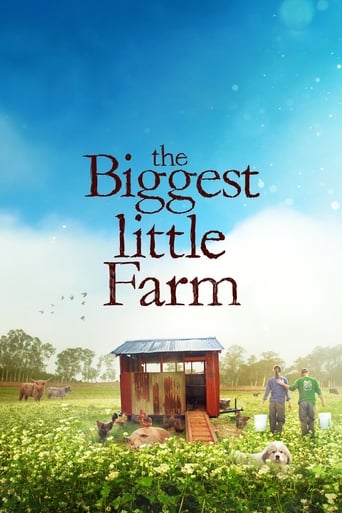
The successes and failures of a couple determined to live in harmony with nature on a farm outside of Los Angeles are lovingly chronicled by filmmaking farmer John Chester, in this inspiring documentary.
A glimpse into the raw and simple power of nature through encounters with farm animals: the eponymous Gunda, a mother pig; two cows, and a one-legged chicken.
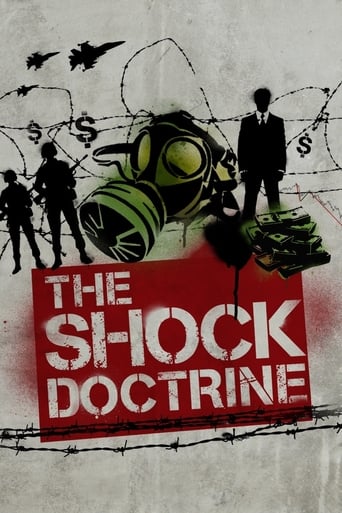
An investigation of "disaster capitalism", based on Naomi Klein's proposition that neo-liberal capitalism feeds on natural disasters, war and terror to establish its dominance.
A presentation of a case for a needed transition out of the current socioeconomic monetary paradigm which governs the entire world society. This subject matter will transcend the issues of cultural relativism and traditional ideology and move to relate the core, empirical 'life ground' attributes of human and social survival, extrapolating those immutable natural laws into a new sustainable social paradigm called a 'Resource-Based Economy'.
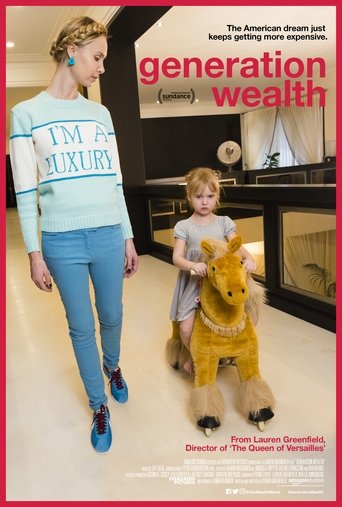
Over the past 25 years, Lauren Greenfield's documentary photography and film projects have explored youth culture, gender, body image, and affluence. Underscoring the ever-increasing gap between the haves and the have-nots, portraits reveal a focus on cultivating image over substance, where subjects unable to attain actual wealth instead settle for its trappings, no matter their ability to pay for it.
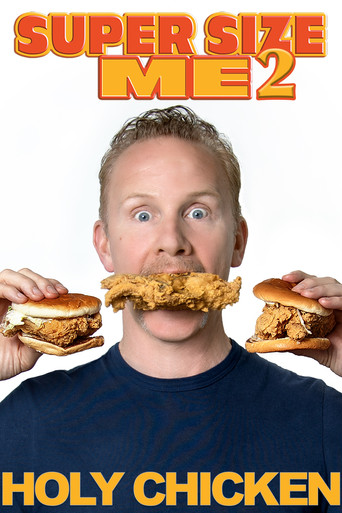
Muckraking filmmaker Morgan Spurlock reignites his battle with the food industry — this time from behind the register — as he opens his own fast food restaurant.
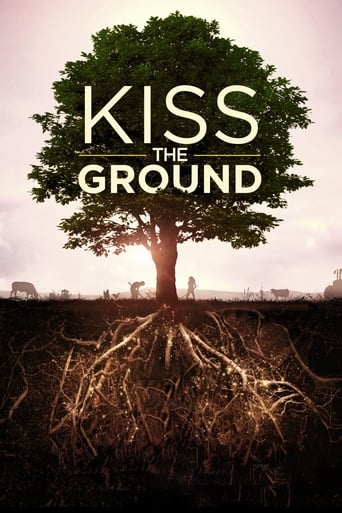
Sheds light on an alternative approach to farming called “regenerative agriculture” that could balance our climate, replenish our vast water supplies, and feed the world.
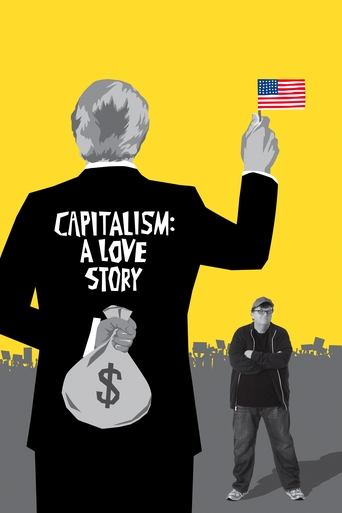
Michael Moore comes home to the issue he's been examining throughout his career: the disastrous impact of corporate dominance on the everyday lives of Americans (and by default, the rest of the world).
After a vicious attack leaves him brain-damaged and broke, Mark Hogancamp seeks recovery in "Marwencol", a 1/6th scale World War II-era town he creates in his backyard.
Paul, is an ordinary man who divides his life between his shipbuilding company, his wife Elise and their daughter Mia. During a sea trip, Paul finds himself confronted with a strange, unexplained meteorological phenomenon. From then on, Paul shrinks inexorably, without science being able to explain why or be of any help to him. When, by accident, he finds himself a prisoner in his own cellar, and while he is only a few centimeters tall, he will have to fight to survive in this banal environment that has become perilous. During this experience, Paul will find himself confronted with himself, with his humanity, and will try to answer the great questions of existence.
A documentary focused on plastic pollution in the world's oceans.
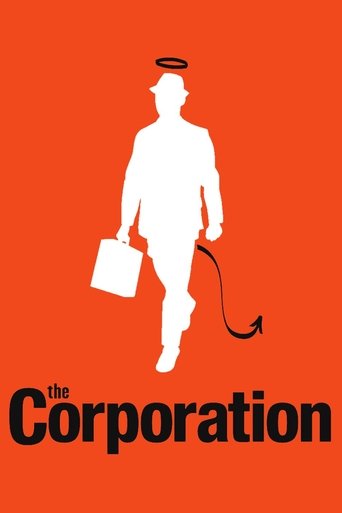
Since the late 18th century American legal decision that the business corporation organizational model is legally a person, it has become a dominant economic, political and social force around the globe. This film takes an in-depth psychological examination of the organization model through various case studies. What the study illustrates is that in the its behaviour, this type of "person" typically acts like a dangerously destructive psychopath without conscience. Furthermore, we see the profound threat this psychopath has for our world and our future, but also how the people with courage, intelligence and determination can do to stop it.
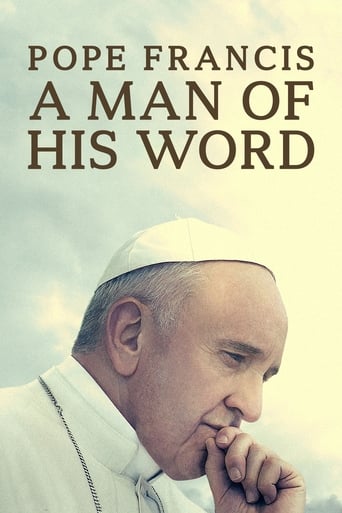
Pope Francis responds to questions from around the world, discussing topics including ecology, immigration, consumerism and social justice.
In a dystopian future, a totalitarian regime maintains peace by subduing the populace with a drug, and displays of emotion are punishable by death. A man in charge of enforcing the law rises to overthrow the system.
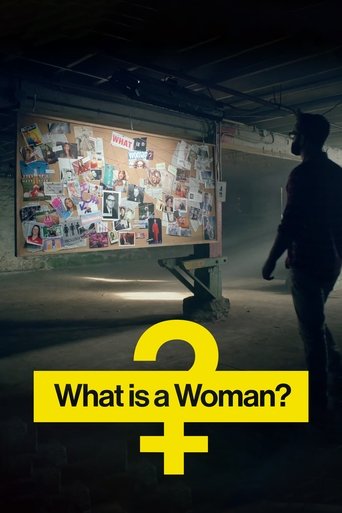
Matt Walsh's controversial doc challenges radical gender ideology through provocative interviews and humor.
A celebration of the universe, displaying the whole of time, from its start to its final collapse. This film examines all that occurred to prepare the world that stands before us now: science and spirit, birth and death, the grand cosmos and the minute life systems of our planet.
A three year self-described labour of love, 2040 takes the form of a visual letter from the filmmaker to his four-year-old daughter Velvet, showing her what the year 2040 could look like “if we simply embraced the best solutions that exist today.”
Former Secretary of Labor Robert Reich meets with Americans from all walks of life as he chronicles a seismic shift in the nation's economy.
In the year 2022, overcrowding, pollution, and resource depletion have reduced society’s leaders to finding food for the teeming masses. The answer is Soylent Green.
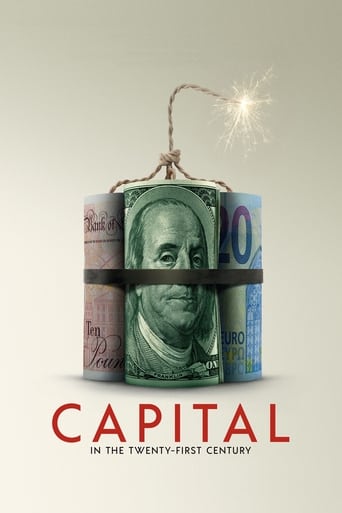
Film adaptation of French economist Thomas Piketty's ground-breaking global bestseller of the same name: an eye-opening journey through wealth and power.