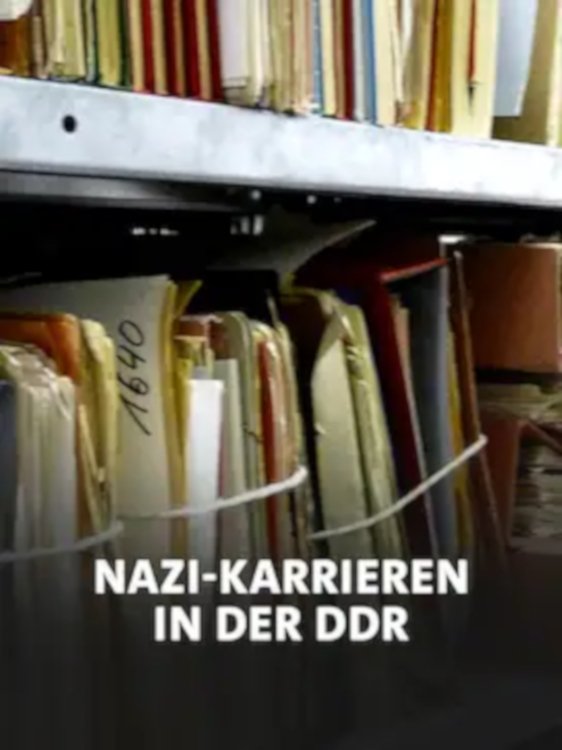
It was a foundational myth of the GDR that it was anti-fascist and free of Nazis. But was that really the case? The film takes a critical look on the actual way the brown heritage was dealt with in the GDR.
Social & External
Narrator (voice)
Hitler's biography told like never before. Besides brief historical localizations by a narrator, only contemporaries and Hitler himself speak: no interviews, no reenactment, no illustrative graphics and no technical gadgets. The testimonies from diaries, letters, speeches and autobiographies are assembled with new, often unpublished archive material. Hitler's life and work are thus reflected in a unique way in interaction with the image of the society in the years 1889 to 1945.


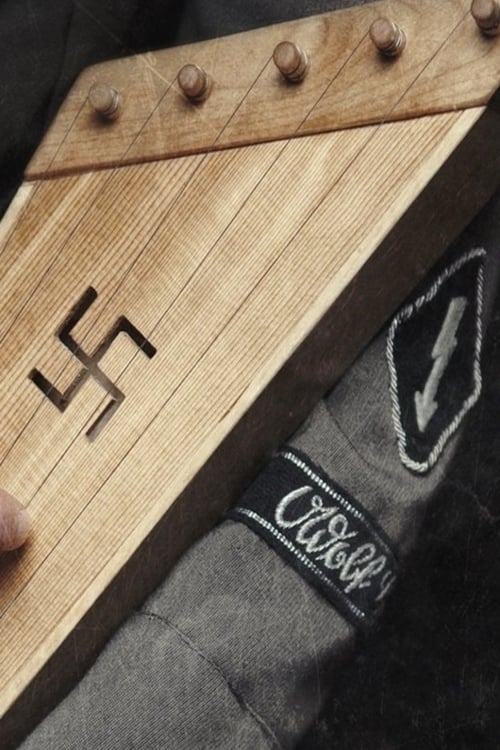
"Himmlers Kantele Player" - about Finnish student, who decides to leave University of Sorbonne and walk from Paris to Helsinki in the spring of 1935. On his way, in Germany, he meets Heinrich Himmler, who is attracted by a traditional Finnish instrument, kantele. Himmler employs Yrjö as researcher to the Ahnenerbe institute to find the Aryan roots from the runic singing culture of Finnish Carelia.
After the World War I, Mussolini's perspective on life is severely altered; once a willful socialist reformer, now obsessed with the idea of power, he founds the National Fascist Party in 1921 and assumes political power in 1922, becoming the Duce, dictator of Italy. His success encourages Hitler to take power in Germany in 1933, opening the dark road to World War II. (Originally released as a two-part miniseries. Includes colorized archival footage.)
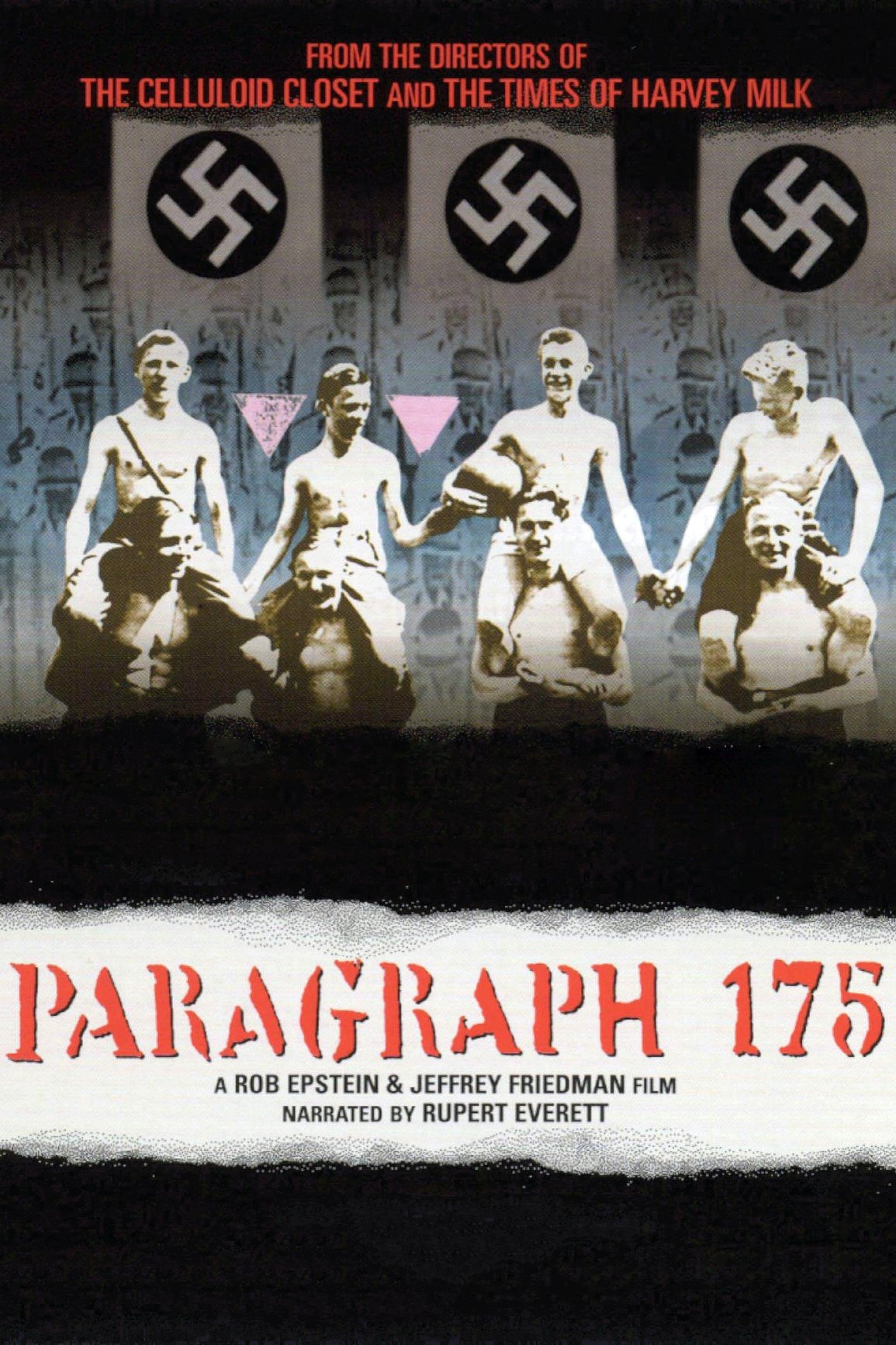
Sexual minorities were oppressed, imprisoned and murdered by the Nazis. Paragraph 175 criminalized homosexual men during the Nazi era – but the Nazis also discriminated against lesbians and trans people. They should be excluded from the national community. More than 50,000 queer people have been proven to have been persecuted. The documentary highlights three poignant fates in the context of Nazi terror.
The theatre 7:3 project was conducted at the Tidaholm prison 1998-1999. What started as an artistic experiment, ended up in police killings at Malexander. The process in the prison were filmed during 6 months.
It is an unknown chapter of the German post-war history: On April 23rd, 1949, the kingdom of the Netherlands occupied German soil as a pledge for demanded war reparations. Part of the annexed territories was also the small municipality of Elten. While the people of Elten were initially afraid of the occupation, the time “with Holland” actually became a miracle of prosperity and economy about which many people from Elten still rave today. The occupation period ended with the largest organized smuggling in the history of the federal republic of Germany. The Documentary shows this in never before released 8 mm footage!
19 years after the dropping of atomic bombs in Japan, the Olympic Games of 1964 took place in Tokyo. In the midst of the cold war, the games are supposed to become a symbol for a peaceful world. Especially the divided Germany is expected to prove this: By order of the IOC, both German states must participate in Tokyo with a joint team despite deep ideological rifts. The fact that athletes from both German states still had to compete against each other in order to form a joint team for the 1964 Olympic Games in Innsbruck and in Tokyo is all but forgotten. The film tells the story of the East-West German team of 1964 for the first time and is simultaneously a current document about the relation of sports and politics in international relations.
A documentary about the portrayal of Adolf Hitler in popular culture.
Between 1933 and 1945 roughly 1200 films were made in Germany, of which 300 were banned by the Allied forces. Today, around 40 films, called "Vorbehaltsfilme", are locked away from the public with an uncertain future. Should they be re-released, destroyed, or continue to be neglected? Verbotene Filme takes a closer look at some of these forbidden films.
In Third Reich, the abuse of drugs made commanders and soldiers feel invincible. The Führer himself took them on daily basis. This is the unbelievable story of the D-IX project and of methamphetamines, which, abundantly furnished to soldiers, changed the course of history.
After the fall of the Berlin Wall, thousands of documents were hastily shredded by the dreaded GDR political police. 16,000 bags filled with six million pieces of paper were found. Thanks to the meticulous work of technology, the destinies of men and women who had been spied on and recorded without their knowledge could be reconstructed.
The nephew of a Republican exiled during the Spanish Civil War is pushed to discover the fate of his uncle by a forgotten letter. Meanwhile, a researcher tries to discover what happened to another deportee after reading the novel "El impostor" by Javier Cercas. When the two coincide, they discover that the lives of their two ancestors are intertwined and end up unearthing the story of František Suchý and his son, who risked their lives and defied the Nazi regime from the Prague crematorium to save the ashes of more than 2,000 victims.
In this documentary Angela Zumpe searches for traces of her brother, who moved from west to east Germany in 1968 to live in the DDR but killed himself eight months after.
The animated short film tells the moving story of the resistance and bravery of Alfreda Noncia Markowska, a young Roma woman from Poland who saved the lives of around fifty children and young adults during the Second World War.
Dragan Wende has lived in Berlin since the '70s and has seen the city change through the years. His nephew comes to live with him as Dragan remembers the better days he lived as a Yugoslavian immigrant in a divided city.
The intricate history of UFA, a film production company founded in 1917 that has survived the Weimar Republic, the Nazi regime, the Adenauer era and the many and tumultuous events of contemporary Germany, and has always been the epicenter of the German film industry.
A documentary-essay which shows Costică Axinte's stunning collection of pictures depicting a Romanian small town in the thirties and forties. The narration, composed mostly from excerpts taken from the diary of a Jewish doctor from the same era, tells the rising of the antisemitism and eventually a harrowing depiction of the Romanian Holocaust.