Social & External
The people behind it
Philippe Saada
Narrator (voice)
Julien Chuzeville
Self

Gilles Candar
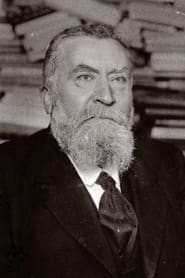
Jean Jaurès
Self (archive footage)
Adeline Blaszkiewicz-Maison
Pierre-Emmanuel Guigo
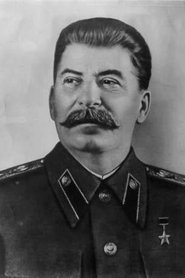
Joseph Stalin
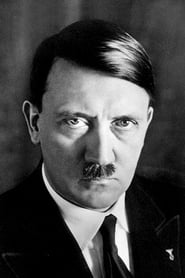
Adolf Hitler
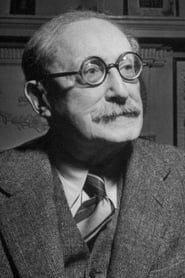
Léon Blum
Maurice Thorez
During the Battle of the Bulge in the winter of 1944, thousands of American GIs were captured by German forces. Berga: Soldiers of Another War, the final work in the distinguished career of four-time Academy Award-winning documentary filmmaker Charles Guggenheim, is the untold story of 350 American POWs caught in the tragedy of the Holocaust. In blatant violation of the Geneva Convention, the Jewish American soldiers in the 106th Infantry Division, together with those who had "Jewish-sounding" names or who "looked" Jewish, were shipped off to the slave-labor camp at Berga am Elster, a satellite camp of the infamous Buchenwald.
Russia, 1917. After the abdication of Czar Nicholas II Romanov, the struggle for power confronts allies, enemies, factions and ideas; a ruthless battle between democracy and authoritarianism that will end with the takeover of the government by Vladimir Lenin and the Bolsheviks.
550,000 Jewish American men and women fought in World War II. In their own words, veterans both famous and unknown (from Hollywood director Mel Brooks to former Secretary of State Henry Kissinger) bring their war experiences to life: how they fought for for their nation and their people, struggled with anti-Semitism within their ranks, and emerged transformed, more powerfully American and more deeply Jewish.
The Danish ambassador to Washington declares himself to be the sole representative of a free Denmark during the Nazi occupation of the country.
About the illegal radio station A.K.Y. and the men that operated it in Norway, based in Kristiansand and Oslo, that helped carry the fight against the Nazis in the bleakest days of WW2. The film is based on a true story, and several of those who participated in the real events play themselves.
In the spring and summer of 1949, the People's Liberation Army launched an offensive under the orders of Mao Zedong and Zhu De, they crossed the Yangtze River and Nanjing was liberated on April 23 which signaled the fall of the KMT regime, Chiang Kai-Shek fled to Taiwan; on October 1, 1949, Mao Zedong standing on the rostrum of Tiananmen, solemnly declared the foundation of the People's Republic of China.
On June 6th, 1944 the largest military invasion and defence the world has ever seen occurred. D-Day tells the epic story of the preparation and execution of the Allied invasion of Normandy. It tells the story of the defence of the Western Front by the forces of the German Empire, and of the complex and deadly secret war fought by the men and women of France and mainland Europe. D-Day brings to life the dramatic and astounding tales of courage and sacrifice, joy and despair, love and betrayal. The planning for the Allied invasion on June 6th 1944 took two years and cost thousands of lives. It involved a deception of breathtaking audacity. Both the preparation leading up to and the actions and events on the day itself relied on the absolute discretion of many and the genius and nerve of a few. D-Day examines the intricate jigsaw from both sides - presenting events through the eyes of the men and women who were there, telling their extraordinary stories.
Edward, Prince of Wales, son and heir to his father King Edward III of England, leads an English army to the French province of Aquitaine to protect the inhabitant from the ravages of the French. After defeating the French in battle, the defeated French plot to kill the prince. Failing in this, they kidnap his lady, the lovely Lady Joan Holland. Of course Prince Edward has to ride to the rescue, adopting numerous guises to save his paramour, which ultimately end in him leading his men into one final climactic battle against the French. (Also known as "The Warriors" and "The Black Prince").
An epic presentation of the turbulent days leading to the Russian Revolution. Based on the classic work by John Reed, this important documentary makes use of rare footage and little-known information, stirringly narrated by Orson Welles.
On December 8, 1941, the Disney Studio was taken over by the military as part of the war effort. Making the most of the talent that hadn't shipped out yet, Walt Disney spent the next four years creating and producing training, propaganda and educational films for the Armed Forces.
In Iasi, Romania, from June 28 to July 6, 1941, nearly 15 000 Jews were murdered in the course of a horrifying pogrom. At the time, the programmed extermination of European Jews had not yet began. After the war, the successive communist governments did all they could to ensure the Iasi pogrom would be forgotten. It was not until November of 2004 that Romania recognized for the first time its direct responsibility in the pogrom. All that remains of this massacre are about a hundred photographs taken as souvenirs by german and romanian soldiers, and a few remaining survivors.
A young filmmaker joins a tour of WWII veterans from the 29th Infantry through celebrations surrounding the 70th anniversary of D-Day in a quest to better know her late grandfather.
The Red Arrow is the special train No.1 between Leningrad and Moscow. The film is set in the 1980s during perestroika in the Soviet Union. Valeriy Kropotov is CEO of a big industrial company in Leningrad who is crafty and successful in getting a major order from the Soviet Government: building an automated assembly line. But his style of management clashes with his subordinates, talented engineers. Their potential is strangled by Kropotov's manipulative control. The government order is not accomplished and Kropotov gets fired. He is rethinking his outdated business style while on the train No.1 to Moscow.
In a series of long interviews, 12 prime ministers talk about their experience in the upper echelons of power. The function of prime minister, torn between the president and the parliament, appointed without necessarily being elected but responsible for everything, is at the center of debate. With the exception of Jacques Chirac (1974-1976 and 1986-1988), deliberately left out because of his image as French President, those who governed France for the past 35 years agreed to discuss the exercise of power, as seen through archive footage, but also how they experienced it personally. Filmed in the same studio and sitting in the same chair, 12 French prime ministers talk freely about their time in office, from their appointment until their resignation.
Alexey Kromov, a former Russian army colonel, is stuck in Paris with a huge sum of money which belong to the former Russian government.
During World War II, enemy fighter pilots find themselves face to face after shooting down one another's planes over a desolate landscape. In order to survive, they must set aside the rules of war.
They raised children, baked cakes... and built world-class fighter planes. Sixty years ago, thousands of women from Thunder Bay and the Prairies donned trousers, packed lunch pails and took up rivet guns to participate in the greatest industrial war effort in Canadian history. Like many other factories across the country from 1939 to 1945, the shop floor at Fort William's Canadian Car and Foundry was transformed from an all-male workforce to one with forty percent female workers.
In the 1920s, Angela Murray Gibson chose an unusual location to embark on a career in silent filmmaking: her tiny hometown of Casselton, North Dakota. She had previously helped Mary Pickford as an advisor and assistant director on The Pride of the Clan (1917), which Mary Pickford produced and starred in. She opened North Dakota's first movie studio, and she had the audacity to be a woman in an industry dominated by men.
Hitler's last offensive in 1944 in the Ardennes, with which he desperately tried to stop the allies thereof, to reach Antwerp.
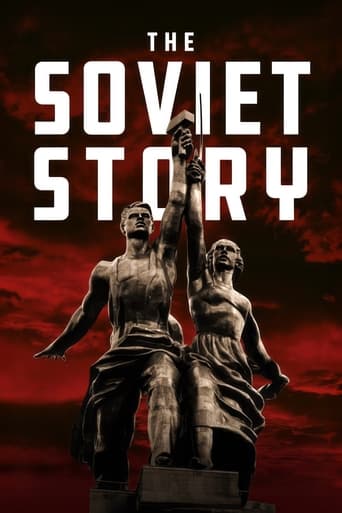
“The Soviet Story” is a story of an Allied power, which helped the Nazis to fight Jews and which slaughtered its own people on an industrial scale. Assisted by the West, this power triumphed on May 9th, 1945. Its crimes were made taboo, and the complete story of Europe’s most murderous regime has never been told. Until now...
The history of cinematic sound, told by legendary sound designers and visionary filmmakers.
Director Claude Lanzmann spent 11 years on this sprawling documentary about the Holocaust, conducting his own interviews and refusing to use a single frame of archival footage. Dividing Holocaust witnesses into three categories – survivors, bystanders, and perpetrators – Lanzmann presents testimonies from survivors of the Chelmno concentration camp, an Auschwitz escapee, and witnesses of the Warsaw Ghetto Uprising, as well as a chilling report of gas chambers from an SS officer at Treblinka.
Journey into the extraordinary world of "The Witcher" — from casting the roles to Jaskier's catchy song — in this behind-the-scenes look at the series.
For the 20th anniversary of "Titanic," James Cameron reopens the file on the disaster.
A documentary examining possible historical and modern conspiracies surrounding Christianity, the 9/11 terrorist attacks, and the Federal Reserve bank.
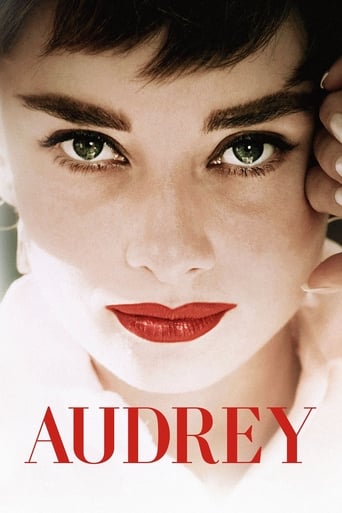
An unprecedented and intimate look at the life, work and enduring legacy of British actress Audrey Hepburn (1929-1993).
Dick Proenneke retired at age 50 in 1967 and decided to build his own cabin in the wilderness at the base of the Aleutian Peninsula, in what is now Lake Clark National Park. Using color footage he shot himself, Proenneke traces how he came to this remote area, selected a homestead site and built his log cabin completely by himself. The documentary covers his first year in-country, showing his day-to-day activities and the passing of the seasons as he sought to scratch out a living alone in the wilderness.
In 1997, Louis Theroux made a documentary about the world of male porn performers in Los Angeles. 15 years later, he returns to find a business struggling with the deluge of free porn on the internet. Louis revisits some of the original programme's contributors as well as meeting the latest crop of porn performers dreaming of porn stardom.
Filmmaker Alain Resnais documents the atrocities behind the walls of Hitler's concentration camps.
A look at the story behind Marvel Studios and the Marvel Cinematic Universe, featuring interviews and behind-the-scenes footage from all of the Marvel films, the Marvel One-Shots and "Marvel's Agents of S.H.I.E.L.D."!
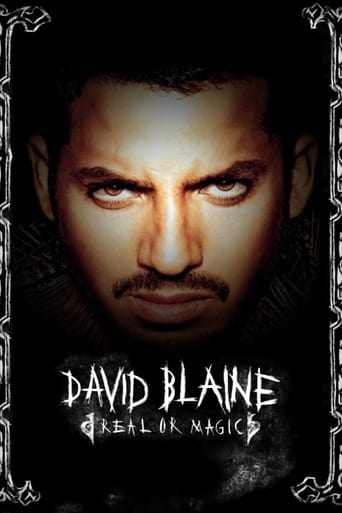
David Blaine's signature brand of street magic mystifies the most recognisable celebrities in the world, such as Jamie Foxx, Bryan Cranston, Aaron Paul, Ricky Gervais, Katy Perry, Woody Allen, and Robert DeNiro, to name a few. He goes to the homes of Kanye West and Harrison Ford, Will Smith and Olivia Wilde. He pays a visit to Stephen Hawking at his office in Cambridge University. Blaine also travels the world, astonishing people from all walks of life with never-before seen, inconceivable magic.
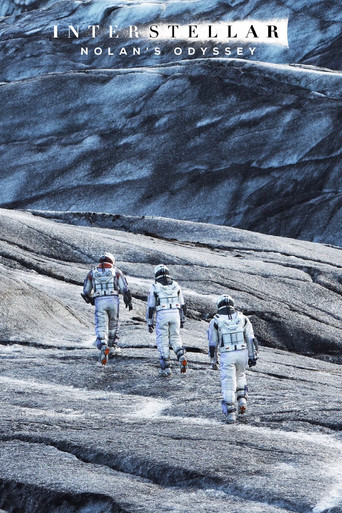
A look behind the lens of Christopher Nolan's space epic.
Roddy McDowall takes you, film by film, from production meetings to make-up sessions, then right onto the movie set to see the actual filming of the science fiction masterpiece. The most comprehensive history of Planet of the Apes ever created, this fascinating 127-minute documentary explores one of the most imaginative and influential series in movie history.
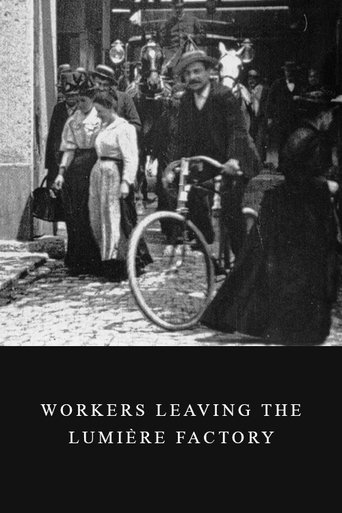
Working men and women leave through the main gate of the Lumière factory in Lyon, France. Filmed on 22 March 1895, it is often referred to as the first real motion picture ever made, although Louis Le Prince's 1888 Roundhay Garden Scene pre-dated it by seven years. Three separate versions of this film exist, which differ from one another in numerous ways. The first version features a carriage drawn by one horse, while in the second version the carriage is drawn by two horses, and there is no carriage at all in the third version. The clothing style is also different between the three versions, demonstrating the different seasons in which each was filmed. This film was made in the 35 mm format with an aspect ratio of 1.33:1, and at a speed of 16 frames per second. At that rate, the 17 meters of film length provided a duration of 46 seconds, holding a total of 800 frames.
On September 15, 1963, a bomb destroyed a black church in Birmingham, Alabama, killing four young girls who were there for Sunday school. It was a crime that shocked the nation--and a defining moment in the history of the civil-rights movement. Spike Lee re-examines the full story of the bombing, including a revealing interview with former Alabama Governor George Wallace.
An account of the extraordinary life of film pioneer Georges Méliès (1861-1938) and the amazing story of the copy in color of his masterpiece A Trip to the Moon (1902), unexpectedly found in Spain and restored thanks to the heroic efforts of a group of true cinema lovers.
Explore how writers Steven Moffat and Mark Gatiss created the hit television sensation. Take a personal voyage through the versions of Holmes that have served as inspirations for the new series - the original stories, their factual origins, hundreds of film adaptations - to arrive at their thoroughly modern Sherlock. Moffat and Gatiss explain the challenges they encountered adapting the original adventures of the iconic super-sleuth. Go behind the scenes on the set of the hit television series, including interviews with actors Benedict Cumberbatch, Martin Freeman and Lara Pulver, who talk about the reinvention of their fictional characters.
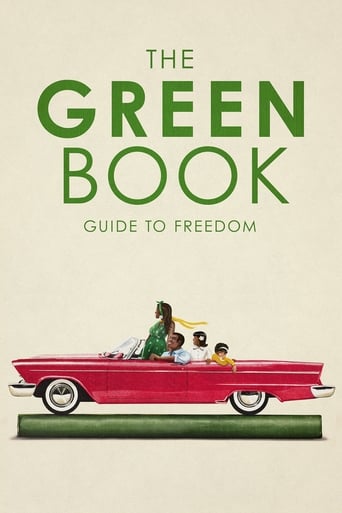
In 1936, Victor H. Green (1892-1960) published The Negro Motorist Green Book, a book that was both a travel guide and a survival manual, to help African-Americans navigate safe those regions of the United States where segregation and Jim Crow laws were disgracefully applied.
Cameramen and women discuss the craft and art of cinematography and of the "DP" (the director of photography), illustrating their points with clips from 100 films, from Birth of a Nation to Do the Right Thing. Themes: the DP tells people where to look; changes in movies (the arrival of sound, color, and wide screens) required creative responses from DPs; and, these artisans constantly invent new equipment and try new things, with wonderful results. The narration takes us through the identifiable studio styles of the 30s, the emergence of noir, the New York look, and the impact of Europeans. Citizen Kane, The Conformist, and Gordon Willis get special attention.