Public warning film on road safety for children - 3 small children meet Death.
Social & External
A road safety lesson using puppets and animation kindergarten age children.
A road safety film for pedestrians in city traffic. Demonstrates typical unsafe practices.
Shot with a big cowboy nod to the Western genre, this road safety film shows the danger of speeding on an unknown country road at night.
They were 27 and 35 years old. They were both killed in the same spot, within the same month. The same botched work killed them. Eighteen people are called to provide an answer to a simple question: Why don't we do what we should? The answer might lie in the missing piece - the unknown story of the pothole, a trademark of Greek roads infrastructure.
Investigating deadly truck accidents and the fight over measures that could save lives.
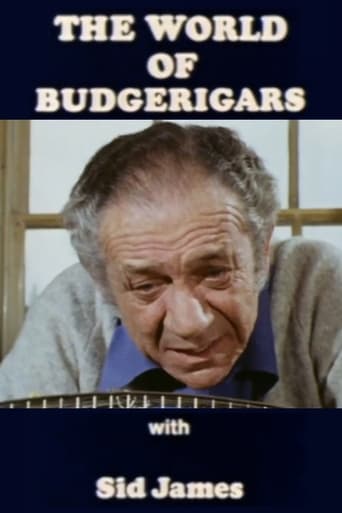
Sid James learns of the joys of owning a budgerigar.
This film shows the dangers of driving commercial trucks professionally as part of driver’s education. It displays various truck drivers; some cautious and others fatally dangerous.
A hard-hitting public information film made at the height of the Great Influenza 1918-18.
Tom Jones, a shepherd who lived in one of the Ystradfechan Cottages at Old Farm, Treorchy, was employed by the Ocean Coal Company who owned the land above ground and coal (the Park and the Dare Collieries) beneath. A farrier who lived in the adjoining cottage tended to all the Park and Dare pit ponies. Tom Jones was known world-wide as the “Wonder Shepherd” for his remarkable skills as an animal trainer which, together with his concern for his flock, are recorded here.
Created in 1963 at the height of the Cold War, this Civil Defense training film uses a dramatic premise to show how emergency staff should manage and organize a large public fallout shelter during a crisis. A Shelter Manager is shown immediately taking control of the situation in the shelter, speaking calmly to those who have made it into the facility, closing the door promptly once the shelter is full, and sticking to the "shelter plan" as the situation unfolds. Some of the areas discussed in this nuclear war drama are the safety plan, regular inspections, supervised public entry into shelters, ventilation, first aid, sanitation, fire prevention, decontamination of personnel, and more. "Shelter living is different," the Manager states, "But we have a trained staff that will make your stay in this shelter livable for us all."
This Cold War film "Information Within Public Shelters" (1953) takes place in a fallout shelter, showing how a well-trained staff that provides information to shelter occupants, can keep them busy and calm during nuclear armageddon. This film was produced as the U.S. Government began to shift from promoting privately-owned "family" fallout shelters to the concept of large, public shelters.
Three young commuter cyclists set out to bike from San Francisco to Orlando, interviewing crash victims, urban planners, activists and law enforcement to investigate what makes the U.S the most dangerous developed country for cyclists. Shot on location, the trio travel to each interview by bicycle, with cameras, tripods and microphones strapped to their front-racks. Carrying the stories of fellow cyclists killed on American roads, SPOKE is an adventure-tale that looks to empower users of the humble bicycle.
A guide to going metric from the Central Office of Information on behalf of the Metrication Board.
This short post-war film was made to inform people how to address a letter correctly.
Poetic tribute to Mrs Turner's vegetable growing prowess, plus the delights of "wartime steaks".
You're asking for trouble when you play with fire - and this public information film is the stuff of nightmares.
Coast Guard film about the importance of life jackets. Stresses safety in boating and shows how boating accidents can happen.
The film emphasizes the importance of safety when using power tools in a workshop. It outlines key safety practices, such as using guards, securing materials, and wearing protective gear like safety glasses. The film also covers specific tool usage tips, including the correct handling of cutting machines, drills, grinders, and lathes, stressing that safety precautions should never be neglected. Proper maintenance and awareness of tool settings are crucial to prevent accidents.
This 1974 film is dedicated by the Chlorine Institute to the public interest. It is specifically intended to assist firefighters and other emergency services. The techniques demonstrated are appropriate for emergency use; different circumstances might require modified or additional procedure. The information is drawn from sources believed to be reliable. The Institute, its members any organizations cooperating in the development of this film, jointly or severally, cannot be responsible for how the information is used and must make this legal disclaimer. This is a 1960s era, color movie about Chlorine and emergency workers… specifically, firefighters. The film is intended to show firefighters what chlorine is, what a chlorine emergency might involve, how a company can plan ahead and how an emergency can be handled safely.
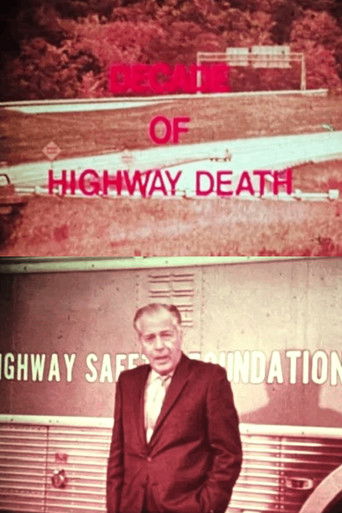
This highway scare film produced by the Highway Safety Foundation in 1971, "Decade of Death", is a retrospective of the organization's 10 years of gory, shocking social guidance films which aimed to promote traffic safety and driver responsibility through the display of bloody and horrific footage of traffic crashes.The Highway Safety Foundation made driver scare films such as "Signal 30," "Mechanized Death," and "Highways of Agony" that intended to encourage drivers to drive responsibly and with consideration of the risks and consequences. It was the organization's belief that crash footage, while horrific, was the best way to convey the importance of driving safely.