You're asking for trouble when you play with fire - and this public information film is the stuff of nightmares.
Social & External
The Falcons is an intimate, observational documentary that delves into the world of the Tshakhruk Ethnoband, a remarkable musical ensemble in the Armenian highlands. Comprised of special-needs children that reside at the state orphanage, these young musicians find solace, strength, and self-expression through the transformative power of music.
What if from one day to the next, you’re no longer seen, but instead are stared at? The leading characters in this multi-layered film have ended up in a new world where suddenly nothing seems to align. In their new lives in the Netherlands, they unintentionally provoke reactions on a daily basis. Even after many years, they still hear the same questions over and over again: where are you from, do you speak Dutch, do you tan in the sun?
An exposed Cumbrian village by the sea surrounded by windmills, fields and factories provides a striking setting for this fairy tale of young love and the loss of childhood innocence. Over one year, the film follows the 9 year-old Laura Anne and her 11 year-old cousin, Steven as they move towards the end of their childhoods. The narrative is told in rhyme by the young female protagonist. As time passes and the seasons change, feelings and memories from all our childhoods are evoked and we wonder what time will make of Laura Anne and Steven.
Vancouver s two leading authorities on sexism in the school system, Linfa Shuto and Reua Dexter, relate their opinions on the problem and some solutions that they are working on. The tape also includes a short historical look at women s position in education and a critical discussion on sex stereotype roles by Grade 6 students.
This 1974 film is dedicated by the Chlorine Institute to the public interest. It is specifically intended to assist firefighters and other emergency services. The techniques demonstrated are appropriate for emergency use; different circumstances might require modified or additional procedure. The information is drawn from sources believed to be reliable. The Institute, its members any organizations cooperating in the development of this film, jointly or severally, cannot be responsible for how the information is used and must make this legal disclaimer. This is a 1960s era, color movie about Chlorine and emergency workers… specifically, firefighters. The film is intended to show firefighters what chlorine is, what a chlorine emergency might involve, how a company can plan ahead and how an emergency can be handled safely.
Coast Guard film about the importance of life jackets. Stresses safety in boating and shows how boating accidents can happen.
A series of interviews with students living in London reveals the dangers present in the capital's nightlife.
Children get ready to start the first grade. They start learning the first letters.
Dramatizes the plight of a young adventure seeker whose canoe is capsized by a wall of water during a flood. Shows community flood preparations, pointing out that a flood's predictability usually allows ample warning time to save lives. Designed to stimulate discussion on civil preparedness for floods
Intercuts scenes from Jack London's To build a fire with modern urban and rural winter scenes to point out the dangers of winter storms and low temperatures. Designed to stimulate discussion on civil preparedness for winter storms.

Portrays the challenges of creating a film about nuclear disaster amid public apathy. It captures behind-the-scenes moments as the crew discusses the gravity of nuclear threats, the importance of preparation, and the emotional impact of a nuclear attack. The narrative emphasizes the need for individuals to take responsibility for their safety and community in the event of an attack, blending factual information with a call to action.
A surrealistic look at the future if man does not learn to control pollution.
The film highlights the dangers of extreme heat and the importance of staying hydrated and cool. It portrays a conversation between two friends, one of whom insists on playing basketball despite the oppressive heat. The narrative emphasizes that heat-related illnesses can be avoided by recognizing the body's signals and taking necessary precautions, such as drinking water and staying indoors. The film concludes with a report of record-breaking temperatures, underscoring the seriousness of heat exposure.
The Defense Civil Preparedness Agency began an informational campaign in 1972 called Your Chance to Live. As part of the campaign, a series of films was released along with a companion book. Each installment covers a different disaster scenario, including tornadoes, blizzards, earthquakes, forest fires, blackouts and a nuclear disaster. The California Department of Education helped produce the films and hosted a workshop of educational professionals to discuss the best ways to present the desired emergency preparedness information to school age audiences. The process was filmed and assembled, along with clips from each production, and distributed as an Instructor's Guide in 1975.

The movie explores the origin of the Ukrainian language and persecution of those who defended its authenticity. Using examples of other countries, creators of the film prove that a nation cannot exist without a language.
The film emphasizes the importance of safety when using power tools in a workshop. It outlines key safety practices, such as using guards, securing materials, and wearing protective gear like safety glasses. The film also covers specific tool usage tips, including the correct handling of cutting machines, drills, grinders, and lathes, stressing that safety precautions should never be neglected. Proper maintenance and awareness of tool settings are crucial to prevent accidents.

The film emphasizes the importance of safety when using hand tools in a workshop. It discusses the significance of keeping tools sharp and in good condition, proper handling techniques, and the need for safe storage. The film also covers guidelines for using specific tools like saws, chisels, screwdrivers, and wrenches, highlighting the dangers of using dull or damaged tools. Additionally, it stresses the importance of maintaining a clean and organized workspace, wearing appropriate protective gear, and being aware of one’s surroundings to prevent accidents.
The film provides a comprehensive guide on snorkeling skills and rescue techniques, emphasizing the importance of proper equipment such as masks, snorkels, and fins. It discusses how to choose the right mask for comfort and fit, the proper use of snorkels, and techniques for clearing water from both masks and snorkels. The film also covers essential skills for entering the water safely, practicing buddy systems during snorkeling, and techniques for locating and rescuing submerged victims. It highlights the need for training and emphasizes that while these skills are crucial for rescue, they do not replace the need for a full certified course in skin diving.
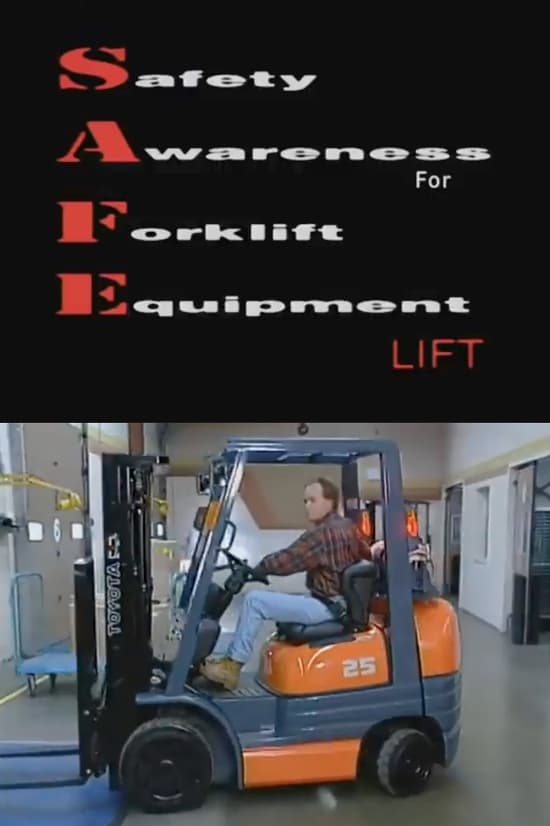
With graphic re-enactments of industrial accidents, the More High Impact Forklift Safety Video gives viewers a scared-straight lesson on the importance of forklift safety. This forklift video is great for training your forklift operators on accident awareness and prevention.