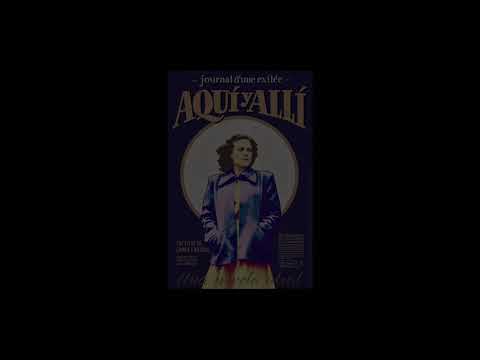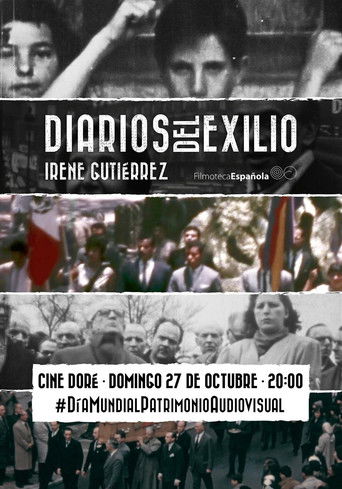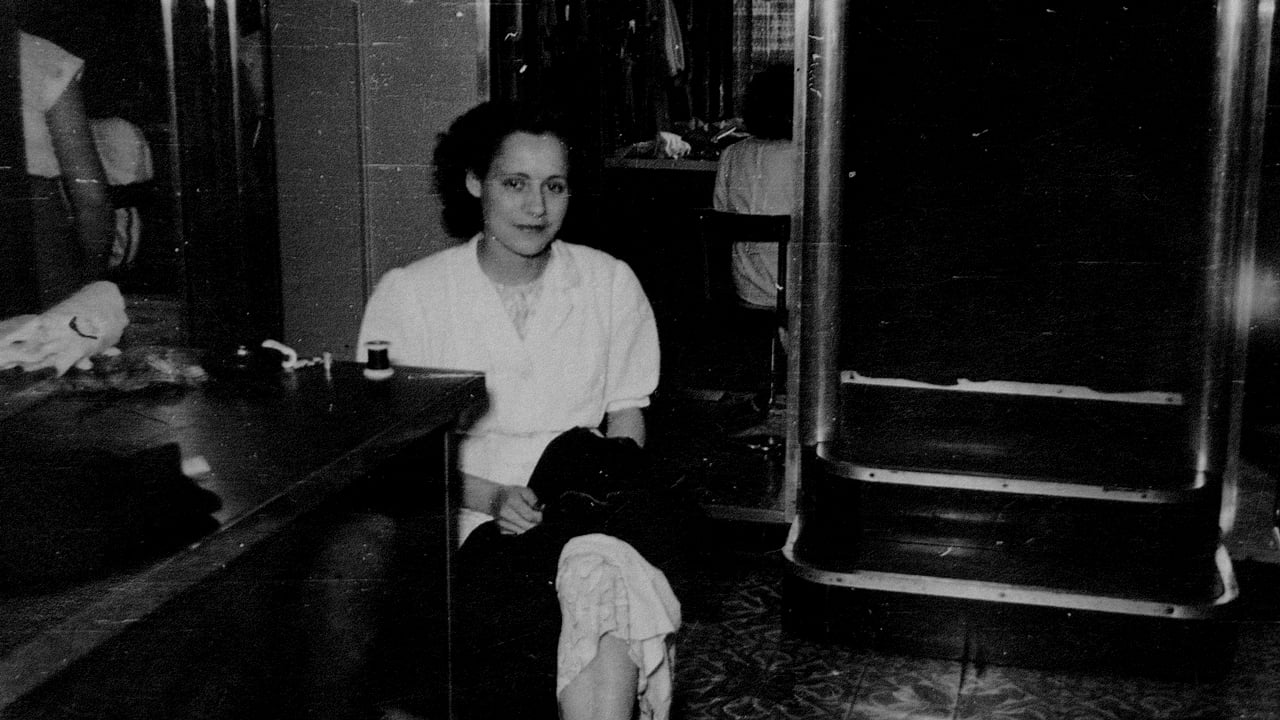
While cleaning the apartment of Lucía, her deceased grandmother, Anna finds a notebook where she discovers the story of a secretly kept love, lived during the turbulent years of the Second Republic and the Spanish Civil War.
Social & External
Lucía
Jordi
Anna
The film tells the story of the events in Western Ukraine before the outbreak of World War II, the rise of Soviet rule, changes in borders, and the disappearance of entire states from the world map. The film is based on archival documents, materials and memoirs of witnesses, representatives of the Ukrainian, Polish and Jewish peoples of pre-war Galicia.
In 1931, three Aboriginal girls escape after being plucked from their homes to be trained as domestic staff, and set off on a trek across the Outback.
The story of the rape of Nanking, one of the most tragic events in history. In 1937, the invading Japanese army murdered over 200,000 and raped tens of thousands of Chinese. In the midst of this horror, a small group of Western expatriates banded together to save 250,000. Nanking shows the tremendous impact individuals can make on the course of history.
In this propaganda film intended to raise money for republicans fighting in the Spanish Civil War, Henri Cartier-Bresson first presents the achievements of the Spanish Republic in the field of public health. He then shows how members of the public and organizations across the world were supporting the fighters.
Dietrich Bonhoeffer was a German pastor, theologian, spy, anti-Nazi dissident, and key founding member of the Confessing Church. His writings on Christianity's role in the secular world have become widely influential.
A dramatic history of Pu Yi, the last of the Emperors of China, from his lofty birth and brief reign in the Forbidden City, the object of worship by half a billion people; through his abdication, his decline and dissolute lifestyle; his exploitation by the invading Japanese, and finally to his obscure existence as just another peasant worker in the People's Republic.
A silent succession of black-and-white photographs of the city of Montreal.
In 1935, German scientists dug for bones; in 1943, they murdered to get them. How the German scientific community supported Nazism, distorted history to legitimize a hideous system and was an accomplice to its unspeakable crimes. The story of the Ahnenerbe, a sinister organization created to rewrite the obscure origins of a nation.
Depression-era bank robber John Dillinger's charm and audacity endear him to much of America's downtrodden public, but he's also a thorn in the side of J. Edgar Hoover and the fledgling FBI. Desperate to capture the elusive outlaw, Hoover makes Dillinger his first Public Enemy Number One and assigns his top agent, Melvin Purvis, the task of bringing him in dead or alive.
Caudillo is a documentary film by Spanish film director Basilio Martín Patino. It follows the military and political career of Francisco Franco and the most important moments of the Spanish Civil War. It uses footage from both sides of the war, music from the period and voice-over testimonies of various people.
Kingdom of Castile, 15th century. A group of nobles, who question the dynastic legitimacy of Princess Juana, daughter of King Enrique IV, conspire with the purpose of overthrowing him.
A young student becomes frustrated by realizing that she knows the names of many battles and fronts of the Spanish Civil War but knows little about the feelings and emotions of those who lived through the conflict. This leads her to continue researching and discovering the "War Ballads" that will take her on a personal journey that she will want to share with the world.
The role of historians is key in the history of humanity because their objective is to investigate the past to avoid repeating the same mistakes in the future. Furthermore, they often bring to light the history of unique individuals who, due to circumstances, have not received the recognition they deserve, especially in the case of women. This documentary focuses on the work of the historian Aïda Sánchez, who rescued Dolours Vives Rodon from oblivion, one of the pioneering women in piloting aircraft in our country and who played a vital role during the Spanish Civil War.
In 1936, after the coup d'état perpetrated by Franco against democratic Spain and the subsequent dictatorship that followed a bloody Civil War, women suffered physical, sexual, economic, educational and political violence, leading to the largest theft of babies in the world. History of recent Europe. 'Las vencidas y no derrotadas' is a documentary with the testimonies of these women, whose faces bear the mark left by unhealed wounds. Its protagonists tell us about real events, reliving events that were milestones in their families, towns and cities, supported by graphic documentation of family and personal memories, as well as images and audios from historical archives.
This documentary collects, through the testimonies of five survivors, four women and one man, the tragedy experienced in “la Desbandá de Málaga and the subsequent exile to France. At the entrance of Queipo de Llano's troops into the city of Malaga, thousands of people, mostly women and children, fled to Almería along the road. They were bombed by sea, land and air by the German army, Mussolini's army and Franco's troops from the then Moroccan colony. Around five thousand people died on these two hundred kilometers of road. This exodus was known as “La desbandá”.
In 1936, the war broke out in Spain and in 1937 the front was maintained for many months around Angiozar and Elgeta. It has often been talked about what men experienced, but women have also experienced the war. Through this documentary, their bravery and courage, both at the front and in resistance away from the front, has been highlighted and recalled.
In 'Las islas cambian de color', the coup d'état and the beginning of the repression against the Republicans are narrated, highlighting figures such as Margalida Roig Colomar, to give way to the landing of Bayo, the role of the Anti-Fascist Militia Committee and its temporary dominance of the island.
The documentary 'Jaén, Viento del Pueblo' places the viewer in the year 1936 and takes them to the present day, analyzing and pivoting around the processes of exhumation of the graves in the province of Jaén, the stories of relatives and experts
On September 13, 1936, Ibiza is bombed. The republican forces flee the island, but not before mass shooting all the prisoners locked up in the city castle. On September 20, the so-called national forces landed, under the command of Commander Antonio Montis Castelló and Arconovaldo Bonacorsi, better known as Conde Rossi, who began a harsh repression that would last beyond the end of the war.
The adventurous life of Natacha Rambova (1897-1966), an American artist, born Winifred Kimball Shaughnessy, who reincarnated herself countless times: false Russian dancer, silent film actress, scenographer and costume designer, writer, spiritist, Egyptologist, indefatigable traveler, mysterious and curious; an amazing 20th century woman who created the myth of Rudolph Valentino.
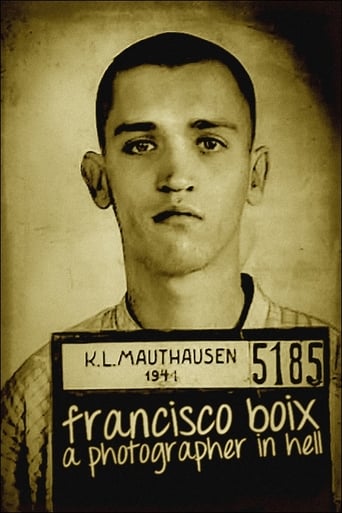
Spanish photographer Francesc Boix, imprisoned in the Mauthausen-Gusen concentration camp, works in the SS Photographic Service. Between 1943 and 1945, he hides, with the help of other prisoners, thousands of negatives, with the purpose of showing the freed world the atrocities committed by the Nazis, exhaustively documented. He will be a key witness during the Nuremberg Trials.
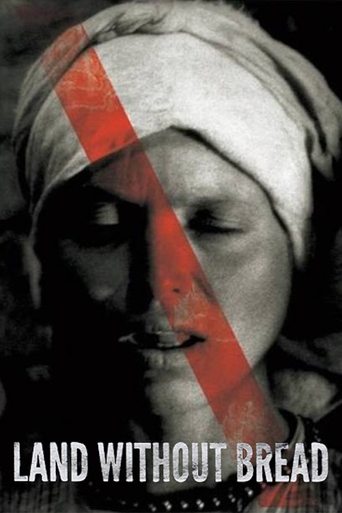
An exploration —manipulated and staged— of life in Las Hurdes, in the province of Cáceres, in Extremadura, Spain, as it was in 1932. Insalubrity, misery and lack of opportunities provoke the emigration of young people and the solitude of those who remain in the desolation of one of the poorest and least developed Spanish regions at that time.
David Carr is a British Communist who is unemployed. In 1936, when the Spanish Civil War begins, he decides to fight for the Republican side, a coalition of liberals, communists and anarchists, so he joins the POUM militia and witnesses firsthand the betrayal of the Spanish revolution by Stalin's followers and Moscow's orders.
Salamanca, Spain, 1936. In the early days of the military rebellion that began the Spanish Civil War (1936-39), writer Miguel de Unamuno supports the uprising in the hope that the prevailing political chaos will end. But when the confrontation becomes bloody, Unamuno must question his initial position.
Spain in the 1930s is the place to be for a man of action like Robert Jordan. There is a civil war going on and Jordan—who has joined up on the side that appeals most to idealists of that era—has been given a high-risk assignment up in the mountains. He awaits the right time to blow up a crucial bridge in order to halt the enemy's progress.
A small village in Huelva, Andalusia, Spain, 1936. Higinio and Rosa have been married only for a few months when the Civil War breaks out. Higinio, being afraid of possible reprisals from the rebel faction, decides to use a hole dug in his own house as a temporary hideout.
Spain, April 15, 1939. With the Civil War concluded, and with the intention of celebrating his victory, General Franco attends a dinner with his generals at the Palace Hotel.
The buried memories of the Spanish Civil War are unearthed as a woman searches for the remains of her grandfather's father and discovers the story of an idealistic young teacher from Tarragona.
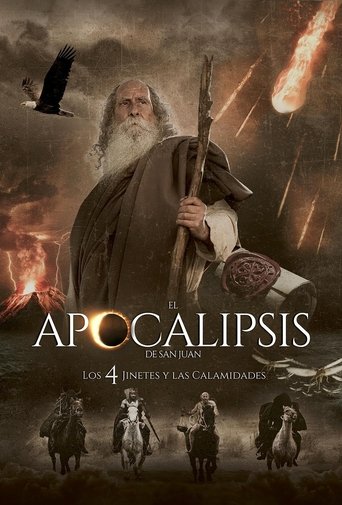
Embark on an epic journey through time and faith with 'The Apocalypse of Saint John.' Join the Apostle John in a stunning visual narrative that unravels the visions of the End Times. Experience each vision like never before, with striking visual effects and epic scenes that immerse you in the apocalyptic narrative.
At the outbreak of the Spanish Civil War, the nun Maria is forced to flee her convent. She takes refuge in a brothel, until it is liberated by a woman's anarchist group. Maria joins the group and eventually goes to the front. The women's group faces the problems of fighting not only the nationalists, but also factions on the left seeking to impose a more traditional military structure.
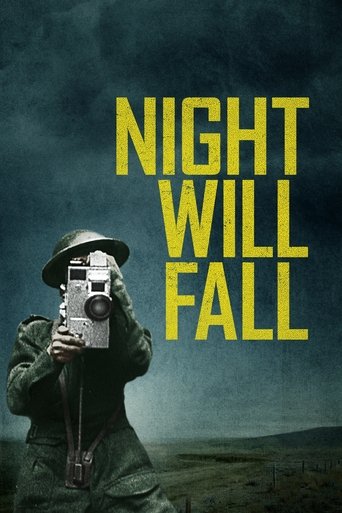
A WWII veteran escapes his care home in Northern Ireland and embarks on an arduous but inspirational journey to France to attend the 75th anniversary of the D-Day landings, finding the courage to face the ghosts of his past.
At the tense 1938 Munich Conference, former friends who now work for opposing governments become reluctant spies racing to expose a Nazi secret.
When Allied forces liberated the Nazi concentration camps in 1944-45, their terrible discoveries were recorded by army and newsreel cameramen, revealing for the first time the full horror of what had happened. Making use of British, Soviet and American footage, the Ministry of Information’s Sidney Bernstein (later founder of Granada Television) aimed to create a documentary that would provide lasting, undeniable evidence of the Nazis’ unspeakable crimes. He commissioned a wealth of British talent, including editor Stewart McAllister, writer and future cabinet minister Richard Crossman – and, as treatment advisor, his friend Alfred Hitchcock. Yet, despite initial support from the British and US Governments, the film was shelved, and only now, 70 years on, has it been restored and completed by Imperial War Museums under its original title "German Concentration Camps Factual Survey".
The true story of photographer Elizabeth "Lee" Miller, a fashion model who became an acclaimed war correspondent for Vogue magazine during World War II.
A chronicle of the Cristeros War (1926-1929), which was touched off by a rebellion against the Mexican government's attempt to secularize the country.
In the Warsaw ghetto in 1943, Jews rise against the Nazis.
An account of the revolutionary years of the legendary American journalist John Reed, who shared his adventurous professional life with his radical commitment to the socialist revolution in Russia, his dream of spreading its principles among the members of the American working class, and his troubled romantic relationship with the writer Louise Bryant.
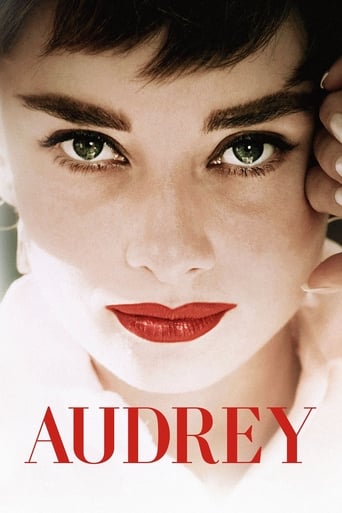
An unprecedented and intimate look at the life, work and enduring legacy of British actress Audrey Hepburn (1929-1993).
Buenos Aires, Argentina, 1983. In the last and turbulent days of the military dictatorship, Alicia, a high school history teacher, begins to ask uncomfortable questions about the dark origins of Gaby, her adopted daughter.
This is a drama set in Nazi-occupied France at the height of World War II. Charlotte Gray tells the compelling story of a young Scottish woman working with the French Resistance in the hope of rescuing her lover, a missing RAF pilot. Based on the best-selling novel by Sebastian Faulks.