Social & External
Himself
Herself
A story about a man in a caravan who checks the suitability and abundance of water wells. A suggestive, sometimes ironic, but always biased portrait of modern Robinson. The film shows the flip side of the modern myth of returning to the bosom of nature.
Journey is an autobiographical video about my identity and an investigation into issues of desire, lust, longing, and love.
A breathtaking quest for the dream the imposing city of Brasilia was based on, a marked contrast with the chaos of the adjacent construction workers' village. Everything about Brasilia was devised and designed, but not on the basis of some cold urban design concept: the plan proves to originate from 19th-century priest Don Bosco’s dream. The chaos and disorder of the adjacent construction workers' village Vila Amauri long stood in stark contrast to the grandeur and majestic regularity of Brasilia. Now the village has disappeared beneath the reservoir’s surface, the necessary order has been restored. All Still Orbit examines both these histories.

Hunter Thompson visits the set of Fear and Loathing in Las Vegas.
This short film profiles the benevolent Mike Sullivan, who has been in the process of shooting a stop-motion robot sex film in his New York City apartment for the last ten years. Obsessed with the meticulous construction of the miniature robot porn stars, his apartment now overflows with thousands, leaving him only tiny paths to navigate and no place to film his epic.
The artist stalks and serenades Joe Dimaggio in her car as he strolls the docks unaware that she is videotaping his every step.
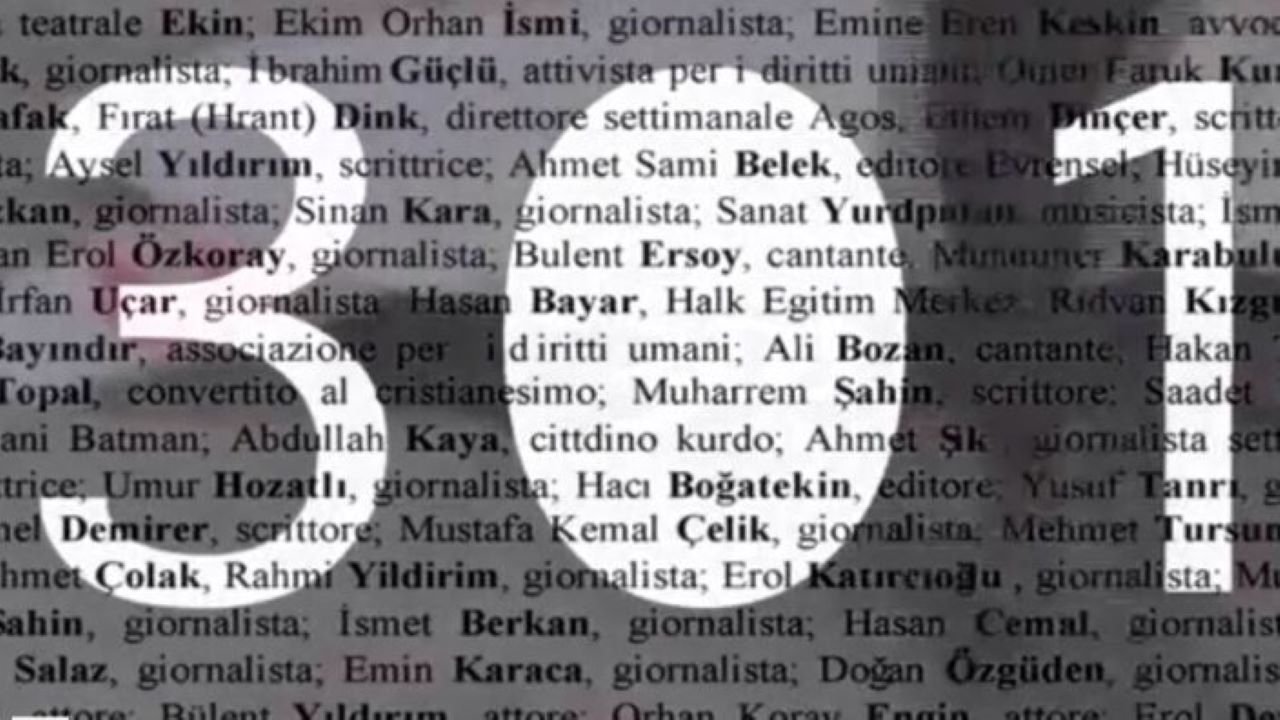
The night of July 15, 2016 changed the history of Turkey. On that day there were coordinated attacks by parts of the Turkish army, among others in Istanbul. The aim of the military: a coup against the government. The decisive confrontation occurred on the Bosporus Bridge. While President Erdogan was still on vacation, live at TV he called on the people who were devoted to him to stand against the military. As an enemy for the masses, he presented his adversary Fethullah Gülen, whom he branded as the coup leader. He also urged the imams of the country's mosques to condition the population to resist. And so it happens that at night thousands of agitated people take to the streets to oppose the armed insurgents. The death toll was high. 352 people died across Turkey during the attempted coup. The consequences are even more serious: Erdogan used this gift, as he called it himself, to undermine democracy, to arrange mass arrests of dissidents and to transform Turkey into a dictatorship.
A moving portrait of Chilean singer-songwriter and political activist Victor Jara (1932-73) that chronicles the life of the talented artist who was imprisoned, tortured and machine-gunned by the country's dictatorship.
16mm film by Paul Clipson, and music by Sarah Davachi. Filmed in New York, Los Angeles, Hong Kong, Brisbane, Krakow, Sidney, Portland, Napa, Oakland and San Francisco.
As rebels planned Ireland’s 1916 Easter Rising, they were watched by two spies code-named Granite and Chalk. This documentary delves into British intelligence to tell their story, one century on. Funded by Bord Scannán na hÉireann/the Irish Film Board, After ’16 is a creative response by Irish filmmakers to the events of Easter 1916. This collection of nine short films is a mixture of live-action, animation and documentary, telling stories from the eve of the Rising all the way to the Troubles in 1970s Northern Ireland and beyond.
Estonia's first ethnographic film. Made by Johannes Pääsuke in 1913 on his expedition to Setomaa, the South-Eastern region in Estonia.
The opening of the Kiel Canal in Germany by Kaiser Wilhelm II on 20 June 1895.
The film uses stop-frame animation to create maps on the screen, and showed the then-current military situation in the Dardanelles, using various maps to assist understanding. Small cardboard cut-outs show the deployment of men and ships. Intertitles explain tactics, and shelling explosions are illustrated by clouds of cotton wool.
A BFI-produced documentary about documentary filmmaker John Grierson speaking about documentary.
Between the French La Nouvelle Vague and the Italian Neorealismo, Europe had been undergoing a continuous cinema transformation since the 1950s, while the ailing American studio system groaned under its own weight and inertia. New Hollywood had arrived with Bonnie and Clyde in 1967, and already by 1968 it was changing how Hollywood thought and acted. The student film scene was getting ready to explode, and it knew it.
A nervous, careless recording of a trip through India and Nepal at the beginning of the 1970s. Fleeting impressions of faces, landscapes, temples, people and things. Images that, having been captured in a ephemeral medium, proceed to fade away (although without aging), alongside the river of time.
German writer Uwe Johnson lived for several years in the 1960s on Manhattan’s Upper Westside where he got to know his neighborhood very well, observing the goings-on in the streets, cafeterias, and parks. In 1968 German Television agreed to co-produce a film for broadcast featuring interviews with various neighborhood characters.
An incident from the early days of Québec's quiet revolution, tailor-made for the cartoonist. It is the story of a Montréal commuter train, a unilingual ticket collector and a bilingual passenger. The passenger appears on screen himself to describe his bid to have tickets requested in French as well as in English. What ensued, and how even the railway president became involved, is illustrated with wit and humor.
Since Monsanto began selling their patented 'Roundup Ready' genetically modified (GM) seeds they have sued hundreds of farmers for patent infringement. Michael White, a fourth generation farmer and seed cleaner living in the northeast corner of rural Alabama never imagined that he would become the target of the conglomerates aggressive legal tactics. But unlike other farmers in his area Michael refused to give in to Monsanto and in doing so became one of only a handful of farmers to maintain the ability to speak publicly about his case. This is his story.
Why can't I hear the sound of sewing machines anymore? A meeting with my family and the history of all their sewing machines.