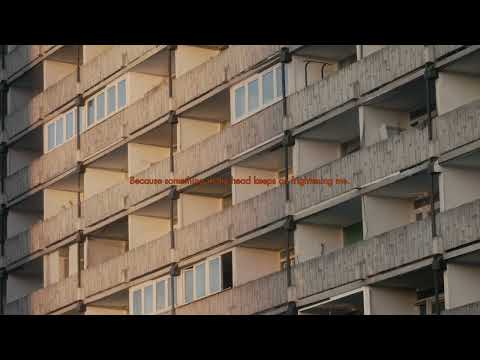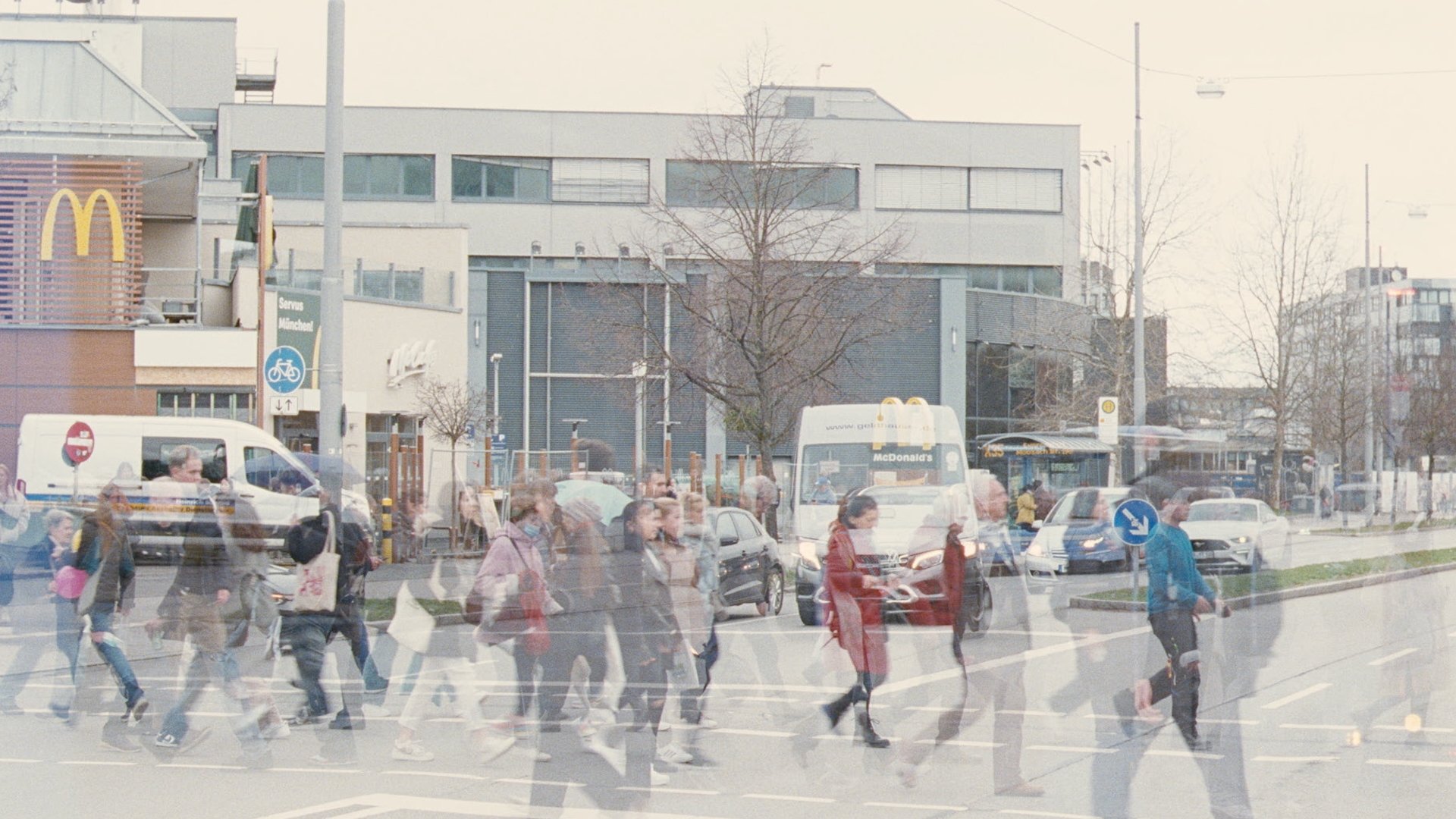
Immigrant workers build a shopping mall for the upcoming 1972 Olympic Games in Munich. In 2016, nine people with migrant backgrounds are killed in a racist attack at the same mall.
Social & External
Seventh art is unique addresses people's relationship with a movie theater or film. What feelings do they feel? What changes in you when you go to the movies? It also addresses Jair Bolsonaro's harsh criticism of culture and cinema in Brazil.
On the tiny island of Martha's Vineyard, where presidents and celebrities vacation, trophy homes threaten to destroy the islands unique character. Twelve years in the making, One Big Home follows one carpenters journey to understand the trend toward giant houses. When he feels complicit in wrecking the place he calls home, he takes off his tool belt and picks up a camera.
A Hazara film director follows a gravestone maker, a water girl and a man who buried his limb, as their daily lives unfold in a graveyard.
Across two countries, France and Algeria, and five cities, Mohamed Gholam takes us south to tell us about the earthen and vernacular-inspired architecture of André Ravéreau. Passing through Lyon, Marseille, Algiers, and Djelfa, this adventure will take us to Ghardaïa, in the Algerian desert. The documentary presents the following buildings: L'Orangerie in Lyon, the Village Terre de l'Isle-d'Abeau in Villefontaine, the Unité d'Habitat or Cité Radieuse in Marseille, L'Aérohabitat in Algiers, the Palais des Raïs or Bastion 23 in Algiers, the Hôtel des Postes in Ghardaïa, and the low-cost housing of Sidi Abbaz de Bounoura.
In the first year of Trump’s Presidency, Daryle Lamont Jenkins, an Antifa activist, combats the rise of the Alt-Right movement, while Richard Spencer, an Alt-Right leader, fights to gain ground, culminating in a tragic showdown in Charlottesville.
In September 2012, the tiny prairie town of Leith, North Dakota, sees its population of 24 grow by one. As the new resident's behavior becomes more threatening, tensions soar, and the residents desperately look for ways to expel their unwanted neighbor.
The murder of Dutch filmmaker Theo van Gogh by an Islamic extremist in 2004, followed by the publishing of twelve satirical cartoons depicting the prophet Mohammed that was commissioned for the Danish newspaper Jyllands-Posten, provides the incendiary framework for Daniel Leconte's provocative documentary, It's Hard Being Loved by Jerks.
People are interviewed in Dresden, Ontario, to sample local attitudes towards racial discrimination against black people that brought this town into the news. After a round-up of the opinions of individual citizens, white and black, commentator Gordon Burwash joins two discussion panels, presenting opposite points of view. The rights and wrongs of the quarrel are left for the audience to decide.
An extraordinary journey through the material that makes up our habitat: concrete and its ancestor, stone. Victor Kossakovsky raises a fundamental question: how do we inhabit the world of tomorrow?
The documentary tells the story of Júlio César, a young Afro-Brazilian who was executed by the Police in the 1980s in Porto Alegre. The crime became notorious when the press published photos of Julius being put alive in the police car and arriving 37 minutes later shot and dead at the hospital.
The film follows five people who lost their sight in armed conflicts, gathering fragments of their present-day lives. Through an enveloping sound composition, veiled archival material, footage shot by the protagonists themselves, and a sensitive visual approach, the film explores memory, perception, and our relationship to the visible. Steering away from spectacle, it invites us to hear what often goes unheard, and to feel differently. In an age saturated with images, this documentary offers a sensory experience where listening becomes a gesture of resistance and human reconnection.
A core group of architects embraced the West Coast from Vancouver to LA with its particular geography and values and left behind a legacy of inspired dwellings. Today, architects celebrate the influence established by their predecessors.
An unlikely collaboration between a forensic scientist from Texas and a group of Latin American students changes the course of forensic science and international human rights.
Through booms and busts, Delft Theatres and its innovative gem The Nordic endured in Marquette, Michigan for almost 100 years. Bernie Rosendahl’s crusade to restore the historic arthouse to its former glory reveals a hidden cinema empire in the Upper Peninsula.
An analysis of the impact on the United States Latino community of immigration policies promoted by President Donald Trump.
The love of Kim Jong Il, the former dictator of North Korea, for cinema and his adventures, including the kidnapping of a director.
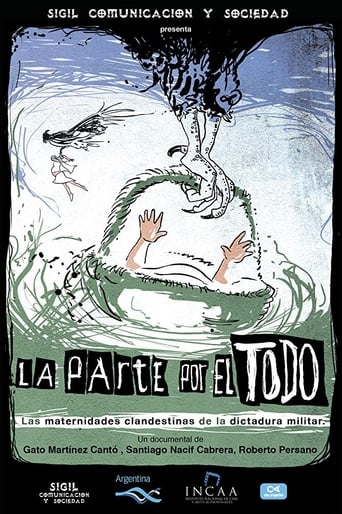
After the Battle of Algiers, France and its army exported, as true experts, anti-subversive methods to Latin America and the United States in the 1960s. After more than a year of investigation in Argentina , in Chile, Brazil, the United States and France, the director collected, sometimes under the cover of a hidden camera, recorded conversations, the exclusive testimonies of the main protagonists. From General Aussaresses to former Minister of the Armed Forces Pierre Messmer, including General Reynaldo Bignone (head of the military junta in Argentina from 1982 to 1984), General Albano Harguindéguy, General Manuel Contreras, and Generals John Johns and Carl Bernard, this investigation gives us a hidden reality of the country of Human Rights.
Amie Siegel’s film installations often reveal the hidden narratives behind architecture and design, investigating the mechanisms by which objects, materials, and spaces accrue meaning and value. The Architects examines the processes of architectural creation, using the artist’s signature slow, parallel tracking shots to offer insight into the inner workings of multiple architecture firms, slicing through them laterally like an architect’s section plan... Siegel not only punctures the myth of the singular “master architect” but also poses questions around creative autonomy, the sociopolitics of labor, and the circulation of capital. (Source: MoMA)