Social & External
Himself
Herself
Ten years after an enormous open-pit gold mine began operations in Malartic, the hoped-for economic miracle is nothing more than a mirage. Filmmaker Nicolas Paquet explores the glaring contrast between the town’s decline and the wealth of the mining company, along with the mechanisms of an opaque decision-making system in which ordinary people have little say. Part anthropological study, part investigation into the corridors of power, Malartic addresses the fundamental issue of sustainable and fair land management.
Take a breathtaking train a ride through Nothern Quebec and Labrador on Canada’s first First Nations-owned railway. Come for the celebration of the power of independence, the crucial importance of aboriginal owned businesses and stay for the beauty of the northern landscape.
Yagorihwanirats, a Mohawk child from Kahnawake Mohawk Territory in Quebec, attends a unique and special school: Karihwanoron. It is a Mohawk immersion program that teaches Mohawk language, culture and philosophy. Yagorihwanirats is so excited to go to school that she never wants to miss a day – even if she is sick.
Autism spectrum disorder (DSA) - It is not what they have, but what they are, who they are. They are Felix, Anthony, Marc and Brigitte. They are different.
Part documentary, part drama, this film presents the life and work of Jack Kerouac, an American writer with Québec roots who became one of the most important spokesmen for his generation. Intercut with archival footage, photographs and interviews, this film takes apart the heroic myth and even returns to the childhood of the author whose life and work contributed greatly to the cultural, sexual and social revolution of the 1960s.
Feature-length documentary directed by Mireille Danserau in 1973: in-depth interviews with four young women who explain their complex relationships with men, motherhood and their own femininity, sometimes radically detaching themselves from the standardized and traditional conception of the couple.
Join self confessed petrol-head Guy Martin as he learns about the alternative to the internal combustion engine, Electric. In this TV special, Guy learns about the advantages of electric transport and the different varieties that exist from bicycles, cars and vans up to buses. Guy also learns some of the disadvantages from range anxiety and with the help of the Leicestershire Fire Brigade, how to deal with a fire. The ultimate aim is to produce a record breaking electrified retro road car that is suitable for the Drag strip, with Guy behind the steering wheel.
Robert Roussil, one of the central figures of Québec sculpture, left a profound mark on art history with his bold creations and unwavering commitment to freedom of expression. However, since his death in 2013, his legacy seems to be fading. This film seeks to revive the memory of this visionary artist by delving into his work and philosophy. Constructed from a rich body of archival footage, the documentary also draws on numerous interviews given by Roussil throughout his career. The film traces his journey from his early exile in France to his life in a mill in Tourrettes-sur-Loup, in the Provence-Alpes-Côte d’Azur region, where he created most of his works. The narrative opens the doors to his home and studio, while also shedding light on his sculptures, still visible in Montreal, which continue to reflect his lasting influence.
This short documentary film is a fascinating portrait of urban and rural Quebec in the late 1960s, as the province entered modernity. The collective work produced for the Quebec Ministry of Industry and Commerce calls on several major Quebec figures.
Gilles Groulx's first film shot in 1955 with a camera borrowed from his brother and edited during his spare time when he worked as an editor at the Radio-Canada news service a few years before he joined the NFB. Silent film, presented as its author left it, where the soil and the dialectic of Groulx's work are already there: documentary realism, the social space to be explored, daily life, the relationship between individual and society, social disparities, the consumer society, seduction and happiness.
This short film is a series of vignettes of life in Saint-Henri, a Montreal working-class district, on the first day of school. From dawn to midnight, we take in the neighbourhood’s pulse: a mother fussing over children, a father's enforced idleness, teenage boys clowning, young lovers dallying - the unposed quality of daily life.
This early work from Pierre Perrault, made in collaboration with René Bonnière, chronicles summer activities in the Innu communities of Unamenshipu (La Romaine) and Pakuashipi. Shot by noted cinematographer Michel Thomas-d’Hoste, it documents the construction of a traditional canoe, fishing along the Coucouchou River, a procession marking the Christian feast of the Assumption, and the departure of children for residential schools—an event presented here in an uncritical light. Perrault’s narration, delivered by an anonymous male voice, underscores the film’s outsider gaze on its Indigenous subjects. The film is from Au Pays de Neufve-France (1960), a series produced by Crawley Films, an important early Canadian producer of documentary films.
Summer unveils a new blueberry season in northern Canada. The fields are covered in blue and workers from all over scramble before the frost puts an end to the harvest. And yet this time of year is much more than just picking: it's a time of music and connection.
Pouvoir Oublier is a political documentary first constructed from the words of the speakers whose lives changed on the tragic day of May 10, 1972 in Sept-Îles. Their word will be juxtaposed with archival material from the events, some of which are unpublished, which will reflect the collective euphoria in which Sept-Îles and all of Quebec were then bathed.
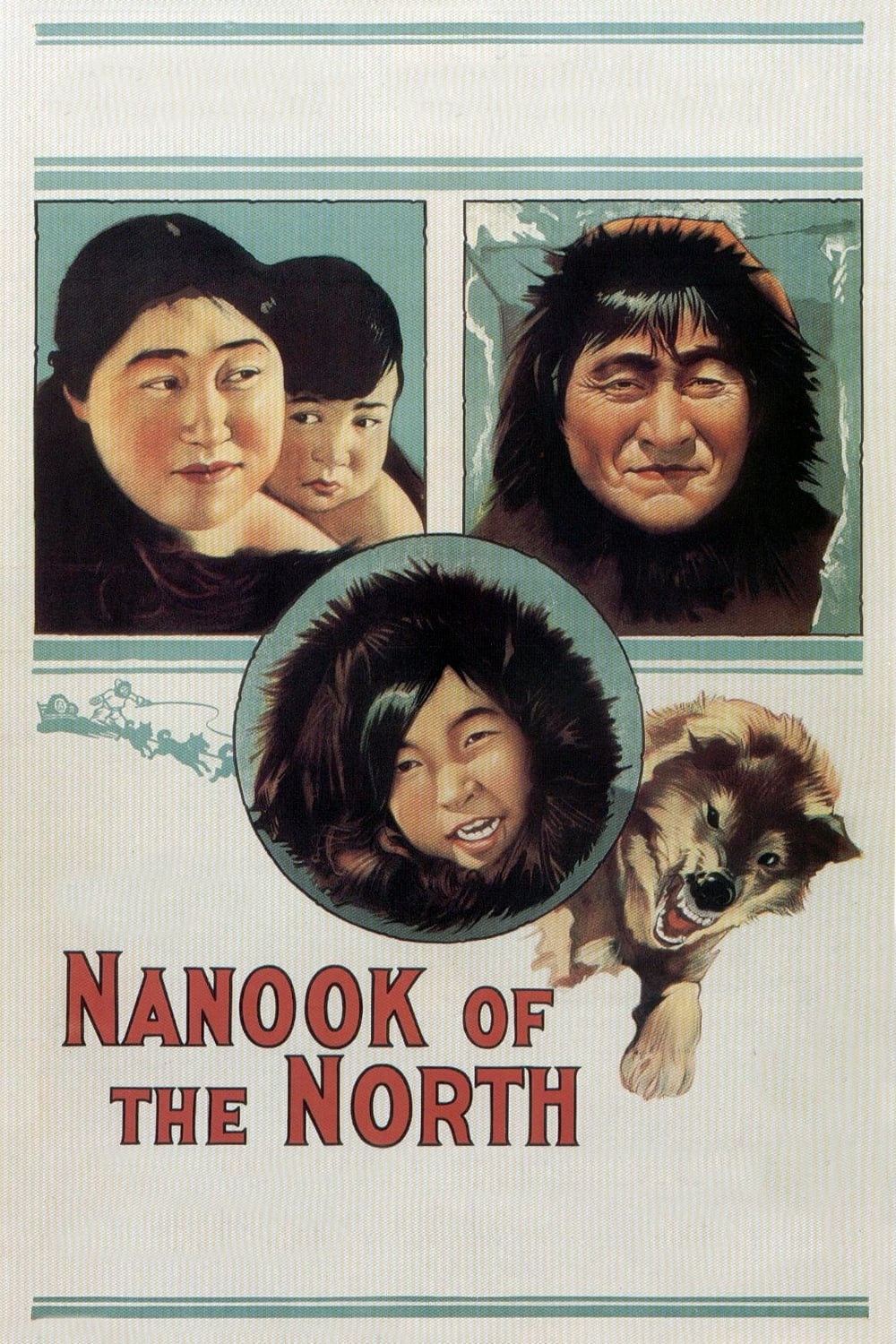
This pioneering documentary film depicts the lives of the indigenous Inuit people of Canada's northern Quebec region. Although the production contains some fictional elements, it vividly shows how its resourceful subjects survive in such a harsh climate, revealing how they construct their igloo homes and find food by hunting and fishing. The film also captures the beautiful, if unforgiving, frozen landscape of the Great White North, far removed from conventional civilization.
On the eve of the publication of a biography of Claude Jutra, one of the most famous and celebrated filmmakers in Quebec and Canada, a leak leaked to the press reveals that the book contains anonymous allegations of pedophile acts committed by the filmmaker. The rumor spread like lightning, suddenly igniting the entirety of Quebec society. By finding today some of the main witnesses propelled overnight into the heart of an unparalleled media tornado, the documentary reconstructs with archive images and other previously unpublished images, the sequence of events which led to a rewriting of the story.
In this feature-length documentary, six teenage girls, aged 14 to 16, agree to open up and have their private worlds invaded by the camera. They have to face problems that they intend to take on "to the end": early experience of sexuality, belonging to a gang, relationships with parents, social tolerance, friendship... They live tender and pure lives in their own way.