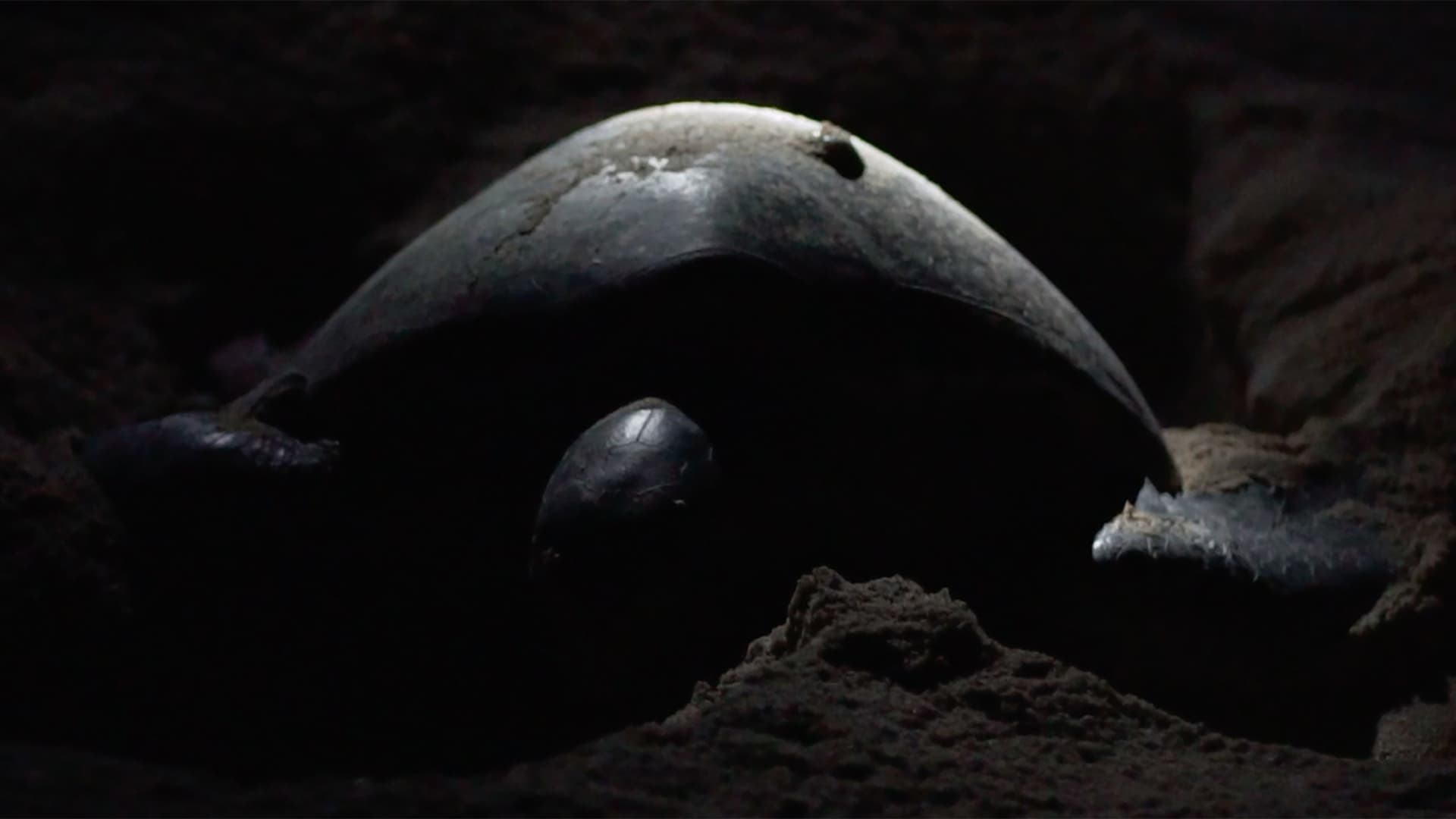
Listen to the sound of the waves, the turtles, all these lamps; many personal emotions and sensations.
Social & External
Found memories decayed by the shock patterns of childhood trauma. This films is made mostly with footage found in the bin of an ophanage. The white progressivelly disolve within a darknest more and more dense. Faces progressivelly disolves within one another.
Filmed at the time Hockney was painting Mr and Mrs Clark and Percy, Portrait of David Hockney is made up of a limited number of shots, observing the periphery details of his flat and studio. Each view is held so as to focus on its particular qualities and composition and, with the accompanying soundtrack of off-screen phone calls, conversations and musings, builds up a picture of Hockney’s daily life.
No Ward is a short documentary about the forced migration of New Orleans residents to cities in Texas. The film juxtaposes the migrations that occurred as a result of Hurricane Katrina in 2005, and Hurricane Gustav in 2008.
This short documentary examines the complex range of issues affecting urban transport in developing countries. After examining cost and available technology, as well as the different needs of the industrialized middle class and the urban poor, the film proposes some surprising solutions.
Documentary on movie special effects.
Filmmaker Helena de Llanos, who lives in the chaotic house, full of memories and treasures, where her grandfather, Fernando Fernán Gómez (1921-2007), legendary writer, actor and director; and his wife, the actress and writer Emma Cohen (1946-2016), shared their lives, analyzes the relationship that the living have with the dead through the places and objects they have left behind.
A series of ten shots, three minutes in length, of various locales in Munich.
"Labyrinth" is a groundbreaking multi-screen 45-minute presentation produced for Chamber III of the Labyrinth at Expo 67 in Montreal, using 35 mm and 70 mm film projected simultaneously on multiple screens. A film without commentary in which multiple images, sometimes complementary, sometimes contrasting, draw the viewer through the different stages of a labyrinth. The tone of the film moves from great joy to wrenching sorrow; from stark simplicity to ceremonial pomp. It is life as it is lived by the people of the world, each one, as the film suggests, in a personal labyrinth. Re-released in 1979 as "In the Labyrinth" by the National Film Board of Canada in a 21-minute single projection format.
David Attenborough tells the story of the discovery and reconstruction in Argentina of the world's largest-known dinosaur, a brand new species of titanosaur.
A film about the consequences of leaving an all-consuming way of life. Three people born and raised in the Unification Church (a cult formed in Korea in the 1950s), all having left the Church in their adulthood, examine their experiences within and without the cult that defined their entire universe.
In Over the Cattle Grid you follow to Robert, Rinke and Ytzen, who spend every day in the woods between the villages of Odoorn and Exloo. Ytzen and Rinke because they live in the middle of the woods, Robert because he cycles through the woods every day to get to work. Behind the grid time seems to pass in a different way. Or as Ytzen says "there is no time, there is just being". They also see things they have never seen before, such as trees that lose their leaves in September and plants that want to start growing in the middle of winter. You will also see Wietse de Haan and Evert Prummel, they build instruments from dead trees. All the music you hear in the film was played on these tree instruments and recorded in the forest. Okki herself also occasionally passes by. She has been coming to this piece of forest all her life, which is a kilometer from the house where she grew up. Not only has she known the forest, but also Robert, Ytzen and Rinke for most of her life.
This film was reconstructed and completed in 1995 by Javier Codesal for the Filmoteca de Andalucia, from the montage and the sound that Val del Omar had outlined before his death, after having returned to a project abandoned twenty years before with the incorporation of significant additions (above all in the soundtrack). Val del Omar's notes show that, as he typically did, he had other alternative titles in mind, such as "Acariño de la Terra Meiga" (Caress of the Magic Land), "Acariño a nosa terra" (Caress of Our Land), or "Barro de ánimas" (Clay of Souls), and that in the final phase of the unfinished project he wanted to add a second sound channel – following the diaphonic principle, and using electro-acoustic techniques – consisting of ambient material that he intended to record at the first screenings of the film in the very places and to the very people that were its origin: its "clay".
A short, experimental documentary featuring sculptures by Alonso de Berruguete and Juan de Juni. Shot within the Valladolid National Museum, the film is an excercise in what Val de Omar called "Tactile vision".
Robert, an ex-shipyard welder from Govan in Glasgow, reflects on how his experiences have influenced his compulsion to write.
A young girl is trying to relate to her grandmother's death which quickly becomes more than a personal loss.
Animal Olympians examines the extraordinary athletic prowess of the animal kingdom, comparing and contrasting the beauty, endurance and sheer power of a variety of creatures with that of human sportsmen.
The quest led by well respected scientists to record the Giant Squid.
An elderly stunt performer travels to The Arctic Circle to meet the real Santa Claus. Filmed in 1997.
A look into the lives of eagles.