'After Haiyan' is a short film about the challenges faced by the Deaf community in Tacloban, Philippines accessing disaster relief, medical care, and basic services after Typhoon Haiyan, known locally as Yolanda.
Social & External
On 15 May, 2006, double amputee Mark Inglis reached the summit of Mt Everest. It was a remarkable achievement and Inglis was feted by press and public alike. But only a few days later he was plunged into a storm of controversy when it was learned that he had passed an incapacitated climber, Englishman David Sharp, leaving him to a lonely end high in the Death Zone.
A portrait of a family living in a village in Masuria.
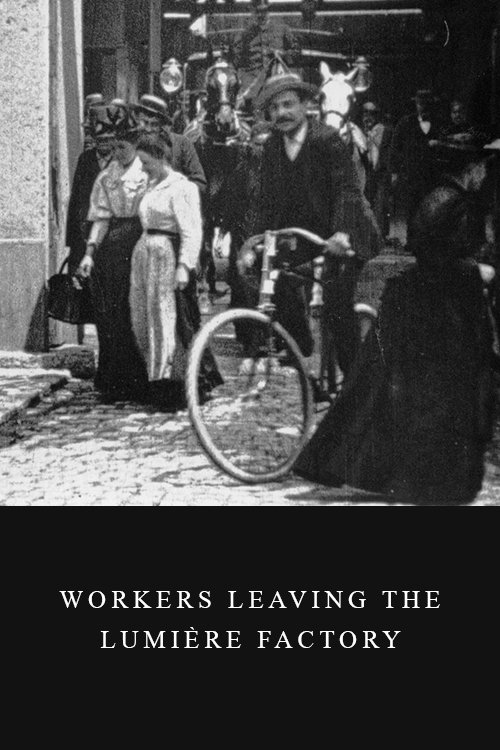
A group of people are standing along the platform of a railway station in La Ciotat, waiting for a train. One is seen coming, at some distance, and eventually stops at the platform. Doors of the railway-cars open and attendants help passengers off and on. Popular legend has it that, when this film was shown, the first-night audience fled the café in terror, fearing being run over by the "approaching" train. This legend has since been identified as promotional embellishment, though there is evidence to suggest that people were astounded at the capabilities of the Lumières' cinématographe.
For longer than the United States has been an independent nation, there has been a Marine Corps. They consider themselves the very best America has to offer. Embodying fierce patriotism, extraordinary courage, and innovative weapons, they are a force. This documentary focuses on their training and examines what it means to be a Marine.
An exploration —manipulated and staged— of life in Las Hurdes, in the province of Cáceres, in Extremadura, Spain, as it was in 1932. Insalubrity, misery and lack of opportunities provoke the emigration of young people and the solitude of those who remain in the desolation of one of the poorest and least developed Spanish regions at that time.
The Whitney Museum of American Art presented the landmark exhibition Jeff Koons: A Retrospective from June 27 to October 19, 2014. It was the largest, most comprehensive survey of Koons’s art ever assembled, spanning four decades of his career and displaying 145 works from every series, including 13 new pieces exhibited publicly for the first time. The film follows Koons and Whitney Chief Curator, Scott Rothkopf, who conceived and organized the show, through every gallery of the exhibition. In addition, insightful interviews with Adam Weinberg, the Whitney’s Director, Robert Storr, Dean Emeritus of the Yale School of Art, and Michelle Kuo, Editor of Artforum, help to deepen the investigation into Koon’s art and process.
It’s the opportunity of a lifetime for artist Phil Richards, who’s been commissioned to create Canada’s official portrait of Her Majesty Queen Elizabeth II for her Diamond Jubilee. Academy Award®-nominated filmmaker Hubert Davis follows Richards over months of painstaking preparations, as he works to capture Her Majesty’s likeness and spirit on canvas.
The film "Hurricane on the Bayou" is about the wetlands of Louisiana before and after Hurricane Katrina.
Denise Crosby takes a first look at the huge fans of "Star Trek" from around America and how the series has affected and shaped their lives.
Made at the height of 'cold war' paranoia, this drama-documentary shows the work of the UK Warning and Monitoring Organisation, who's duties included the issuing of public warnings of any nuclear missile strike and the subsequent fallout.
The director documents the events leading to a reunion with her estranged father.
A definitive documentary charting the rise and fall of Amicus film productions.
Documentary that portrays the life of a coal-mining town south of Havana, around 1955, prior to the triumph of the revolution.
The earliest surviving motion-picture film, and believed to be one of the very first moving images ever created, was shot by Louis Aimé Augustin Le Prince using the LPCCP Type-1 MkII single-lens camera. It was taken on paper-based photographic film in the garden of Oakwood Grange, the Whitley family house in Roundhay, Leeds, West Riding of Yorkshire (UK), on 14 October 1888. The film shows Adolphe Le Prince (Le Prince’s son), Mrs. Sarah Whitley (Le Prince’s mother-in-law), Joseph Whitley, and Miss Harriet Hartley walking around in circles, laughing to themselves, and staying within the area framed by the camera. Roundhay Garden Scene is often associated with a recording speed of around 12 frames per second and runs for about 2 to 3 seconds.
A film by Louis Aimé Augustin Le Prince, shot in late October 1888, showing pedestrians and carriages crossing Leeds Bridge.
After the successful conquest of Everest in 1953, two Italians reach the summit of K2, the second highest mountain in the world, the next year,after careful preparation and the formation of the team of climbers, scientists, and porters.
Life After opens the dialogue surrounding grief and how we experience it. Through conversations with Nicola Winstanley and Carmen Galavan about what grief is and how it affects us, we learn what it really means to live a life after.
.TV is a found footage essay film: Voicemails left by an anonymous caller from the future guide us to the remote islands of Tuvalu, a place the global media has described as “the first country to disappear due to rising sea levels”. Surrounded by thousands of miles of open water, much of Tuvalu’s revenue comes from its country-code web extension .TV, a popular domain choice among global video-streaming and television industries. The caller describes how heat, digital screens, and distance gave him no choice but to leave his sinking home and escape into cyberspace where rising waters will never reach him.
Short documentary released in 1907.