A new insight into the Irish origins of Ice-hockey in Canada.
Social & External
Unknown Role
CREE CODE TALKER reveals the role of Canadian Cree code talker Charles 'Checker' Tomkins during the Second World War. Digging deep into the US archives it depicts the true story of Charles' involvement with the US Air Force and the development of the code talkers communication system, which was used to transmit crucial military communications, using the Cree language as a vital secret weapon in combat.
Six friends document their trip from Cork to Portmagee, County Kerry for the May the 4th Sci-fi film festival where one of their short films is screening.
After the Japanese attack on Pearl Harbor, all persons of Japanese descent in Canada were sent to internment camps. The former Asahi members survived by playing ball. Their passion was contagious and soon other players joined in, among them RCMP officials and local townspeople. As a result, the games helped break down racial and cultural barriers.
A biography of the poet W. B. Yeats and his contribution to the Irish independence movement as a Protestant nationalist.
Documentary about filmmaker Bonnie Ammaaq's memories of life on Baffin Island, where her family moved for eleven years during her childhood from the hamlet of Igloolik to return to the traditional Inuit way of life.
In 2012, Stephen Vaughan and Kay Ferreter are invited to address the congregation at St. Joseph's Redemptorists Church in Dundalk, Ireland for the Solemn Novena Festival. In a powerful speech, the pair describe their experiences being gay and lesbian in Ireland, feeling excluded by Catholic doctrine, and the importance of a more inclusive church.
They were the bad boys of hockey — a team bought by a man with mob ties, run by his 17-year-old son, and with a rep for being as violent as they were good.
This pioneering documentary film depicts the lives of the indigenous Inuit people of Canada's northern Quebec region. Although the production contains some fictional elements, it vividly shows how its resourceful subjects survive in such a harsh climate, revealing how they construct their igloo homes and find food by hunting and fishing. The film also captures the beautiful, if unforgiving, frozen landscape of the Great White North, far removed from conventional civilization.
Mike and I spent 2 months in Tramore, County Waterford, Ireland in the fall/winter of '92. We had been on the road since the summer, and planned to be gone for another year or so. We made a video to send home to our friends and family in the States as a Christmas card. This is the part of the video where we took our friends on a tour of Tramore.
This feature documentary retraces the century of haggling by successive federal and provincial governments to agree on a formula to bring home the Canadian Constitution from England. This film concentrates on the politicking and lobbying that finally led to its patriation in 1982. Five prime ministers had failed before Prime Minister Pierre Elliott Trudeau took up the challenge in the early 1970s. Principal players in this documentary are federal Minister of Justice Jean Chrétien, Prime Minister Trudeau, 10 provincial premiers and a host of journalists, politicians, lawyers, and diplomats on both sides of the Atlantic.
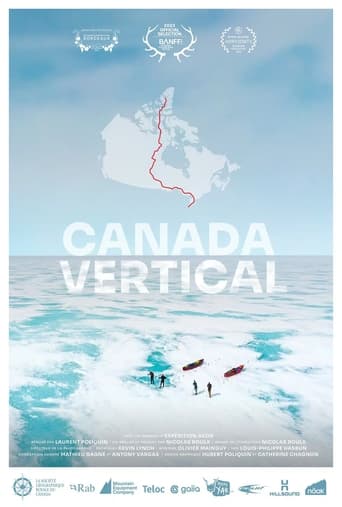
After years of preparation, a team of highly motivated Quebeckers set out on one of the longest wilderness expeditions ever documented. Stage one involves skiing in relentless polar conditions from Ellesmere Island to the Northwest Passage where the challenge was reaching the mainland. Cue canoes for a 2000km journey across Nunavut and NWT until they reach the first dirt road available where bikes are waiting to be pedalled 4000km to Point Pelee in Ontario.
A look at the Stanley Cup winning season of the New Jersey Devils of the National Hockey League.
In the early 1970s, a group of young volunteers, the Free Youth Clinic of Winnipeg, operated a "crisis bus" to rescue young people experiencing bad drug trips, usually from LSD.
In the mid-1950s, lured by false promises of a better life, Inuit families were displaced by the Canadian government and left to their own devices in the Far North. In this icy desert realm, Martha Flaherty and her family lived through one of Canadian history’s most sombre and little-known episodes.
Before the summer of 2022, Ireland had never beaten the All Blacks in New Zealand. Using behind the scenes footage and interviews with players and coaches this documentary reflects on the experience of triumphing in New Zealand for the first time.
Crash 'n' Burn is an experimental film shot in and named after Toronto, Ontario's first punk rock club. (Not to be confused with Peter Vronsky's similarly titled 1977 documentary on the Toronto punk scene made for the CBC television network.) The film, shot on 16mm black-and-white stock, features performances by Dead Boys, Teenage Head, The Boyfriends, and The Diodes".
The filmed account of a large Canadian rock festival train tour boasting major acts. In the summer of 1970, a chartered train crossed Canada carrying some of the world's greatest rock bands. The Grateful Dead, Janis Joplin, The Band, Buddy Guy, and others lived (and partied) together for five days, stopping in major cities along the way to play live concerts. Their journey was filmed.
Legendary Canadian documentarian Alanis Obomsawin digs into the tangled history of Treaty 9 — the infamous 1905 agreement wherein First Nations communities relinquished sovereignty over their traditional territories — to reveal the deceptions and distortions which the document has been subjected to by successive governments seeking to deprive Canada’s First Peoples of their lands.