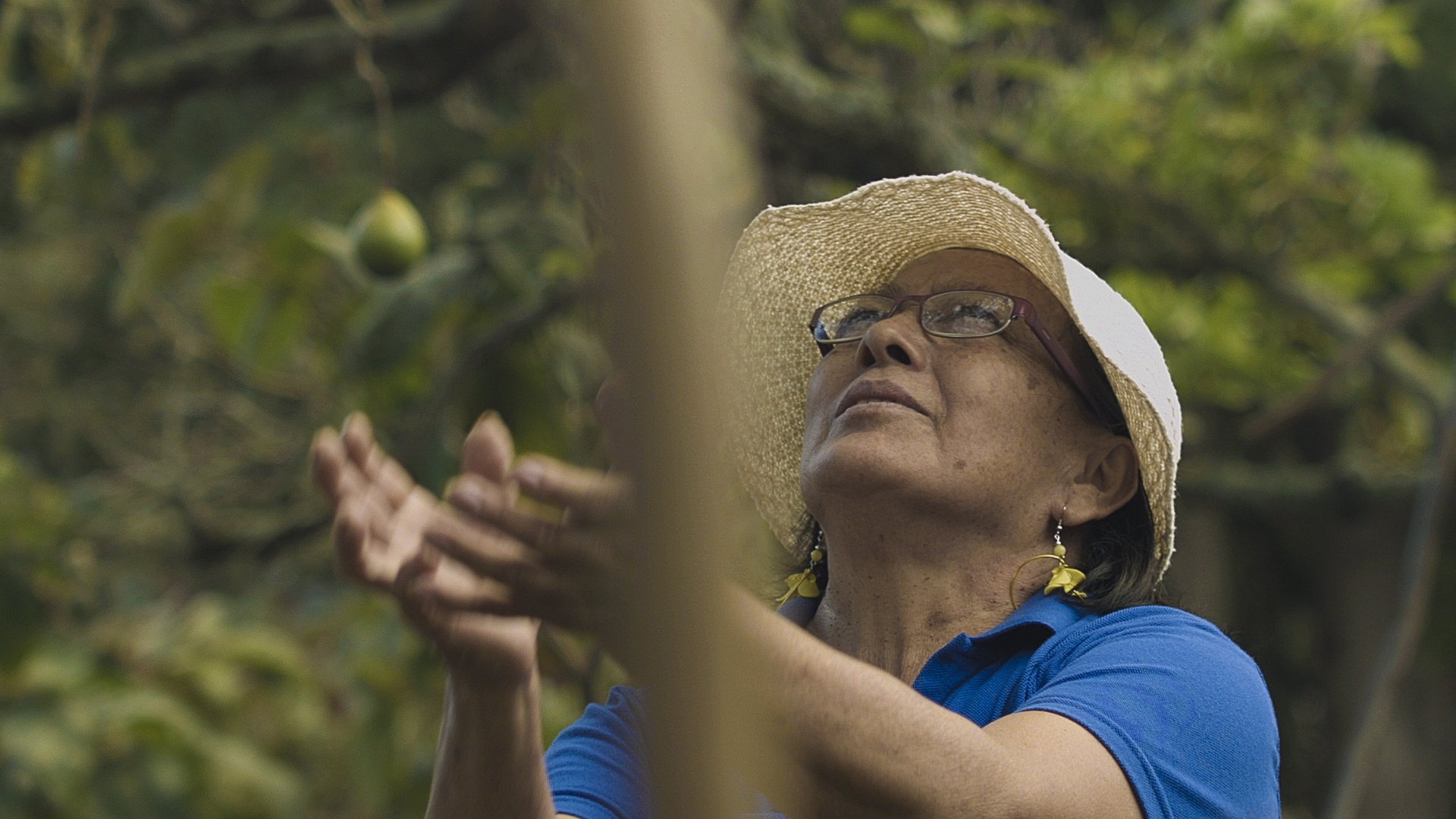
The reality of four rural women in the Metropolitan District of Quito. Despite their pain and difficulties, they have managed to forge a life that in maturity unfolds all the beauty of wisdom.
Social & External
The camera falls in love with the characters, the landscape and the objects and is installed with the tenderness that inoculates the life of the town itself. The camera is the thousand eyes of the gaze of a rigorous anthropologist, although in love, multiplying so as not to lose detail in 24 hours of people, activity, games, intimacy ... Recording every sound that pierces the oceanic silence of the countryside open.And night comes. And the gazpacho. And the party. You see.
This documentary film follows farmers and activists fighting together to stop the Indiana Enterprise Center, a mega-sized industrial park planned west of South Bend, Indiana
A strange story from Somerset, England about a filmmaking farmer and the inspiring legacy of his long-lost home movies.
For ten years, Raymond Depardon has followed the lives of farmer living in the mountain ranges. He allows us to enter their farms with astounding naturalness. This moving film speaks, with great serenity, of our roots and of the future of the people who work on the land. This the last part of Depardon's triptych "Profils paysans" about what it is like to be a farmer today in an isolated highland area in France. "La vie moderne" examines what has become of the persons he has followed for ten years, while featuring younger people who try to farm or raise cattle or poultry, come hell or high water.
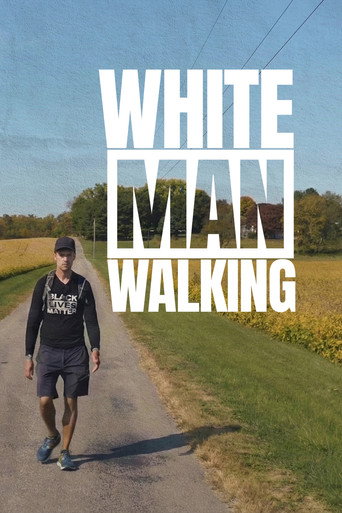
In July 2020, Rob Bliss, a young, white filmmaker, posted a video of what happened when he held up a ‘Black Lives Matter’ sign in Harrison, Arkansas, 'the most racist town in America'. It went viral, attracting 12 million views. What Bliss did next was remarkable. Over 1500 miles, two months and 25 miles a day, he set out to walk through the American South, wearing a Black Lives Matter t-shirt, and a sign that invited people to ‘come walk with me’. His goal was simple: to take the conversation Floyd’s murder had sparked about racism in American society into the places where it was most needed, yet most silent.
After eighteen years of operating the favourite lunch counter in Manitoba's Interlake region, Ellen and Martin Kihn have retired. A poignant look at the last day, The Kihns, their friends and their customers, demanding rural life and the place the disappearing institution of the country cafe plays in these people's lives. A tribute to the cafes found in small towns.
The first of a documentary serie about rural France.
Second documentary of a trilogy produced on the long term (together with Profils paysans: l'approche (2001) and Profils paysans: La vie moderne (2008)), showing the simple lives of farmers in contemporary Southern France.
Even in the push and pull era which is full of flour and sugar, rice firmly protects the table of the rice bowl nation! There are farmers who grow the rice in different ways. Nam Ho-hyeon, a young farmer who continues his father's family business, challenges farming with agricultural drones that spray coated rice seeds in large quantities, but new technologies that seemed to bring a rosy future leave only endless homework in a series of trials and errors. Lee Geun, an urban farmer who started farming on weekends and fell in love with farming, lives a life of small farmers who touch and cultivate them with their hands rather than machines, and studies and protects the world of traditional native rice that has disappeared in history. Our rice, which grows with sincerity, is filled with happiness, and conveys the power of life presented by nature for a long time! The moving journey begins now!
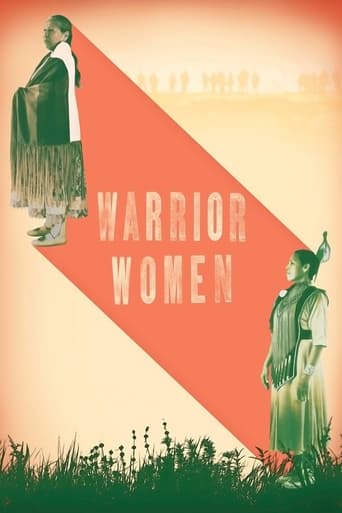
Through the figure of Lakota activist and community organizer Madonna Thunder Hawk, this inspiring film traces the untold story of countless Native American women struggling for their people's civil rights. Spanning several decades, Christina D. King and Elizabeth A. Castle's documentary charts Thunder Hawk's lifelong commitment, from her early involvement in the American Indian Movement (AIM), to her pivotal role in the founding of Women of All Red Nations, to her heartening presence at Standing Rock alongside thousands protesting the Dakota Access Pipeline. She passed her dedication and hunger for change to her daughter Marcy, even if that often meant feeling like comrades-in-arms more than mother and child. Through rare archival material—including amazing footage of AIM's occupation of Wounded Knee—and an Indigenous style of circular storytelling, Warrior Women rekindles the memories and legacy of the Red Power movement's matriarchs.
This film illustrates the struggles of Canadian prairies women to achieve a more just and humane society within the farm movement and at large. During the early 1900s, women on the prairies looked for ways to overcome their isolation. Out of the resulting farm women's organizations grew a group of women possessing remarkable intellectual abilities, social and cultural awareness, and advanced worldviews.
The village of Yahidne in northern Ukraine is coming back to life. Dogs are running around. Gardens and crops are green again. People support one another and families have reunited. In a movement of solidarity, local youth help rebuild what was devastated a year ago when Russian troops occupied the village imprisoning the villagers in the school's basement for a month. The villagers' attitudes alternate between their desire to move forward an remembering the horrors of the past. A heartwarming tribute to resilience and unity.
Paul Bedel will be 75 soon. He's and old bachelor, a peasant, a fisherman and a verger. He lives in a farm from another time with his two sisters, also unmarried. This year, they will retire : « Our lives will be filled with emptiness ». Their territory is the Cape of la Hague. The air is bracing, the wind is unpredicable, the granit is rough, and the horizon without boundaries. In here, Paul resisted to modernity, keen to preserve and improve his link to nature.
Filmmaker Angelo Madsen Minax returns to his rural Michigan hometown following the death of his infant niece and the subsequent arrest of his brother-in-law as the culprit. Using the audio-visual approaches of essay film, first-person cinema vérité, staged actions, and decades of home movies, Madsen navigates a town steeped in opioid addiction, economic depression, and religious fervor, while using the act of filmmaking to rebuild familial bonds and reimagine justice. Posing empathy as a tool for creating a more just world, North By Current does not seek to investigate a crime, but creates a relentless portrait of an enduring pastoral family, poised to reframe and reimagine narratives about incarceration, addiction, trans embodiment, and ruralness.
In this documentary by Coline Serreau, known for her feature film Why Not?, a selection of Frenchwomen in characteristically no-win situations discuss what they are experiencing and answer, if only by implication, the question: "What do women want?"
When Werner Herzog was still a child, his father was beaten to death before his eyes. His mother was overwhelmed with his upbringing and thereupon shipped him off to one of the toughest youth welfare institutions in Freistatt. This was followed by a career as a bouncer in the city's most notorious music club and an attempt to start a family. Today, the 77-year-old from Bielefeld lives with his dog Lucky in a lonely house in the country. Despite adverse living conditions, he has survived in his own unique and inimitable way.
Told in the cinematic tradition of classic westerns, “COWBOYS - A Documentary Portrait” is a feature-length film that gives viewers the opportunity to ride alongside modern working cowboys on some of America's largest and most remote cattle ranches. The movie documents the lives of the men and women working on these "big outfit" ranches - some of which are over one million acres - and still require full crews of horseback mounted workers to tend large herds of cattle. Narrated through first-hand accounts from the cowboys themselves, the story is steeped in authenticity and explores the rewards and hardships of a celebrated but misunderstood way of life, including the challenges that lie ahead for the cowboys critical to providing the world's supply of beef. “COWBOYS” was filmed on eight of the nation’s largest cattle ranches across ten states in the American West.
In barely a century, French peasants have seen their world profoundly turned upside down. While they once made up the vast majority of the country, today they are only a tiny minority and are faced with an immense challenge: to continue to feed France. From the figure of the simple tenant farmer described by Emile Guillaumin at the beginning of the 20th century to the heavy toll paid by peasants during the Great War, from the beginnings of mechanization in the inter-war period to the ambivalent figure of the peasant under the Occupation, From the unbridled race to industrialization in post-war France to the realization that it is now necessary to rethink the agricultural model and invent the agriculture of tomorrow, the film looks back at the long march of French peasants.
In the dying days of apartheid, three generations of women in a village in South Africa came together to create a community garden. They called it “the thinking garden” – hleketani in the local xiTsonga language – a place where women gather to think about how to effect change. Twenty-five years later the garden is still going strong, providing fresh vegetables and new opportunities for local people while helping to confront the ravages of climate change, poverty, and HIV/AIDS in a community pushed to the edge.