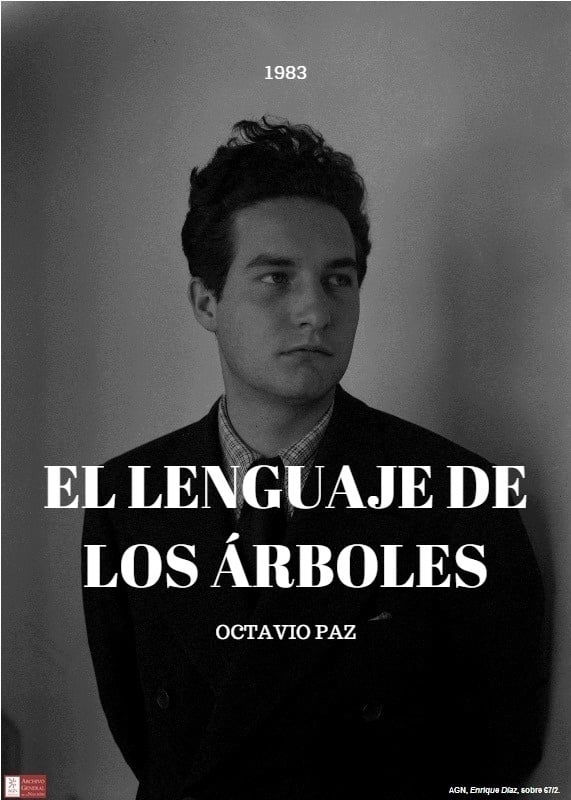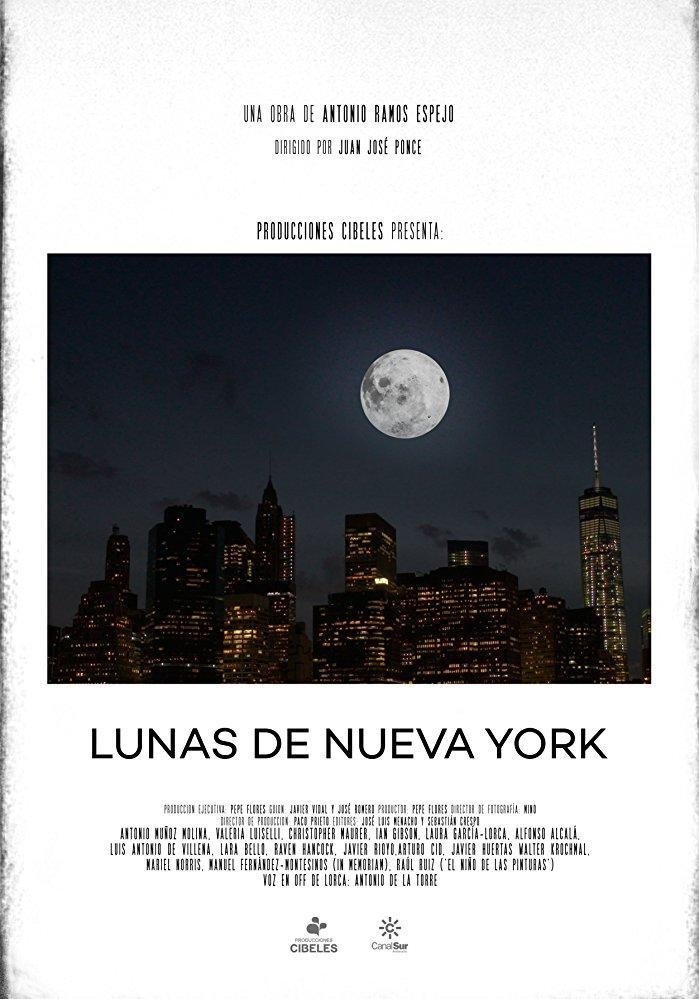
First film of Juan José Ponce’s trilogy about Federico García Lorca. Lunas de Nueva York looks back on Federico’s trip to New York in 1929, an essential journey for his life and career.
Social & External
Narrador
Unknown Role
The hard-working cinema owners and operators of the small towns found in BC's southern interior are doing more than showing movies and selling popcorn––they are bringing their communities together.

As PlayhouseSquare celebrates its first 90 years, “Staging Success: The PlayhouseSquare Story” pays tribute to the people who were instrumental in saving the theaters and shows how the community worked together to create a cultural showplace in the heart of downtown Cleveland. This new documentary, a production of WVIZ/PBS, in collaboration with Think Media Studios, reveals a Cleveland rags-to-riches tale as dramatic as any on Broadway.
A recovering alcoholic and recently converted Mormon, Arthur "Killer" Kane, of the rock band The New York Dolls, is given a chance at reuniting with his band after 30 years.
An in-depth look at the Canadian rock band Rush, chronicling the band's musical evolution from their progressive rock sound of the '70s to their current heavy rock style.
Reading out loud one poem of Andrés Eloy Blanco, titled “Pleito de amar y querer” (Battle between loving and caring).
A short documentary on the River Ouse, following it downstream from Lewes to Newhaven, meditating on the surrounding area.
Voices in Wartime is a 2004 documentary that explores the human experience of war through poetry. Combining interviews with soldiers, journalists, and historians, it reveals how war affects individuals and societies across time and place. The film features poets from around the world – from Homer and Wilfred Owen to Shoda Shinoe and modern writers in Iraq and Nigeria – showing how poetry expresses the pain, trauma, and truth of conflict. By linking verse with real-life accounts, Voices in Wartime highlights how poetry helps us understand the emotional and moral impact of war.
A short documentary about the rapidly disappearing era of heritage movie palaces and the film going experience once offered within those hallowed walls.

Empire Skate chronicles the colorful rise and enduring influence of New York skateboarding culture in the 1990s, through the global phenomenon of Supreme and intimate portraits of the skaters who breathed life into that world. From the highs of breakout film success and the creation of a brand and movement to the lows of fractured families and the loss of close friends, it is a style-and-substance trip through a unique moment when multiple trends converged on one city to create something timeless.
Performance and conversation with husband-and-wife poets Donald Hall and Jane Kenyon at a New Jersey festival, in their Wilmot (N.H.) hometown and their Eagle Pond farmhouse.
Filmed at New York’s Carnegie Hall, Cut Piece documents one of Yoko Ono’s most powerful conceptual pieces. Performed by the artist herself, Ono sits motionless on the stage after inviting the audience to come up and cut away her clothing in a denouement of the reciprocity between victim and assailant.
Where does voguing come from, and what, exactly, is throwing shade? This landmark documentary provides a vibrant snapshot of the 1980s through the eyes of New York City's African American and Latinx Harlem drag-ball scene. Made over seven years, PARIS IS BURNING offers an intimate portrait of rival fashion "houses," from fierce contests for trophies to house mothers offering sustenance in a world rampant with homophobia, transphobia, racism, AIDS, and poverty. Featuring legendary voguers, drag queens, and trans women — including Willi Ninja, Pepper LaBeija, Dorian Corey, and Venus Xtravaganza.
On January 31, 1857, the French writer Gustave Flaubert (1821-80) took his place in the dock for contempt of public morality and religion. The accused, the real one, is, through him, Emma Bovary, heroine with a thousand faces and a thousand desires, guilty without doubt of an unforgivable desire to live.
In 1991, American Psycho, the third novel by controversial writer Bret Easton Ellis, provoked heated discussions among critics and readers alike; an extraordinarily disturbing book that transported its readers into the mind of Patrick Bateman, a cynical mergers and acquisitions executive obsessed with brands, inconsequential details, pop culture and brutal murder.
A theatrical documentary about Hrytsko Chubai, a genius of Ukrainian poetry, a connoisseur of literature, art and music and the brightest representative of Lviv underground culture of late 60s early 70s.
A lost chapter in black British film: extraordinary rushes from a documentary showcasing talented members of the black community.
Artist Taylor Denise sets out to make her first painting, which also happens to be her largest work to-date. As she embarks on this creative process of making shit because it looks cool, she's met with comradery, debauchery, and people's brains interrupting art whatever way they want to-ery.
All About New York is a 1962 documentary directed by Paul Cohen and produced by Owen Murphy, chronicling the history and development of New York City.
After World War II a group of young writers, outsiders and friends who were disillusioned by the pursuit of the American dream met in New York City. Associated through mutual friendships, these cultural dissidents looked for new ways and means to express themselves. Soon their writings found an audience and the American media took notice, dubbing them the Beat Generation. Members of this group included writers Jack Kerouac, William Burroughs, Allen Ginsberg. a trinity that would ultimately influence the works of others during that era, including the "hippie" movement of the '60s. In this 55-minute video narrated by Allen Ginsberg, members of the Beat Generation (including the aforementioned Burroughs, Anne Waldman, Peter Orlovsky, Amiri Baraka, Diane Di Prima, and Timothy Leary) are reunited at Naropa University in Boulder, CO during the late 1970's to share their works and influence a new generation of young American bohemians.
The golden age of the annual Tony Awards ceremony lasted from 1967 to 1986 — the period during which Alexander H. Cohen and his wife, Hildy Parks, were the producers of the show. This film offers a compilation of performances from Tony Award broadcasts during those years. They are presented with color-corrected footage and digitally re-mastered sound.