This cartoon propaganda short by Halas & Batchelor sweetens the pill of post-war coal prices by promising jam tomorrow.
Social & External
Unknown Role
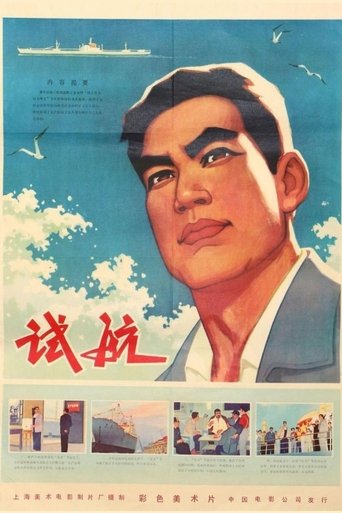
Lu Dahai and his shipbuilding team want the 10,000-ton ocean freighter "The East" to be given a sea trial. But the ship is made with domestic parts, and Chen Zongjie, a leader of the Party Committee of the Bureau of Foreign Transport, believes that the quality is not sufficient, and orders that the parts be replaced with imported ones before the sea trial takes place. In the end, the sea trial not only sets a successful new record, but also rescues a Taiwanese fishing boat in distress.
Short US propaganda cartoon.
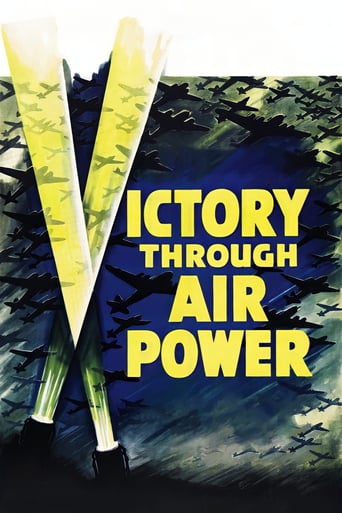
Based on the book by Major Alexander de Seversky's about his theories of the practical uses of long range strategic bombing. Using a combination of animation humorously telling about the development of air warfare, the film shows de Seversky illustrating his ideas of how air power could win World War II for the Allies.
Peaceful citizens (one of whom resembles Felix the Cat) are dancing to music before their island is being invaded by a gigantic rodent that resembles Mickey Mouse. The islanders contact legendary folk-hero Momotaro from a giant book to battle Mickey.
A marching band of Germans, Italians, and Japanese march through the streets of swastika-motif Nutziland, serenading "Der Fuehrer's Face." Donald Duck, not living in the region by choice, struggles to make do with disgusting Nazi food rations and then with his day of toil at a Nazi artillery factory. After a nervous breakdown, Donald awakens to find that his experience was in fact a nightmare.
The first Greek animated film was shot by the cartoonist Stamatis Polenakis (1908-1997) with the title "The Duce tells...". The seven-minute "Mickey-Mouse-style" film, as its creator mentions in the credits, satirizes the Italian invasion of Greece on October 28, 1940, and especially Mussolini, who recounts his exploits, but reality constantly contradicts him. Stamatis Polenakis, one of the leading Greek cartoonists of the 20th century and a pioneer of animation in our country, began drawing the sketches for the film in 1942 in his hometown, Sifnos, where he had taken refuge during the Occupation. He worked under the boot of the Italian conqueror, risking arrest. The film was lost during the Civil War and it was not until 1980 that a negative was found and restored.
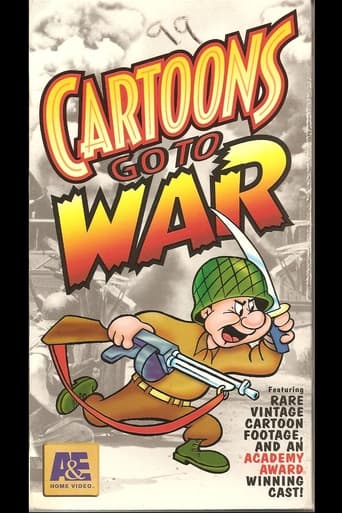
This remarkable documentary dedicates itself to an extraordinary chapter of the second World War – the psychological warfare of the USA. America’s trusted cartoon darlings from the studios of Warner Bros., Paramount, and the “big animals” of the Disney family were supposed to give courage to the people at the homefront, to educate them, but also to simultaneously entertain them. Out of this mixture grew a genre of its own kind – political cartoons. Insightful Interviews with the animators and producers from back then elucidate in an amusing and astonishing way under which bizarre circumstances these films partially came into existence.
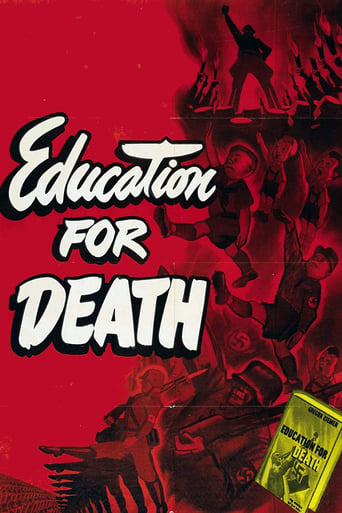
A propaganda film during World War II about a boy who grows up to become a Nazi soldier.
A pastel animation produced by Sheila Graber and based upon the short story by Sid Chaplin. Narrated by north east broadcaster Mike Neville the film tells the story of Geordie, a miner, and his love for his pigeons and the trials and tribulations of his passion which is very popular around the region. The face of Sid Chaplin is used as Geordie.
Animated documentary promoting timely filing and payment of Federal income taxes, demonstrated by Donald Duck's difficulties with his tax return.
Donald Duck deals with income taxes and their benefit to the American war effort in this inspirational documentary short animated film.
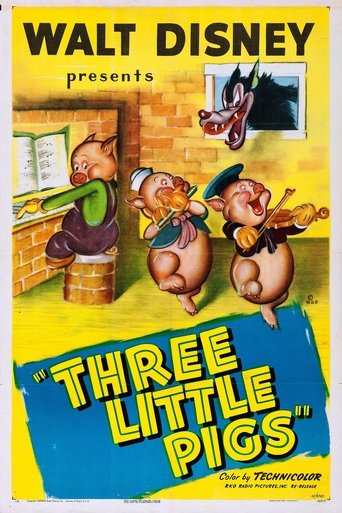
The Three Little Pigs sell Canadian war bonds.
Private Duck is a camouflage painter. He paints a giant cannon with some very gaudy colors, until Sergeant Pete explains that the point is to make it so the cannon can't be seen. Donald finds a bucket of experimental invisible paint and makes the cannon disappear. Pete isn't happy with this, and knocks Donald into the paint, then chases him, until he runs into the general. As Pete tries to explain, Donald prods him with a cactus, then goes off to steal some pies. Eventually, Pete goes berserk and starts throwing grenades willy-nilly and gets in more trouble with the general.
The Seven Dwarfs fight malaria.
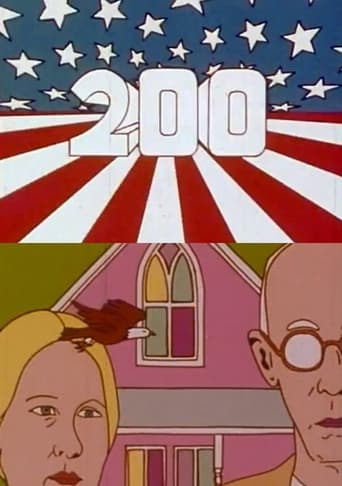
A psychedelic animated short celebrating America's bicentennial. The film " provides a short, impressionistic history of the U.S. through famous American symbols, including the Statue of Liberty; the Woodstock logo; the Liberty Bell; and Mt. Rushmore. The symbols are layered on top of each other, as can be seen from a bald eagle hatching from a red, white, and blue egg and flying past the American Gothic farmers, the U.S. Capitol building, the Golden Gate Bridge, Abraham Lincoln’s cabin, and an American bison. The film was directed by Vince Collins" (US National Archives).
Donald is manning a listening post and falls asleep; he blows trumpet calls in his sleep and wakes his nephews. For their revenge, they send up a model airplane filled with gingerbread men with parachutes; Donald shoots it down, and cowers in fear when he sees the parachutes (and hears a simulated battle), until one lands on his beak. Donald kicks his nephews out until he mistakes a bee for an airplane, and calls them back to fight this menace.
The Sailor and the Seagull was released by the U.S. Navy in 1949 with a simple goal: encouraging servicemen to re-enlist. In the film, a disgruntled sailor named McGinty complains about the raw deal he believes he is receiving by serving in the Navy. As luck would have it, a seagull comes to release him from service so that he can experience the freedom of civilian life. McGinty soon learns, however, that civilian life means less freedom and less money than he had imagined and quickly jumps at the chance to re-enlist. (cont. http://blogs.archives.gov/unwritten-record/2013/09/26/sailor-and-the-seagull/)
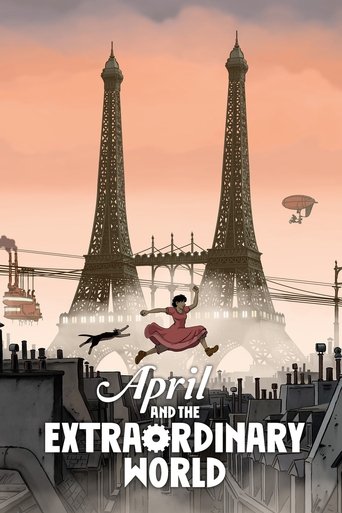
It's 1941, but France is trapped in the 19th Century, governed by steam and Napoleon V. Avril, a teenage girl, goes in search of her missing scientist parents.
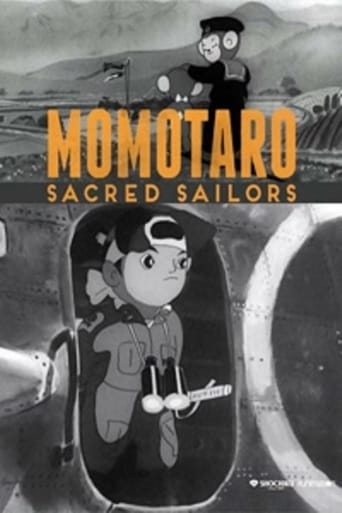
The first Japanese feature-length animated film. It was directed by Mitsuyo Seo, who was ordered to make a propaganda film for the war by the Japanese Naval Ministry. Shochiku Moving Picture Laboratory shot the 74-minute film in 1944 and screened it on April 12, 1945. It is a sequel to Momotarō no Umiwashi, a 37-minute film released in 1943 by the same director. It is black and white. The whole movie also depicts the Japanese "liberation of Asia", as proclaimed by the Government at the time. Seo tried to give dreams to children, as well as to instill the hope for peace, with hidden movie's hints of dreams and hopes, under the appearance of war propaganda.
A World War II propaganda film about the need to remain calm and logical during wartime.