Social & External
Narrator (as Savatore F. Vecchio)
In February 1917, Imperial Russia plunges into revolution. Nine months of unrest before a coup brought about an upheaval that changed the course of history and profoundly altered the future of civilisation.
Benedict Arnold is not the villain of American history most people were taught to believe. New facts and never before presented material illuminate his heroic contributions to the American Revolution and explains his later change of allegiance.
In the mountains of Chiapas, a rebel experiment in autonomy continues to thrive – thirty years after its declaration of war against the Mexican state. ¡Ya Basta! 30 Years of Zapatista Autonomy, a Modern Insurgent documentary, explores the legacy and future of the EZLN, reflecting on how a masked, rural rebellion reshaped Mexico’s political landscape and inspired activists across the globe. What does revolution look like when it refuses to seize state power? And what can the world learn from a community that continues to build its own system from the ground up?
Blending drama with the explanations of passionate historians and specialists, this enriched historical reconstruction traces 60 years in the life a man who transformed the Middle Ages and laid the foundation of modern Europe, William The Conqueror.
This film tells a story of ethnic Koreans from Russia and the post-Soviet territories making their new home in New York City. The history of the diaspora is told through conversations with Lidiya Kan’s mother, personal stories, fragmented memories, and her family photo archive. An important character of the film is Morkovcha, the Korean carrot salad, an invention of the Russian Korean diaspora; its essence is symbolic of their mixed identity.
The documentary about the Library is C-SPAN’s original feature on America’s iconic government institutions and buildings. This in-depth examination of the Library takes an intimate look at the oldest U.S. federal cultural institution, providing a behind-the-scenes glimpse into the history of the world’s largest library and its vast collection of books, photographs, maps and manuscripts. The documentary also examines how the Library is using science and technology to protect the nearly 150 million items in its collections. The Library of Congress is the only library in the world with its own preservation-science laboratory. Founded in 1800, the Library of Congress is the nation’s oldest federal cultural institution. Many of the Library’s rich resources can be accessed through its website at www.loc.gov.
In the 1970s, the Spanish dictatorship opened up to the outside world and allowed a group of Danes to build Tivoli World, the first amusement park on the Costa del Sol, a copy of Tivoli Garden in Copenhagen.
A historical documentary about the Island of Jersey narrated by the people that live there. Directed by Richard Oliver.
For both Aboriginal and non-Aboriginal Australians, Captain James Cook is a figure of great historical significance.
A team of scientists search for the lost island of Testerep in front of the Belgian coast, venturing into artificial landscapes and virtual realities.
The film maps the life and work of the historian Ján Mlynárik (1933 - 2012), which took place very close to the controversial events in the historical development of the former Czechoslovakia.
An insight into the life and works of Michel Foucault and how his work on Knowledge and Power still has an impact on daily life. This is applied practically to the real world of SOAS University and the online world of Social Media. Presented by Merle Tschirschnitz, Kiran Thomas and Adam Brocklesby
How do you find your place in an ableist world as a person with a disability? Disabled Hugo Schmidt talks to the almost 90 year old Franz-Josef Sauer, who was left with a walking impairment by a tuberculosis infection in his childhood. In the 1990s Sauer received the German Federal Cross of Merit for his achievements in the disabled community. As a public servant in Münster and Düsseldorf he worked on several projects which still benefit his disabled peers. Sauer and Schmidt discover that, although they were born almost 70 years apart, their paths in life are not that different from each other.
At once a vast expanse of mesmerizing desolation and the crucible of human history, the Sahara Desert has been both the battlefield of empires and the haunted wilderness at the margins of the known world for thousands of years. Shot on location, this exhilarating documentary brings to life the Sahara’s cruel history and the conflicts that still plague its people. THE SAHARA recounts the story of kings who once led caravans of 30,000 people across the desert, bearing riches beyond imagination. It tells of Roman death squads that exterminated the citizens of the Empire’s most bitter rival and how the Foreign Legion crafted a legend out of last stands and lost causes. From the fabled metropolis of Timbuktu to the shores of Tripoli, THE SAHARA is an illuminating exploration of this unforgiving and remote land of myth and mirage.
Filmed in IMAX, a young Mayan boy who lives close to the ruins becomes acquainted with an archaeologist (Guerra) and asks her to tell him about his ancestors. The crew travelled to over 15 locations in Mexico and Guatemala, including Tulum and Chichén Itzá.
In the mountains of Peru, an environmental scientist discovers ancient artifacts submerged beneath the headwaters of the Amazon; his findings could save this sacred landscape from mining devastation.
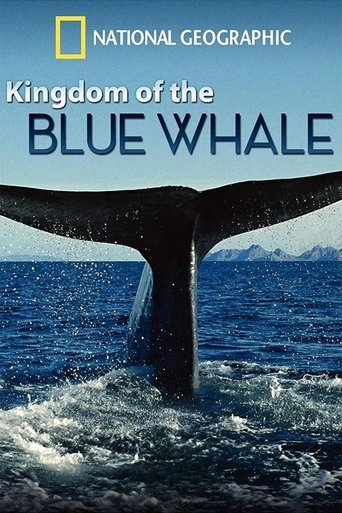
Supported by the National Geographic Society, the world's eminent blue whale scientists embark on a revolutionary mission: They'll find, identify, and tag California blue whales, use the DNA samples to confirm the sex of individual whales, then rejoin the massive creatures' stunning migration when they collect at a chimera known as the Costa Rica Dome.
In the heart of Gorongosa National Park, Mozambique, the waters of Lake Urema explode with the thrashing of a giant crocodile tail. Gorongosa was once known as the place where Noah left his ark: 1,500 square miles of lush floodplains in central Mozambique, packed with wild animals. All around, enormous buffalo, soaring fish eagles, and countless antelopes roam freely. But on closer look, something strange is going on. Fifteen years of civil war has taken a heavy toll and many species have been almost completely wiped out. All the usual top predators and prey are virtually missing, except for one - giant crocodiles and thousands of them. Discover what is being done to bring this African oasis back to its former glory, including perhaps the most ambitious restoration effort ever attempted, with elephants, hippos and scores of zebra, wildebeest, impala and buffalo, being relocated into the park.