Documentary about brother and sister duo The Carpenters, one of the biggest-selling pop acts of the 1970s, but one with a destructive and complex secret that ended in tragedy.
Social & External
Self
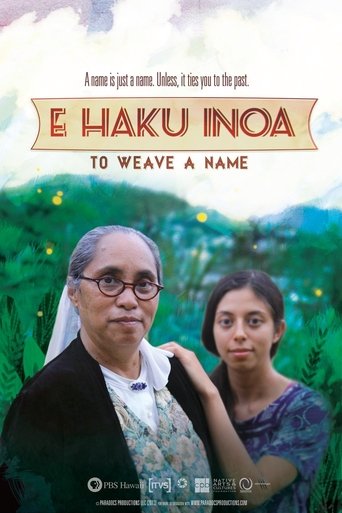
In Inukjuak, an Inuit community in the Eastern Arctic, a baby boy has come into the world and they call him Timuti, a name that recurs across generations of his people, evoking other Timutis, alive and dead, who will nourish his spirit and shape his destiny.
What would your family reminiscences about dad sound like if he had been an early supporter of Hitler’s, a leader of the notorious SA and the Third Reich’s minister in charge of Slovakia, including its Final Solution? Executed as a war criminal in 1947, Hanns Ludin left behind a grieving widow and six young children, the youngest of whom became a filmmaker. It's a fascinating, maddening, sometimes even humorous look at what the director calls "a typical German story." (Film Forum)
When a Mongolian nomadic family's newest camel colt is rejected by its mother, a musician is needed for a ritual to change her mind.
After his long-time girlfriend dumps him, a thirty-year-old record store owner seeks to understand why he is unlucky in love while recounting his "top five breakups of all time".
IDFA and Canadian filmmaker Peter Wintonick had a close relationship for decades. He was a hard worker and often far from home, visiting festivals around the world. In 2013, he died after a short illness. His daughter Mira was left behind with a whole lot of questions, and a box full of videotapes that Wintonick shot for his Utopia project. She resolved to investigate what sort of film he envisaged, and to complete it for him.
Between 1968 and 1970, J M Goodger, a lecturer at the University of Salford, made a film record of the living conditions in the slums of Ordsall, Salford, which were then in the process of being demolished. Under the title 'The Changing face of Salford', the film was in two parts: 'Life in the slums' and 'Bloody slums'.
Beyond Silence is about a family and a young girl’s coming of age story. This German film looks into the lives of the deaf and at a story about the love for music. A girl who has always had to translate speech into sign language for her deaf parents yet when her love for playing music grows strong she must decide to continue doing something she cannot share with her parents.
A young trans woman travels back to places she visited as a child with her mother, reflecting on memory, loss, and grief.
After four years away, Huiju returns home to South Korea. Exchanges with her loved ones are awkward and clumsy. Huiju turns once again to her familiar rituals: pruning the trees, preparing a sauce, tying a braid.
Two old sisters, living in the same Warsaw apartment, sit on a bench and talk. The 87-year-old elder one seems to care for the other reluctantly and treat her badly. The younger, who is said to be clumsier, has walking problems.
Painter Zdzisław Beksiński, his wife Zofia and their son Tomasz, a well-known radio journalist and translator, were a typical and unconventional family, both at the same time. One of the father’s obsessions was filming himself and his family members. Using archival footage only, shot primarily by Zdzisław, as well many other materials, which have not been presented anywhere so far, the film tells a tragic story of the Beksińskis that has never ceased to fascinate Polish filmmakers.
A journey into the lives of the famed Vachon wrestling family through the eyes of Paul “The Butcher” Vachon, the last living member of the dynasty.
Exclusive "Delta Machine" album launch. Setlist: Angel, Should be higher, Walking in my shoes, Barrel of a gun, Heaven, Only when I lose myself, Personal Jesus, Soft touch / Raw nerve, Soothe my soul, Enjoy the silence
Rahul Seth is a dashing young millionaire who believes he is "western" enough to rebel against his mother and grandmother. They are not too keen about his Caucasian girlfriend Kimberly who, to make matters worse, is a pop star. Before you can say "karmic intervention," Kimberly dies in a freak accident and Rahul is devastated. Instead of allowing him to mourn in peace, Rahul's mother sees the opportunity she's been waiting for. She threatens to call off his sister's wedding unless he finds himself a "nice Indian girl." Rahul enlists the services of Sue, a fiercely independent escort whom he believes to be Hispanic, and therefore not "married" to the conventions taught to young Indian women. With a wink in her eye, Sue accepts the deal to pose as his Indian bride-to-be. She needs the money and having never been a fan of the typical Indian male, she feels her heart is safe. The charade begins....
The filmmaker delves into her family's past and the seemingly intact world of childhood begins to fall apart. Here, the private sphere reflects the helplessness and excessive demands of German society in the 1970s - between the shadows of the National Socialist past and new utopias.
In 2008 French filmmaker Julie Gali traveled to the US to film the election of Barack Obama. In spite of this victory for civil rights, it soon became apparent that the rights of another minority were under threat. In California the passing of Proposition 8 marked the only time in U.S. history that a civil right was actually taken away after it had been granted. Upon seeing this, Ms. Gali decided to immerse herself in the growing grassroots struggle of the gay community, which culminated in the October 11, 2009 March for Equality in Washington DC.
This is a reconstruction of the daily life of an ordinary family. With kindness and gentle humour, the film reveals the relationship between the older and the younger generation. The original concept of a short film study with authentic characters of the Ravager family grew into a feature-length picture on the border between a documentary and fiction. It was made as an improvisation without a previously approved screenplay in the course of only twenty days.