Jason Momoa's story of fatherhood, craftsmanship, and the legacy he'll leave behind.
Social & External
Self - Narrator
Self
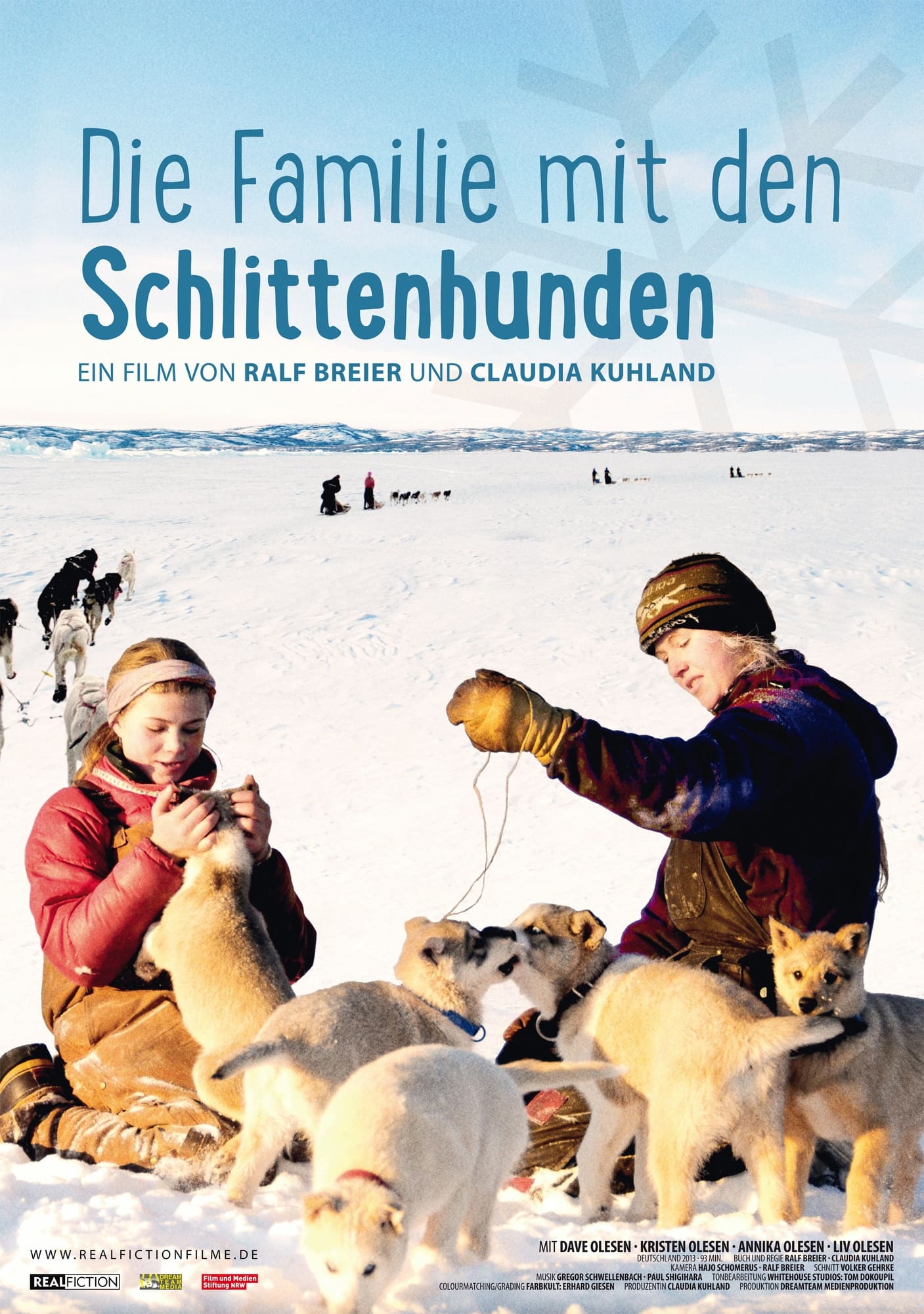
In Inukjuak, an Inuit community in the Eastern Arctic, a baby boy has come into the world and they call him Timuti, a name that recurs across generations of his people, evoking other Timutis, alive and dead, who will nourish his spirit and shape his destiny.
What would your family reminiscences about dad sound like if he had been an early supporter of Hitler’s, a leader of the notorious SA and the Third Reich’s minister in charge of Slovakia, including its Final Solution? Executed as a war criminal in 1947, Hanns Ludin left behind a grieving widow and six young children, the youngest of whom became a filmmaker. It's a fascinating, maddening, sometimes even humorous look at what the director calls "a typical German story." (Film Forum)
When a Mongolian nomadic family's newest camel colt is rejected by its mother, a musician is needed for a ritual to change her mind.

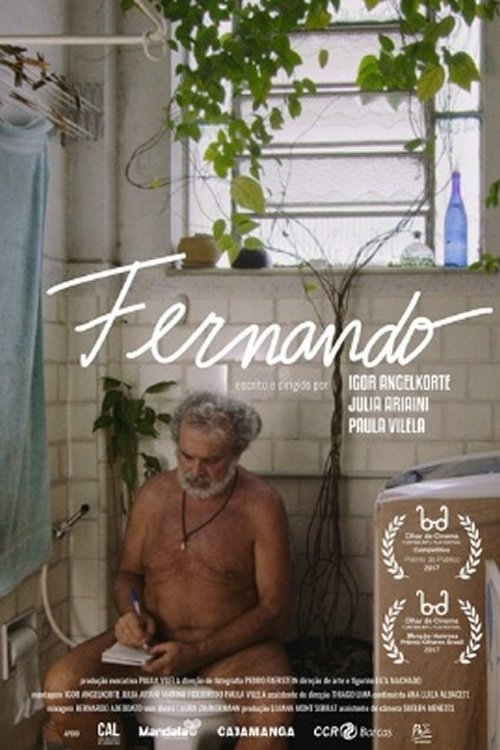
Fernando is an actor and theater teacher who, at the age of 74, is impelled to be the protagonist of himself in an experience that blurs the boundaries between the documentary and the fictional. Faced with a delicate problem in his heart, he follows a life full of love for art, where education emerges as a powerful transforming element of reality.
Mickey Rooney is interviewed by Robert Osborne.
An emotional portrait of David Oyelowo’s journey to play legendary civil rights leader Dr. Martin Luther King, Jr. Featuring behind-the-scenes footage and intimate home videos, Becoming King is a story of faith, friendship and a destiny fulfilled.
IDFA and Canadian filmmaker Peter Wintonick had a close relationship for decades. He was a hard worker and often far from home, visiting festivals around the world. In 2013, he died after a short illness. His daughter Mira was left behind with a whole lot of questions, and a box full of videotapes that Wintonick shot for his Utopia project. She resolved to investigate what sort of film he envisaged, and to complete it for him.
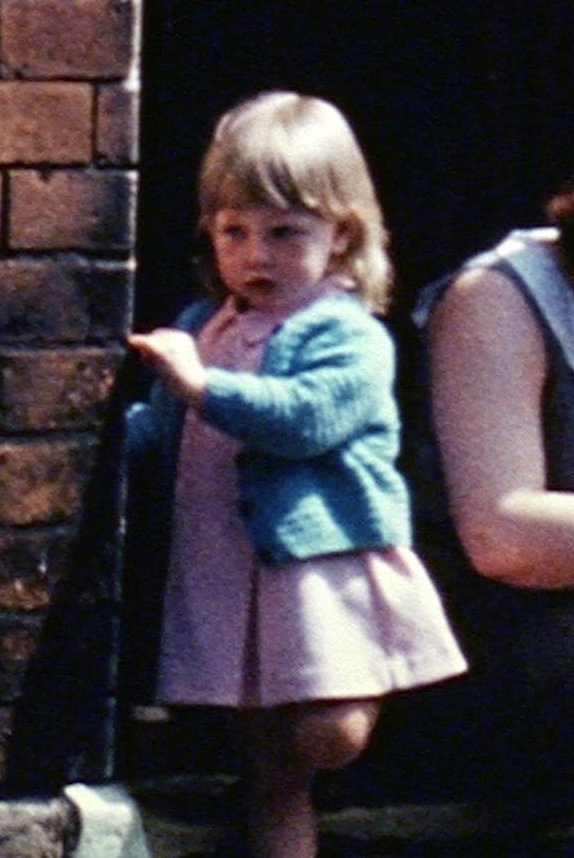
Between 1968 and 1970, J M Goodger, a lecturer at the University of Salford, made a film record of the living conditions in the slums of Ordsall, Salford, which were then in the process of being demolished. Under the title 'The Changing face of Salford', the film was in two parts: 'Life in the slums' and 'Bloody slums'.
A young trans woman travels back to places she visited as a child with her mother, reflecting on memory, loss, and grief.
After four years away, Huiju returns home to South Korea. Exchanges with her loved ones are awkward and clumsy. Huiju turns once again to her familiar rituals: pruning the trees, preparing a sauce, tying a braid.
Two old sisters, living in the same Warsaw apartment, sit on a bench and talk. The 87-year-old elder one seems to care for the other reluctantly and treat her badly. The younger, who is said to be clumsier, has walking problems.
Painter Zdzisław Beksiński, his wife Zofia and their son Tomasz, a well-known radio journalist and translator, were a typical and unconventional family, both at the same time. One of the father’s obsessions was filming himself and his family members. Using archival footage only, shot primarily by Zdzisław, as well many other materials, which have not been presented anywhere so far, the film tells a tragic story of the Beksińskis that has never ceased to fascinate Polish filmmakers.
A journey into the lives of the famed Vachon wrestling family through the eyes of Paul “The Butcher” Vachon, the last living member of the dynasty.
The filmmaker delves into her family's past and the seemingly intact world of childhood begins to fall apart. Here, the private sphere reflects the helplessness and excessive demands of German society in the 1970s - between the shadows of the National Socialist past and new utopias.
In 2008 French filmmaker Julie Gali traveled to the US to film the election of Barack Obama. In spite of this victory for civil rights, it soon became apparent that the rights of another minority were under threat. In California the passing of Proposition 8 marked the only time in U.S. history that a civil right was actually taken away after it had been granted. Upon seeing this, Ms. Gali decided to immerse herself in the growing grassroots struggle of the gay community, which culminated in the October 11, 2009 March for Equality in Washington DC.
This is a reconstruction of the daily life of an ordinary family. With kindness and gentle humour, the film reveals the relationship between the older and the younger generation. The original concept of a short film study with authentic characters of the Ravager family grew into a feature-length picture on the border between a documentary and fiction. It was made as an improvisation without a previously approved screenplay in the course of only twenty days.
"Our Family" is a film about the time that we can't get back. I left my home along with my friends and family behind in 2017, when I was aged 15 to study in the United States. In some ways I feel like I may have not been best suited to make that decision for myself at the time, but 4 years later, I decided to take this opportunity to reflect on my departure and to reconnect with my family. Because of the COVID-19 pandemic, I haven't been able to go home to Sikkim in over 2 years. Talking to my parents over WhatsApp, I recorded two interviews with them discussing stories from the collective past of our family as well as individual ones. I was able to discover the love story my parents were a part of before I was even born, recollect the bits and pieces of my childhood that I'm beginning to forget, and process how my departure has affected my relationship with my parents and the course of our lives.
A multi-award winning biography covering the life and career of legendary screen and stage actor/director Laurence Olivier.
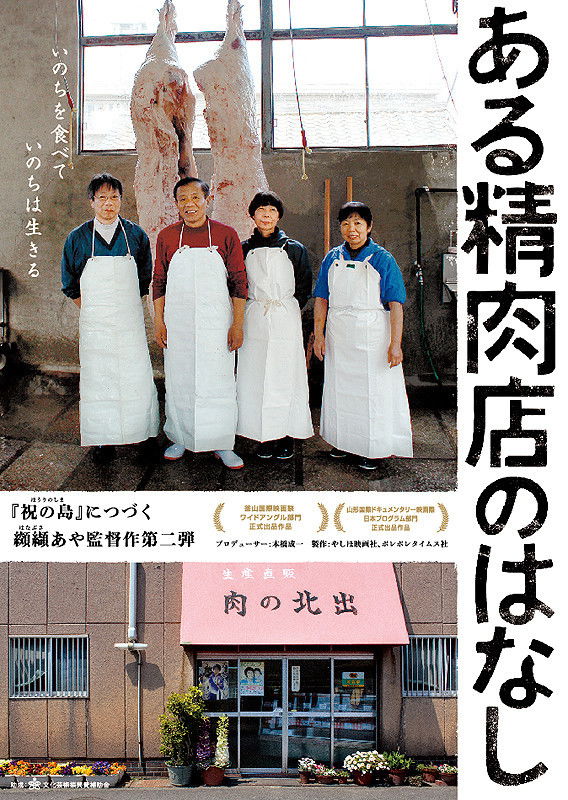
The Kitades run a butcher shop in Kaizuka City outside Osaka, raising and slaughtering cattle to sell the meat in their store. The seventh generation of their family's business, they are descendants of the buraku people, a social minority held over from the caste system abolished in the 19th century that is still subject to discrimination. As the Kitades are forced to make the difficult decision to shut down their slaughterhouse, the question posed by the film is whether doing this will also result in the deconstruction of the prejudices imposed on them. Though primarily documenting the process of their work with meticulous detail, Aya Hanabusa also touches on the Kitades' participation in the buraku liberation movement. Hanabusa's heartfelt portrait expands from the story of an old-fashioned family business competing with corporate supermarkets, toward a subtle and sophisticated critique of social exclusion and the persistence of ancient prejudices.
There are more refugees in the world today than at any point in history. And half of them are children. Let Me In is a cinematic experience which reimagines the refugee crisis as if it was happening on America’s shores. Written and directed by Jonathan Olinger, this tale of survival and the remarkable power of the human spirit is inspired by the stories of real refugees. Starring Alicia Keys, the film follows her and her family's quest to survive after they experience unimaginable violence and embark on a journey that will forever change them. Along with thousands of Americans fleeing the conflict in Los Angeles, they must seek safety by attempting to cross the border into Mexico. Guided by their resolute love for each other and utter determination, the refugee family must navigate oceans and desserts in their unrelenting pursuit to find refuge and reunite.
In the middle of a broadcast about Typhoon Yolanda's initial impact, reporter Jiggy Manicad was faced with the reality that he no longer had communication with his station. They were, for all intents and purposes, stranded in Tacloban. With little option, and his crew started the six hour walk to Alto, where the closest broadcast antenna was to be found. Letting the world know what was happening to was a priority, but they were driven by the need to let their families and friends know they were all still alive. Along the way, they encountered residents and victims of the massive typhoon, and with each step it became increasingly clear just how devastating this storm was. This was a storm that was going to change lives.

Dick Romans is a washed up TV host whose wife walks out on him the day before their ten year anniversary celebration. Alone with his thoughts, his dog, and a ton of booze, Dick decides to go through with the week-long party... by himself. The seven event-filled days become Dick's reluctant vision quest, filled with odd characters, awkward romance, and some long-overdue self examination.
A girl is saved by a miracle after she falls from a cliff in the Argentine Andes, and is blessed with healing powers. A shrine is built on the site, and a whole city grows around it, rich with gold from the grateful worshipers. Ruiz, an evil and sadistic general, captures the city, confiscates the gold, and closes the shrine. But the Gaucho, the charismatic leader of a band of outlaws, comes to the rescue.
Joseph Kuo's final film.
What do you do when you love music, and music doesn't love you back? It's a question that haunts Walt (Jim Tavaré), the owner of Essential Music, an indie record store in the heart of Silver Lake. Walt's all too aware of how his punk-rock glory days are fast fading in the rear-view - even as he can't help recounting war stories to his much younger employees: Lysette (Kate Dalton), who has to contend with a parade of customers convinced she's the Record Store Girl of their dreams; Chris (Derek James Elstro), the lead singer of Troubled Meats, a band poised for takeoff, and maybe not just in Chris' mind; and well-meaning music nut Duane (Adam Weber), who's a little too fluent in Rock Critic for his own good. With a love of all types of music evident in every shot, WARMED-OVER KRAUTROCK is a comedy for anyone who's ever spent too much time obsessing over playlists - and for anyone who's ever been driven crazy by that type of person, too.
Fatty's Jonah Day is a 1914 short comedy film directed by and starring Fatty Arbuckle.
After a rough night out protesting in the city, Kosta and Maja fall in the hands of the police. Their lives will change forever.
Ambitious young script writer Igor Sullivan, who just lost his lover, concentrates on a romantic comedy. He gets advice from seasoned professional James Ford, who explains the `fomula` way, while Igo keeps insisting on artistic input of his own. Thus they draft piece by piece, often after dropping or amending the first version, a (not quite) standard triangle. It involves Internet firm colleagues Patrick, the good boy, and his womanizing buddy Mark Gibson, the vixen being the firm`s new consultant Jennifer.
A sadistic rock singer will do anything for fame, including seducing older women, stealing money, bedding his agent's wife, and harming a naive teen.
Minako is at the age where her father is more like an alien to her than a person. The situation is exacerbated when he comes home drunk one night and tries to climb on top of her. Minako's mother deserted them for another man when Minako was a child. Now working as a hostess, she has little time for her own six year-old daughter, Yu, Minako's half sister. Both girls are yearning for their mother's love. Minako runs into Yu at a game center in the mall and proposes they take a trip. She changes out of her school uniform and into adult clothes and the pair hops on an overnight bus out of the city.
Two American GIs are the only survivors of a unit wiped out in a battle with Japanese troops on an isolated island. The two, who don't like each other, find try to put aside their differences in order to evade the Japanese and survive.
Buddy's baseball team, the Bearcats, takes on the Battling Bruisers in the big stadium. The crowd buys tickets and hot dogs before settling down to watch the game....