Social & External
Working men and women leave through the main gate of the Lumière factory in Lyon, France. Filmed on 22 March 1895, it is often referred to as the first real motion picture ever made, although Louis Le Prince's 1888 Roundhay Garden Scene pre-dated it by seven years. Three separate versions of this film exist, which differ from one another in numerous ways. The first version features a carriage drawn by one horse, while in the second version the carriage is drawn by two horses, and there is no carriage at all in the third version. The clothing style is also different between the three versions, demonstrating the different seasons in which each was filmed. This film was made in the 35 mm format with an aspect ratio of 1.33:1, and at a speed of 16 frames per second. At that rate, the 17 meters of film length provided a duration of 46 seconds, holding a total of 800 frames.
At the peak of Perestroika, in 1987, in the village of Gorki, where Lenin spent his last years, after a long construction, the last and most grandiose museum of the Leader was opened. Soon after the opening, the ideology changed, and the flow of pilgrims gradually dried up. Despite this, the museum still works and the management is looking for ways to attract visitors. Faithful to the Lenin keepers of the museum as they can resist the onset of commercialization. The film tells about the modern life of this amazing museum-reserve and its employees.
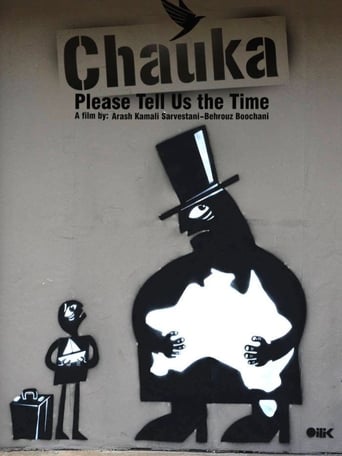
An urgent and powerful documentary, shot in a detention centre where asylum seekers trying to reach Australian shores are indefinitely detained. Secretly shot on a mobile phone by Iranian journalist Behrouz Boochani while detained on Manus, in Papua New Guinea, the film is a collaboration with Dutch-Iranian filmmaker Arash Kamali Sarvestani. Boochani recounts, via the testimonies of fellow inmates, the abuse and violence inflicted and the precarious state of limbo they find themselves in. Chauka, the name of the dreaded solitary confinement unit within the detention centre, was originally the name of a beautiful bird and symbol of the Manus Island. By interweaving dialogue with two Manusian men and shots of daily life on the island, the film gives a much-needed voice to Manus inhabitants, understandably distressed by the current situation. With marked restraint, the film exposes lives broken by shocking immigration policies.
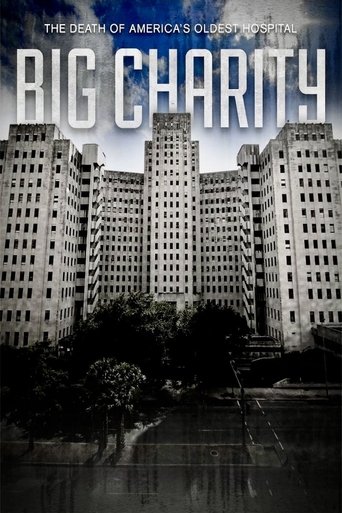
This documentary film includes never-before-seen footage and exclusive interviews to tell the story of Charity Hospital, from its roots to its controversial closing in the wake of Hurricane Katrina. From the firsthand accounts of healthcare providers and hospital employees who withstood the storm inside the hospital, to interviews with key players involved in the closing of Charity and the opening of New Orleans’ newest hospital, “Big Charity” shares the untold, true story around its closure and sheds new light on the sacrifices made for the sake of progress.
Follows the waves of literary, political, and cultural history as charted by the The New York Review of Books, America’s leading journal of ideas for over 50 years. Provocative, idiosyncratic and incendiary, the film weaves rarely seen archival material, contributor interviews, excerpts from writings by such icons as James Baldwin, Gore Vidal, and Joan Didion along with original verité footage filmed in the Review’s West Village offices.
After the World War I, Mussolini's perspective on life is severely altered; once a willful socialist reformer, now obsessed with the idea of power, he founds the National Fascist Party in 1921 and assumes political power in 1922, becoming the Duce, dictator of Italy. His success encourages Hitler to take power in Germany in 1933, opening the dark road to World War II. (Originally released as a two-part miniseries. Includes colorized archival footage.)
Documentary that shows the changing attitude towards immigrant labor in The Netherlands. The documentary follows three immigrants that arrived in Holland 30 years ago to work in a bakery.
Documentary about the Lyon sex workers who occupied the church of St. Nizier on June 3, 1975.
Documentary film about Tony Halme, masculinity and populism. The film follows how Tony Halme created a mythical, highly masculine freestyle wrestling character, The Viking, who gained fame both in the ring and in the public eye and eventually became captivated by it. With his brash speeches, Halme fired the starting shot for the rise of the Finns Party. The voice of a forgotten section of the population, a protest against the ruling elite, were the building blocks of Halme's popularity. Halme's great popularity has served as a good example of a populist figure, admired within the deep ranks of the nation, who comes from outside the political elite and changes the direction of politics. Also, despite - or perhaps because of - his openly racist statements, he was part of changing the political climate in Finland to a more acrimonious one.
For 40 years, the community-organizing group ACORN advocated for America’s poorest communities, while its detractors accused it of promoting the worst of liberal policies. Riding high on the momentum of Barack Obama’s presidential victory in 2008, ACORN was at its political zenith when a hidden-camera video sparked a national scandal and brought it crashing down. The story involves voter fraud, a fake prostitute, and the rise of Breitbart.com.
Buenos Aires is a complex, chaotic city. It has European style and a Latin American heart. It has oscillated between dictatorship and democracy for over a century, and its citizens have faced brutal oppression and economic disaster. Throughout all this, successive generations of activists and artists have taken to the streets of this city to express themselves through art. This has given the walls a powerful and symbolic role: they have become the city’s voice. This tradition of expression in public space, of art and activism interweaving, has made the streets of Buenos Aires into a riot of colour and communication, giving the world a lesson in how to make resistance beautiful.
Documentary about the Rembrandt Association. In the 19th century, a lot of Dutch art disappeared abroad, before the Rembrandt Association stood up in 1883 to put a stop to it. Today, 140 years later, the Association still helps determine what art lovers see in Dutch museums. In their crowning year, the Association faces a difficult choice: will they make the largest contribution in their history to the purchase of Rembrandt's De Vaandeldrager? The amount of 175 million needed for the painting is causing discussion. Is this money well spent?
When artist Janet Biehl fell in love with radical American philosopher Murray Bookchin in the 1980s whilst editing his ground-breaking opus “The Ecology of Freedom”, she could never have imagined that it would one day take her halfway across the globe. Now, over 40 years later, Janet travels from America to the Middle East to witness something remarkable - how Murray’s ideas have ignited a female-led revolution in North-East Syria, where society is being rebuilt in the wake of victory over ISIS. Janet meets the women who are turning her late partner’s political theories into a modern reality, creating a grassroots communal democracy. Janet draws what she sees, and her illustrations capture the humanity of ordinary people in their struggle to self-govern. Now, at this critical moment for Syria and with this revolutionary project under renewed threat, "Threads of a Revolution" reveals a possible way forward for those prepared to fight for a new way to live.
A documentary about the hearings of President Nixon's Commission on Obscenity, featuring adult-film producer David F. Friedman (one of the producers of this film) testifying before Congress, and involved in the production of one of his films, "Trader Hornee."
Donald Trump's daughter Ivanka has been appointed to an official role within the White House, but what does she believe in and how much political clout does she actually have?
The Blocher Experience tells the story of Switzerland’s most controversial political leader. It also chronicles the face-to-face encounter between a film-maker and a man of power, through a year of exclusive, up-close interviews and access to his private life.
The story of January 6, 2021, where approximately 2000 people stormed the US Capitol to stop the certification of the Electoral College Votes, killing some and leaving over 140 injured. A firestorm of angst, anger, violence and confusion.
Featuring unprecedented access inside the White House and State Department, The Final Year offers an uncompromising view of the inner workings of the Obama Administration as they prepare to leave power after eight years.