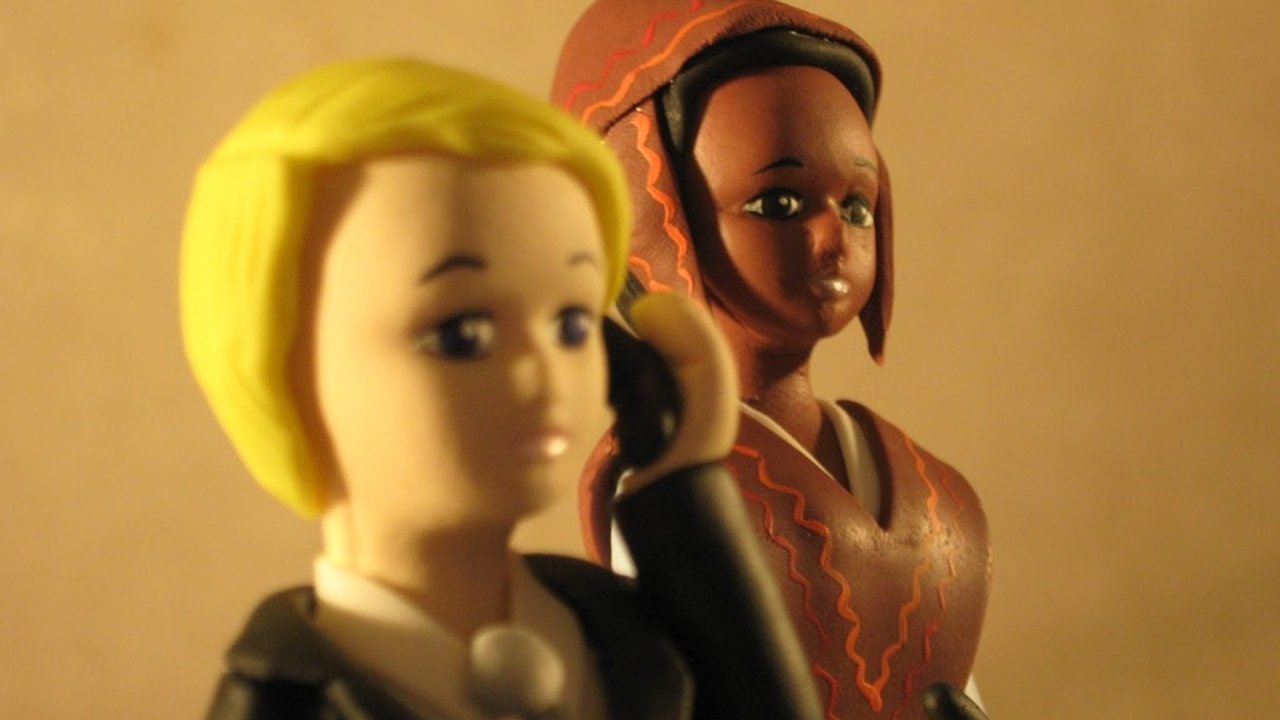
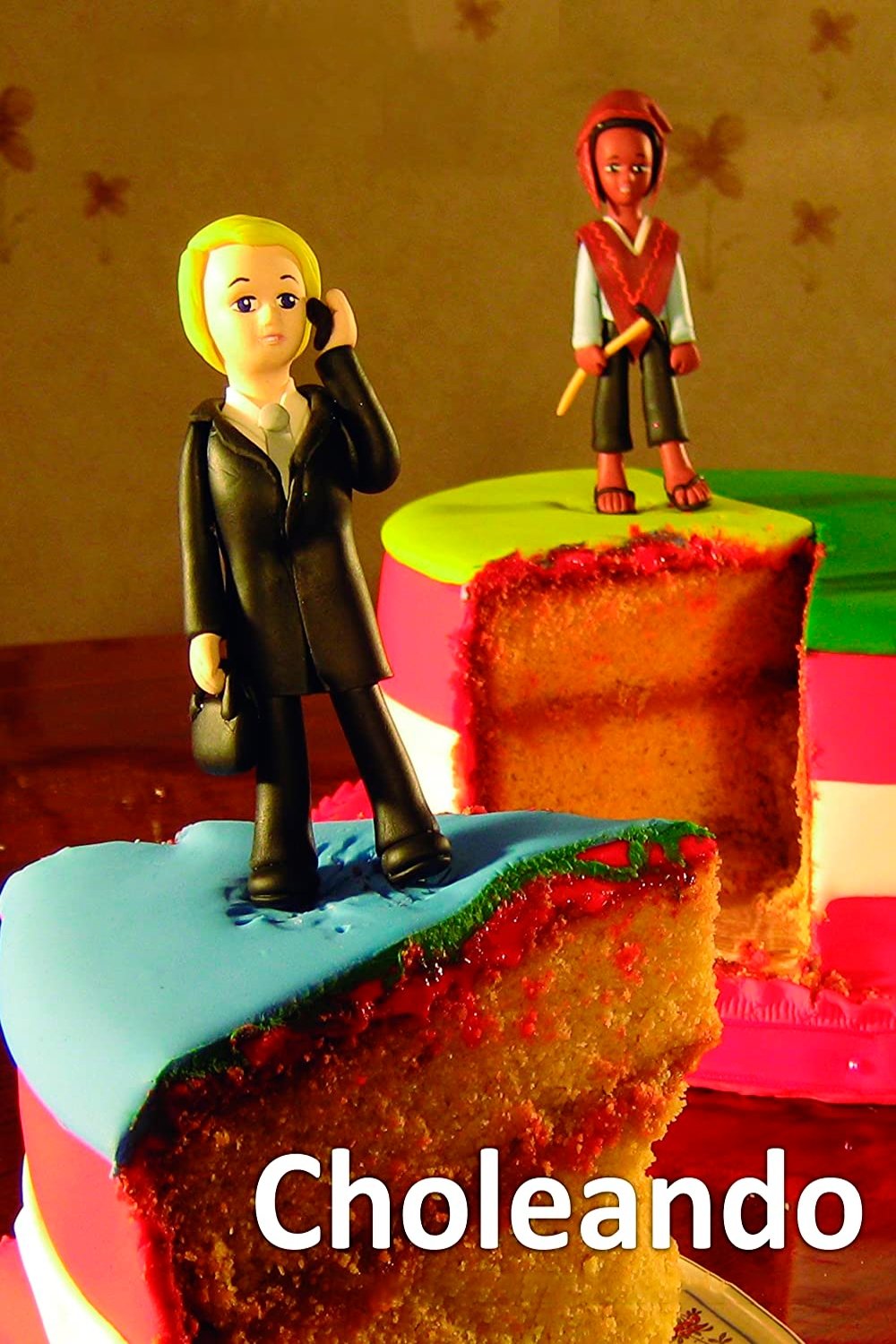
"Are Peruvians racists or not?"
This documentary delves deeper into the racism issue addressing many discriminatory practices in Peru, researching their origins and their hurtful consequences.

Social & External
Himself
Herself
An oral history documentary of people of color at Miami University during its Public Ivy period—from 1970 to the early 2000s.
In the central Peruvian Amazon, a young indigenous man from the Nomatsigenga Community of Boca Kiatari, shares his urgent message with the world. In a moving short film, the community comes together to preserve their natural environment, aware of the growing challenges of climate change and global warming.
Whenever the phrase "breaking the color line" is used, there's a temptation to invoke Jackie Robinson's story. However, Perry Wallace, the first black college athlete in the Southeast Conference, was a mere teenager who stood all alone at center court in such hotbeds of rabid racism as Starkville, Mississippi and Tuscaloosa, Alabama.
A reflection on the concept of invisibility, narrated by women who clean public spaces in Mexico City. Combining documentary, fiction and still photography, the film is an intimate mosaic of testimonies and experiences that highlight the precariousness of work in the cleaning industry, in a world where subcontracting rules.

The Shipibo-Konibo people of Peruvian Amazon decorate their pottery, jewelry, textiles, and body art with complex geometric patterns called kené. These patterns also have corresponding songs, called icaros, which are integral to the Shipibo way of life. This documentary explores these unique art forms, and one Shipibo family's efforts to safeguard the tradition.
In the 1950's, Jews coming from North Africa and the Middle East settled in the newly constituted State of Israël. The Mizrahim, as their are called, were denied their right to a better life and forced to move to development towns in the Negev Desert. Today, the new generations of Mizrahim still suffer from this policy conducted 70 years ago. Michale Boganim follows the footsteps of her father, who came from Morocco and quickly became a leader of the local Israeli Black Panthers to stand against this discrimination. She embarks on a road trip through Israël's history to meet with three generation of Mizrahims.

A documentary about rap artists from Ceilândia, a satellite-city of Brazil capital, Brasilia. The film portrait the struggle of the lives of the rapers and makes a parallel with the violent building of the city designed to settle the outcast from Brasilia after its completion.
The film looks at men and women of color in the U.S. Merchant Marine from 1938-1975. Through chronicling the lives of these men and women who, with a median age of 82, are beset with a host of life-threatening illnesses, the movie tells how they navigated issues of racism, disparities in the workplace, gender and familial relations.
An American story. Traces the career of Joe Louis (1914-1981) within the context of American racial consciousness: his difficulty getting big fights early in his career, the pride of African-Americans in his prowess, the shift of White sentiment toward Louis as Hitler came to power, Louis's patriotism during World War II, and the hounding of Louis by the IRS for the following 15 years. In his last years, he's a casino greeter, a drug user, and the occasional object of scorn for young Turks like Muhammad Ali. Appreciative comment comes from boxing scholars, Louis's son Joe Jr., friends, and icons like Maya Angelou, Dick Gregory, and Bill Cosby.
Approximately, because so-called "ethnic" statistics are prohibited, there are an estimated 3.3 million black French citizens. Distant descendants of slaves from the Caribbean or "indigenous" peoples from the French colonial empire in Africa, they constitute a minority that is often discriminated against. Isabelle Boni-Claverie, a mixed-race woman raised in the affluent neighborhoods of Paris, daughter of an Ivorian politician and granddaughter of Alphonse Boni, a Black man who became a magistrate of the French Republic in the 1930s, examines what is blocking the social advancement of Black French people and the full recognition of their citizenship.
Filmed in the jungles of Peru, shaman Don Jose Campos introduces the practices and benefits of Ayahuasca, the psychoactive plant brew that has been used for healing and visionary journeys by Amazonian shamans for at least a thousand years.
7-year-old Sasha has always known that she is a girl. Sasha’s family has recently accepted her gender identity, embracing their daughter for who she truly is while working to confront outdated norms and find affirmation in a small community of rural France.
A shocking political exposé, and an intimate ethnographic portrait of Pacific Islanders struggling for survival, dignity, and justice after decades of top-secret human radiation experiments conducted on them by the U.S. government.
Shipibo healer Ricardo Amaringo describes how he prepares, teaches, and shares the plant medicine ayahuasca. Olivia and Julian Arévalo sing examples of icaros (healing songs) in the Shipibo language.
Colorful widescreen travelogue along the Amazon River jungle of Peru, featuring an indigenous village carnival and a snake dance.
"Africa Light" - as white local citizens call Namibia. The name suggests romance, the beauty of nature and promises a life without any problems in a country where the difference between rich and poor could hardly be greater. Namibia does not give that impression of it. If you look at its surface it seems like Africa in its most innocent and civilized form. It is a country that is so inviting to dream by its spectacular landscape, stunning scenery and fascinating wildlife. It has a very strong tourism structure and the government gets a lot of money with its magical attraction. But despite its grandiose splendor it is an endless gray zone as well. It oscillates between tradition and modernity, between the cattle in the country and the slums in the city. It shuttles from colonial times, land property reform to minimum wage for everyone. It fluctuates between socialism and cold calculated market economy.
In France, victims and perpetrators of offenses, misdemeanors, or crimes can meet and talk in secure, supervised settings. Included in the Penal Code since 2014, this "restorative justice" is intended to complement criminal justice and provide a safe space for dialogue. The aim is to enable victims to rebuild their lives and perpetrators to take full responsibility for their actions, thereby reducing the risk of reoffending. This film follows one such program over the course of a year. Amélie, a prison rehabilitation and probation counselor, and Séverine, a lawyer for a victims' association, prepare Marthe, Aurélien, Sylvain, and JF, who are incarcerated for murder or attempted murder of their spouses. They also follow Emeline, Evelyne, and Marie, victims of similar crimes.
Breaion King, a 26 year-old African-American school teacher from Austin, Texas - is pulled over for a routine traffic stop that escalates into a violent arrest. Dashcam clips intercut with verite scenes tell a story of racism in law enforcement through the eyes of one of its victims.
Cassius X puts a period of often-overlooked history into the spotlight – the period when Cassius Clay fought his way to achieving his lifelong dream of becoming World Heavyweight Champion while embarking on a secret spiritual journey.
A documentary that reviews the numerous contributions of African-Americans to the development of the United States. From the perspective of the turbulent late 1960s, the fact that their positive roles had not generally been taught as part of American history, coupled with the pervasiveness of derogatory stereotypes, was evidence of how Black people had long been victims of negative attitudes and ignorance.