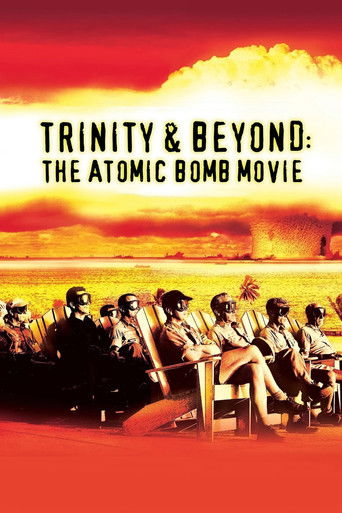
A shocking political exposé, and an intimate ethnographic portrait of Pacific Islanders struggling for survival, dignity, and justice after decades of top-secret human radiation experiments conducted on them by the U.S. government.
Social & External
They met onstage at the Mr Leather Russia contest. One of them won the title, the other won the titleholder. 'A tale of two Doms', gay fetish and BDSM activists who tried to make a difference. But soon their world came crashing down.
A new look at the public and private life of one of the most important statesmen in the history of Europe: Winston Churchill (1874-1965), soldier, politician, writer, painter, leader of his country in the darkest hours, winner of the Nobel Prize in Literature, a myth, a giant of the 20th century.
A documentary about US-led covert actions under the Reagan administration intended to bolster the perception of Soviet aggression, undermine the peace initiatives of Sweden's PM Olof Palme, and to tie the non-aligned Sweden to NATO.
German film about Luftwaffe pilots. It depicts a love triangle involving two of them being overcome by their participation in battle together.
"Wae(Distorted): The Cartel" is a shocking documentary film that conducts an in-depth analysis of various statistical and physical evidence revealed during South Korea's April 15, 2020 general election. The narration is provided by Yoon Joo-sang, a renowned actor and voice actor. The horrific election fraud—so hard to believe and yet impossible to ignore—did not end with the April 15 general election. It has continued even after the change of administration. It is our sincere hope that this film will help widely expose the appalling reality of election fraud that outrages the conscience of all people.
When a private police foundation in Atlanta tries to raze an urban forest to build the country’s largest police training facility, a diverse, decentralized, and intersectional movement defends the forest from what they call “Cop City.” A City in the Forest paints a collective portrait of the country’s most urgent social justice story, where a web of activists fight back against environmental racism, political corruption, police violence, and the criminalization of dissent.
Witnesses, survivors and front-line heroes recall the first days of the Chernobyl disaster of April 1986. Featuring rare archive footage of the world's worst ever nuclear accident.
The true story of British intelligence whistleblower Katharine Gun who—prior to the 2003 Iraq invasion—leaked a top-secret NSA memo exposing a joint US-UK illegal spying operation against members of the UN Security Council. The memo proposed blackmailing member states into voting for war.
Seo Chang-dae, an ambitious political campaign strategist who ends up having ideological differences with his present client, receives a lucrative offer that will put his loyalty under the microscope.
Documentary on water usage, money, politics, the transformation of nature, and the growth of the American west, shown on PBS as a four-part miniseries.
What happened when unarmed Black teen Michael Brown was fatally shot by White police officer Darren Wilson?
In the near future, a group of war journalists attempt to survive while reporting the truth as the United States stands on the brink of civil war.
Christophe Dechavanne recounts the provocative, scandalous, and irreverent television of the 1980s, 1990s, and 2000s, which he experienced from the inside. From political programs to talk shows, entertainment to news programs, no genre escaped its sometimes provoked, often unexpected missteps, which amused, shocked, and even upset the public. Thanks to the testimonies of Léa Salamé, Michèle Cotta, Marie-Laure Augry, Enora Malagré, Patrice Carmouze, Alain Bougrain-Dubourg, Michel Field, Benjamin Castaldi, Eric Naulleau, and Marc-Olivier Fogiel, this documentary takes us behind the scenes of these cult sequences of French television.
Summer of 1939. Zosia is a young Polish girl who is deeply in love with Ukrainian Petro. Their great love will be put to the test when her father decides to marry her to a wealthy widower Skiba. Right after wedding she is left alone because her husband is drafted to the Polish army for the war with Germany. Meanwhile, tensions grow due to Jews, Poles, and Ukrainians living side by side.
Raised in an orthodox home, Amos Dov Silver dreams of becoming Prime Minister. But when the State continues to shun him, he soon finds unexpected solace in the velvety smoke of Marijuana. Spreading his new Torah, he establishes an online community using a mobile app called "TeleGrass" that turns into the largest marketplace for drugs in Israel, raising Silver to Messiah status. Through exclusive footage of Silver, his family and his partners’ investigations, as well as secretly filmed footage of Silver in the Ukrainian prison, a polarizing portrayal of the man charged with heading a crime organization emerges. Champion of the people, or a lost soul corrupted by power?
An environmental account of Henry Ford’s Amazon experience decades after its failure. The story addressed by the film begins in 1927, when the Ford Motor Company attempted to establish rubber plantations on the Tapajós River, a primary tributary of the Amazon. This film addresses the recent transition from failed rubber to successful soybean cultivation for export, and its implication for land usage.
We follow the build-up and training of two opposite Belgian political parties. We see their leaders during meetings, during voting and after when the results of the elections are published.
Gonzalo Boye, a lawyer, businessman, and editor of Mongolia magazine, was convicted in the 1990s for allegedly collaborating with ETA in a kidnapping, a crime he denies. His story, told in a documentary by Sebastián Arabia, begins in Chile and continues in Spain, where he served 14 years in prison. During this time, he studied law and later handled significant cases like the 11M trials, the Bárcenas case, defending Edward Snowden, and suing the George W. Bush administration over Guantanamo.
Narrated by Robert Culp, this special examines racism in the sixties
"Trinity and Beyond" is an unsettling yet visually fascinating documentary presenting the history of nuclear weapons development and testing between 1945-1963. Narrated by William Shatner and featuring an original score performed by the Moscow Symphony Orchestra, this award-winning documentary reveals previously unreleased and classified government footage from several countries.
Produced and presented as evidence at the Nuremberg war crimes trial of Hermann Göring and twenty other Nazi leaders, this film consists primarily of dead and surviving prisoners and of facilities used to kill and torture during the World War II.
A docudrama depicting a hypothetical nuclear attack on Britain. After backing the film's development, the BBC refused to air it, publicly stating "the effect of the film has been judged by the BBC to be too horrifying for the medium of broadcasting." It debuted in theaters in 1966 and went on to great acclaim, but remained unseen on British television until 1985.
When Sgt. First Class Brian Eisch is critically wounded in Afghanistan, it sets him and his sons on a journey of love, loss, redemption and legacy.
War stories about family, ethics and honor include the true story of two U.S. Marines who in a span of six seconds, must stand their ground to stop a suicide truck bomb, a Navy Corpsman who attempts to hold on to his humanity, and a WW2 soldier who gets separated from his squad and is forced to re-evaluate his code.
When Allied forces liberated the Nazi concentration camps in 1944-45, their terrible discoveries were recorded by army and newsreel cameramen, revealing for the first time the full horror of what had happened. Making use of British, Soviet and American footage, the Ministry of Information’s Sidney Bernstein (later founder of Granada Television) aimed to create a documentary that would provide lasting, undeniable evidence of the Nazis’ unspeakable crimes. He commissioned a wealth of British talent, including editor Stewart McAllister, writer and future cabinet minister Richard Crossman – and, as treatment advisor, his friend Alfred Hitchcock. Yet, despite initial support from the British and US Governments, the film was shelved, and only now, 70 years on, has it been restored and completed by Imperial War Museums under its original title "German Concentration Camps Factual Survey".
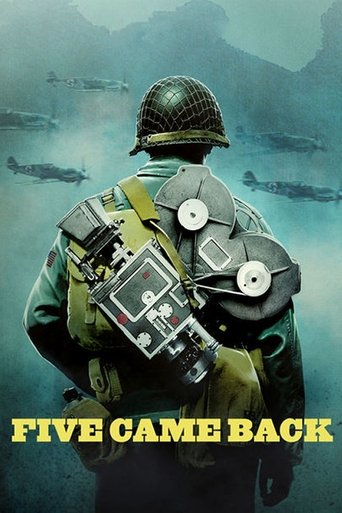
The extraordinary story of how Hollywood changed World War II – and how World War II changed Hollywood, through the interwoven experiences of five legendary filmmakers who went to war to serve their country and bring the truth to the American people: John Ford, William Wyler, John Huston, Frank Capra, and George Stevens. Based on Mark Harris’ best-selling book, “Five Came Back: A Story of Hollywood and the Second World War.”
When a high-ranking war planner is captured and held in a German prisoner of war camp, a team of specialists take on the dangerous mission of trying to break him out. Trouble is, he doesn't want to be rescued.
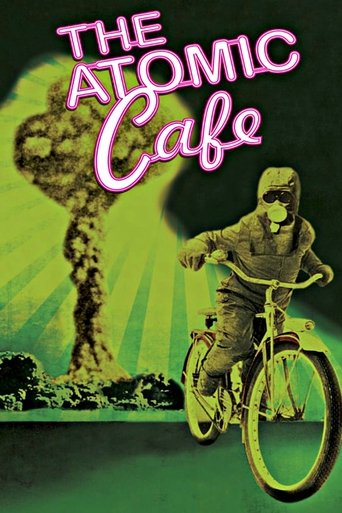
A disturbing collection of 1940s and 1950s United States government-issued propaganda films designed to reassure Americans that the atomic bomb was not a threat to their safety.
Deep beneath the surface in the Syrian province of Ghouta, a group of female doctors have established an underground field hospital. Under the supervision of paediatrician Dr. Amani and her staff of doctors and nurses, hope is restored for some of the thousands of children and civilian victims of the ruthless Syrian civil war.
The harrowing true story of the crew of the USS Indianapolis, who were stranded in the Philippine Sea for five days after delivering the atomic weapons that would eventually end WWII. As they awaited rescue, they endured extreme thirst, hunger, and relentless shark attacks.
An investigative and powerfully emotional documentary about the epidemic of rape of soldiers within the US military, the institutions that perpetuate and cover up its existence, and its profound personal and social consequences.
Prelude to War was the first film of Frank Capra's Why We Fight propaganda film series, commissioned by the Pentagon and George C. Marshall. It was made to convince American troops of the necessity of combating the Axis Powers during World War II. This film examines the differences between democratic and fascist states.
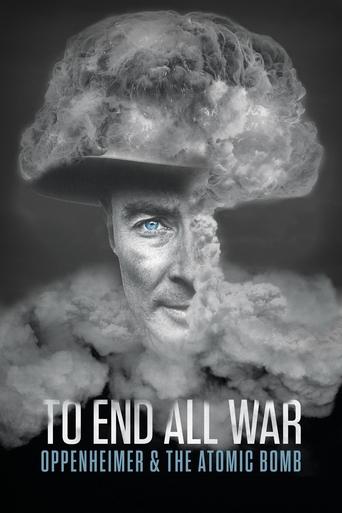
Explore how one man's relentless drive and invention of the atomic bomb changed the nature of war forever, led to the deaths of hundreds of thousands of people and unleashed mass hysteria.
An in-depth look at the prison system in the United States and how it reveals the nation's history of racial inequality.
A woman’s Holocaust memoir takes the world by storm, but a fallout with her publisher-turned-detective reveals her story as an audacious deception created to hide a darker truth.
Set both in Latin America and the United States, the film explores the historic and current relationship of Washington with countries such as Venezuela, Bolivia and Chile. Pilger says that the film "...tells a universal story... analysing and revealing, through vivid testimony, the story of great power behind its venerable myths. It allows us to understand the true nature of the so-called "war on terror". According to Pilger, the film’s message is that the greed and power of empire is not invincible and that people power is always the "seed beneath the snow".
In the early days of World War II, a German U-boat is sunk in Canada's Hudson Bay. Hoping to evade capture, a small band of German soldiers led by commanding officer Lieutenant Hirth attempts to cross the border into the United States, which has not yet entered the war and is officially neutral. Along the way, the German soldiers encounter brave men such as a French-Canadian fur trapper, Johnnie, a leader of a Hutterite farming community, Peter, an author, Philip and a soldier, Andy Brock.
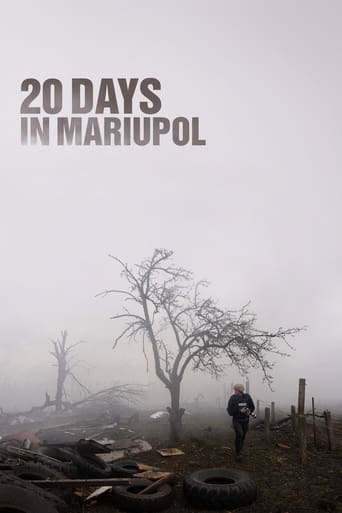
As the Russian invasion begins, a team of Ukrainian journalists trapped in the besieged city of Mariupol struggle to continue their work documenting the war's atrocities.
As World War II rages, the elite Sixth Ranger Battalion is given a mission of heroic proportions: push 30 miles behind enemy lines and liberate over 500 American prisoners of war.