"Where do you draw the line?"
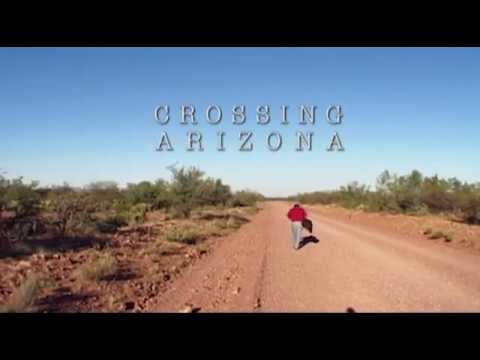
A collection of personal accounts stemming from Arizona's illegal immigration crisis.
Social & External
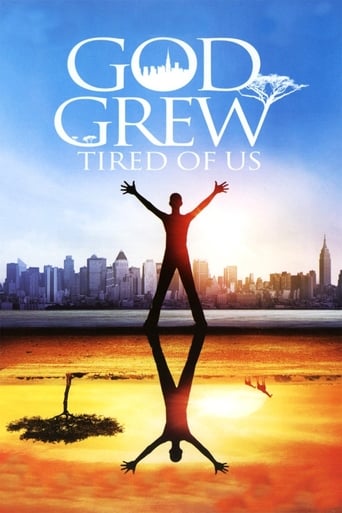
In 1892, Ellis Island, in New York Bay, became the main gateway to the United States for immigrants arriving increasingly from Europe. The story of immigration to the United States from 1892 to 1954, an enthralling polyphonic narrative that embraces both small and great history.
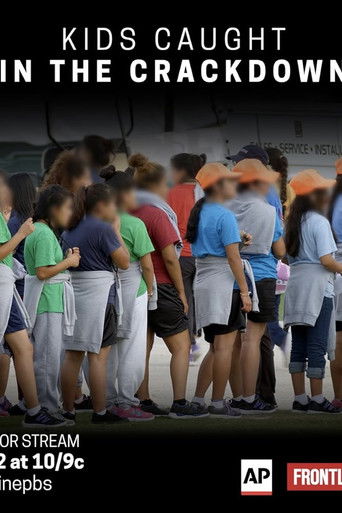
Undercover journalist James O'Keefe goes to the front lines of the migrant industrial complex using hidden cameras and raw testimonials. O'Keefe reveals the shocking reality of the U.S. border crisis like never before: Mexican freight trains, cartel tunnels, and U.S. funded child detention camps. Watch this gripping exposé of a corrupted system that demands change.
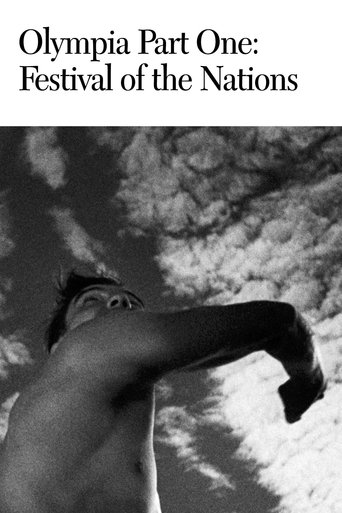
Starting with a long and lyrical overture, evoking the origins of the Olympic Games in ancient Greece, Riefenstahl covers twenty-one athletic events in the first half of this two-part love letter to the human body and spirit, culminating with the marathon, where Jesse Owens became the first track and field athlete to win four gold medals in a single Olympics.
The events that took place at the beach of El Tarajal in Ceuta (Spain) in February 2014 - the killing by the border police of 15 people who were trying to reach the Spanish coast - are an example of how the police force can violate the laws of its own country and international conventions with total impunity. The worst part is that this violation of human rights is protected by the Spanish Ministry of Interior itself, which hinders any effective action by the prosecution. For this reason, the civil society plays a fundamental role in revealing the facts. This is where the figure of collective complaints (DESC Observatory and the association Coordinadora de Barrios) steps in.
Somewhere between documentary and fiction, this is an essay on questions of territory and human displacements made during an excursion from southern Spain to northern Morocco. Travelling on the Mediterranean rim, we hear immigrants tell their stories.
A Palestinian activist's fight for freedom draws a Japanese American filmmaker into confrontation with detention regimes of past and present.
An analysis of the impact on the United States Latino community of immigration policies promoted by President Donald Trump.
A poetic retelling of the experiences of Joseph Murakami, a fourteen-year-old boy from Darwin, who is summarily rounded up and interned by his government on the basis of his ethnicity, leaving wounds unhealed to this day.
What does it mean to be British? Gabriel, a dentist originally from Hong Kong, has lived in Milton Keynes for nearly 50 years. His mixed race son Michael couldn't wait to leave. Now a film-maker, he returns to the city to discover how his father feels about the place he has made home.
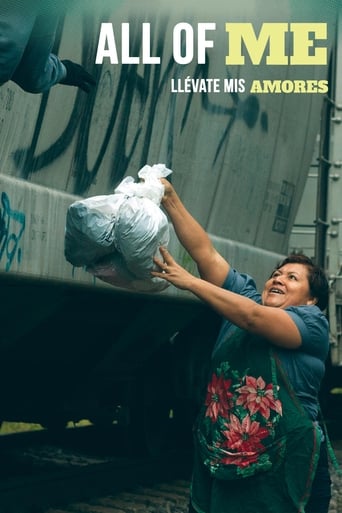
"Take my love" is a documentary film about "Las Patronas", a group of women who daily cook, pack and throw food to the migrants riding the "Beast" train.
The encounter with a growing, and mostly undocumented, brazilian community allows us to bear witness to its energy, its vivacity, and its diversity. This film attempts to work for a larger acceptance of foreigners in their land of exile.
In his second international bestseller, "Arc de Triomphe," author Erich Maria Remarque explores his own experience of exile and his decisive encounter with Marlene Dietrich. From Paris and Antibes to Los Angeles and New York, the documentary traces the moving genesis of this highly autobiographical novel, now considered a major work of European exile literature, and the literary legacy of the long-standing passion between two global stars.
Set during the Lebanese revolution, WE NEVER LEFT portrays a heart-wrenching duality between Beirut and New York, an impassioned testament to the Lebanese diaspora’s unrequited but irrepressible love for their homeland.
Rosa is a Mexican woman who, at the age of 17, migrated illegally to Austin, Texas. Some years later, she was jailed under suspicion of murder and then taken to trial. This film demonstrates how the judicial process, the verdict, the separation from her family, and the helplessness of being imprisoned in a foreign country make Rosa’s story an example of the hard life of Mexican migrants in the United States.
The Cossack and the Gypsy takes us to the heart of intimate worlds of Lev Chayka and Régine Gabrysz, illustrating their memories, interior views composed of the stories about their childhood and devotion to their country of origin (Ukraine and Soviet Union). The wars and dictatorship of the past in the Eastern Europe is set in contrast with the Far North of Quebec in a forgotten boom town. Vera and Jack, the last miner, Régine and Lev are among the last first immigrants. Their Slavic voices and accents still lull the Abitibi sonorous landscapes, but for how long...
A documentary about a night café called Walkers, its workers and the youth – largely immigrants – populating the café during the night.
An aspiring documentary filmmaker named Simon Rosenthal tries to get some attention for his film about skinheads versus Turkish immigrants. However, as a Jewish man in today's Germany, his fears for the future prompt him to move to the moon.
A conversation between Idrees Khan and his mother on how the celebrate their Trini culture in Orlando
The Dawn is Too Far: Stories of Iranian-American Life poetically narrates the story of a community of Iranian Americans who have made the San Francisco Bay Area their home over the past five decades. The film explores Iranian immigration through turbulent histories of dissent, revolution, war, and separation, and the reinvention of identity in a new land and culture. The Dawn is Too Far highlights how Iranian students, activists, and artists have navigated displacement while drawing on and influencing Bay Area culture. This community offers a more nuanced story of the Iranian diaspora—the ways that this community enriches the region where they live, work, and build families. The Dawn is Too Far undermines the tired and overplayed news headlines that are dominated by narratives of enmity and mistrust between the government of Iran and the U.S., to offer a more humane understanding of the how people's lives and the sacrifices they make are part of the larger story of immigration.
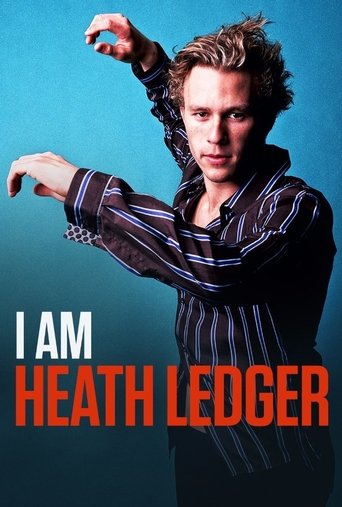
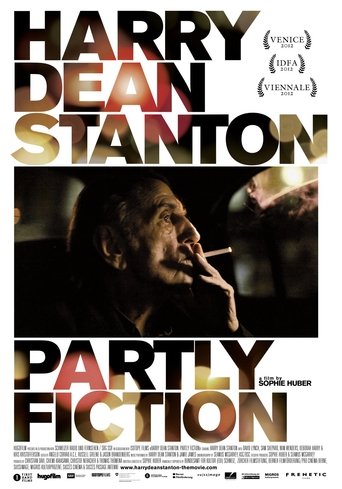
The life and career of an actor, artist, and icon. His own journey through his own camera.
Those who knew iconic funnyman John Candy best share his story, in their own words, through never-before-seen archival footage, imagery, and interviews.
The life and career of one of comedy's most inimitable modern voices, Mr. Gilbert Gottfried.
Photographer Estevan Oriol and artist Mister Cartoon turned their Chicano roots into gritty art, impacting street culture, hip hop and beyond.
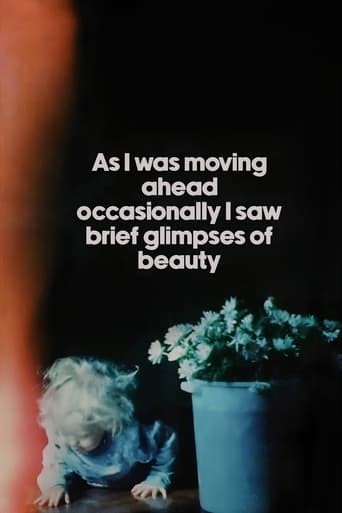
A compilation of over 30 years of private home movie footage shot by Lithuanian-American avant-garde director Jonas Mekas, assembled by Mekas "purely by chance", without concern for chronological order.
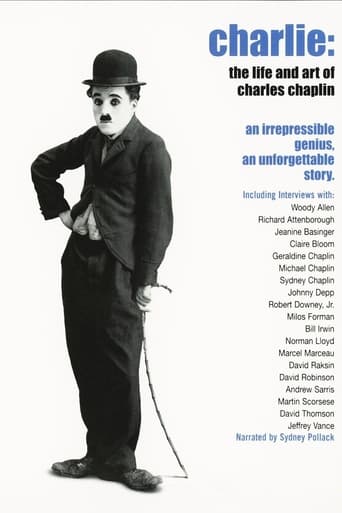
Brilliant, long in-the-works story of the life and art of the world's greatest comedian and the cinema's first genius, Charlie Chaplin. Produced, written and directed by renowned film critic Richard Schickel.
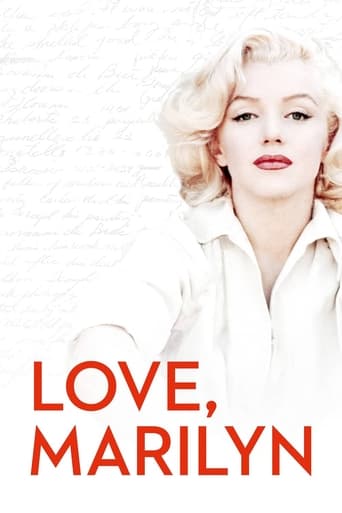
Using the book 'Fragments', which collects Marilyn Monroe's poems, notes and letters, and with participation from the Arthur Miller and Truman Capote estates who have contributed more material, each of the actresses will embody the legend at various stages in her life.
A visual montage portrait of our contemporary world dominated by globalized technology and violence.
Al Pacino's deeply-felt rumination on Shakespeare's significance and relevance to the modern world through interviews and an in-depth analysis of "Richard III."
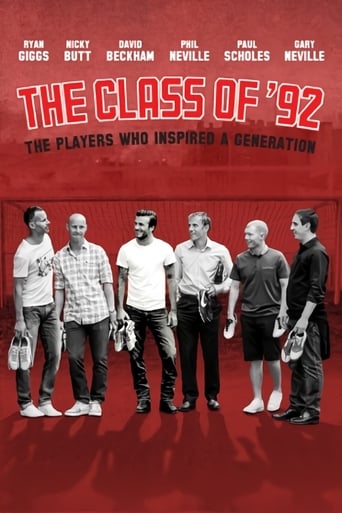
A detailing of the rise to prominence and global sporting superstardom of six supremely talented young Manchester United football players (David Beckham, Nicky Butt, Ryan Giggs, Paul Scholes, Phil and Gary Neville). The film covers the period 1992-1999, culminating in Manchester United's European Cup triumph.
Through deeply personal interviews with her siblings and an examination of the photographs, letters, and belongings left behind, Mariska assembles a new portrait of her mother Jayne Mansfield, an extraordinary and complex woman.
A comedic, brutally honest documentary following self-destructive TV writer Dan Harmon as he takes his live podcast on a national tour.
Dubbed “The Cannibal Cop,” former NYPD officer Gilberto Valle was charged with conspiring to kidnap and eat women but argued it was all a fantasy. His story made headlines both for its disturbing details and its potential to kick off a trend of thought-policing across the nation. Featuring intimate interviews with Valle and insights from experts, Thought Crimes explores if someone can be found guilty for their most dangerous thoughts.
A documentary about the making of season five of the acclaimed AMC series Breaking Bad.
A documentary on the expletive's origin, why it offends some people so deeply, and what can be gained from its use.
More than 65 million people around the world have been forced from their homes to escape famine, climate change and war, the greatest displacement since World War II. Filmmaker Ai Weiwei examines the staggering scale of the refugee crisis and its profoundly personal human impact. Over the course of one year in 23 countries, Weiwei follows a chain of urgent human stories that stretch across the globe, including Afghanistan, France, Greece, Germany and Iraq.
A documentary focused on plastic pollution in the world's oceans.
A sexual wellness company gains fame and followers, then members come forward with shocking allegations.
Serial killer Dennis Nilsen narrates his life and horrific crimes via a series of chilling audiotapes recorded from his jail cell.
Daniel Craig candidly reflects on his 15 year adventure as James Bond. Including never-before-seen archival footage from Casino Royale to the upcoming 25th film No Time To Die, Craig shares his personal memories in conversation with 007 producers, Michael G Wilson and Barbara Broccoli.