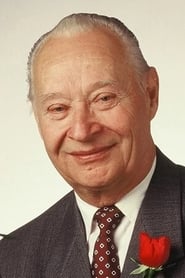
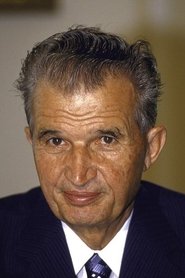
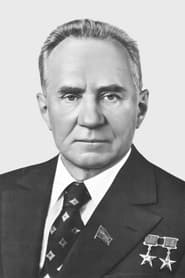
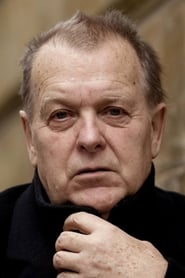
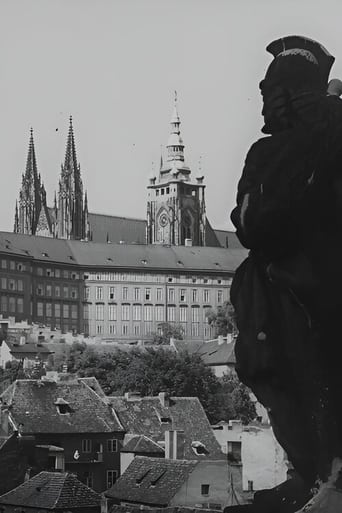
A unique document of the 1968 Soviet invasion of Czechoslovakia, what began as a documentary about the liberalization of Czechoslovakia evolved into a record of the entry of Russian tanks into Prague.
Social & External
The people behind it
Alexander Dubček
Self (archive footage)
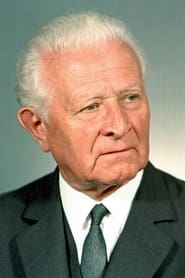
Ludvík Svoboda
Josef Smrkovský
Oldřich Černík
Čestmír Císař
Zdeněk Mlynář
Nicolae Ceaușescu
Alexei Kosygin
Jan Němec
Self
Gene Moskowitz
Commentary (voice)
Reinhard Heydrich was considered the most dangerous man in Nazi Germany after Hitler himself. The plot to kill him masterminded in England and carried through to finality in Prague in 1942, is told in this gripping dramatised documentary special. Featuring meticulous reconstructions, coupled with authentic historical film, some of it never shown before the film powerfully presents a vivid account of the only successful assassination of a leading Nazi in World War II. It also chillingly recreates the terrible human cost of SS savagery against the Resistance and the total obliteration of the village of Lidice.
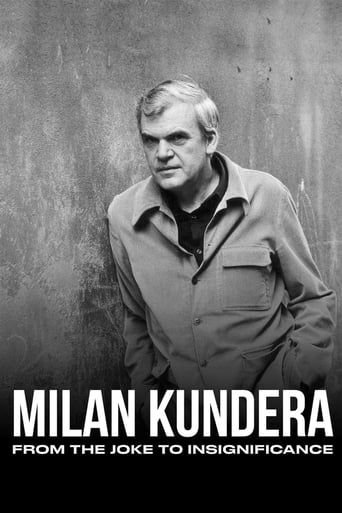
The brilliant Czech writer Milan Kundera has not given an interview in thirty years; nor does he appear in public. How did he become a legendary author? What is so unique about his books?
A film about the contrasts between Czechoslovakia and Bulgaria in 1968. A film that reveals the mechanisms of censorship and propaganda during communism. A film about how information about events in Czechoslovakia was distorted in Bulgaria.
A documentary film comparing current / everyday and historical / noble aspects of Prague.
Documentary short film by Mario Handler about the city of Prague as part of an internship to study film in Europe.
Showing his own original footage of Prague Spring, director Evald Schorm describes the atmosphere these days in 1968.
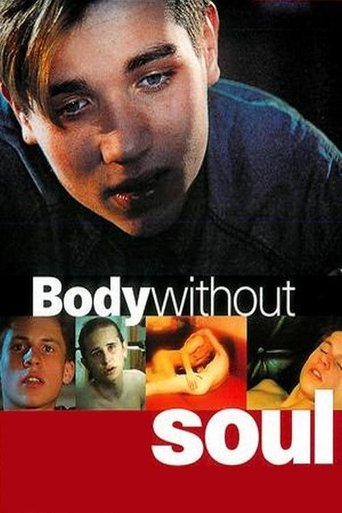
A stark documentary about young male prostitutes in Prague, aged 15 to 18, who work the streets, train stations, and clubs. Through candid interviews and behind-the-scenes footage of gay porn shoots, the film explores their lives, struggles, and dreams, touching on themes of exploitation, identity, AIDS, and survival.
Czech painter and illustrator Alphonse Mucha (1860-1939) ranks among the pioneers of the Art Nouveau movement at the end of the 19th century. Virtually overnight, he becomes famous in Paris thanks to the posters that he designs to announce actress Sarah Bernhardt’s plays. But at the height of his fame, Mucha decides to leave Paris to realize his lifetime project.
Reminiscences of a trip to Čáslav
Interviews with a procurer and with nineteen boys and young men who are prostitutes in Prague. The youths range in age from 14 to 19. They hustle at the central train station and at clubs. Most of their clients are foreign tourists, many are German. The youths talk about why they hustle, their first trick, prices, dangers, what they know about AIDS, their fears (disease and loneliness), and how they imagine their futures. The film's title, its liturgical score, much of it elegiac, and shots of the city's statues of angels underline the vulnerability and callow lack of sophistication of the young men.
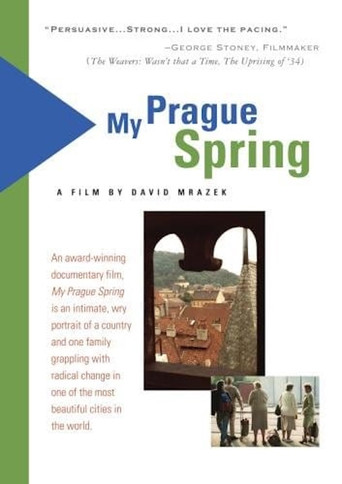
In its "velvet revolution" of 1989, the people of Czechoslovakia toppled its communist dictatorship and embraced democracy and capitalism. By January 1993, the country had peacefully split in two. In the early 1990s, thousands of American college graduates began flocking to Prague, where they could postpone entering the "real world," and live cheaply in a beautiful undiscovered European city. Throughout that decade more and more tourists crossed the statue-lined Charles Bridge in search of old world beauty previously hidden by communist isolation. But what of the people who cross the Charles Bridge on their way to work every morning? Who are the Czechs? What is their history? What is their future? My Prague Spring is an award-winning film that vividly humanizes a resilient people who have survived a tumultuous history. In the spring of 1990, a Czech-American filmmaker spent four months living with his Czech relatives, and opened an intimate window into an uncertain world.
From the behavior, discourse, and appearance of individual actors, Vachek composes, in the form of a mosaic, a broad and many-layered film-argument about Czechoslovak democracy in the period of its rebirth, all administered with the director’s inimitable point of view.
Otakar Vávra walks through Prague in front of the camera and with the camera, and remembers those who in the 1930s determined the pulse of the cultural and political life of that time.
After the Soviet invasion of Czechoslovakia in 1968, Libuše Jarcovjáková, a young female photographer, strives to break free from the constraints of Czechoslovak normalization and embarks on a wild journey towards freedom, capturing her experiences on thousands of subjective photographs.
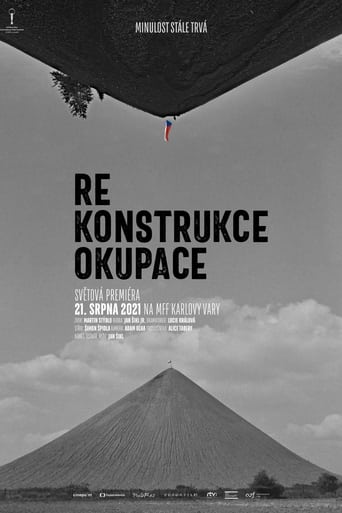
Documentary filmmaker Jan Sikl came across several hours of footage showing the Warsaw Pact invasion of Czechoslovakia in private film archives. 53 years later, historical memory awakens from a long slumber with this reconstruction of the occupation, a cinematic adventure of a truly archeological nature.
Explore the 'Krivoklat Castle, Czechia', one of the oldest and most important castles of the Czech kings and princes, with origins dating back to the 12th century. This royal residence was built as a seat of the ruling Premyslid dynasty
A feature about philosophy, perception and imprisonment in Aldo Lado's Giallo "Short Night of Glass Dolls".
Weiss’s classic B&W agitprop short made after his escape to London just ahead of the Nazis. He carried with him three reels of material for his unrealized film ‘Dvacet Let Svobody’ (‘Twenty Years of Freedom’) i.e. 20 years of the existence of independent Czechoslovakia from its 1918 founding to 1938 when the Munich Agreement dissolved it. In English with poetic narration written by C. Day-Lewis (father of Daniel Day-Lewis).
An inside look at one of the most anticipated movie sequels ever with James Cameron and cast.
The film follows adventurer Jeff Johnson as he retraces the epic 1968 journey of his heroes Yvon Chouinard and Doug Tompkins to Patagonia.
Al Pacino's deeply-felt rumination on Shakespeare's significance and relevance to the modern world through interviews and an in-depth analysis of "Richard III."
Through deeply personal interviews with her siblings and an examination of the photographs, letters, and belongings left behind, Mariska assembles a new portrait of her mother Jayne Mansfield, an extraordinary and complex woman.
A documentary about the life and films of director John Ford.
“The Soviet Story” is a story of an Allied power, which helped the Nazis to fight Jews and which slaughtered its own people on an industrial scale. Assisted by the West, this power triumphed on May 9th, 1945. Its crimes were made taboo, and the complete story of Europe’s most murderous regime has never been told. Until now...
A visual montage portrait of our contemporary world dominated by globalized technology and violence.
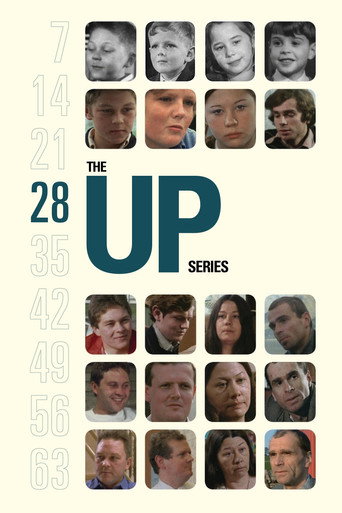
Director Michael Apted revisits the same group of British-born adults after a 7 year wait. The subjects are interviewed as to the changes that have occurred in their lives during the last seven years.
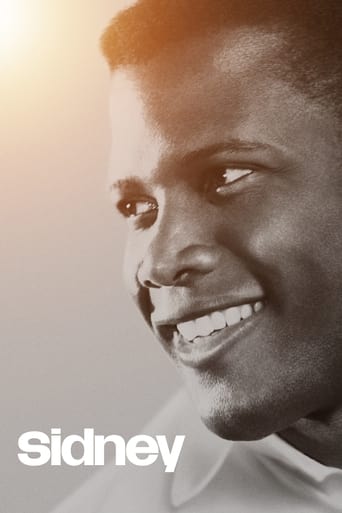
This revealing documentary honors the legendary Sidney Poitier—iconic actor, filmmaker, and civil rights activist. Featuring interviews with Denzel Washington, Spike Lee, Halle Berry, and more.
A documentary about the making of season five of the acclaimed AMC series Breaking Bad.
Lyrical and powerfully personal essay film that reflects on the deaths of her husband Lou Reed, her mother, her beloved dog, and such diverse subjects as family memories, surveillance, and Buddhist teachings.
Retrospective documentary about the making of the horror cult classic "The Return of the Living Dead."
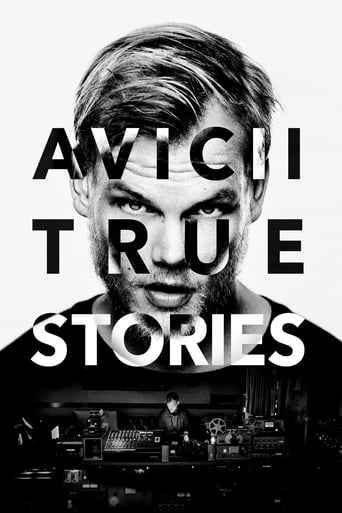
Documentary about the arena-packing Swedish DJ, chronicling his explosive rise to fame and surprising decision to retire from live performances in 2016.
As the front man of the Clash from 1977 onwards, Joe Strummer changed people's lives forever. Four years after his death, his influence reaches out around the world, more strongly now than ever before. In "The Future Is Unwritten", from British film director Julien Temple, Joe Strummer is revealed not just as a legend or musician, but as a true communicator of our times. Drawing on both a shared punk history and the close personal friendship which developed over the last years of Joe's life, Julien Temple's film is a celebration of Joe Strummer - before, during and after the Clash.
Alex Gibney explores the charged issue of pedophilia in the Catholic Church, following a trail from the first known protest against clerical sexual abuse in the United States and all way to the Vatican.
Police pull over a woman who claims she just gave birth. But the baby — and the blood — aren't hers. Twisted lies unravel in this true-crime documentary.
A documentary on the expletive's origin, why it offends some people so deeply, and what can be gained from its use.
Martin Scorsese's documentary intertwines footage from The Band's incredible farewell tour with probing backstage interviews and featured performances by Eric Clapton, Bob Dylan, Joni Mitchell, Van Morrison, and other rock legends.
This documentary focuses on the actors and their journey over two summers to create the remake to the original IT, by Stephen King. The documentary originally released as bonus material, bundled with IT: Chapter Two.
A real-life undercover thriller about two ordinary men who embark on an outrageously dangerous ten-year mission to penetrate the world's most secretive and brutal dictatorship: North Korea.