Social & External
Self
A close-up of a snow-bound city, and the men, money and machinery it takes to dig it out.
Author and activist Jane Jacobs talks about the problems and virtues of North American cities.
This short documentary film is a fascinating portrait of urban and rural Quebec in the late 1960s, as the province entered modernity. The collective work produced for the Quebec Ministry of Industry and Commerce calls on several major Quebec figures.
A short documentary on the River Ouse, following it downstream from Lewes to Newhaven, meditating on the surrounding area.
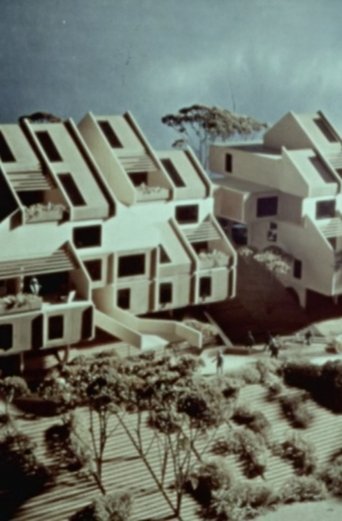
The human side of town planning, as exemplified in Baltimore, Maryland. The Coldspring Project concerned a proposed housing development for lower and upper income levels on a three hundred-acre site adjoining a wildlife sanctuary. The film records the differences aired in meetings of various interest groups that tried to modify the plan according to their views, and the compromise reached, based on plans drawn up by Montréal architect Moshe Safdie.
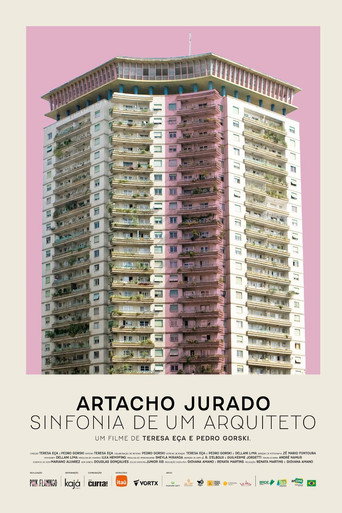
Focusing on the Matta-Viel complex, the immediate environment, the program, the materiality, the community of neighbors and its architects and what they represented in the modern Latin American architectural panorama.
Documentary devoted to the architectural and urban planning designs of Le Corbusier. The architect supports his in-depth reflection on the city and its necessary adaptation to modern life with plans, drawings and images, particularly Paris, whose revolutionary development dreamed of by Le Corbusier is exhibited here. Its first projects will remain at the stage of a model: the modernization plan for the city of Algiers. Some will be created by other architects: Ministry of Education in Rio de Janeiro, UN Palace in New York. From the post-war period in less than 10 years, Le Corbusier created large housing units in Marseille, Nantes, a chapel in Ronchamps, a factory in Saint-Dié, a town in Chandigarh in India. Through diagrams, the architect presents his theory of the "radiant city", the mathematical key modulor of his work as well as his project for reorganizing the countryside, industrial and urban cities into a grouping around a cooperative system.
In the town of Xoco, the spirit of an old villager awakens in search of its lost home. Along its journey, the ghost discovers that the town still celebrates its most important festivities, but also learns that the construction of a new commercial complex called Mítikah will threaten the existence of both the traditions and the town itself.
This feature documentary takes a look at how the Halifax/Dartmouth community in Nova Scotia was stimulated by a week-long session held by a panel of specialists from different fields who met with members of this urban community to consider the future of the area and the responsibility of the citizens and government in planning the future.
The documentary offers an overview of the district of Cidade Tiradentes and its inhabitants. It starts by the acquisition of land by the public authorities from the 1970s onwards, to the occupation of what is today one of the largest housing projects in Latin America.
Just a stone’s throw from downtown Montreal is the largest social housing complex in Quebec. Built in 1959 where the red-light district used to be, Les Habitations Jeanne-Mance have retained something of the area’s seedy reputation for poverty, prostitution, drugs and violence. But who really knows the projects and the people who live there? Delving beneath the prejudices and stereotypes, director Isabelle Longtin ventured inside the buildings and met the residents.
In Cape Verde, where the majority of the population is young, children use olive oil cans, bits of sandals, leftover tires and pieces of cardboard to build their own toys. The absence of a consumer society and the challenges posed by insularity have led them to invent their own recreational independence with almost nothing.
Amina, Sami and Jennyfer are high school students in the Paris suburbs, in 93. At the initiative of 3 of their teachers, they embark on an unexpected investigation into a gigantic leisure park project which involves concreting agricultural land near their homes. But can we have the power to act on a territory when we are 17 years old? Funny and intrepid, these new citizens take us to meet residents of their neighborhood, property developers, farmers and even elected officials of the National Assembly. A joyful quest that challenges conventional wisdom and revives our connection to the land!
Architect Stanley King involves the local Vancouver community in urban design.
This film focuses on the approaches that several cities have taken to one problem. Through various examples, it examines the implications and options for a pedestrian-oriented city core. Ninth in Régnier's ten-film Urba 2,000 series.
American historian Lewis Mumford looks at the city through history.
In the city of Saskatoon, Saskatchewan, an effective government policy of controlling land investment prevents speculation, keeps land prices down, and provides a good balance between commercial, residential and public areas.
Exploring the impact of the now defunct Steinberg supermarkets on the urban environment.
Bridgeview, British Columbia is less than 30 kilometres from downtown Vancouver. The residents were promised a sewer system in 1953, but more than 20 years later the sewer system has yet to be built.