Social & External
Narradora
“Tucaneira: Wooden Hands” is a captivating mini-documentary that takes us on a fascinating journey through the world of a skilled artisan who works with wood at an eco-solidarity fair held in a university environment. In this brief and inspiring portrait, we explore the life and craft of Manoel, a master craftsman whose hands transform tree trunks into true works of art. Through beautiful images, testimonials and captivating photographs, the documentary reveals Manoel's passion for his art. He shares his inspirations and motivations, highlighting how his work is deeply rooted in sustainability and respect for nature. “Tucaneira: Wooden Hands” is a mini-documentary that not only celebrates the talent and dedication of an exceptional artisan, but also reminds us of the importance of supporting initiatives and fairs that promote eco-solidarity, art and sustainability in a vibrant and inspiring university .
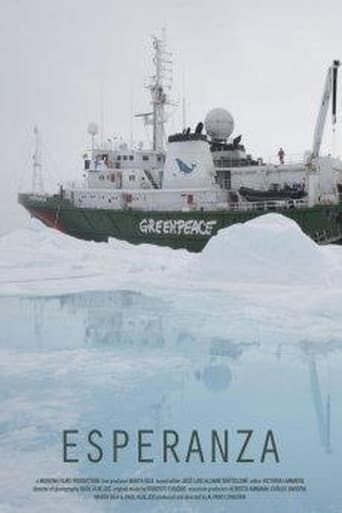
Based on one of the Esperanza's voyages to the Arctic, this short documentary chronicles life aboard the Greenpeace ship. Through conversations with the crew, we will discover her motivations for risking her life defending the planet so far from home.
This is a documentary linking ecological and political problems. The planet has come to be less important than the multinational earnings, and with it politicians earnings as well. With this project we bring foreward this problem, witch not only affects the third world, but is a worldwide situation witch needs to be adressed.
Investigative journalists working for Disclose spent over a year investigating the production chain of the furniture giant which generated a 44.6 billion euros revenue in 2022 and attracts over 5 billion visitors to its stores and website every year. From the boreal forests of Sweden to Brazilian plantations and New Zealand coastlines, they uncovered how IKEA intensively exploits wood around the world, fuels the illegal trafficking of this resource and threatens the last precious European forests. Long overlooked, intensive logging is now sparking outrage and anger among citizens in Poland and the Baltic countries, who are increasingly concerned about the fate of their countries' public forest domains and biodiversity loss. In Romania, where IKEA owns 50,000 hectares of forests, activists are risking their lives mobilizing against the timber mafia. This film tells the expansion of a discreet forest predator, grappling with the limits of the planet's resources.
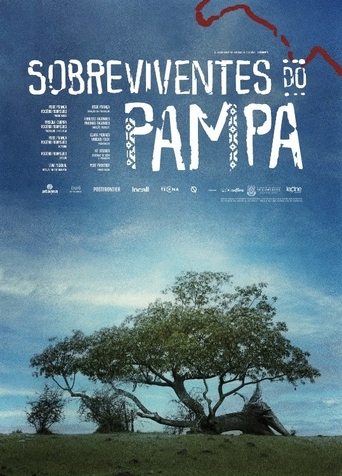
When the search for its origin takes him to the deep pampa, the documentary director discovers a recently recognized biome, little known and that presents more than half of its native area destroyed. So, its goal becomes to present the biome and its inhabitants, in a mosaic between the original peoples, quilombola communities, family cattle ranchers, agrarian reform settlers and rural entrepreneurs, awakening an awareness of belonging, with the objective of strengthening the preservation of the Pampa biome.
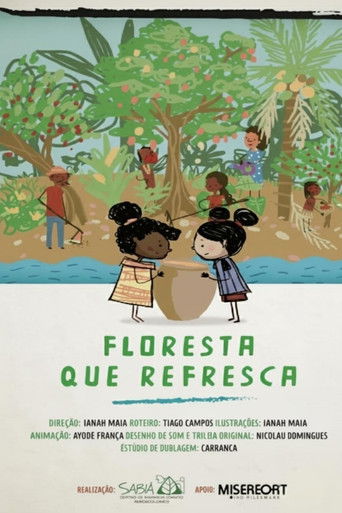
It's a 5-minute animation that addresses the issue of climate change, presenting a proposal for how to balance our relationship with the environment. The short film also shows the importance of agroforestry in the lives of people in both rural and urban areas.
Timo Novotny labels his new project an experimental music documentary film, in a remix of the celebrated film Megacities (1997), a visually refined essay on the hidden faces of several world "megacities" by leading Austrian documentarist Michael Glawogger. Novotny complements 30 % of material taken straight from the film (and re-edited) with 70 % as yet unseen footage in which he blends original shots unused by Glawogger with his own sequences (shot by Megacities cameraman Wolfgang Thaler) from Tokyo. Alongside the Japanese metropolis, Life in Loops takes us right into the atmosphere of Mexico City, New York, Moscow and Bombay. This electrifying combination of fascinating film images and an equally compelling soundtrack from Sofa Surfers sets us off on a stunning audiovisual adventure across the continents. The film also makes an original contribution to the discussion on new trends in documentary filmmaking.
Fred Martinez was a Navajo youth slain at the age of 16 by a man who bragged to his friends that he 'bug-smashed a fag'. But Fred was part of an honored Navajo tradition - the 'nadleeh', or 'two-spirit', who possesses a balance of masculine and feminine traits.
Sequel to the "The Waterfowl People". The author interprets the kinship, linguistic and cultural relationships of the Finno-Ugric peoples. Finns, Vepsians, Votes, Setos, Erzya-Mordvinians, Mansi, Hungarians, Sami, Nganasans, and Estonians appear in the film. The film was shot in 1977 on location in northern Finland, Sapmi, Vepsia, Votia, Mordovia, Khantia-Mansia, Hungary, the Taymyr Peninsula, the Setomaa region in Estonia, and on the Estonian islands of Saaremaa and Muhu. Footage was also shot in 1970 in the Nenets Okrug. The second documentary in Lennart Meri's "Encyclopaedia Cinematographica Gentium Fenno - Ugricarum" series.
Made famous by the 1957 Hollywood movie, the bridges of the River Kwai emblematize one of the most misunderstood events in history. Contrary to the romanticized film version, the structures represent a period of terror, desperation, and death for over 16,000 POWs and 100,00 local slaves. The Thailand - Burma Railway was the vision of the Japanese Imperial Army: a 250-mile track cut through dense jungle that would connect Bangkok and Rangoon. To accomplish this nearly impossible feat, the fanatical and ruthless Japanese engineers used POWs and local slaves as manpower. Candid interviews with men who lived through the atrocity - including Dutch, Australian, British, and American POWs - illuminate the violence and horror of their three-and-a-half-year internment. From Britain's surrender of Singapore the enduring force of friendship, The True Story Of The Bridge On The River Kwai narrates a moving and unforgettable account of a period in history that must be remembered.
We see the man in action, in the ring as the intense fighting machine with killer instincts, and out of the ring as the quietly spoken young man.
Oliver Stone charts the history of the United States from the Second World War to the present.
The history of cinematic sound, told by legendary sound designers and visionary filmmakers.
An astonishing journey revealing the awesome power of the natural world. Over the course of one single day, we track the sun from the highest mountains to the remotest islands to exotic jungles.
Cameramen and women discuss the craft and art of cinematography and of the "DP" (the director of photography), illustrating their points with clips from 100 films, from Birth of a Nation to Do the Right Thing. Themes: the DP tells people where to look; changes in movies (the arrival of sound, color, and wide screens) required creative responses from DPs; and, these artisans constantly invent new equipment and try new things, with wonderful results. The narration takes us through the identifiable studio styles of the 30s, the emergence of noir, the New York look, and the impact of Europeans. Citizen Kane, The Conformist, and Gordon Willis get special attention.
An eye-opening documentary that asks the question: Are we going to let climate change destroy civilization, or will we act on technologies that can reverse it? Featuring never-before-seen solutions on the many ways we can reduce carbon in the atmosphere thus paving the way for temperatures to go down, saving civilization.
A behind-the-scenes documentary about the Clinton for President campaign, focusing on the adventures of spin doctors James Carville and George Stephanopoulos.
Documentary about the art of film editing. Clips are shown from many groundbreaking films with innovative editing styles.
Exuberant, eye-opening movie that serves up a dazzling hundred-year history of the role of gay men and lesbians have had on the silver screen. Film contains fabulous footage from 120 films showing the changing face of cinema sexuality, from cruel stereotypes to covert love to the activist triumphs of the 1990s.
A documentary highlighting the Soviet Union's legendary and enigmatic hockey training culture and world-dominating team through the eyes of the team's Captain Slava Fetisov, following his shift from hockey star and celebrated national hero to political enemy.
Experience the events of September 11, 2001 through the eyes of President Bush and his closest advisors as they personally detail the crucial hours and key decisions from that historic day.
A documentary about the development and spread of the virtual currency called Bitcoin.
Former United States Secretary of Defense, Donald Rumsfeld, discusses his career in Washington D.C. from his days as a congressman in the early 1960s to planning the invasion of Iraq in 2003.
Ten of Muhammad Ali's former rivals pay tribute to the three-time world heavyweight champion.
This searing investigative work shadows a group of activists risking unimaginable peril to confront the ongoing anti-LGBTQ program raging in the repressive and closed Russian republic. Unfettered access and a remarkable approach to protecting anonymity exposes this under-reported atrocity–and an extraordinary group of people confronting evil.
A comedic, brutally honest documentary following self-destructive TV writer Dan Harmon as he takes his live podcast on a national tour.
Not since the invention of the Internet has there been such a disruptive technology as Bitcoin. Bitcoin's early pioneers sought to blur the lines of sovereignty and the financial status quo. After years of underground development Bitcoin grabbed the attention of a curious public, and the ire of the regulators the technology had subverted. After landmark arrests of prominent cyber criminals Bitcoin faces its most severe adversary yet, the very banks it was built to destroy.
Pete Postlethwaite stars as a man living alone in the devastated future world of 2055, looking at old footage from 2008 and asking: why didn’t we stop climate change when we had the chance?
Set both in Latin America and the United States, the film explores the historic and current relationship of Washington with countries such as Venezuela, Bolivia and Chile. Pilger says that the film "...tells a universal story... analysing and revealing, through vivid testimony, the story of great power behind its venerable myths. It allows us to understand the true nature of the so-called "war on terror". According to Pilger, the film’s message is that the greed and power of empire is not invincible and that people power is always the "seed beneath the snow".
Various MGM stars from yesterday present their favorite musical moments from the studio's 50 year history.
Dick Proenneke retired at age 50 in 1967 and decided to build his own cabin in the wilderness at the base of the Aleutian Peninsula, in what is now Lake Clark National Park. Using color footage he shot himself, Proenneke traces how he came to this remote area, selected a homestead site and built his log cabin completely by himself. The documentary covers his first year in-country, showing his day-to-day activities and the passing of the seasons as he sought to scratch out a living alone in the wilderness.