Social & External
Andrea Affuso
Mariapia Ciampa
Franco Cioffi
Luca de Martino
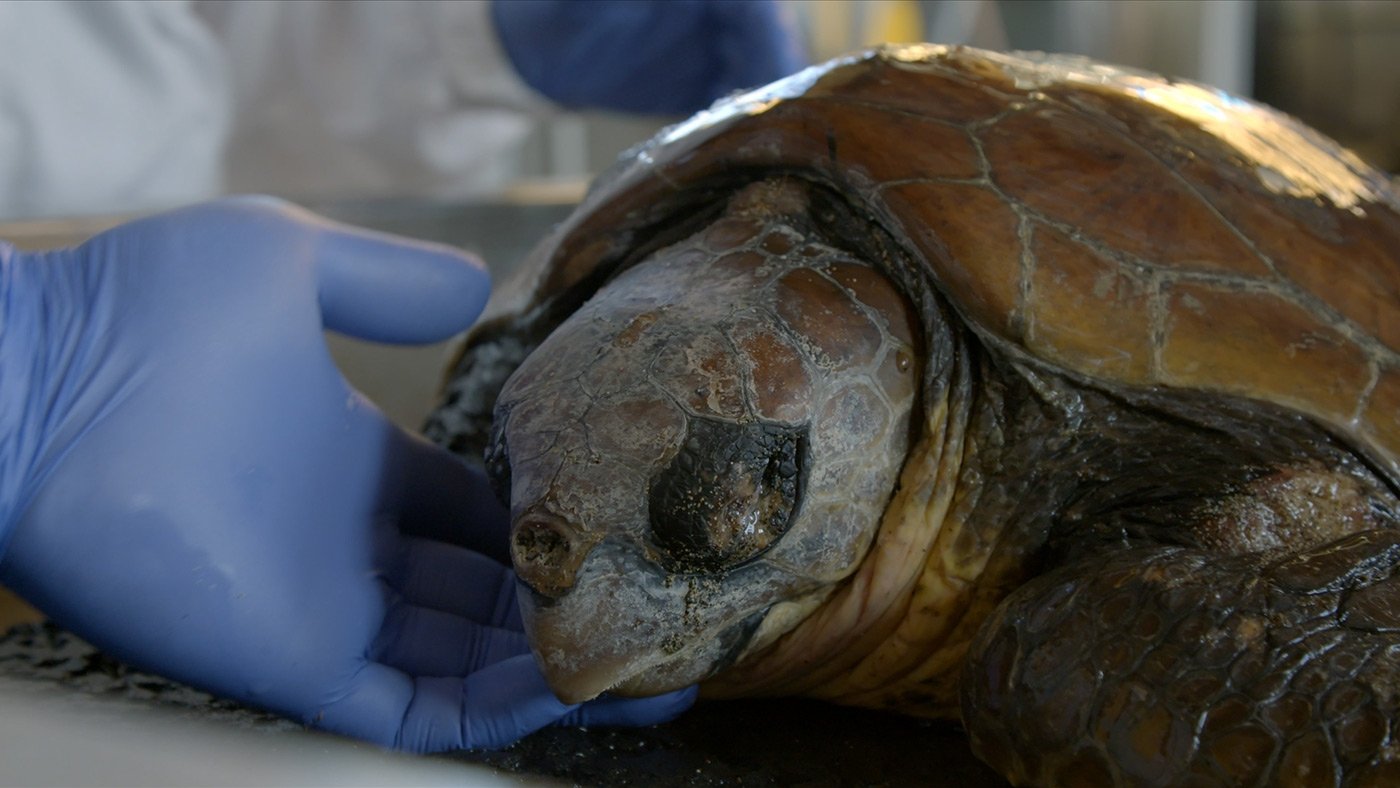
Tortuga
Mollusks deserve a second chance to better their first impression since the world is truly one of a kind. Enter the secret world of mollusks!
Before leaving for Rome with his mother, five year old Natan is taken by his father, Jorge, on an epic journey to the pristine Chinchorro reef off the coast of Mexico. As they fish, swim, and sail the turquoise waters of the open sea, Natan discovers the beauty of his Mayan heritage and learns to live in harmony with life above and below the surface, as the bond between father and son grows stronger before their inevitable farewell.
The Lamalera village is located in a small volcanic Island, a poor, barren land, and they catch whales to eat. It is the only way for them to survive. The harpooners are called lamafa in the local language. They are the village's pride because they take the whole responsibility for the very dangerous hunting. In 2018. a tragedy struck the village. Benjamin, a young lamafa, was killed during a spear hunting. His father, Ignatius, was devastated, and Benjamin's brother, Demo, was shocked and unable to go hunting. They blame accidents at sea on a victim's family discord in Lamalera. Ignatius, the master boat-builder, decided to build a new traditional whaleboat to reunite the family bond. The whaling boat is 12 meters long, made entirely of hand-crafted wood, not using a single nail, and is considered an intangible cultural asset.
An ecological drama/documentary, filmed throughout the globe. Part thriller, part meditation on the vanishing wonders of the sub-aquatic world.
While the Pelagic Life team is chasing the elusive sardine baitball in the open ocean near Baja California, they stumble upon a crude shark fishing operation that sparks a seismic shift in the group’s thinking. Departing from their original concept of documenting awesome sea-life phenomenon, they transform their mission to creating awareness of Mexico’s sea-life while creating sustainable livelihoods for the shark fishermen in order to preserve a delicate and critical ecosystem.
Acid Horizon follows marine ecologist Dr. Erik Cordes on a harrowing deep-sea expedition to track down the "supercoral", a strain of the deep-water coral Lophelia pertusa that seems to possess the unique genetic capability to thrive in a low-pH ocean.
In a fitting farewell, Crocodile Hunter Steve Irwin's last documentary goes below the surface of Australia's eastern reef, where some of the planet's most dangerous animals reside. Joining Irwin is Philippe Cousteau, grandson of pioneering oceanographer Jacques Cousteau. Together, the two explorers run up against venomous sea snakes, enormous sharks and saltwater crocodiles in their search for the most fearsome creatures of the deep.
Stanley Kubrick’s first color film, commissioned by the Seafarers International Union to promote the benefits of union membership. Shot inside the union’s Atlantic and Gulf Coast District facilities, it features scenes of ships, machinery, cafeteria life, and meetings, highlighting the daily routines and camaraderie of seafarers. Thought lost for decades, the film was rediscovered in 1973 and preserved by the Library of Congress.
In the early 1900s commercial loggers cut down an old growth spruce tree growing on a small island surrounded by tide pools on the coast of Maine. Out of the trunk of this ancient tree grew two new trees, side by side.
A short film featuring a coastal forest and the rocky coastline of downeast Maine.
A study of the seashore in mid-coast Maine.
The sun rises over the tide pools of coastal Maine.
One of the many unusual marine species is the crustacean. Caught between reality and fantasy, it has remained a mystery to man for centuries.
A documentary that explores the natural world of the sea, from the single-celled organism to more complex forms of life, OCEAN ORIGINS was originally filmed in the IMAX large format, which adds a crispness and clarity to the images. This documentary film seeks to examine the process of evolution by looking at the many creatures of the sea that can illustrate the way multi-cellular life emerged over the course of four billion years. OCEAN ORIGINS is a creative film that uses fascinating documentary footage to look at scientific theories and principles in an interesting manner
In the early ‘70s, founding member of Australian surf magazine Tracks, Albert Falzon, began filming off the North Coast of New South Wales, Hawaii, and Indonesia. He set out to make a film “that was a reflection of the spirit of surfing at the time” and the end result, Morning of the Earth, proved its worth as a vital document of surf culture and a powerful nature film.
Tubbataha Park in the Philippine Archipelago, is one of the best-preserved coral reefs in the world. Registered as a UNESCO heritage site, this marine park is a model for sustainable development and a true laboratory of the future. Fervent advocate of environmental protection, Prince Albert II of Monaco joins this expedition and visits the heart of Tubbataha to raise awareness among local children to the wealth and fragility of their little paradise.
Back to the Titanic documents the first manned dives to Titanic in nearly 15 years. New footage reveals fresh decay and sheds light on the ship’s future.
The Indonesian archipelago in the Indo-Pacific Ocean comprises thousands of islands, atolls and the largest concentration of coral reefs in the world. This rich and varied environment is a product of a unique set of natural circumstances.