Social & External
El proyecto del Pitufo Enrique is a document about the existence of a mysterious goblin from the province of Catamarca. During the filming of the movie there were some tragic incidents, such as the disappearance of six people or the violent deaths of another three. Some of these incidents were registered on video but couldn't see the light because of the ongoing legal battle between the director and the victim's families opposing its screening. On the contrary, Elvira Serio director of the movie, thinks that what is on the tape could be of great help shedding some light over all the mysteries around this thread. She hopes that her work can serve as a warning as well to all the residents and tourists who often visit that place.
Between 1968 and 1970, J M Goodger, a lecturer at the University of Salford, made a film record of the living conditions in the slums of Ordsall, Salford, which were then in the process of being demolished. Under the title 'The Changing face of Salford', the film was in two parts: 'Life in the slums' and 'Bloody slums'.
A short film following Anthony, a young child from the small, rural town of San Antonio de los Baños, Cuba. We see him in different moments of his daily life as he interacts with different forms of environmental, familial, and social influences. While Anthony displays contradictory traits of creativity, destruction, rigidity, and tenderness as he interacts with his external and internal worlds, we see a story built from the the multidimensionality of Anthony's layered personality as a young man.
For three decades now, Qatar, this small desert kingdom, has not stopped being talked about; because of its financial power and the secrecy that surrounds it, the royal family that runs it fascinates as much as it frightens.
A day in the city of Berlin, which experienced an industrial boom in the 1920s, and still provides an insight into the living and working conditions at that time. Germany had just recovered a little from the worst consequences of the First World War, the great economic crisis was still a few years away and Hitler was not yet an issue at the time.
When a Mongolian nomadic family's newest camel colt is rejected by its mother, a musician is needed for a ritual to change her mind.
It's a sensitive, moving doc chronicling the life of Tétrault's brother Philip , a Montreal poet, musician and diagnosed paranoid schizophrenic. A promising athlete as a child, Philip began experiencing mood swings in his early 20s. His extended family, including his daughter, share their conflicted feelings love, guilt, shame, anger with the camera. They want to make sure he's safe, but how much can they take?
Hammer and compass in Mozambique. We see a GDR flag waved at a rally in Maputo, carried by "Madgermanes", contract workers who once toiled in eastern Germany. Some of them founded families there, like Eulidio. His daughter Sarah grows up with her mother in Berlin. The relationship with her "second home" is slow in growing, partly thanks to Luana, Sarah's baby, whose father, Eduardo is also from Mozambique.
The new documentary from Apprehensive Films follows eight Home Haunters in their pursuit to transform their nice suburban homes into visions of the macabre. Their obsession with Halloween has lead them to spend thousands, dedicate countless hours and resources to acheive their horrific attractions and to scare the daylights out of unsuspecting trick-or-treaters. We'll meet all sorts of different haunters from basic yard haunts to one's so extreme they go beyond their property lines. Special features include: Trailers, Spotlight on Hauntcast, Larry Scholl's Tiki Room, Alternate Opening and Behind the Scenes at Night Frights.
For five years, Stephen McCoy documented street life in Boston. This is what he captured.
Audrey, a woman in her mid-fifties, has never been able to make peace with her tumultuous family history. A clumsy mother, an emotionally distant father and sexual assaults that have gone unreported. She now decides to confront her demons. Supported by her son, the director of the documentary, she revisits a striking scene from her past: the moment when she told her parents that her grandfather had raped her. Together, through a year-long production process, they transform this awkward exchange into a moment of communion, thanks to actors, a set and Audrey's desire to do herself justice.
Hosted by Keeley Hawes, star of the popular television series The Durrells, this documentary reveals the adventures of the eccentric Durrell family once they left Corfu, Greece.
A heartfelt look at the life of a wonderful person and the legacy she has left behind, looking into her love, patience, kindness and the grief of her passing.
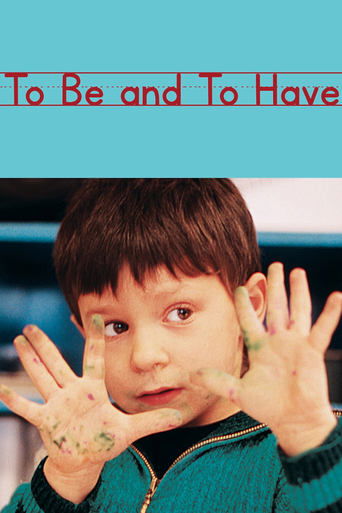
The documentary's title translates as "to be and to have", the two auxiliary verbs in the French language. It is about a primary school in the commune of Saint-Étienne-sur-Usson, Puy-de-Dôme, France, the population of which is just over 200. The school has one small class of mixed ages (from four to twelve years), with a dedicated teacher, Georges Lopez, who shows patience and respect for the children as we follow their story through a single school year.
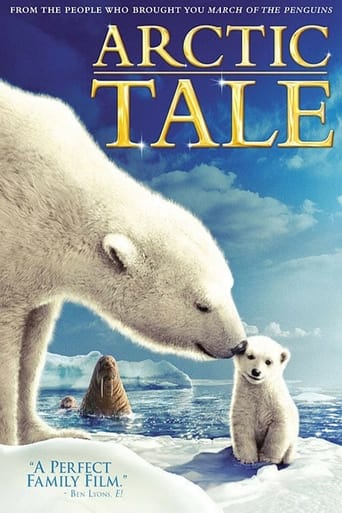
Arctic Tale is a 2007 documentary film from the National Geographic Society about the life cycle of a walrus and her calf, and a polar bear and her cubs, in a similar vein to the 2005 hit production March of the Penguins, also from National Geographic.
A mysterious natural phenomenon sets an end to the party night of a group of young adults. The morning after begins with far more than just a hangover.
Just after midnight on 10 March 1945, the US launched an air-based attack on eastern Tokyo; continuing until morning, the raid left more than 100,000 people dead and a quarter of the city eradicated. Unlike their loved ones, Hiroshi Hoshino, Michiko Kiyooka and Minoru Tsukiyama managed to emerge from the bombings. Now in their twilight years, they wish for nothing more than recognition and reparations for those who, like them, had been indelibly harmed by the war – but the Japanese government and even their fellow citizens seem disinclined to acknowledge the past.
Barred from racing for breaking stride, a trotting horse finds a new career as a police officer's mount in Boston.
A documentary of insect life in meadows and ponds, using incredible close-ups, slow motion, and time-lapse photography. It includes bees collecting nectar, ladybugs eating mites, snails mating, spiders wrapping their catch, a scarab beetle relentlessly pushing its ball of dung uphill, endless lines of caterpillars, an underwater spider creating an air bubble to live in, and a mosquito hatching.
IDFA and Canadian filmmaker Peter Wintonick had a close relationship for decades. He was a hard worker and often far from home, visiting festivals around the world. In 2013, he died after a short illness. His daughter Mira was left behind with a whole lot of questions, and a box full of videotapes that Wintonick shot for his Utopia project. She resolved to investigate what sort of film he envisaged, and to complete it for him.