Social & External
Self - Narrator (voice)
Self (archive footage)
Self
In Turkey, buses are a cheap, widespread and therefore the most important means of public transportation throughout the country. What the airplane is in America and the train is in Europe, the intercity bus is in Turkey. The documentary takes a trip through Turkey using the common people's means of transport.
While we were wandering through the pages of our democracy history, we saw right-left fights and experienced revolutions. Blood was shed, scaffolds were set up, but they could never change the country's path. When we came to the 1980s, a person came out and shook the system to its roots and changed the world of people. According to some, this was a great revolution, according to others, it was the wear and tear of some values. Regardless, this person left his mark on a period of Turkey.
An overview of one of the greatest disasters of the first World War WWI - the Dardanelles Campaign at Gallipoli, Turkey.
The night of July 15, 2016 changed the history of Turkey. On that day there were coordinated attacks by parts of the Turkish army, among others in Istanbul. The aim of the military: a coup against the government. The decisive confrontation occurred on the Bosporus Bridge. While President Erdogan was still on vacation, live at TV he called on the people who were devoted to him to stand against the military. As an enemy for the masses, he presented his adversary Fethullah Gülen, whom he branded as the coup leader. He also urged the imams of the country's mosques to condition the population to resist. And so it happens that at night thousands of agitated people take to the streets to oppose the armed insurgents. The death toll was high. 352 people died across Turkey during the attempted coup. The consequences are even more serious: Erdogan used this gift, as he called it himself, to undermine democracy, to arrange mass arrests of dissidents and to transform Turkey into a dictatorship.
In Turkey far too many women are still unable to read and write, and all they see in their life span is being forced into early marriage and relegation to the home, where they look after extended families and more children than they can feed. The girls are portrayed in their homes, together with the strongest supporters of their emancipation through education: their mothers. Girls of Hope portrays five girls who struggle for their education and, despite all the difficulties, try to hold on to their hope for a better future.
February 28 is Deniz Gezmiş's birthday… He would have been 75 years old today; but it only lived for 25 years, and in those 25 years, it had an impact that spanned 75 years. When you have a 25-year-old son, one feels better, what was done to him...
Bülent Ecevit had dreams of a modest, serene life away from competition and politics. He imagined that he would write poems throughout his life and take refuge in that serene, purified world of art, poetry and aesthetics, against the harsh and harsh reality of daily life. While escaping the hazy atmosphere of politics, he could not even guess where his decision on the day he stepped into politics would take him...
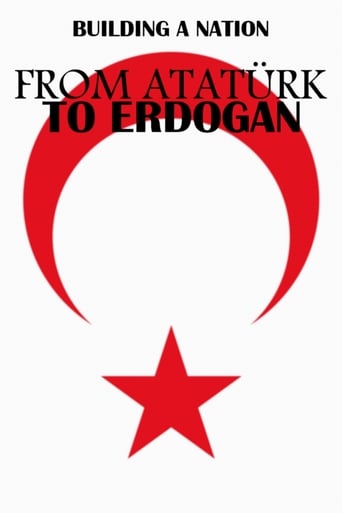
Docudrama examining the life of Mustafa Kemal Atatürk, who founded the Republic of Turkey from the ruins of the Ottoman Empire. Monuments to him can be found in every city; the anniversary of his death is commemorated every year; derogatory words about him are punishable by law. Rarely has a politician changed a society so radically in such a short time as Atatürk did Turkey.
Ecumenopolis: City Without Limits" tells the story of Istanbul and other Mega-Cities on a neo-liberal course to destruction. It follows the story of a migrant family from the demolition of their neighborhood to their on-going struggle for housing rights. The film takes a look at the city on a macro level and through the eyes of experts, going from the tops of mushrooming skyscrapers to the depths of the railway tunnel under the Bosphorous strait; from the historic neighborhoods in the south to the forests in the north; from isolated islands of poverty to the villas of the rich. It's an Istanbul going from 15 million to 30 million. It's an Istanbul going from 2 million cars to 8 million. It's the Istanbul of the future that will soon engulf the entire region. It's an Istanbul nobody has ever seen before.
Stony Paths is the story of a walk across Anatolia. Arnaud Khayadjanian starts a trek in Turkey, on the land of his forefathers who survived the Armenian Genocide. Starting from a painting, from encounters and from accounts by his relatives, he goes on exploring the little known issue of the Righteous, all these anonymous people who saved lives in 1915.
INTENT TO DESTROY embeds with a historic feature production as a springboard to explore the violent history of the Armenian Genocide and legacy of Turkish suppression and denial over the past century.
We have a topic that has always been on the agenda of Turkey and the world, which we have been discussing for nearly 40 years: Cyprus. To foreigners, Cyprus is known as an innocent little island under Turkish invasion. Everyone forgot the bloody events of the past. What about us? Do we know? No. Especially the younger generations, who have come to the point of governing the country today, do not know where this country has gone through regarding Cyprus. However, we are now approaching a road junction in Cyprus. I will tell you the story of Cyprus in this documentary. This is a very bloody and sometimes very sad story...
For young Muslims who live in a free society, how is the culture of origin of the parents compatible with their own wishes? What significance does the commandment of virginity have?
In the 1990s many people in Kurdistan were taken into custody and interrogated under torture; their killers disposed of the bodies by throwing them out of helicopters, or burying them in acid-filled wells. Thousands were murdered/disappeared by paramilitary forces—such as Jitem and Hizbul-Kontra—that were financed and supported by the state, though they have always stuck to the line: “We didn’t do it.” The documentary looks at the case of seven people, including four children, who were disappeared from the town of Kerboran [Dargeçit] in 1995, and tells the story of their families’ tireless search for their bones
Bakur (North) is a documentary that invites its audience to reflect on a war that has been continuing for decades and gives an insightful look on its main subject, the PKK. The film follows the lives of the guerilla in three different camps on the Kurdish region (north) that lies within Turkish borders.
Byzance uses a text by Stefan Zweig to describe the Ottoman conquest of the city in 1453. Before he turned to feature filmmaking in 1968 with Naked Childhood, Pialat worked on a series of short films, many of them financed by French television. Byzance is one of Pialat’s six Turkish shorts.
All of Pialat's Turkish films are uniquely interested in the country — especially Istanbul — as it was, not just as it is at the precise moment that Pialat is filming it. History informs these films in a big way, with the voiceover narration (which incorporates excerpts from various authors) introducing tension between the images of the modern-day city and the descriptions of incidents from its long and rich history. Istanbul is probably the most conventional documentary of Pialat's Turkish series, providing a general profile of the titular city, its different neighborhoods, and the different cultures and ways of living that coexist within its sprawling borders. As the other films in the series also suggest, Pialat sees Turkey, and Istanbul in particular, as a junction point between Europe and the East, between the old and the new, between history and modernity.