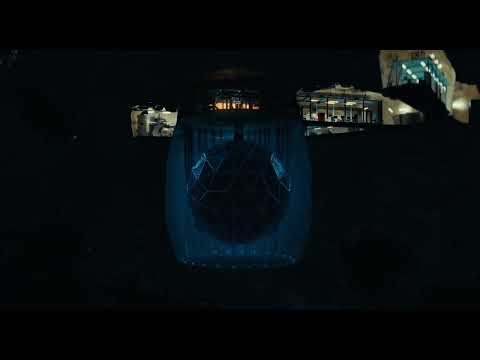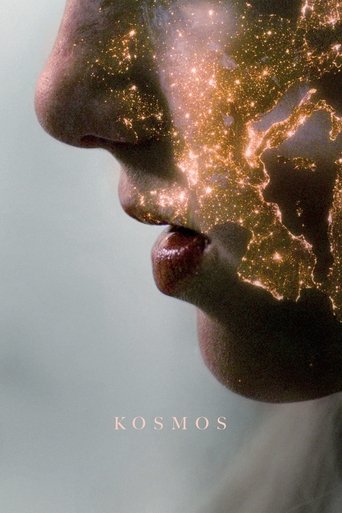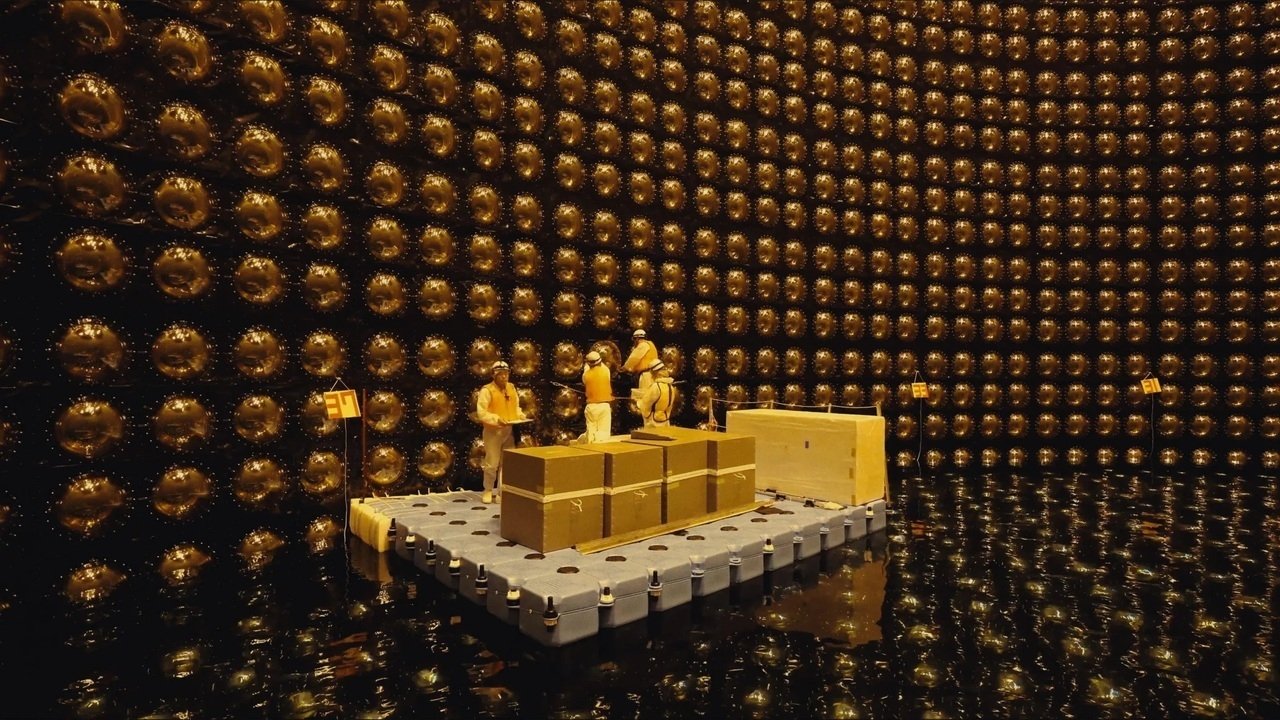
A poetic exploration of three subterranean telescopes in remote regions of Canada, Japan, and Antarctica that reveal a new way of perceiving the universe from within. Underground, we are dreaming into the earth.
Social & External
Explorer Bruce Parry visits nomadic tribes in Borneo and the Amazon in hope to better understand humanity's changing relationship with the world around us.
In 1952, Haanstra made Panta Rhei , another view of Holland through the eyes of a painter and filmmaker. Its poetic images of water, skies and clouds reflect Haanstra's own moods.
Since before time, humankind has pondered one central question...who are we, and why are we here? Many theories have been put forth by religious leaders, scientists, philosophers, writers, artists, and countless others. None of the theories have held the test of time because there is a central fact, a hidden truth so powerful it almost transcends comprehension. It is so shocking, few dare imagine it. To keep this secret question hidden countless people throughout the centuries have been misled, manipulated, lied to, and even slaughtered, their lives ruined to benefit the ruling class. The most powerful and successful people on earth do not want you to know these truths, because it would undermine their control over the earth's population of sheeple. Once this incredible truth sweeps the world, nothing will be the same. Don't be left behind on this one. Watch for...The Endless Question.
The camera floats quietly to capture the beauty that emerges from the mundane. Accompanied by Ryuichi Sakamoto's composition, Arseny Tarkovsky's poem celebrates life.
Kuwait’s constitution says that every person has the right to a job, so in some places 20 people are employed for one person’s job. In South Korea, they work so much that a policy has been introduced to turn off computers at the end of the day so that employees can’t work any more. In the US, they give up over 500 million holiday hours each year, while Amazon’s drivers are trying to form a union. Meanwhile, robots are poised to take over most jobs and put the rest of us out of work. Work is so crucial to our identity and what we spend our waking hours on that it is barely noticed anymore. A lot has happened since a group of Puritan priests invented the concept of work ethic in the 1600s, and in the 21st century the very concept of work is in many ways disintegrating. A perfect situation for a filmmaker like Swedish mastermind Erik Gandini, who travels the world to explore what the concept of work means today – if it means anything at all.
Robert Drew shows the sights and sounds from the funeral of President John F. Kennedy in November, 1963. Preserved by the Academy Film Archive in 2002.
An exploration of Rodez Cathedral and its stained glass windows: praying figures and scientific imagery. A study on color, repetition and flickering consisting of 292 photographs.
Americans are preoccupied with the news, but need an escape from many of the events reported in the news. These escapes in the past have included dime store novels. The most accessible of these escapes is what are known as the funny papers, the set of serialized comic strips that are included within many newspapers. They appeal to all socio-economic classes, and all ages. Some of the earliest known from the late 19th century include the Yellow Kid, Little Nemo, Happy Hooligan, the Katzenjammer Kids, Mutt & Jeff, and Bringing Up Father. Many cartoonists are seen in action. Some originated their characters, while others have taken over following the passing of the originator. The joy of many comic strips are the absurd and the fantastical, which are limited only by the imagination of the cartoonist. Others are grounded in reality, which add to their poignancy within the public mindset.
On July 25th, 2020, Ridley Scott and Academy Award winner Kevin Macdonald invite you to be part of Life in a Day—a historic, global documentary capturing a single day on Earth. Videos from around the world are woven into a feature film.
A film by Spetsnaz, narrated through a first person perspective, documenting his journey and the journeys of countless other men. "A Documentary Told in Four Chapters. Featuring many favorite content creators & some of the videos that impacted me the most in my journey. This Feature does not take a historical approach but is rather an expression of my experience discovering men going their own way content & the impact it had on my development. It is told from a personal individual perspective. I wanted to make this video to have closure on that chapter in my life & to leave a record of what was & what continues to evolve. The insights & shared experiences of men are more important now than ever. They certainly helped me."
This video is dedicated to your mastery of the art of realizing all your desires. The greatest gift you have been given is the gift of your imagination. Everything that now exists was once imagined. And everything that will ever exist must first be imagined.
Vyacheslavs Kashcheyevs is a man who feels the world with each single one of his atoms and breaks the stereotype about physics as a dry and impersonal field of science. In parallel to splitting electrons in the laboratory, he seeks a connection to the Almighty, and is a dreamer, an exceptional scientist, family man and educator, socially active and civically minded. What allows him, unlike most of us, to be so harmonious and seemingly omniscient? Together with quantum physicist, theological authority and Latvian patriot Vyacheslav Kashcheyev, the film searches for the code to modern-day life.
Investigates the central ideas of Marshall McLuhan using pictorial techniques and including his own comments. Examines the reaction of others to his views and points out that his interest is the impact of electronic technology on the contemporary world.
Almost one hundred years ago, the project to reduce the world to mathematical physics failed suddenly and completely: “One of the best-kept secrets of science,” physicist Nick Herbert writes, “is that physicists have lost their grip on reality.” The world, we are now told, emerges spontaneously, out of “nothing,” and constitutes a “multiverse,” where “anything that can happen will happen, and it will happen an infinite number of times.” Legendary reclusive genius Wolfgang Smith demonstrates on shockingly obvious grounds the dead end at which physics has arrived, and how we can “return, at last, to the real world.” The End of Quantum Reality introduces this extraordinary man to a contemporary audience which has, perhaps, never encountered a true philos-sophia, one as intimately at ease with the rigors of quantum physics as with the greatest schools of human wisdom.
An exploration of the link between science and beauty through the work of scientists at CERN, in Geneva.
An in-depth investigation featuring world renowned philosophers and scientists into the most profound philosophical debate of all time: Do we have free will?
This documentary explores the growing American interest in the 1970s in Eastern religions and philosophy. The teachings and lifestyles of ten spiritual teachers and their followers are presented without voice-over narration.
Thomas Hirschhorn, one of the few Swiss artists of world renown, often touches on social wounds with his provocative works. In 2013, Hirschhorn built a monument for Italian philosopher and communist Antonio Gramsci in a public housing project in the Bronx. The contentious artist collaborated with neighborhood residents whose everyday life is impacted by poverty, unemployment and crime. Conflicts and misunderstandings are bound to arise as Hirschhorn’s absolute devotion to art is confronted with the resident’s lack of prospects and fatalistic outlooks. The «Gramsci Monument» becomes a summer-long experiment where diverse worlds collide: blacks and whites, the art elite and street kids, party people and poets, politicians and philosophers. A nuanced film about art, politics and passion.
Documentary on writer/philospher Simone de Beauvoir via interviews of herself and friends supplimented with archive footage resulting in an intimate portrait avaoiding the usual clichés.
The personal stories lived by the Uncle, the Father and the Son, respectively, form a tragic experience that is drawn along a line in time. This line is comparable to a crease in the pages of the family album, but also to a crack in the walls of the paternal house. It resembles the open wound created when drilling into a mountain, but also a scar in the collective imaginary of a society, where the idea of salvation finds its tragic destiny in the political struggle. What is at the end of that line? Will old war songs be enough to circumvent that destiny?