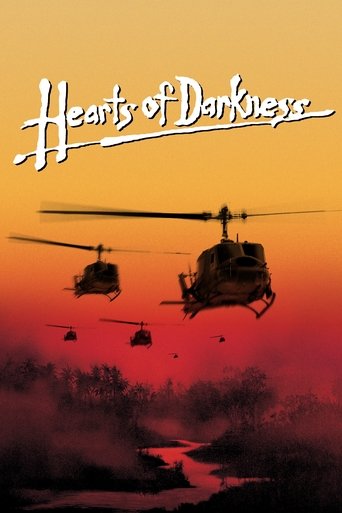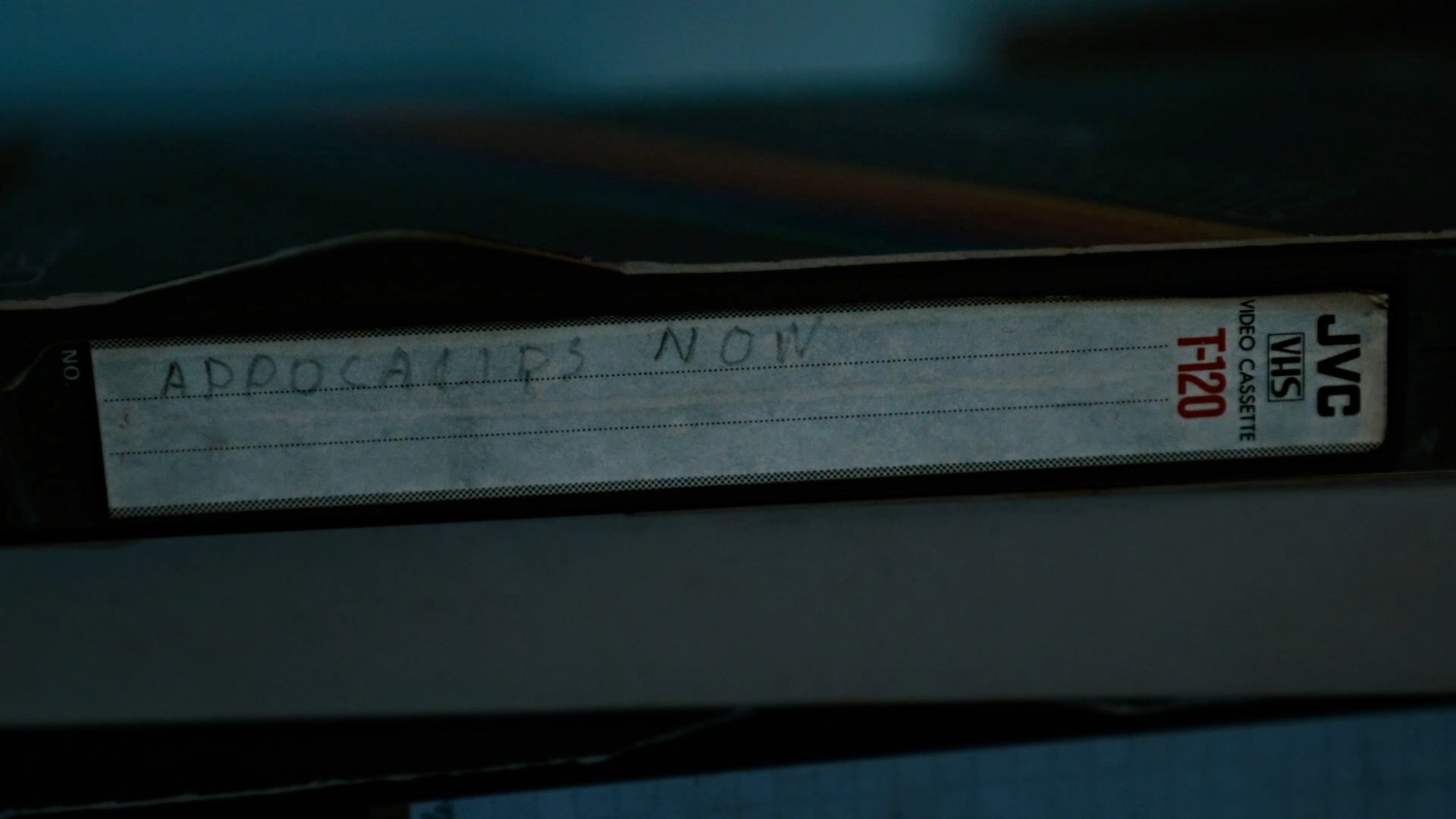
In 1975, soon after the end of the Vietnam War, Hoa Thi Le and Hue Nguyen Che fled the country on a small boat. After nine days at sea, they docked in the Philippines, where they were utilized as background extras for “Apocalypse Now.”
Social & External
Self
A frenetic found-footage documentary made entirely from “lost” unlabeled media on YouTube - weaving together nearly a thousand raw videos, each mistakenly or mindlessly uploaded under a generic filename (e.g., IMG 1326, IMG 5493…).
The late Fujio Akatsuka is revered by many Japanese artists and scholars for his developments to early comedy manga, but his contributions aren't just limited to the world of print media. Featuring commentary from family, friends, colleagues, and celebrity fans, Fujio Akatsuka's story is told with archival footage and animation, showcasing the life of the man who went beyond manga.
The film captures the pivotal events surrounding President Lyndon Johnson's historic address on March 31st, focusing on his decision to halt bombing in North Vietnam and his surprising announcement not to seek re-election. The speech aimed for peace negotiations amidst the Vietnam War, leading to diplomatic breakthroughs with North Vietnam. It also chronicles the aftermath, including societal unrest following Martin Luther King Jr.'s assassination and Johnson's efforts to maintain national unity.
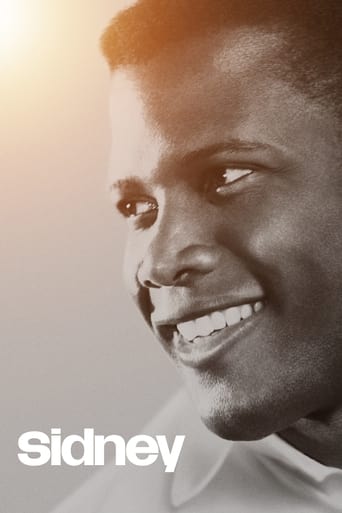
Co-curated by Jenni Olson and the late Black gay activist Karl Knapper, this entertaining showcase of vintage movie trailers traces the evolution of African American cinema through its most crucial period, 1952-1976. Filled with insights on race and social dynamics, this fascinating compendium of coming attractions explores an extensive range of stylistic approaches—Blaxploitation, Comedy, Music Bio, Plantation Drama and more—offering an outrageous joyride through motion picture history. Beyond mere camp, these marvelously condensed gems crystallize a range of African American identities and personalities, tracking the meteoric careers of Sidney Poitier, James Earl Jones, Billy Dee Williams, Richard Pryor, Pam Grier and others through their bold performances in movies both hugely popular and practically forgotten. Afro Promo provides a compact glimpse at the representation of African Americans through twenty-five dynamic years of American cinema history.
The story of Vietnam War veteran Tim Kochis, who earned a Purple Heart after being wounded in action. Kochis is a world-renowned wealth manager living in San Francisco, California. He provides some key lessons which led to his success and expresses his appreciation for the Veteran's Administration and their support.
Jack "Fingers" Ensch served in the Navy for 30 years. Recounting his experience of getting shot down and held as a POW in the infamous Hanoi Hilton, Jack explains how he was able to move forward from the experience and enjoy a full life.
A veteran creates support systems that help other veterans and their families.
The story of Noble Sissle Jr., a production company owner, community development expert, and veteran of the Vietnam War. Combining archival footage with interviews and family portraits, the film explores Sissle Jr.’s life, and the way he carries on the legacy of his father, Noble Sissle – the famous WWI Harlem Hell Fighter and leader of the Harlem Renaissance. Includes original music and footage of Noble Sissle.
In this short documentary, the life story of Buck Southworth as a U.S. Air Force aircrewman is told and narrated by his wife, Priscilla Southworth, now a Cemetery Volunteer at Cape Canaveral National Cemetery. This is a remarkable and touching documentary about bravery, mission and love.
Raymond Carlson remembers his older brother, a medic killed in action in the Vietnam War when Raymond was only seven years old. The impact of that loss lingers today more than fifty years later.
Jack Lyon used his experience as a Vietnam Veteran to help found the Veterans Village of San Diego. With a mission of offering peer support and spiritual guidance, Jack immerses himself in a life of helping young U.S. veterans.
John Baumhackl recalls the early days of the Vietnam War when more and more troops were being sent into combat every month. In 1968, John's number came up and he was drafted into the conflict. Buying a camera at his company store before shipping off, he captured many battles while in a helicopter. John was near the front lines when President Nixon made the controversial decision to push into Cambodia. In John's view, this saved American lives.
The collective life of the generation born as Jurij Gagarin became the first man in space. Vitaly Mansky has woven together a fictional biography – taken from over 5.000 hours of film material, and 20.000 still pictures made for home use. A moving document of the fictional, but nonetheless true life of the generation who grew up in this time of huge change and upheaval.
One man's journey into the world of the so-called 'Bloodline' conspiracy, at the heart of Dan Brown's The Da Vinci Code, where a secret society, the Priory of Sion, claims to have guarded evidence of the marriage of Mary Magdalene and Jesus Christ, their children and their descendants down through the centuries.
Baldwin’s “pseudo-pseudo-documentary” presents a factual chronicle of US intervention in Latin America in the form of the ultimate conspiracy theory, combining covert action, environmental catastrophe, space aliens, cattle mutilations, killer bees, religious prophecy, doomsday diatribes, and just about every other crackpot theory broadcast through the dentures of the modern paranoiac.
“In a meeting between history and the present, this docufiction takes us on a unique journey through the Ria de Aveiro, through the curious eyes of a child who discovers, for the first time, the Vouga Class boats. Guided by an adult, a symbol of the generations that preserve this centuries-old tradition, the child enters a world of memories, knowledge and traditions that resist the test of time. Between workshops and shipyards, conversations with master builders and walks along the waters of the estuary, the story unfolds like a bridge between generations. This docufiction interweaves reality and fiction, testimonies and dramatization, showing how cultural heritage is transmitted, not only through words, but through lived experiences. More than telling the story of the Vougas, this film celebrates those who keep them alive, and those who will one day carry them forward.”
Nearly Really Me follows the story of Karla, a 35 year old professional who knows her life is fine, and yet feels that fine isn't good enough, she wants to feel alive. Trouble is, she has no real idea how to go about it. So she outsources her existential crisis to an internationally respected medium for direction and soon finds herself embarking on a trip to Vietnam for their 5 day spiritual conference, where participants gain knowledge, wisdom and insights delivered unlike any other in the world.
Brief scenes of death related material: mortuaries, accidents and police work are filmed by TV crews and home video cameras. Some of it is most likely fake, some not as much.
The third installment of the infamous "is it real or fake?" mondo series sets its sights primarily on serial killers, with lengthy reenactments of police investigations of bodies being found in dumpsters, and a staged courtroom sequence.
Pete Postlethwaite stars as a man living alone in the devastated future world of 2055, looking at old footage from 2008 and asking: why didn’t we stop climate change when we had the chance?
A deep dive into the making of the Paranormal Activity films with first time ever interviews with cast and crew, never-before-seen footage from the movies, and a preview of the seventh installment in the franchise.
A visual montage portrait of our contemporary world dominated by globalized technology and violence.
A chronicle of the production problems — including bad weather, actors' health, war near the filming locations, and more — which plagued the filming of Apocalypse Now, increasing costs and nearly destroying the life and career of Francis Ford Coppola.
Using archival footage, cabinet conversation recordings, and an interview of the 85-year-old Robert McNamara, The Fog of War depicts his life, from working as a WWII whiz-kid military officer, to being the Ford Motor Company's president, to managing the Vietnam War as defense secretary for presidents Kennedy and Johnson.
The documentary recounts the world's first nuclear attack and examines the alarming repercussions. Covering a three-week period from the Trinity test to the atomic bombing of Hiroshima, the program chronicles America's political gamble and the planning for the momentous event. Archival film, dramatizations, and special effects feature what occurred aboard the Enola Gay (the aircraft that dropped the bomb) and inside the exploding bomb.
During the chaotic final weeks of the Vietnam War, the North Vietnamese Army closes in on Saigon as the panicked South Vietnamese people desperately attempt to escape. On the ground, American soldiers and diplomats confront a moral quandary: whether to obey White House orders to evacuate only U.S. citizens.
What happened after Einstein fled Nazi Germany? Using archival footage and his own words, this docudrama dives into the mind of a tortured genius.
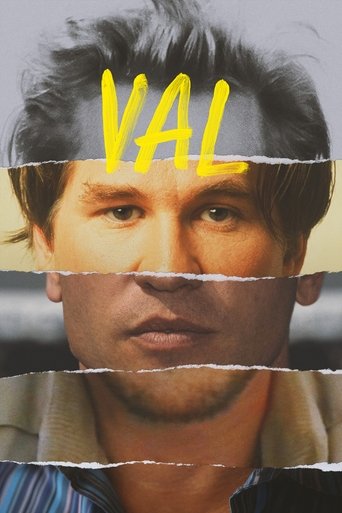
For over 40 years Val Kilmer, one of Hollywood’s most mercurial and/or misunderstood actors has been documenting his own life and craft through film and video. He has amassed thousands of hours of footage, from 16mm home movies made with his brothers, to time spent in iconic roles for blockbuster movies like Top Gun, The Doors, Tombstone, and Batman Forever. This raw, wildly original and unflinching documentary reveals a life lived to extremes and a heart-filled, sometimes hilarious look at what it means to be an artist and a complex man.
A disturbing collection of 1940s and 1950s United States government-issued propaganda films designed to reassure Americans that the atomic bomb was not a threat to their safety.
When Allied forces liberated the Nazi concentration camps in 1944-45, their terrible discoveries were recorded by army and newsreel cameramen, revealing for the first time the full horror of what had happened. Making use of British, Soviet and American footage, the Ministry of Information’s Sidney Bernstein (later founder of Granada Television) aimed to create a documentary that would provide lasting, undeniable evidence of the Nazis’ unspeakable crimes. He commissioned a wealth of British talent, including editor Stewart McAllister, writer and future cabinet minister Richard Crossman – and, as treatment advisor, his friend Alfred Hitchcock. Yet, despite initial support from the British and US Governments, the film was shelved, and only now, 70 years on, has it been restored and completed by Imperial War Museums under its original title "German Concentration Camps Factual Survey".
A documentary shot by filmmakers all over the world that serves as a time capsule to show future generations what it was like to be alive on the 24th of July, 2010.
The definitive documentary on the history of nudity in feature films from the early silent days to the present, studying the changes in morality that led to the use of nudity in films while emphasizing the political, sociological and artistic changes that shaped that history. Skin will also study the gender inequality in presenting nude images in motion pictures and will follow the revolution that has created nude gender equality in feature films today.
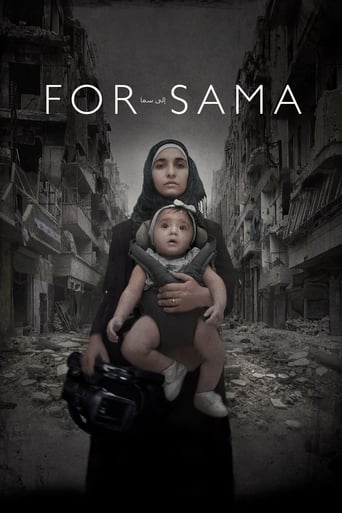
A love letter from a young mother to her daughter, the film tells the story of Waad al-Kateab’s life through five years of the uprising in Aleppo, Syria as she falls in love, gets married and gives birth to Sama, all while cataclysmic conflict rises around her. Her camera captures incredible stories of loss, laughter and survival as Waad wrestles with an impossible choice– whether or not to flee the city to protect her daughter’s life, when leaving means abandoning the struggle for freedom for which she has already sacrificed so much.
As the Russian invasion begins, a team of Ukrainian journalists trapped in the besieged city of Mariupol struggle to continue their work documenting the war's atrocities.
Carefully picked scenes of nature and civilization are viewed at high speed using time-lapse cinematography in an effort to demonstrate the history of various regions.
With a team of the world's foremost historic and marine experts as well as friend Bill Paxton, James Cameron embarks on an unscripted adventure back to the wreck of the Titanic where nearly 1,500 souls lost their lives almost a century ago.
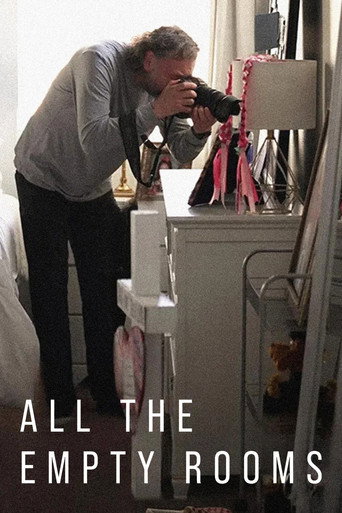
A journalist and a photographer set out to memorialize the bedrooms left behind by children killed in school shootings.
Takes us to locations all around the US and shows us the heavy toll that modern technology is having on humans and the earth. The visual tone poem contains neither dialogue nor a vocalized narration: its tone is set by the juxtaposition of images and the exceptional music by Philip Glass.
The most famous murder scene in movie history comprises 78 camera settings and 52 cuts: the shower scene in Alfred Hitchcock's Psycho. 78/52 tells the story of the man behind the curtain and his greatest obsession.