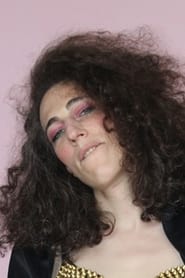
Through post-porn, performance and wrestling, Puck tries to figure out her place in the world.
Social & External
Self
(archive footage)
Documentary filmmaker Amy Berg investigates the life of 30-year pedophile Father Oliver O'Grady and exposes the corruption inside the Catholic Church that allowed him to abuse countless children. Victims' stories and a disturbing interview with O'Grady offer a view into the troubled mind of the spiritual leader who moved from parish to parish gaining trust ... all the while betraying so many.
For over 30 years, Martin Bisi has been recording music from his studio in Gowanus, Brooklyn. He has worked with many influential musicians, including Sonic Youth, Swans, Herbie Hancock, Brian Eno and the Dresden Dolls. Now though, he finds himself squeezed in by the approaching gentrification of his neighborhood.
Alanis Obomsawin, a North American Indian who earns her living by singing and making films, is the mother of an adopted child. She talks about her life, her people, and her responsibilities as a single parent. Her observations shake some of our cultural assumptions.
In this evocative meditation, a disturbing link is made between the resource extraction industries’ exploitation of the land and violence inflicted on Indigenous women and girls. Or, as one young woman testifies, “Just as the land is being used, these women are being used.”
Hailed by John Grierson as 'one of the best descriptions of life in the country anybody has yet made', the film follows a young couple torn between the choice of emigration to Australia or remaining to work their croft in Shetland.
From: Light In The Attic Records: ‘Baby’ has been a staple on just about every playlist/mixtape I’ve assembled in the past 3 years. It is nothing short of sublime.” – Ariel Pink Pacific Northwest isolation mixed with wide-eyed ambition, a strong sense of family and the gift of music proved to be quite the combination for teenage brothers Donnie and Joe Emerson. Originally released in 1979, Dreamin’ Wild is the sonic vision of the talented Emerson boys, recorded in a family built home studio in rural Washington State. Situated in the unlikely blink-and-you-missed-it town of Fruitland and far removed from the late 1970s punk movement and the larger disco boom, Donnie and Joe tilled their own musical soil, channeling bedroom pop jams, raw funk, and yacht rock.
Film archivist and former director of the San Francisco Lesbian and Gay Film Festival Jenni Olson created this fast-paced and often funny, campy 75-minute film comprised entirely of spliced together movie trailers. Some of the segments have themes such as a breezy look back at John Travolta's career that includes trailers from such films as Saturday Night Fever, Staying Alive, Grease, Perfect, and Moment by Moment. Other trailers include Mae West in Sextette, the disco camper Thank God It's Friday, Raquel Welch in Kansas City Bomber, Pier Paolo Pasolini's The Gospel According to St. Matthew and the rarely seen Chastity, the serious acting debut of Cher.
A portrait of the masterful author whose novels were adapted into the classics 'The Birds,' 'Jamaica Inn,' and 'Rebecca."
The Director reflects upon and seeks to understand the causes and the events that lead to her drug-addicted prostitute daughter being murdered at the age of 26.
The current trend to render prostitution a profession "as any other" is belied by women who were themselves prostitutes. With clarity and courage, the women in this film reveal the hidden face of that so-called "sex work". They are 22, 34 or 48 years old; they live in Montreal, Quebec and Ottawa - They have recently given up prostitution, or are trying to escape it. These women are leading the bitter fight to turn their lives around and it is a long and lonely struggle fraught with difficulties. Shot in a Cinéma Vérité style, The Fallacy (L'imposture) takes us to the heart of their realities.
Canadian director Catherine Annau's debut work is a documentary about the legacy of Pierre Trudeau, the long-running Prime Minister of Canada, who governed during the 1970s. The film focuses particularly on Trudeau's goal of creating a thoroughly bilingual nation. Annau interviews eight people in their mid-30s on both sides of the linguistic divide. One tells of her life growing up in a community of hard-core Quebec separatists, while another, a yuppie from Toronto, recalls believing as a child that people in Montreal got drunk and had sex all day long. Annau has all of the interviewees discuss how Trudeau's policies affected their lives and their perceptions of the other side, in this issue that strikes to the heart of Canada's national identity.
Chick Strand's SOFT FICTION is a personal documentary that brilliantly portrays the survival power of female sensuality. It combines the documentary approach with a sensuous lyrical expressionism. Strand focuses her camera on people talking about their own experience, capturing subtle nuances in facial expressions and gestures that are rarely seen in cinema. Preserved by the Academy Film Archive in partnership with The Film Foundation in 2015.
A woman asks "what's the meaning of democracy?" as she looks back over the politics of Kenya from the 1960s to the 2007 election.
The Artist Is Absent reveals the true face of the enigmatic Belgian designer who appears here as never before. Featuring some of the most distinguished names in the fashion industry, such as fashion journalist Suzy Menkes, designers Jean Paul Gaultier and Raf Simons and fashion retail entrepreneur Geert Bruloot – who was the first to discover the enormous talent of Martin Margiela.
While serving with the African Union, former Marine Capt. Brian Steidle documents the brutal ethnic cleansing occuring in Darfur. Determined that the Western public should know about the atrocities he is witnessing, Steidle contacts New York Times reporter Nicholas Kristof, who publishes some of Steidle's photographic evidence.
If your bedroom has become too small a stage for your air guitar antics, take inspiration from the competitors featured here as they battle their way from the inaugural U.S. Air Guitar Championship to the world championship in Oulu, Finland. Along the way, filmmaker Alexandra Lipsitz documents the fierce rivalries that develop as would-be rock legends vie for top honors in technical accuracy, stage presence and "airness."
The film does not have a plot per se; it mixes documentary footage, along with standard movie scenes, to give the audience the mood of Germany during the late 1970s. The movie covers the two-month time period during 1977 when a businessman was kidnapped and later murdered by the left-wing terrorists known as the RAF-Rote Armee Fraktion (Red Army Fraction). The businessman had been kidnapped in an effort to secure the release of the original leaders of the RAF, also known as the Baader-Meinhof gang. When the kidnapping effort and a plane hijacking effort failed, the three most prominent leaders of the RAF, Andreas Baader, Gudrun Ensslin, and Jan-Carl Raspe, all committed suicide in prison. It has become an article of faith within the left-wing community that these three were actually murdered by the state.
Steyerl’s film traces the impact of an influx of transnational companies on the city dwellers of Berlin in post-reunification Germany. The effect of the changing economy and politics on the city and its inhabitants is echoed through their physical relocation to its outer edges. In 1990, squatters proclaim a socialist republic on the death strip. Eight years later, the new headquarters of Mercedes Benz are built in the same location. The film makes use of slow super-impositions to uncover a journey across changing architectural and cultural boundaries. "The Empty Centre" tries to give a voice and a history to those who continue to be marginalised by the simultaneous dismantling and reconstruction of the borders which they are trying to cross.
Three Alaska Native women work to save their endangered language, Kodiak Alutiiq, and ensure the future of their culture while confronting their personal demons. With just 41 fluent Native speakers remaining, mostly Elders, some estimate their language could die out within ten years. The small community travels to a remote Island, where a language immersion experiment unfolds with the remaining fluent Elders. Young camper Sadie, an at-risk 13 year old learner and budding Alutiiq dancer, is inspired and gains strength through her work with the teachers. Yet PTSD and politics loom large as the elders, teachers, and students try to continue the difficult task of language revitalization over the next five years.