"The Search Begins"
What forms might life take in the Solar System and beyond? In the Academy's newest original planetarium show, see how a deeper understanding of Earth might help us locate other living worlds, light years away.
Social & External
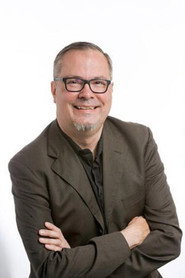
Narrator (voice)
With a wealth of fantastic archive footage and a series of revealing interviews with those who had first-hand experience, filmmaker Vicki Lesley tells the turbulent story of the West’s love-hate relationship with a nuclear power over the past seventy years. Capturing both the tantalising promise and the repeated disappointments of this singular technology, the film reveals how the post-war, romantic fantasy of an Atom-powered future developed into the stormy, on-off relationship still playing out today. A tale of scientific passion and political intrigue all wrapped up in the packaging of a sentimental screen melodrama.
The film discusses the evolution and potential of using light waves, particularly coherent light, for communication. It highlights the development of lasers at Bell Telephone Laboratories, explaining how they produce a highly controlled and intense beam of light that could revolutionize communication. The film emphasizes the vast possibilities of lasers, including applications in telecommunications, surgery, and exploring the universe, suggesting that this technology represents a significant step in humanity's understanding and use of light.
CERN and the University of California-Santa Barbara are collaborating in the search for the elusive substance that physicists and astronomers believe holds the universe together -- dark matter. Where is this search now in the realm of particle physics and what comes next?
Cave paintings and lunar calendars exist in the caves and remains of prehistoric hunters studied recently. What if Prehistoric Man were clever enough to develop in depth scientific knowledge? As unlikely as it may seem, new data tend to prove that Prehistoric Man actually invented Astronomy!

This feature-length documentary is a portrait of eclipse chasers, people for whom solar eclipses - among nature's more spectacular phenomena – are a veritable obsession. The film follows 4 of them as they travel incredible distances to witness the last total eclipse of the millennium as it sweeps eastward across Europe to India. At various points along the way enthusiasts Alain Cirou in France, Paul Houde in Austria, Olivier Staiger in Germany and Debasis Sarkar in India offer their impressions of the historic event.
In this two-part Channel 4 series, Professor Richard Dawkins challenges what he describes as 'a process of non-thinking called faith'. He describes his astonishment that, at the start of the 21st century, religious faith is gaining ground in the face of rational, scientific truth. Science, based on scepticism, investigation and evidence, must continuously test its own concepts and claims. Faith, by definition, defies evidence: it is untested and unshakeable, and is therefore in direct contradiction with science. In addition, though religions preach morality, peace and hope, in fact, says Dawkins, they bring intolerance, violence and destruction. The growth of extreme fundamentalism in so many religions across the world not only endangers humanity but, he argues, is in conflict with the trend over thousands of years of history for humanity to progress to become more enlightened and more tolerant.
An educational film about the nervous system produced by Encyclopædia Britannica Films, an educational film production company in the 20th century owned by Encyclopædia Britannica Inc.
An incredible travel through space and time between the walls of the Paris Observatory, which is celebrating its 350th birthday. Place of discoveries such as speed of light or Neptune’s existence, it is still today one of the oldest operating observatories and the greatest hub in the world for astronomy and astrophysics researches, second only to Harvard.
This movie explores the saga of the telescope over 400 years - the historical development, the scientific importance, the technological breakthroughs, and also the people behind this ground-breaking invention, their triumphs and failures.
Billions of years ago, Venus may have harbored life-giving habitats similar to those on the early Earth. Today, Earth's twin is a planet knocked upside down and turned inside out. Its burned-out surface is a global fossil of volcanic destruction, shrouded in a dense, toxic atmosphere. Scientists are now unveiling daring new strategies to search for clues from a time when the planet was alive.
Before the joint NASA/ESA Cassini-Huygens mission, humanity only knew what had been learned, decades earlier, with the previous limited, rapid "fly-by" Pioneer and Voyager missions. Cassini-Huygens spent more than 13 years in wildly varied orbits around Saturn, allowing the spacecraft to pass near many of its moons, as well as execute a soft-landing of its Huygens lander on the moon Titan. By mission end, it accumulated a mountain of imagery and scientific data that will continue to be studied for years to come. This film is a testament to the amazing efforts of the scientists who planned and executed the mission. It combines breathtaking images, movies, and a variety of animations to take the viewer into Saturn's complex system of rings and moons, as well as stepping viewers through some of the more exciting scientific discoveries made over the course of the elaborately complex mission.
This 1971 color anti-drug use and abuse film was produced by Concept Films and directed by Brian Kellman for Encyclopedia Britannica. “Weed: The Story of Marijuana” combines time-lapse, montage, illustrations, animation (by Paul Fierlinger and emigre Pavel Vošický) and dramatized, documentary-style interviews to survey the evolving role of cannabis in U.S. society, with emphasis on the legal risks faced by young people. A unique score of experimental synthesizer music is provided by Tony Luisi on an EMS VCS 3 “Putney”
The film features amazing scenes of places never before seen gathered by key space missions that culminated with groundbreaking discoveries in 2015. It features a spectacular flight though the great cliffs on comet 67P, a close look at the fascinating bright "lights" on Ceres, and the first ever close ups of dwarf binary planet Pluto/Charon and its moons.
The sun is the miracle that makes everything possible - but also the greatest danger. For the first time, a feature-length documentary is dedicated to the search for the significance of our home star for mankind, science and nature. Thanks to the researchers from the American space agency NASA, who work at the Canary Islands observatories in the hottest and coldest places on the planet.
Before the internet. Before social media. Before breaking news. The victims of Thalidomide had to rely on something even more extraordinary to fight their corner: Investigative journalism. This is the story of how Harold Evans fought and won the battle of his and many other lives.
At only twelve inches long, the menhaden are a keystone species in the East Coast's marine ecosystem, yet their numbers are threatened by industrial-scale fishing operations in the Chesapeake Bay.
Part of the Almost Famous series. Jocelyn Bell was a graduate student at Cambridge in 1967 when she pushed through the skepticism from her superiors to make one of the greatest astrophysical discoveries of the twentieth century. While Jocelyn was belittled and sexually harassed by the media, the Nobel Prize was awarded to her professor and his boss.
A crash course in the professional and scientific work related to the field of venomous herpetology. The film covers diverse topics, including biochemistry, biology, law and public policy, conservation, venom collection, animal husbandry, antivenom production, emergency medicine, veterinary medicine, toxicology and toxinology. The film follows the personal and working lives of prominent experts in the field, beginning with their childhood interest through their professional careers, with particular emphasis on the sciences related to their work.