A migrant boat has been stranded in the Mediterranean Sea for 30 hours. As authorities ignore calls for help, the Sea-Watch Crew, an NGO, launches an urgent search.
Social & External

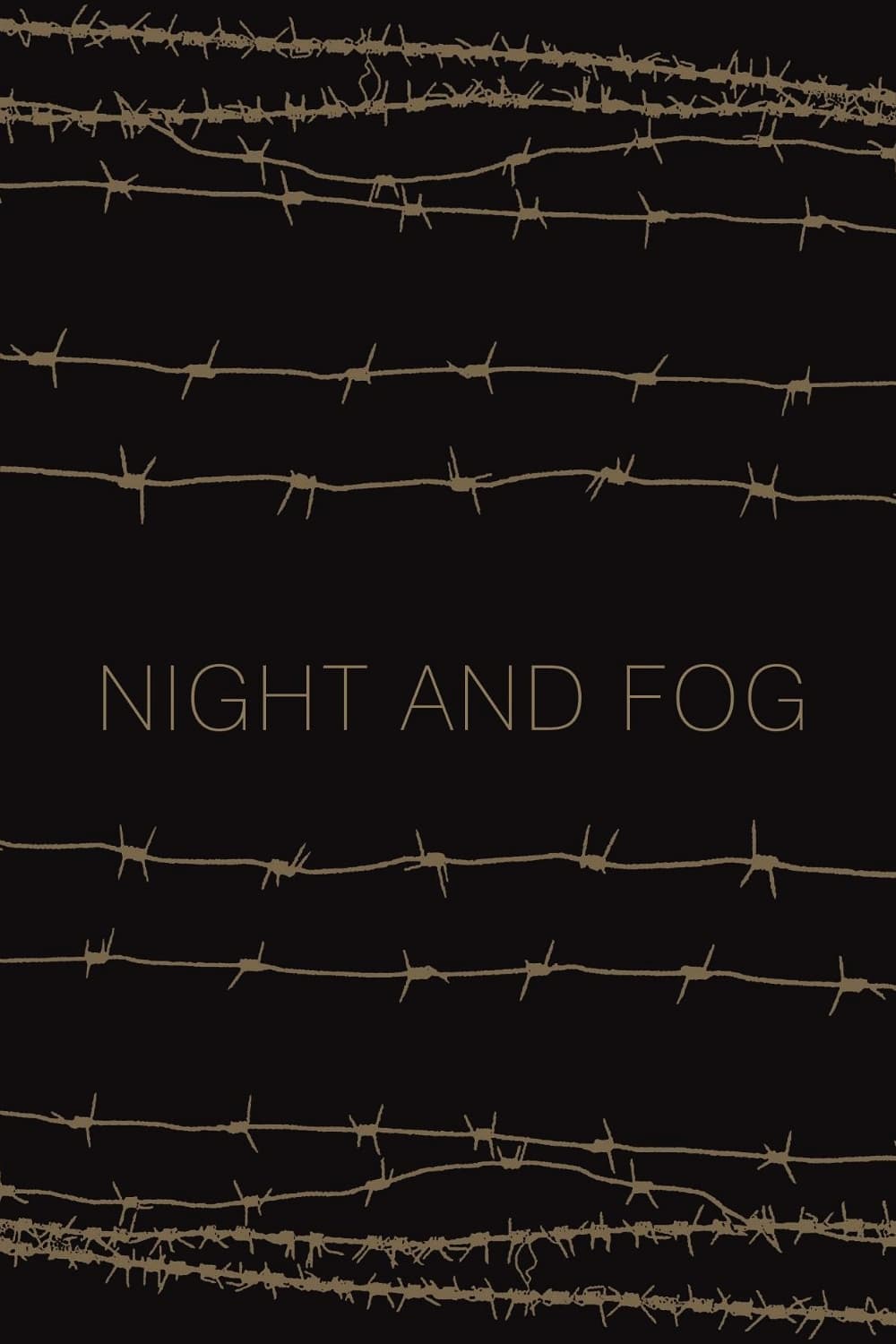
Filmmaker Alain Resnais documents the atrocities behind the walls of Hitler's concentration camps.
Max S. reveals how he built a drug empire from his childhood bedroom in this story that inspired the series "How to Sell Drugs Online."
This anthology film, whose Chinese title begins with a romantic name for human excrement, premiered internationally at Rotterdam and won Best Screenplay from the Hong Kong Film Critics Society. A variety of Hong Kong people wrestle with nostalgia when facing an uncertain future. Their stories give way to a documentary featuring a young barista turned political candidate.
A docu-film that traces the victorious ride of Mancini's Azzurri, from the debut match to the final against England. A troupe lived with the Azzurri for a month, to bring the spectators into the lives of the players and all the members of the staff, between training sessions, matches, travels and celebrations. An adventure told through the voices of the protagonists, who confided dreams, joys, pains and hopes to the cameras. "Blue Dream, the road to Wembley" is the completion of a project started a year ago together with the FIGC, to tell the national team's approach to the European Championships through the 4 episodes aired in the days immediately preceding the European Championship, bringing the new television language of the docu-series to one of the most important time slots of the first generalist network. "Blue Dream, the road to Wembley" is a project of the New Formats Development Department
After the World War I, Mussolini's perspective on life is severely altered; once a willful socialist reformer, now obsessed with the idea of power, he founds the National Fascist Party in 1921 and assumes political power in 1922, becoming the Duce, dictator of Italy. His success encourages Hitler to take power in Germany in 1933, opening the dark road to World War II. (Originally released as a two-part miniseries. Includes colorized archival footage.)

Paintings, performances, experiments, electronic music sounding in the spaces of two old houses in a small Italian town, heated conversations about contemporary art, touching meetings with the closest people and places in Bulgaria after 50 years of separation. "Flying with Fins" is a film about the constant search for meaning in art and life. Alzek Misheff, artist - rebel and experimenter, leads us in this philosophical and aesthetic journey through time, space and ideas.
Pictures of the Mediterranean made with bread, oil and wine. In one meal the history, geography, economy, climate, culture and people of the Mediterranean. Close up of threshing floors, threshing floors, mills. Dietary habits, production methods, daily routines together with the natural and built environment make up the cultural body of the most interesting, perhaps, man-made environment in history. A culture that runs as a commonplace even in seemingly different worlds. The Mediterranean emerges in a sea of convergence and meeting without, however, ignoring the dynamics of the different.
Amanda Knox served four years in an Italian prison for the murder of her British flatmate Meredith Kercher in Perugia in 2007, always insisting on her innocence. In 2011, she was acquitted on the basis of DNA evidence but prosecutors successfully appealed and her acquittal was struck down. In 2014 she was again found guilty in absentia after a retrial and sentenced to 28 years and six months in jail. The saga came to and end when Italy's highest court overturned the convictions of Ms Knox and her former boyfriend, Italian student Raffaele Sollecito in March 2015. Known burglar Rudy Guede was arrested a short time later following the discovery of his bloodstained fingerprints on Kercher's possessions. He was later found guilty of murder in a fast-track trial and is currently (as of 2019) serving a 16-year prison sentence.
How could a German Wehrmacht soldier become a celebrated soccer idol of the Britons in the post-war period? The documentary by Radio Bremen shows the moving life story of the soccer star of the 1950s in a torn Europe and how an enemy became a friend. With his legendary appearance in the English Cup Final 1956, in which he played until the end despite a broken neck, Bert Trautmann set up a memorial for himself in the history of sport. Already in the same year, he is chosen as England’s footballer of the year, and by his club Manchester City even as best player of all times. Bernhard “Bert” Trautmann is one of the most popular and best-known soccer players in England.
In focusing his attention on the competitors of Mr Gay Syria, director Ayse Toprak shatters the one-dimensional meaning of “refugee”. Using the pageant as a means of escape from political persecution, the organiser Mahmoud — already given asylum in Berlin — hopes to offer the winner a chance to travel as well as bring international attention to the life-threatening situations faced by LGBT Syrians.
Home is where we grow up or settle permanently. And this home is always shaped by nature. Today, we human beings change and shape this more than any law of nature. HEIMAT NATUR is a visually stunning journey through the nature of our homeland, from the peaks of the Alps to the coasts and the depths of the North and Baltic Seas. In between is a cinematic foray through steaming forests, shimmering moors, over rose-blossoming heaths and the colorful cultural landscape around our villages and towns. In extraordinary images this nature is shown from its most beautiful side, examining the state of the native habitats. Slow-motion and time-lapse photography as well as intimate shots of familiar and unfamiliar species, some filmed for the first time, making the film a cinematic nature experience for the whole family.
The youngest protagonist of the documentary is Wartburg, an automobile over 50 years of age. The car is still on the road, driven by Bogdan, a 70-year-old who is taking his mother to visit the German factory where she was forced to work during WWII. In this road movie which takes place between Majdanpek and Germany, the trip becomes a journey into the past, retracing memories from the war and revealing a unique relationship between an old son and his elderly mother.
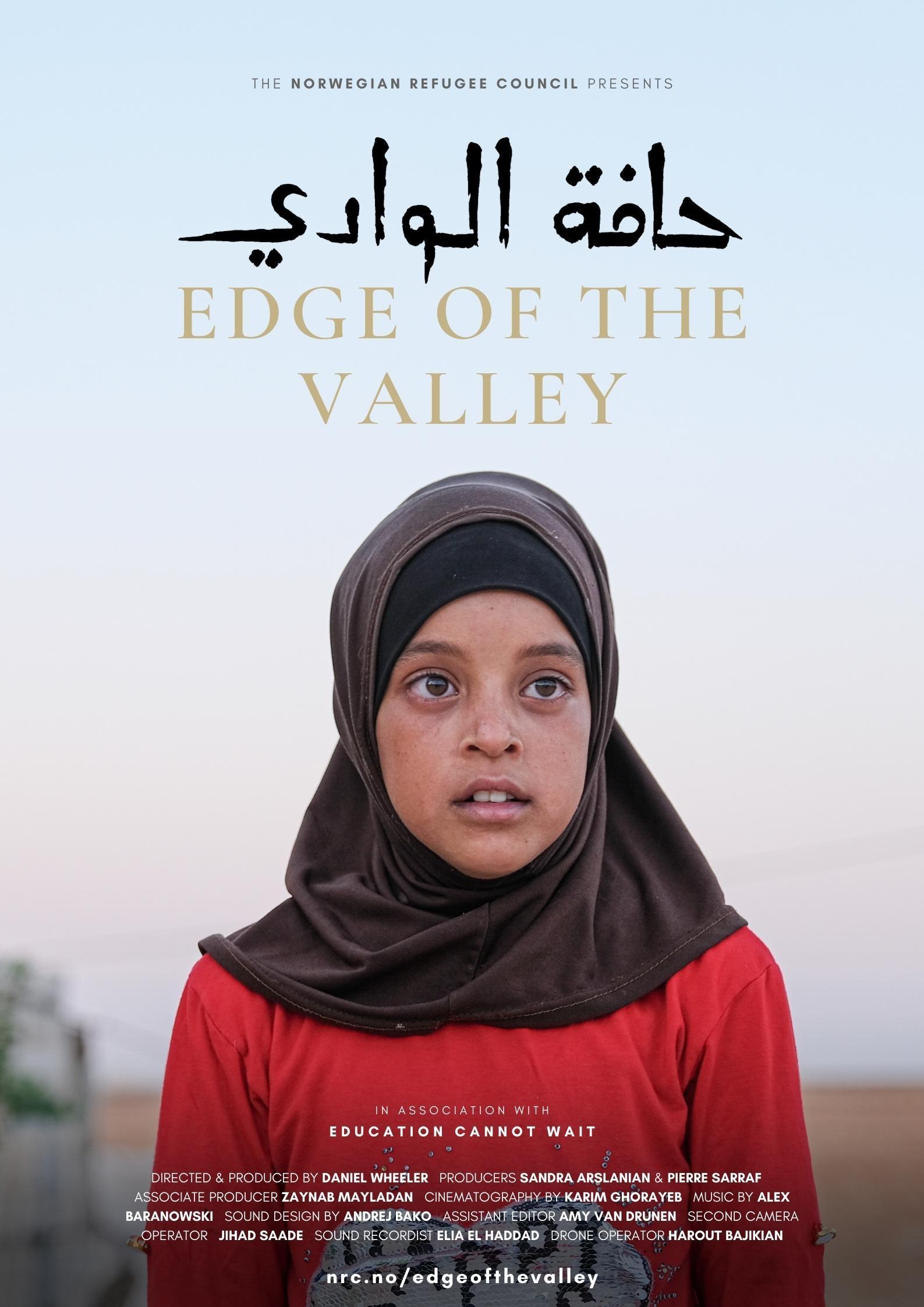
An estimated 12 million people live in refugee camps worldwide and only 0.1% are resettled, repatriated, or integrated into normal society each year. The feature-length documentary.
Australian filmmaker Sophia Turkiewicz investigates why her Polish mother abandoned her and uncovers the truth behind her mother's wartime escape from a Siberian gulag, leaving Sophia to confront her own capacity for forgiveness.
Helke Sander interviews multiple German women who were raped in Berlin by Soviet soldiers in May 1945. Most women never spoke of their experience to anyone, due largely to the shame attached to rape in German culture at that time.
This documentary follows various migratory bird species on their long journeys from their summer homes to the equator and back, covering thousands of miles and navigating by the stars. These arduous treks are crucial for survival, seeking hospitable climates and food sources. Birds face numerous challenges, including crossing oceans and evading predators, illness, and injury. Although migrations are undertaken as a community, birds disperse into family units once they reach their destinations, and every continent is affected by these migrations, hosting migratory bird species at least part of the year.
Enrico Naso is an undertaker in Lampedusa. Constantly confronted with the death that lurks everywhere on this remote rock in the middle of the Mediterranean Sea, Enrico has chosen life, immersing us in what it means to be human.
Something from there is a short film on the substance of our original lands. Weaving between the voices of the artist’s parents, one a refugee and the other not, the film is personal, yet evokes a shared Palestinian experience.
This documentary analyses the perverse monetary policies initiated before the euro inception. It focuses on the case of Spain and the terrible housing bobble that developed there.
Pauline, Norah, Kristina and others wait for hours, sitting under a hut deep in the Bois de Vincennes. In front of the administrative detention center (CRA) in Paris, they have all come to see their loved ones locked up. Lives on hold, awaiting deportation or release. On this stage, these women tell their stories, talk to each other, share their experience, their revolt and their dreams with new visitors. They are the mirror of migrant detention, its reverse view.