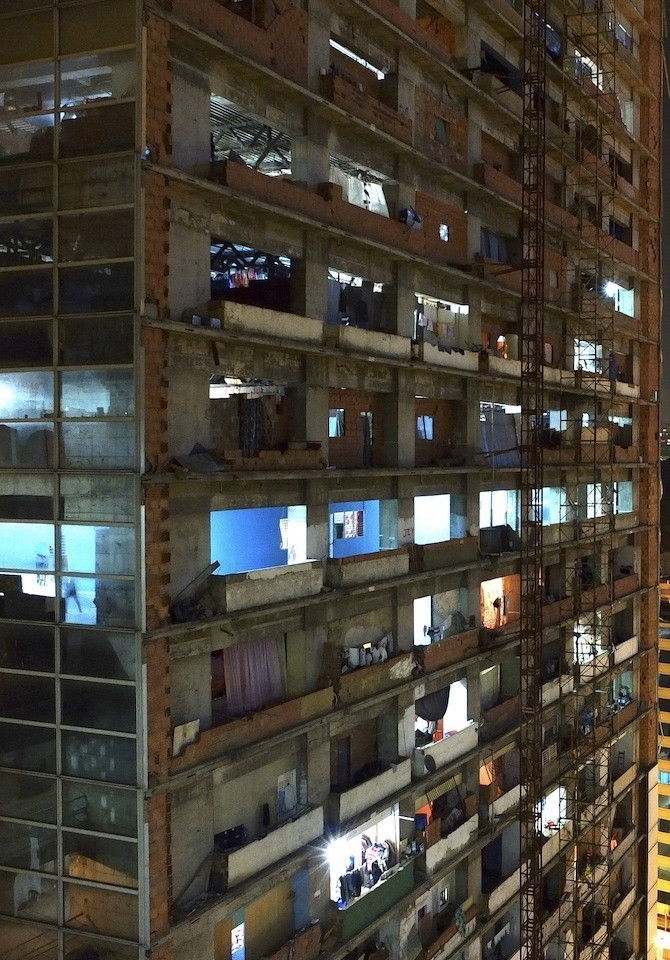
A squatted bank tower in downtown Caracas is transformed into a socialist micro-society by 3000 people. RUINA tells about difficulties and achievements by building up a community in a vertical city.

Social & External
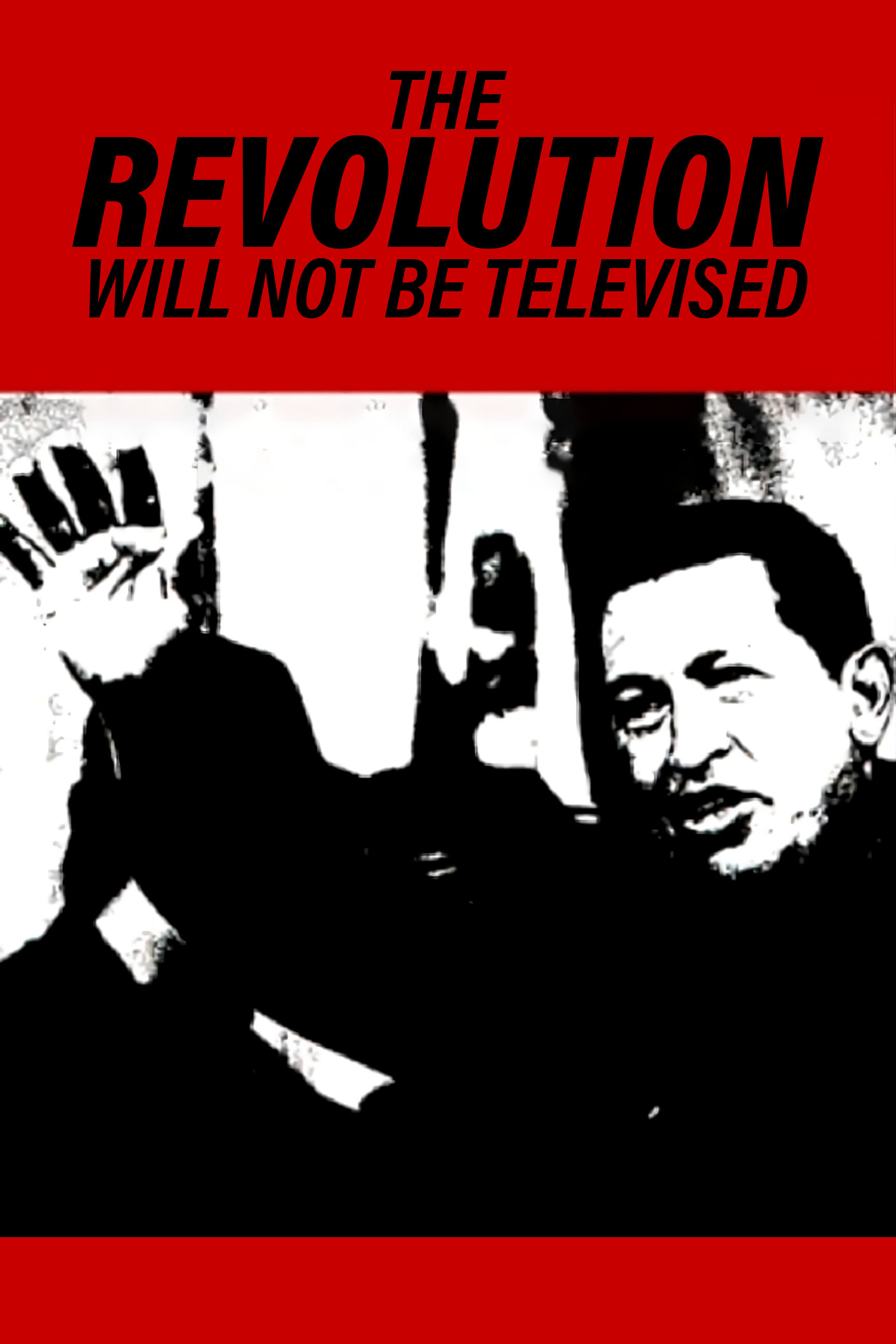
Hugo Chavez was a colourful, unpredictable folk hero who was beloved by his nation’s working class. He was elected president of Venezuela in 1998, and proved to be a tough, quixotic opponent to the power structure that wanted to depose him. When he was forcibly removed from office on 11 April 2002, two independent filmmakers were inside the presidential palace.
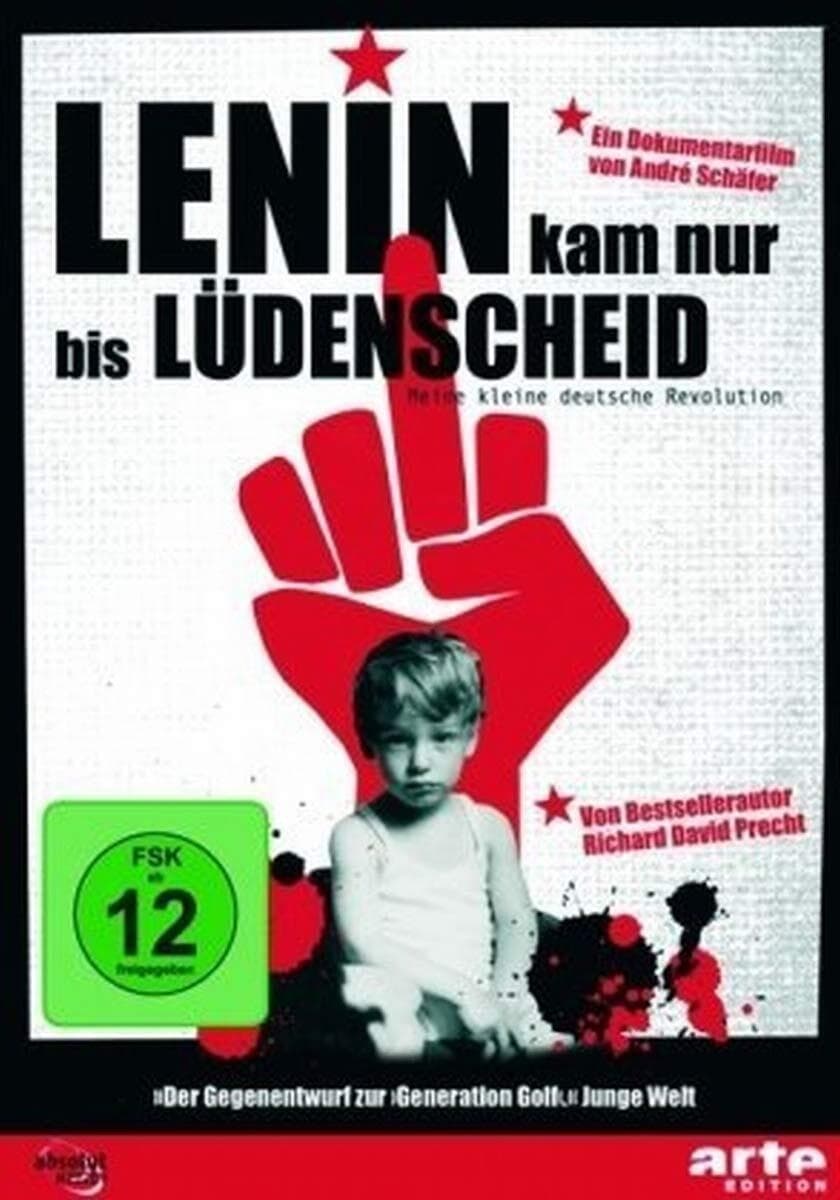
The free, almost naive view from the perspective of a child puts the "68ers" in a new, illuminating light in the anniversary year 2008. The film is a provocative reckoning with the ideological upbringing that seemed so progressive and yet was suffocated by the children's desire to finally grow up. With an ironic eye and a feuilletonistic style, author Richard David Precht and Cologne documentary film director André Schäfer trace a childhood in the West German provinces - and place the major events of those years in completely different, smaller and very private contexts.
A portrait of the leading female Bolshevik (and later Worker’s Opposition) revolutionary leader Alexandra Kollontai using her own words.
Music documentary about Billo Frómeta by director Rafael Marziano Tinoco from Venezuela.
A documentary on the late American entertainer Dean Reed, who became a huge star in East Germany after settling there in 1973.
Michael Moore's view on how the Bush administration allegedly used the tragic events on 9/11 to push forward its agenda for unjust wars in Afghanistan and Iraq.
Three centuries of Venezuela's history as a Spanish colony are considered from economic, political and social standpoints; evocations of the past are compared to the present. Based on the ideas and research of Federico Brito Figueroa, Alfredo A. Alfonso, Miguel A. Saignes, Josefina Jordan, and Thaelman Urgelles among others.
This documentary tells the story behind "Indeleble", the album with which Los Mesoneros received four Latin Grammy nominations and toured many countries. "10 Años de Indeleble" features interviews, stories, and songs that had never seen the light of day, along with a live show in which Los Mesoneros perform, in order, the songs that were part of that first record.
The film consists of video tapes made by the filmmaker’s father documenting daily scenes of family life, family celebrations, and holidays over the course of fifteen years. The tapes are a mixture of the personal and the political – the father was politically engaged in the revolutionary movement that brought Hugo Chávez to power. The family’s life becomes a backdrop for political and economic developments in Venezuela and their impact on the lives of ordinary citizens.
Two decades ago, Venezuela's power trio Dermis Tatú released their only album, "La violó, la mató y la picó" ("Raped her, killed her and cut her"). The band was an offspring from the separation of Sentimiento Muerto, and was formed by Carlos "Cayayo" Troconis (voice and guitar), Héctor Castillo (bass) and Sebastián Araujo (drums). The record is still considered by many as the most influential in the Venezuelan rock scene. Twenty years later, Castillo and Araujo remember the stories behind the recording, as a group of the current generation of Venezuelan rockers, not only explain its influence and impact, but also play all the songs from the album, making them their own.
Exploring the history, biodiversity and current affairs of Akiechi Weimei (Magical Mangrove Island) on the shores of the Lake Maracaibo in Venezuela.
A documentary on the rise and fall of Project Cybersyn, an attempt at a computer-managed centralized economy undertaken in Chile during the presidency of Salvador Allende.
The First Year tells the inside story of Jamie Driscoll’s first 12 months as the new North of Tyne Mayor.
During the first days after the 1973 Chilean coup d’état, the political leadership of the Popular Unity government was arrested and transferred to Dawson Island, Magallanes Region, extreme south of Chile and the mainland. The wives of the then political prisoners began an incessant effort to find out the whereabouts of their husbands and then try to return them alive. In these circumstances, they meet and spontaneously organize into a group they call the “Dawsonianas.”
The early struggles of the working class are placed under a microscope in Plutocracy III: Class War, the latest chapter in an exceptionally well produced series which explores the origins of America's growing economic divide.
During the 16th Workers' Festival in Dresden in 1976, a student group of Chilean emigrants paints a mural symbolically depicting the activity of the Unidad Popular during Salvador Allende's reign. Festival guests comment on this work. Music by Chilean music group Jaspampa, formed in Leipzig in 1972.
A cartoon film about the whole heterogeneous mixture of Canada and Canadians, and the way the invisible adhesive called federalism makes it all cling together. That the dissenting voices are many is made amply evident, in English and French. But this animated message also shows that Canadians can laugh at themselves and work out their problems objectively.
History is Marching is a feature length documentary analysing the rise in tensions between major powers across the globe over the course of 2018. The film follows western history from 1945 to the present day, before looking at how capitalist society is today breaking down into the largest crisis in its history. Socialism or extinction?